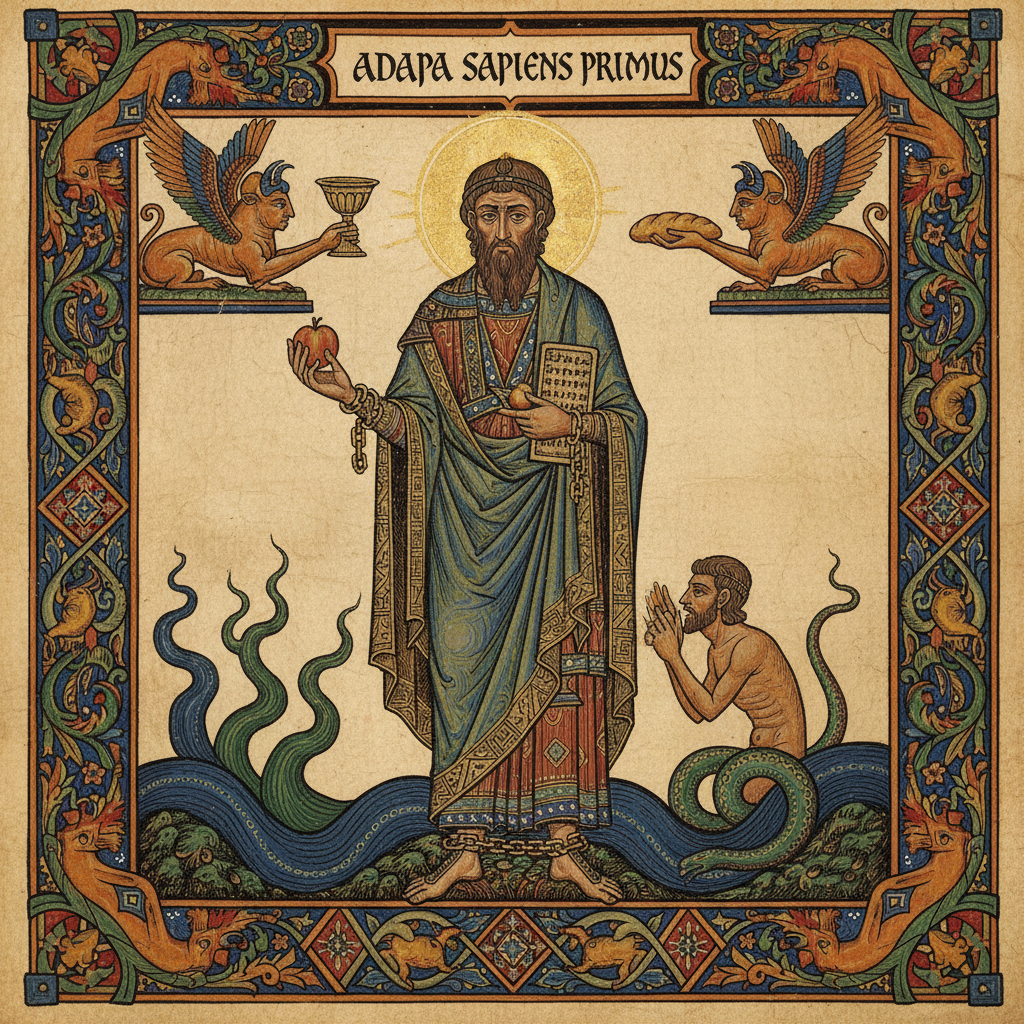
Combat Profile
Bread of Life
Adapa grants immortal knowledge to one ally, permanently increasing their arcane power by 20 points.
Sage's Counsel
All ritual-based actions gain +30% effectiveness and Adapa's wisdom flows to nearby priesthoods, strengthening divine communication.
“Enki, the lord of wisdom, created him as a model of men. He gave him wisdom, but did not give him eternal life.”
Adapa is the inverse Adam: where Adam takes what he should not (the fruit of knowledge), Adapa refuses what he should accept (the food of immortality). Enki gives Adapa supreme wisdom (Adapa myth) and warns him that when he is summoned before Anu, he will be offered the “bread of death” and “water of death” — and must refuse. But Enki has deceived him (or tested him): what Anu actually offers is the bread and water of eternal life (Adapa myth). Adapa, trusting his god, refuses, and loses immortality forever. The parallel to Genesis 2-3 is devastating: in both stories, a divinely created man in a privileged relationship with god is tricked/deceived out of eternal life by the interplay of knowledge and obedience (Adapa myth; Genesis 2-3). Adapa obeys and loses immortality; Adam disobeys and loses immortality. The Mesopotamian and biblical traditions agree on one foundational point: wisdom and immortality cannot coexist for mortals (Adapa myth; Genesis 3).
1 min read
Adapa myth (Kassite period fragment, ~14th century BCE)