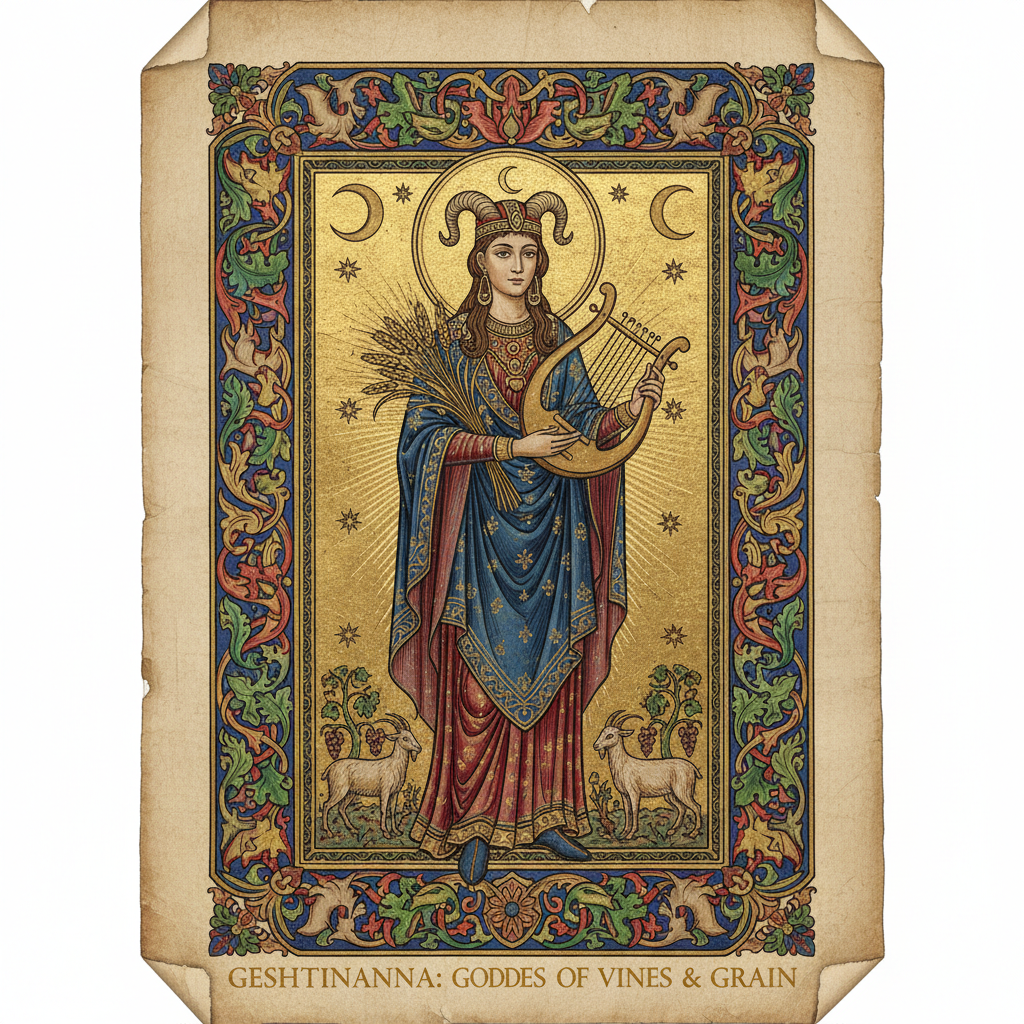
Combat Profile
Fermented Covenant
Geshtinanna transforms sacrifice into divine strength, granting allies temporary invulnerability proportional to their devotion and self-imposed hardship.
Underworld Witness
Geshtinanna perceives the truth of all souls and their debts, gaining knowledge of enemy weaknesses and seeing through deception.
“Dumuzi was condemned to the underworld. His sister Geshtinanna said: ‘I will go in his place. Let me spend half the year in the dark lands, and he will be released for the other half.’ And so the seasons turned.”
Geshtinanna is the unsung hero of the Mesopotamian cosmology: a goddess whose self-sacrifice enables the entire seasonal cycle. When Ishtar returns from death and demands a substitute to take her place below, Dumuzi flees. But Geshtinanna — his sister, his blood — volunteers to alternate with him. She spends half the year in the underworld (winter) so that he can walk the earth and tend the flocks the other half (spring/summer). Her sacrifice is not a single heroic act but an eternal commitment: every year, she descends. Every year, she returns. This creates time, seasons, fertility, and renewal. The biblical parallel is Mary, the mother of Jesus, whose suffering stands alongside Jesus’s in the Pietà, whose sword pierces her heart (Luke 2:35). Both represent the compassionate feminine sacrifice that enables redemption. Geshtinanna’s story answers the question: what does devotion look like? Not conquest, not heroic glory, but the quiet willingness to suffer seasonally so that the world may live.
1 min read
Descent of Inanna; Dumuzi and Geshtinanna cycle; ETCSL