Combat Profile
Tablet of Destinies
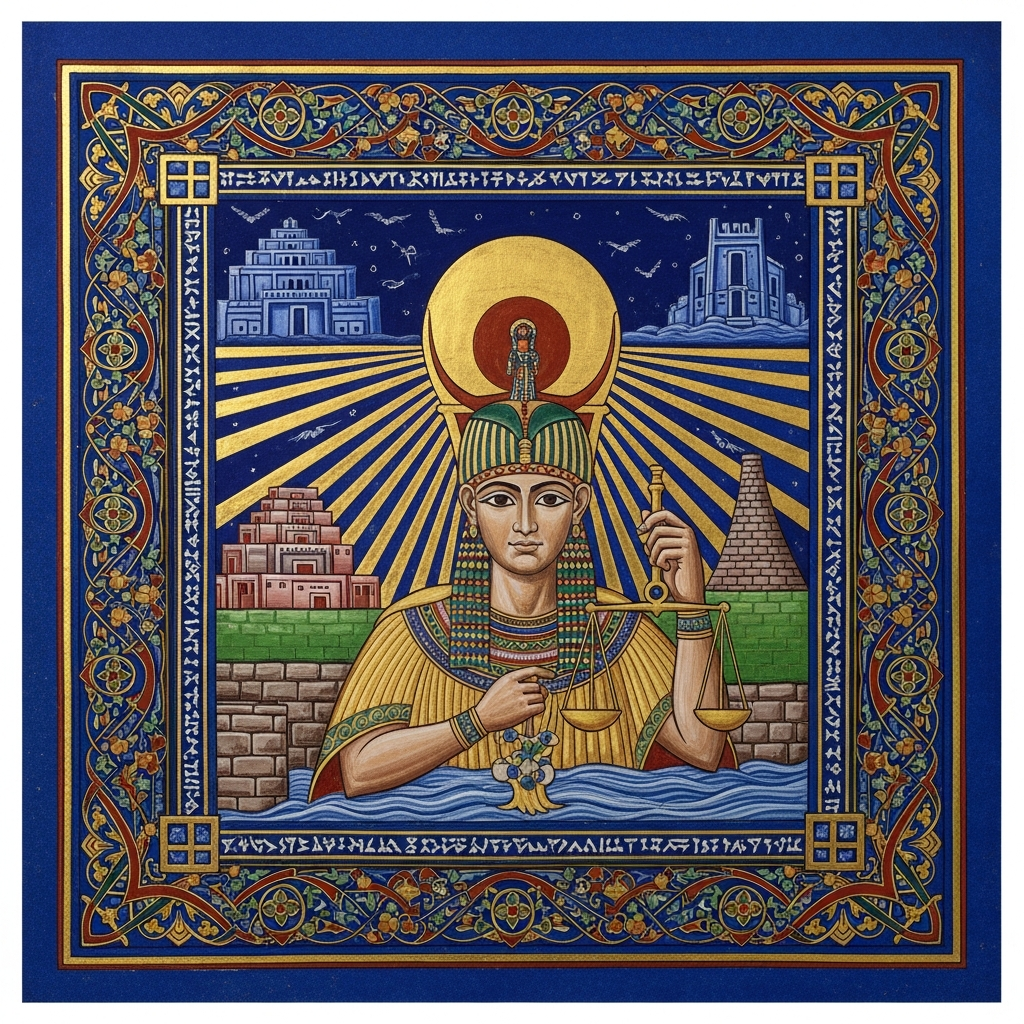
Shamash reveals all hidden truths and binds mortals to their sworn oaths with divine judgment that cannot be broken.
Eye of Heaven
Shamash illuminates all deception and evil wherever his gaze falls, granting perfect vision of truth and protecting travelers from harm.
“O Shamash, judge of heaven and earth, lord of truth and justice. The wicked man shall not escape your net.”
Shamash is the sun as moral arbiter — the cosmic eye that sees every deed and the divine judge before whom every oath is sworn. The most famous depiction is the relief atop the Code of Hammurabi (c. 1750 BCE): Shamash, seated on his throne, hands the rod and ring of authority to Hammurabi, sanctioning the king’s law-code as divine. He travels the sky each day in a chariot of fire and descends through the underworld each night, illuminating even the realm of the dead. Travelers, judges, and the wronged invoke him; the Hymn to Shamash (preserved in Ashurbanipal’s library) is one of the longest and most theologically sophisticated Akkadian compositions, declaring that Shamash sees the “intent of the heart” — a phrase remarkable for its interiority.
Cross-tradition parallels: YHWH’s identification with light and justice (Psalm 27:1, “The LORD is my light and my salvation”; Malachi 4:2, “the Sun of Righteousness”); Surya (Hindu sun god); Ra (Egyptian sun god); Apollo (Greek sun and oracle god); Mithra (Indo-Iranian god of contracts and oaths).
1 min read
The Code of Hammurabi (preamble and stele image); *Epic of Gilgamesh* III; the Hymn to Shamash (the longest extant Akkadian hymn); seal inscriptions across the second millennium BCE