Contents
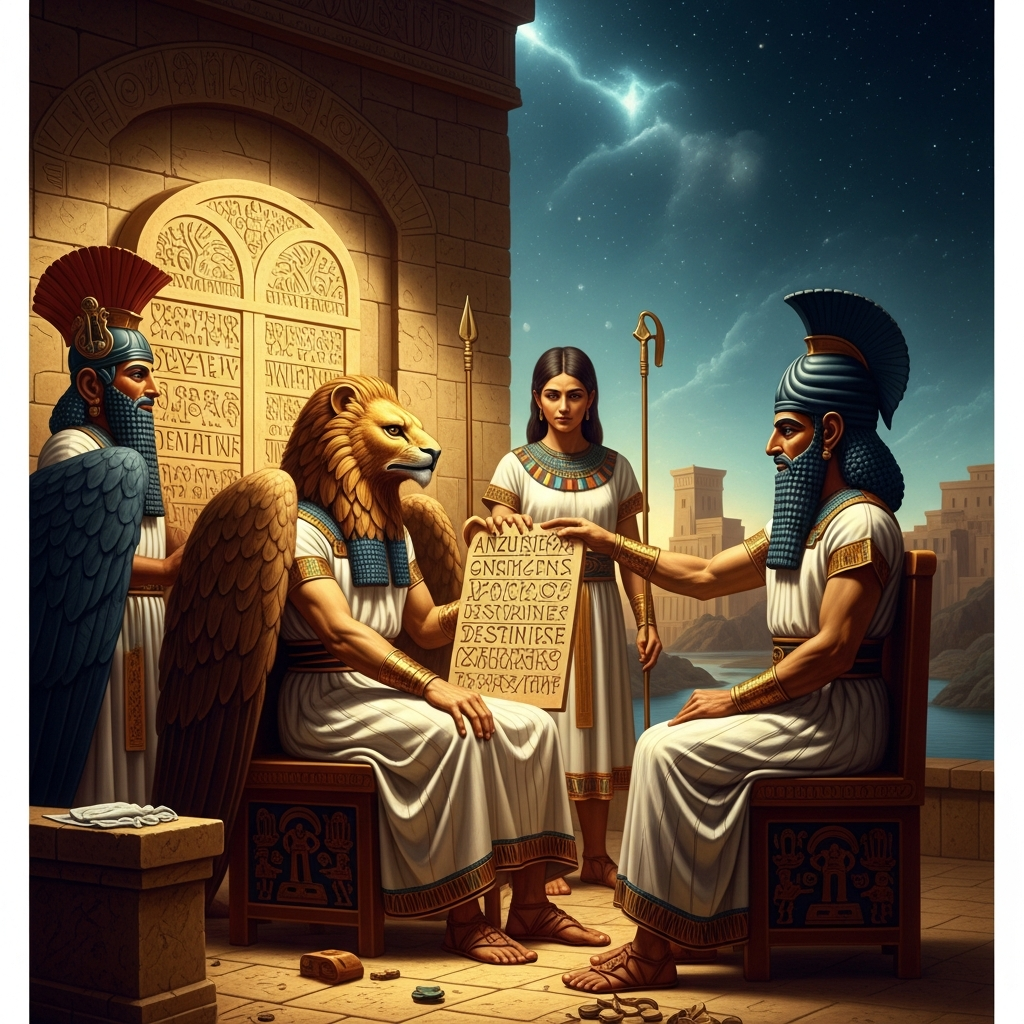
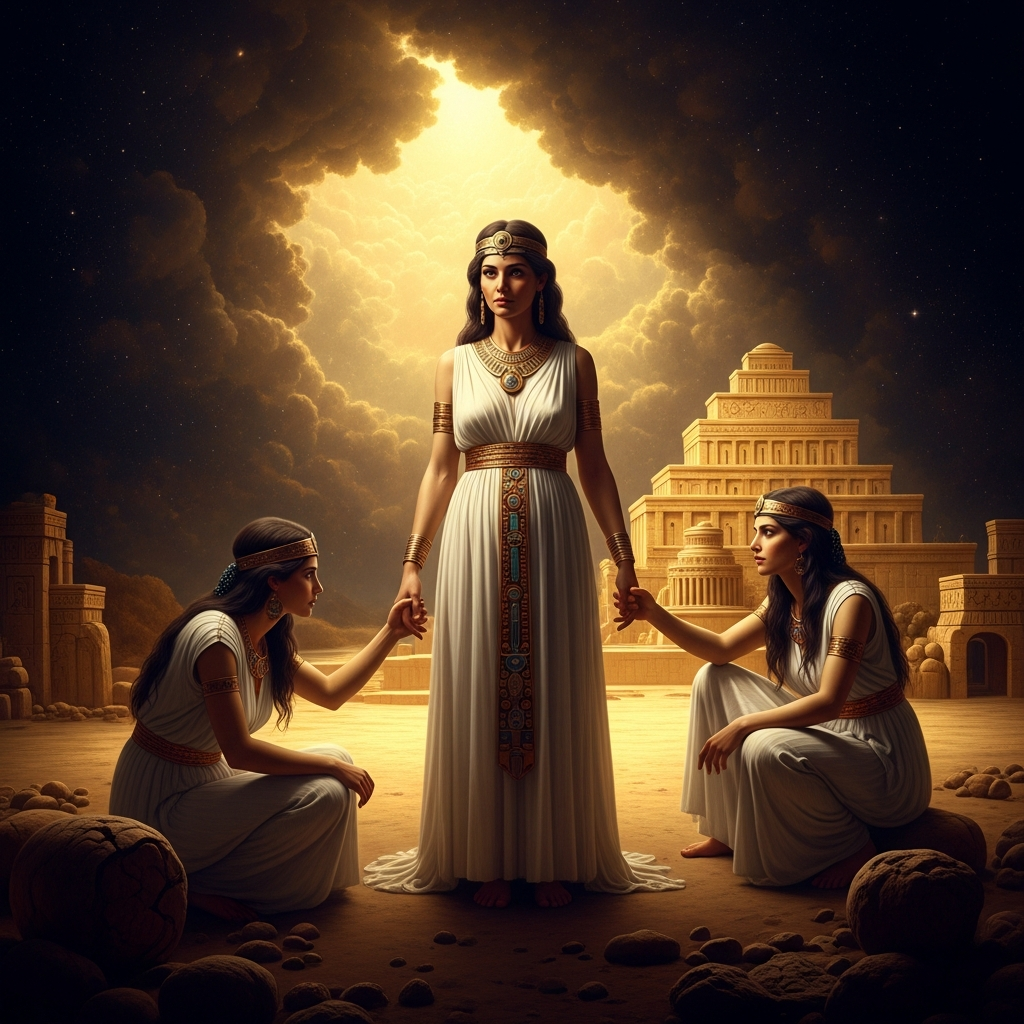
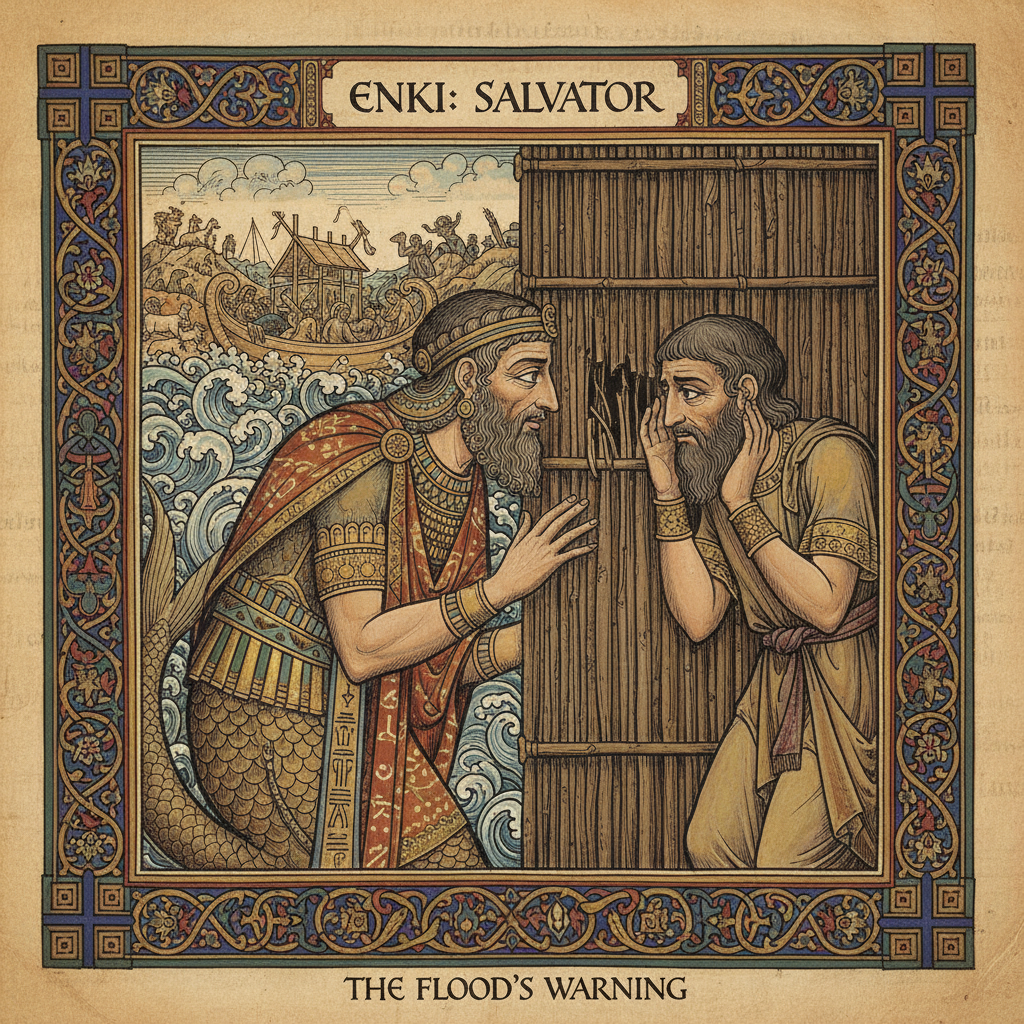
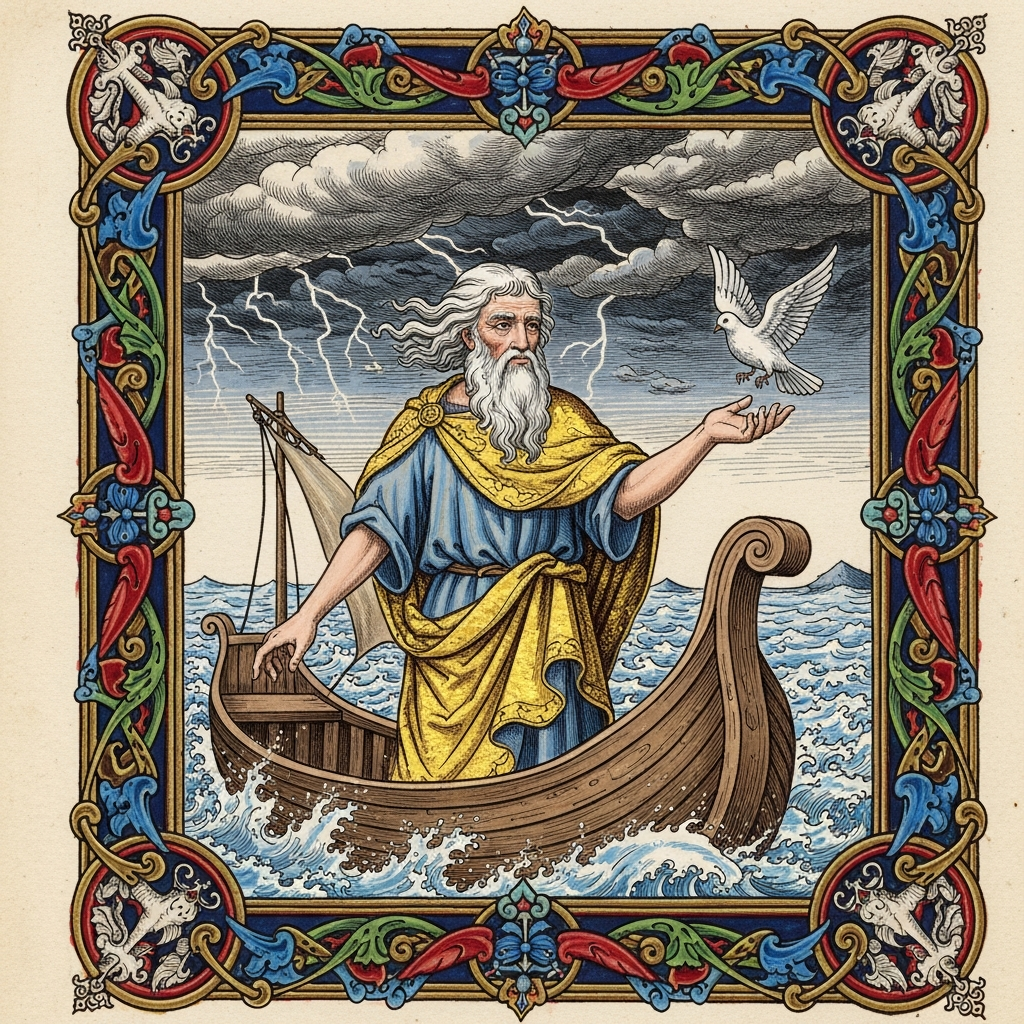
When the gods voted to destroy humanity with a flood, Enki — the cleverest of them — had sworn an oath not to reveal divine plans to mortals. So he did not. He turned to the reed wall of a man's house and spoke to it instead, describing in careful detail exactly what was coming and exactly what that man should build. The man, Utnapishtim, was standing on the other side of the wall. He heard everything. The god kept his oath and saved the species simultaneously, through an act of contractual precision so elegant that Enlil, who had called the flood, could only rage and find no legal ground to stand on.
- When
- Old Babylonian period, c. 1700 BCE · precursor to the biblical flood narrative
- Where
- The divine assembly of the gods · Shuruppak, on the Euphrates
The gods had a problem with noise.
In the Atrahasis Epic, which the Old Babylonian scribes pressed into clay around 1700 BCE — before the great temples of Greece were imagined, before the earliest books of the Hebrew Bible were written, before the founding of Rome was a thought in anyone’s mind — the creation of humanity had gone wrong in a specific and tractable way. Humanity had been made to do the work the lesser gods refused: digging canals, building temples, carrying the irrigation of the world on human backs. This had solved the labor problem. It had created a different problem.
Humanity would not stop making noise.
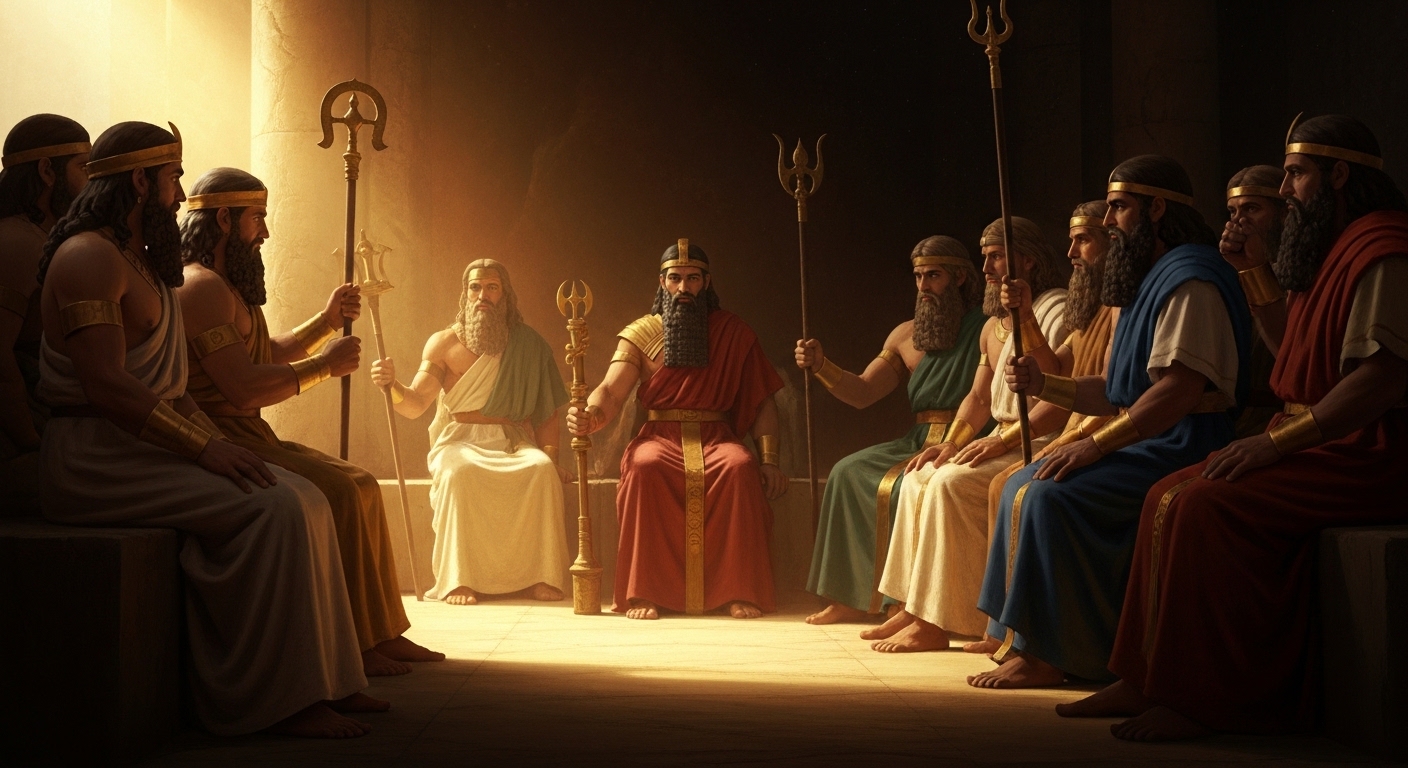
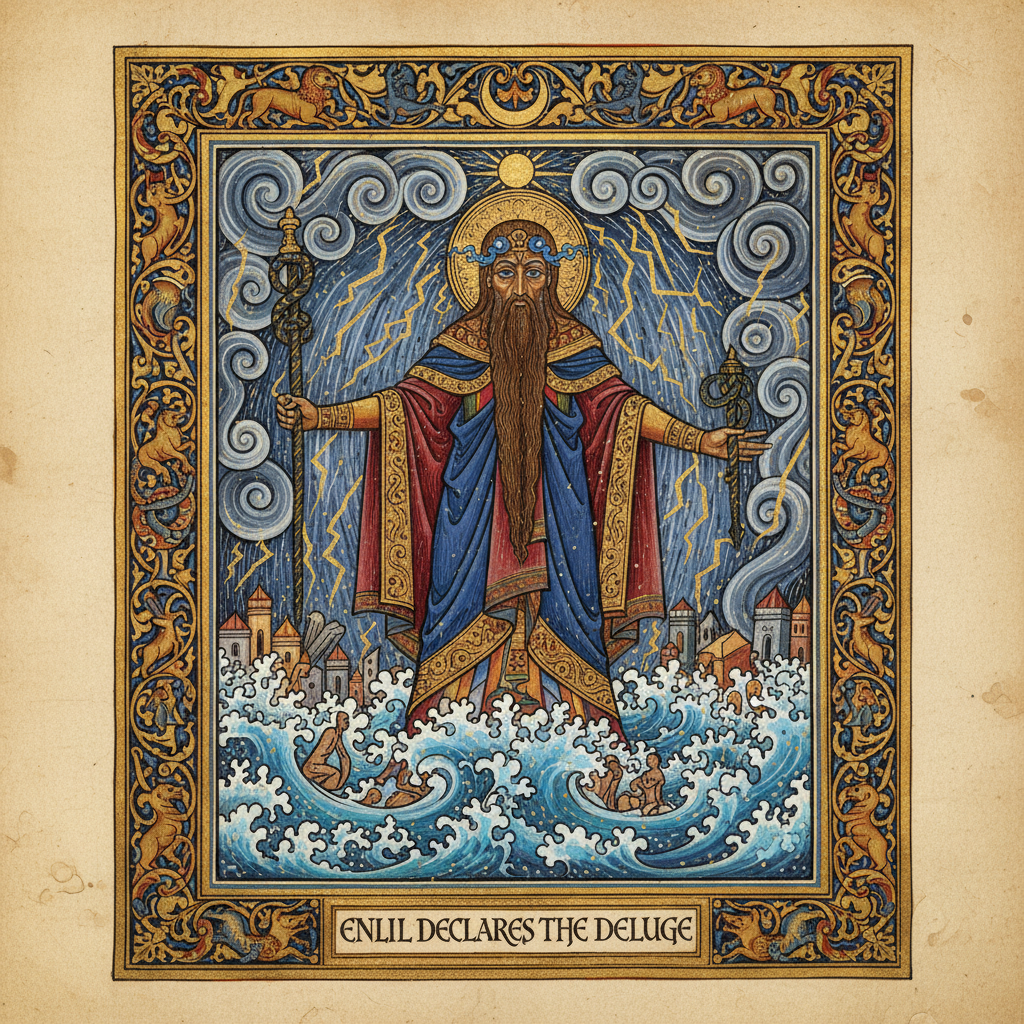
The word the text uses is rigmu — din, clamor, the sound of too many beings too close together, the noise of markets and celebrations and argument and grief and birth and all the sounds that living things make when they live in sufficient numbers. Enlil, the chief god of the divine assembly, could not sleep. He was not a patient administrator. He brought the matter before the council.
The decision, made by vote, was flood. Not plague, which Enki had twice deflected with medical interventions. Not drought, which Enki had also managed to limit. Flood: total, comprehensive, the kind that would cover the mountains and leave nothing. The gods swore an oath, all of them, that they would not warn the humans. The logic of collective action required commitment devices. If any god warned any human, the flood was undermined.
Enki voted with the council. He swore the oath.
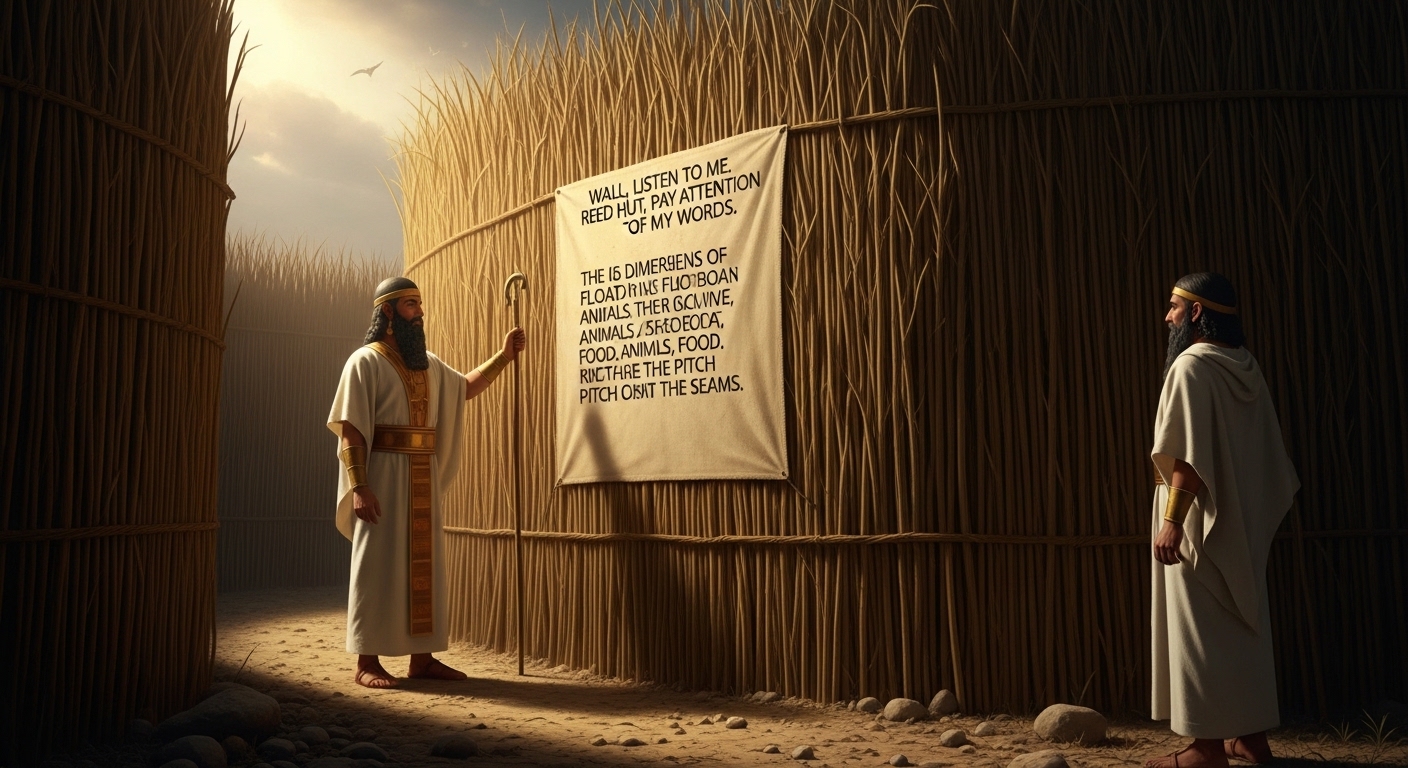
He then went directly to a reed wall and began to talk.
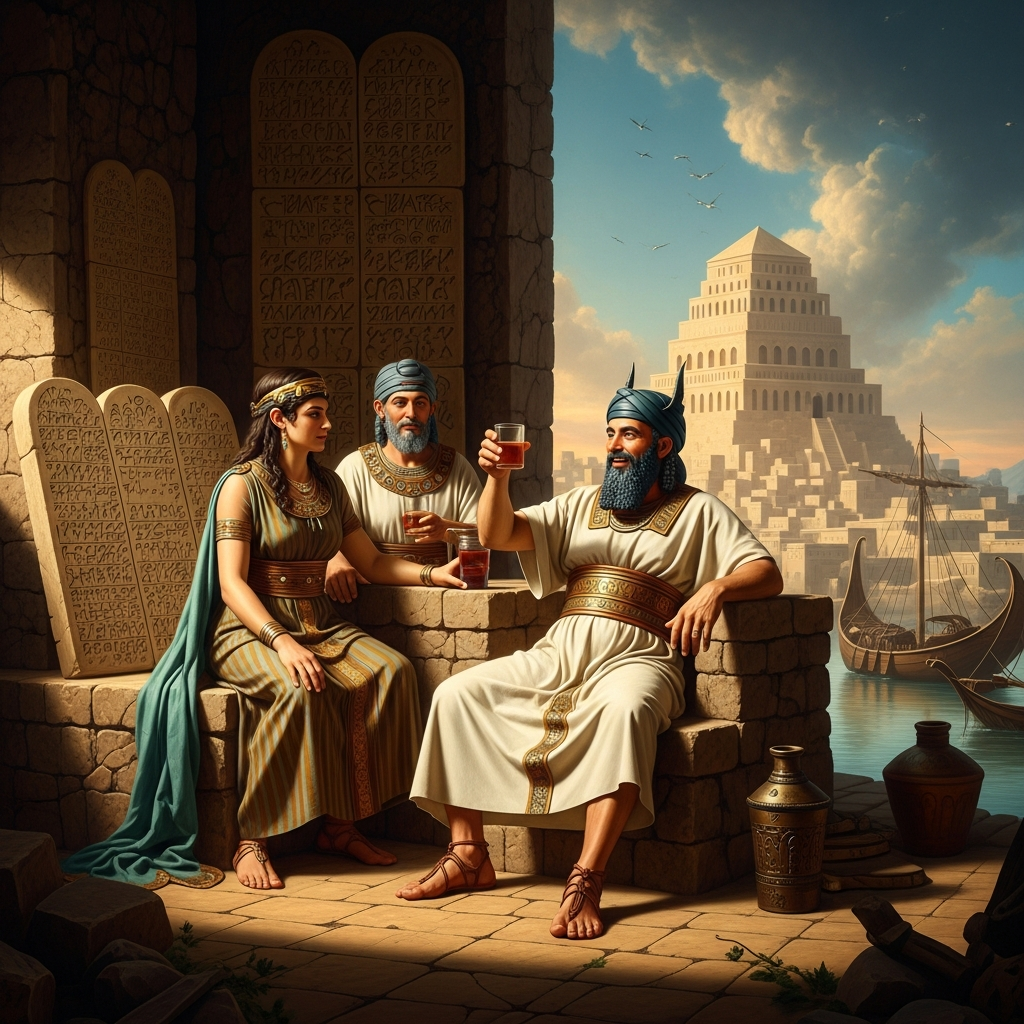
The reed wall belonged to a man named Utnapishtim — or Atrahasis, the names vary across versions, but the story is the same story. He lived in Shuruppak, a city on the Euphrates whose ruins are real, whose geography is recoverable, whose location places this as a story about a specific place on the earth and a specific relationship between a man and a god.
Enki stood before the wall and spoke to it.
O wall, listen to me. Reed hut, pay attention. Pull down the house and build a boat.
He gave the dimensions. He specified the pitch for the seams — every maritime culture knows that a ship without pitch is a vessel that becomes the sea. He told the wall what to load: the living creatures of every kind, the grain, the family. He told the wall how many days the flood would last. He told the wall what the sky would look like when the waters finally receded.
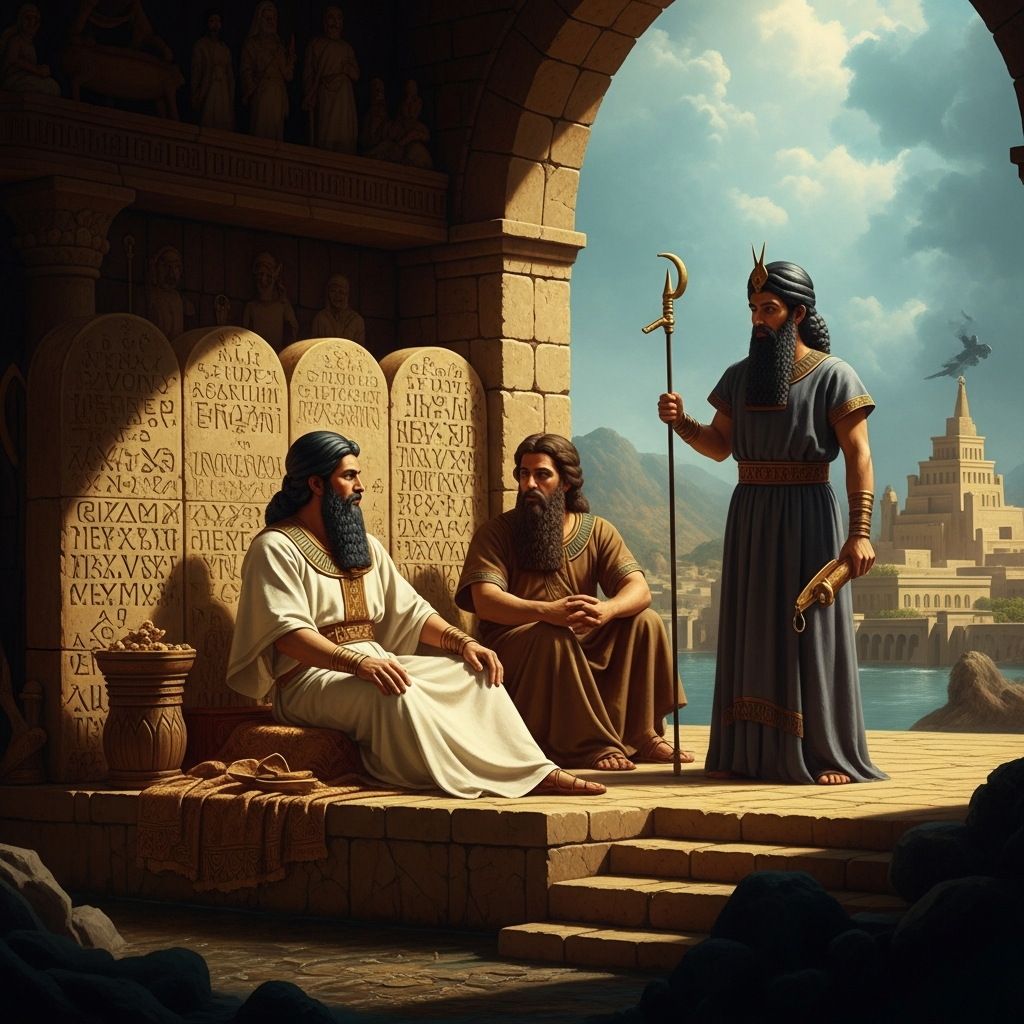
Utnapishtim was on the other side of the wall. He heard every word. The Atrahasis Epic is not coy about this — the man is described as overhearing the conversation between Enki and his own wall, which raises the question of what kind of conversation a man has with his wall. The answer is: the conversation the wall has been instructed to have with him.
Enki is the god of wisdom, fresh water, crafts, writing, magic, and the subterranean waters beneath the earth. He is not the most powerful god in the Mesopotamian assembly. Enlil, who called the flood, outranks him. Anu, the sky, outranks him. Enki’s power is of a different kind. He is the one who thinks past what the current situation appears to require. He is the one who sees that every system has a gap between what it prohibits and what it can actually prevent.
The oath said: do not warn the humans. Enki parsed this carefully. The oath was about Enki’s communications with mortals. It was not about Enki’s communications with architecture. The reed wall was not a mortal. Enki told the wall the truth. The wall, being a wall, could not be held responsible for whatever the man standing next to it inferred.
This is not a loophole in the modern, dismissive sense — a technicality that gets someone off on a procedural point. This is something more fundamental. The Mesopotamian legal tradition was precise and written. Contracts were cuneiform, enforceable, literal. The oath was a contract. Enki was the god of the very craft by which contracts were made. He knew exactly what the oath covered. He had perhaps voted for the flood precisely because he had already identified the gap in the oath’s language.
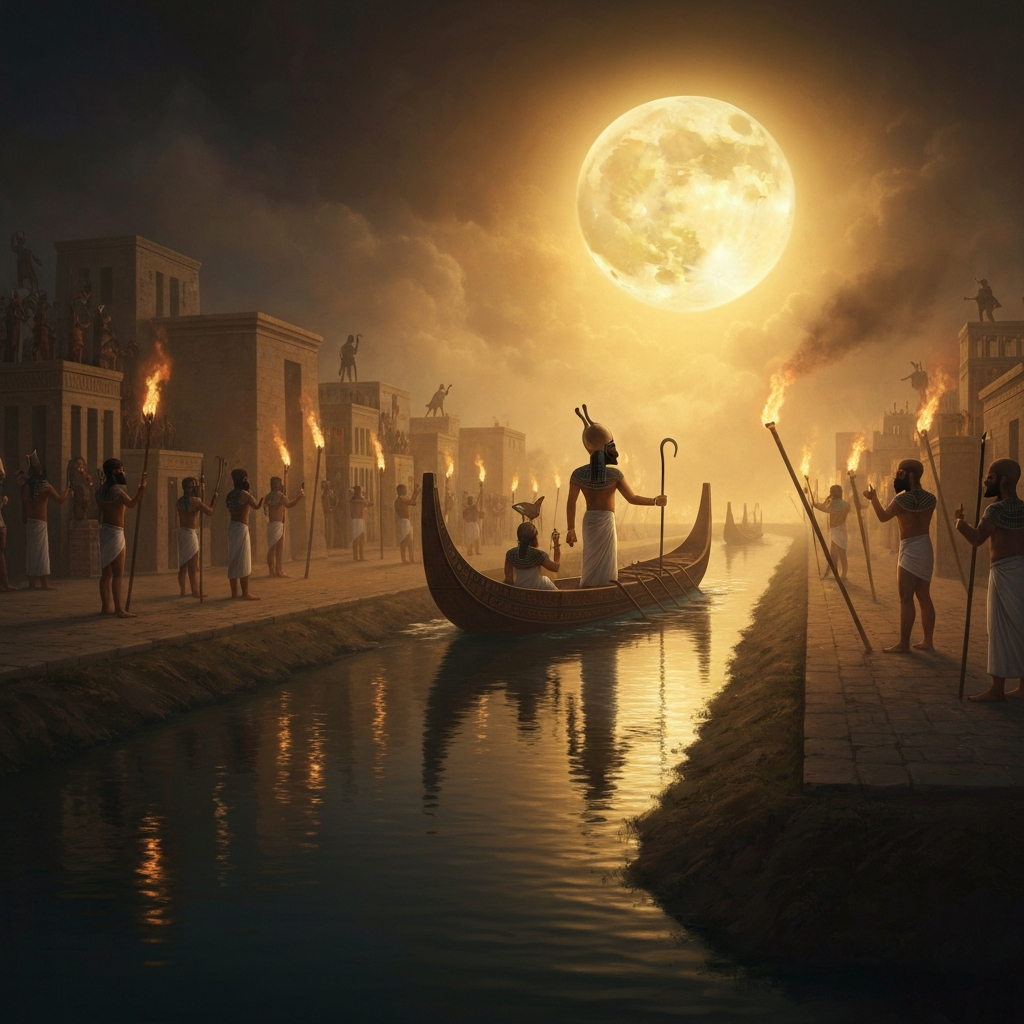
The wood for the boat came from the forest. The pitch came from the riverbank. Utnapishtim built what the wall had described. His family boarded. The animals came. The rain began.
When Enlil found the boat resting on Mount Nimush after the flood, and found Utnapishtim alive inside it — Utnapishtim, who by every divine vote should be dead — he was furious in the way that powerful beings are furious when they discover they have been outmaneuvered without being technically wronged.
He turned to Enki.
Enki’s defense was delivered with the equanimity of someone who has thought through this conversation in advance.
I swore the oath, Enki said. I did not warn a mortal. I spoke to a wall. If the wall is wise and the man who built it is listening, that is the action of the wall and the man, not mine.
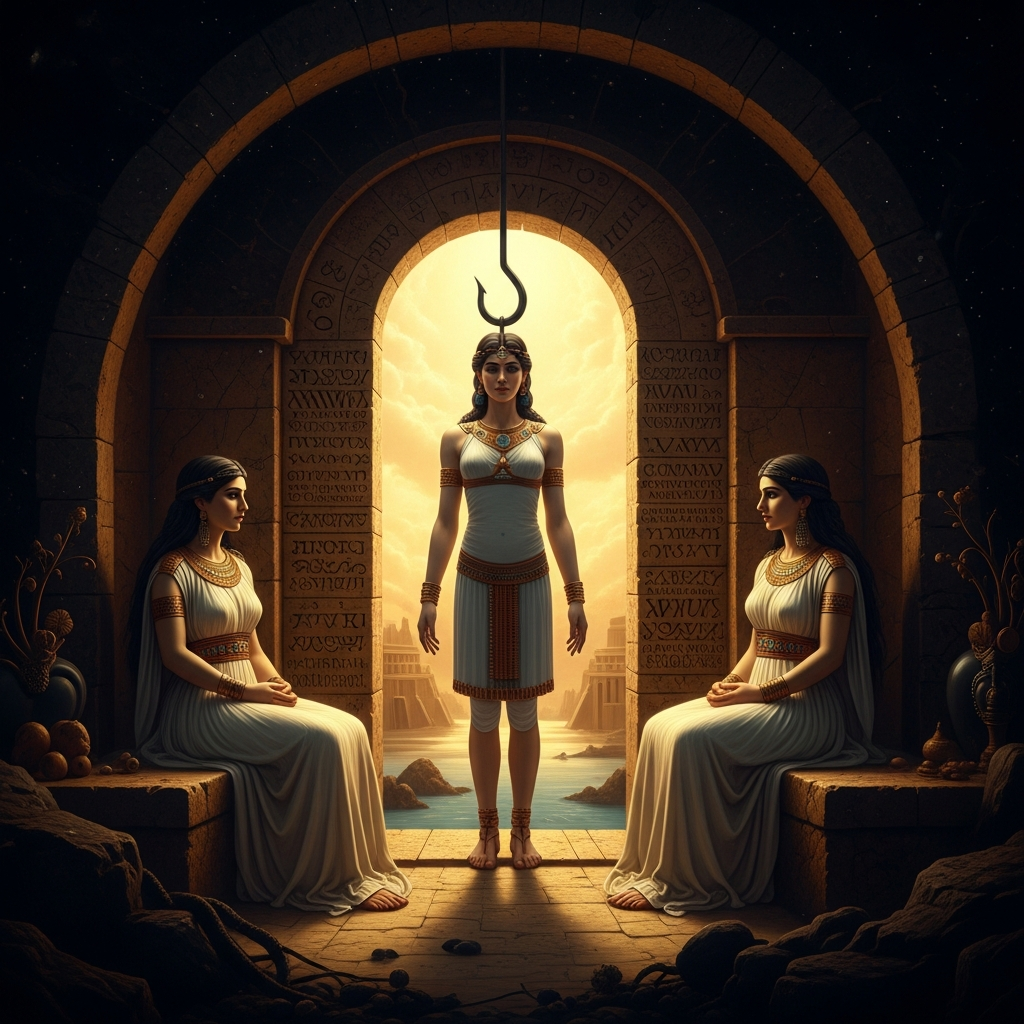
There is something to examine in the fact that Enlil could not find purchase here. The mythology does not describe him successfully punishing Enki. He grants Utnapishtim immortality instead — a concession that reads more like a settlement than a triumph. The flood killed the rest of humanity. Utnapishtim and his wife were removed from the mortal world entirely, placed at the mouth of the rivers, beyond the world. The species survived. Enlil had won the flood and lost the war.
Enki had kept his oath and kept the species. Both things were true simultaneously.
What this story reveals about the Mesopotamian understanding of the divine is worth sitting with.
The god who advocated for humanity was not the most powerful god. He was the most precise. Wisdom, in Mesopotamia, was not a soft attribute — it was a technical competency, the ability to understand systems well enough to find where they bend. Enki’s wisdom was structural. He understood the shape of an oath the way a shipbuilder understands the shape of a hull: you have to know where the water will push before you commit the wood.
The contrast with Noah is instructive. In Genesis, God decides to save Noah. The decision is personal, made by the being with all authority. Noah is righteous; God elects him. The relationship is vertical: supreme power extending grace downward. There is no loophole, no assembly, no oath, no technical maneuver. God’s will and God’s action are identical.
Enki cannot do that. He is not supreme. He voted with the assembly. The flood is happening. What he can do is find the place where his commitment does not quite reach to what he wants to prevent. The god of wisdom saves humanity not through power but through the intelligent application of what he has already agreed to.
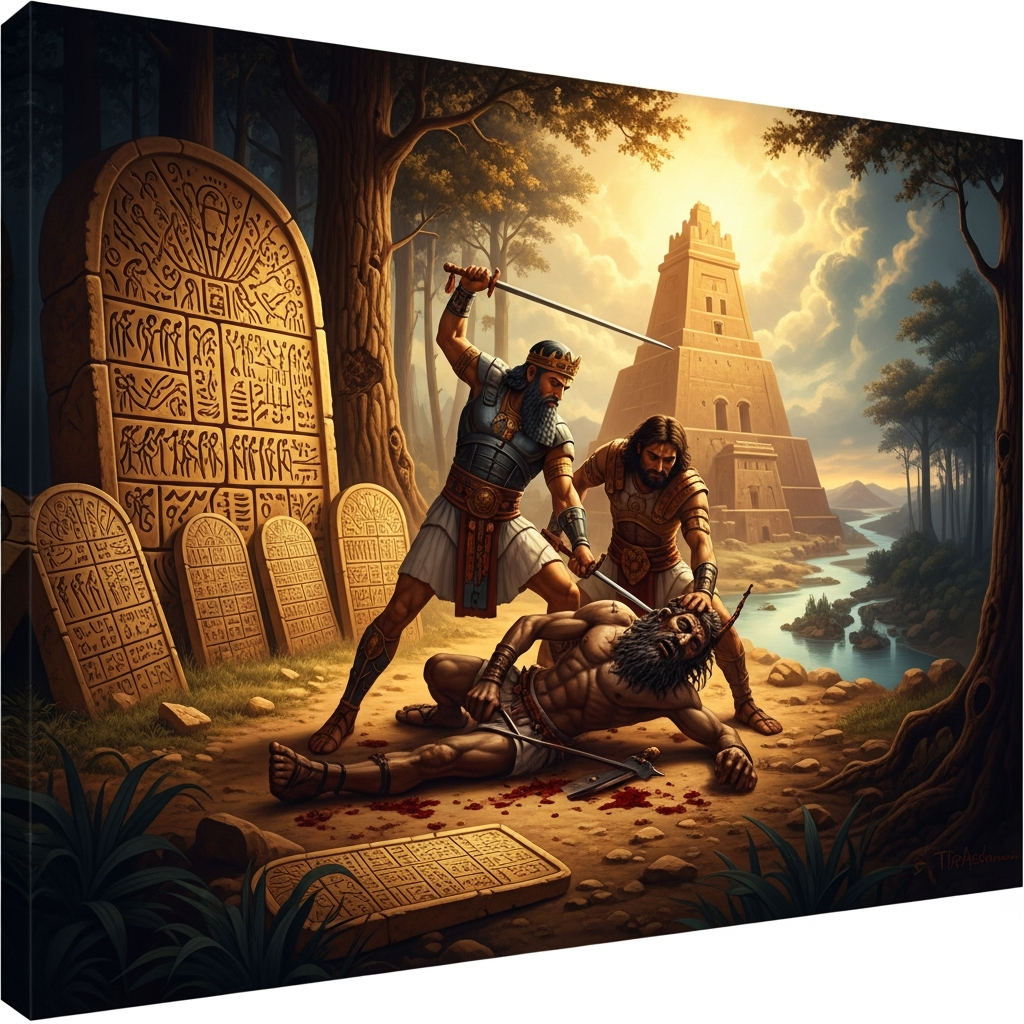
Prometheus stole fire. He acted against the clear intent of Zeus and paid for it in chains and eagles and the extraction of his liver across the span of eternity. Enki never stole anything. He gave information to a wall. The wall gave it to a man. The man built a boat. The god kept his oath and the species survived and the assembly could not articulate precisely what had gone wrong.
The reed wall is gone, of course. The mud-brick cities of the Euphrates valley have returned to the earth over which they were built. The actual Shuruppak, excavated by German archaeologists in the early twentieth century, shows flood deposits — thick, clean silt laid down in a single catastrophic event, beneath which the earlier stratum of the city lies undisturbed, above which the rebuilt city continues.
The flood happened, or something like it happened, the kind of regional catastrophe that can look, from the inside, like the end of the world. What the Mesopotamians made of it was a story about why the world did not end: not because the gods relented, not because the gods were merciful, but because one of them was clever enough to have a conversation with a wall.
That is the theology. The cosmos is ruled by power, and power is not always wise, and wisdom is not always powerful, and in the gap between those two facts there is room, sometimes, for a species to survive.
Enki found the room. He stood at the wall and spoke carefully, in full compliance with everything he had sworn, and three thousand years of humanity later read what he said.
Scenes
Echoes Across Traditions
Entities
Sources
- Atrahasis Epic (Old Babylonian, c. 1700 BCE)
- Epic of Gilgamesh, Tablet XI (Standard Babylonian version, c. 700 BCE)
- Thorkild Jacobsen, 'The Treasures of Darkness: A History of Mesopotamian Religion' (1976)
- Benjamin Foster, 'Before the Muses: An Anthology of Akkadian Literature' (2005)