Combat Profile
Soma Nectar
grants divine intoxication that enhances fertility, mental clarity, and cosmic alignment to all who consume it
Lunar Cycles
perpetually governs the passage of time through moon phases, influencing tides, growth, and the minds of all living beings
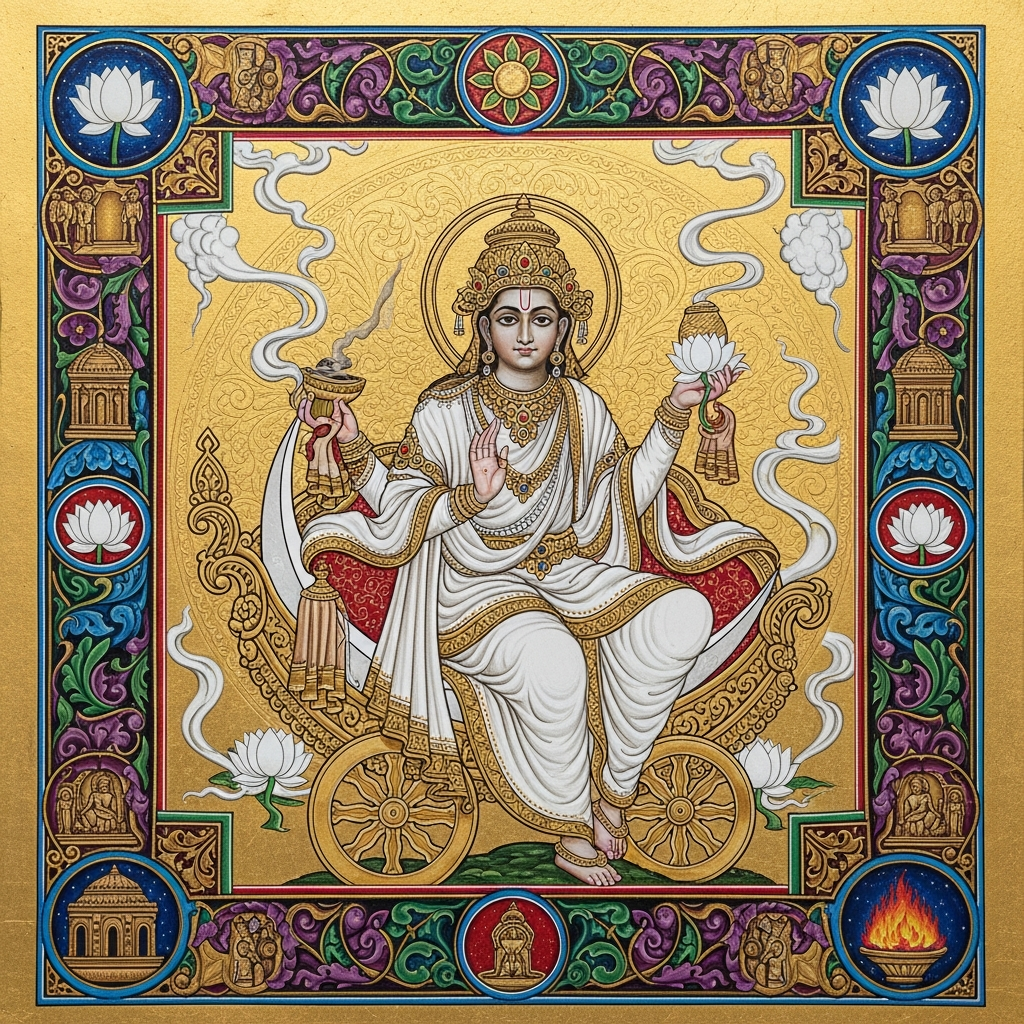
Chandra rides a chariot pulled by ten white horses (or an antelope), holds a club and a lotus, and is associated with the soma — the sacred drink that intoxicates the gods (Rig Veda 9). His mythology is laced with romantic scandal: he married the 27 Nakshatras (lunar mansion goddesses, daughters of Daksha) but loved Rohini above all the others. Daksha cursed him to waste away. Shiva intervened, modifying the curse so Chandra would only wane half the month and wax the other half (Matsya Purana 11). The phases of the moon are the curse and its mercy in eternal alternation.
Chandra also famously seduced Tara, wife of Brihaspati (the guru of the gods), fathering Budha (Mercury) — the founding scandal of the lunar dynasty (Vishnu Purana 4.6).
Cross-tradition parallels: Sin/Nanna (Mesopotamian moon god, also a wanderer); Khonsu (Egyptian moon god whose name means “traveler”); Selene/Luna (Greek-Roman moon goddess); Yarikh (Canaanite lunar deity).
1 min read
Rig Veda, Vishnu Purana, Bhagavata Purana, Matsya Purana