Combat Profile
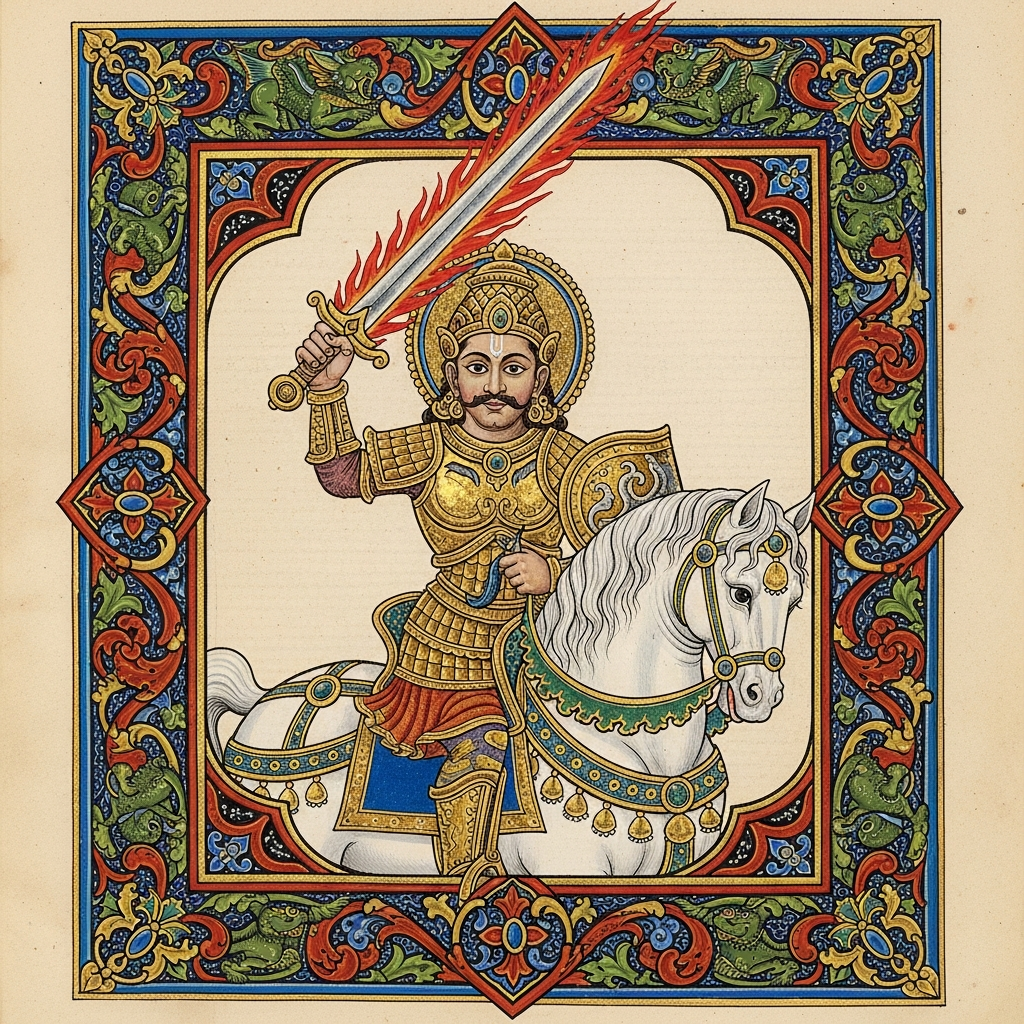
Dashavatara
Vishnu manifests in ten divine incarnations across time to restore cosmic balance and defeat forces of destruction.
Preserver's Mercy
Vishnu passively sustains all existence and grants compassion to those who seek dharma, making him eternally benevolent to righteous beings.
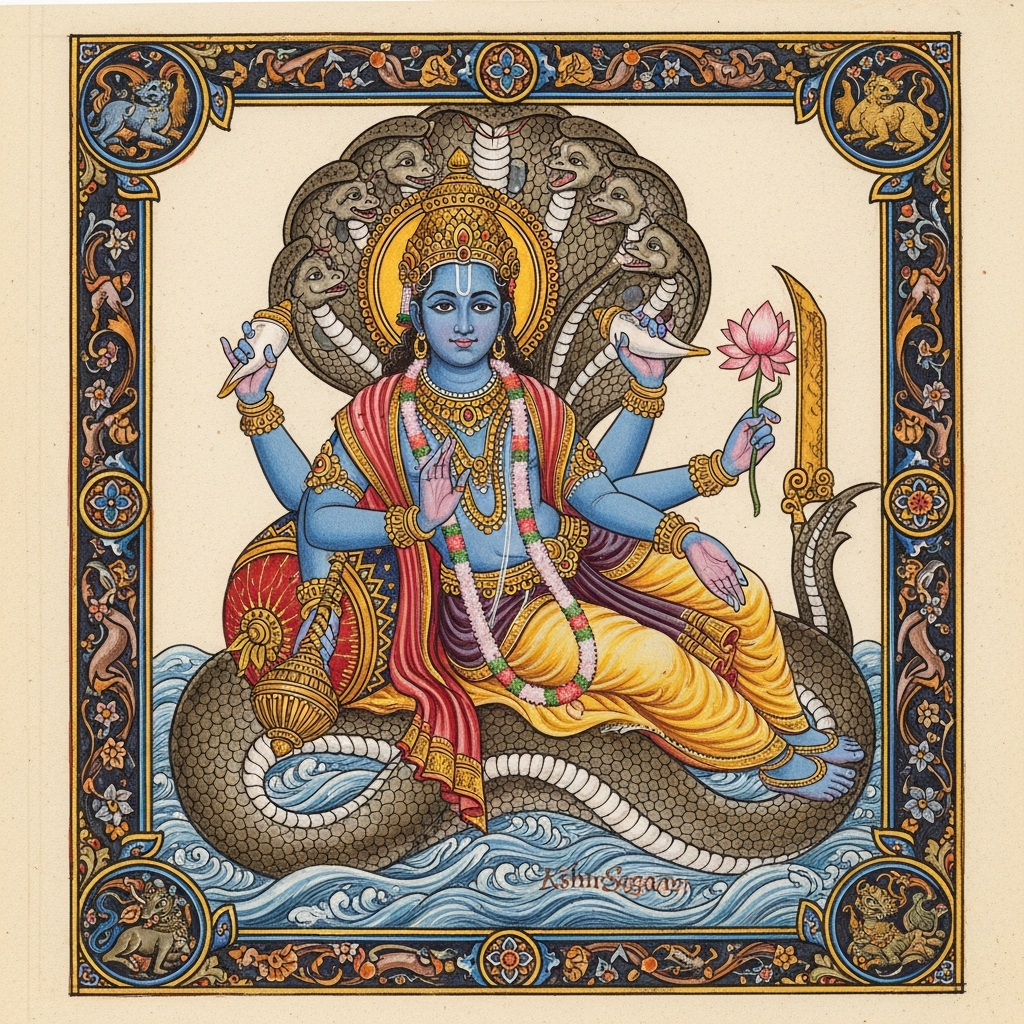
Vishnu is depicted with blue skin (representing the infinite, like the sky and ocean), four arms holding a conch shell (Panchajanya — the primordial sound), a discus (Sudarshana Chakra — the weapon that destroys ignorance), a mace (Kaumodaki — cosmic power), and a lotus (purity and creation) (Vishnu Purana 1.22). Between cosmic ages, he sleeps on the thousand-headed serpent Shesha (also called Ananta, “the infinite”), floating on the Kshira Sagara — the cosmic ocean of milk (Bhagavata Purana 2.10). When he wakes, a new creation begins; from his navel grows a lotus from which Brahma emerges to create the world.
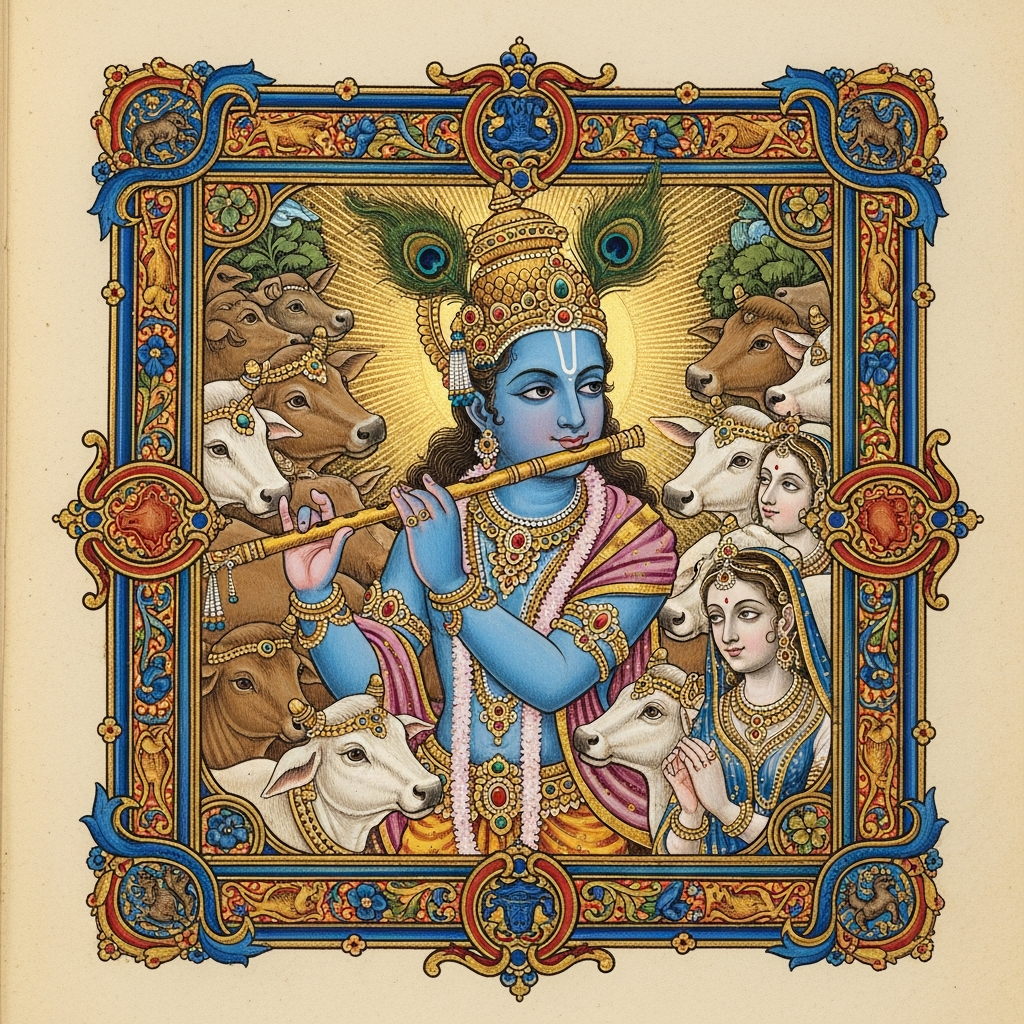
Vishnu’s defining role is the avatar — divine descent into the world in physical form when evil rises beyond humanity’s ability to resist. “Whenever dharma declines and adharma prevails, I manifest myself. For the protection of the good, for the destruction of the wicked, and for the establishment of dharma, I appear in every age” (Bhagavad Gita 4.7-8). This is perhaps the most direct parallel to the Christian doctrine of Incarnation: God takes on flesh to save a world that cannot save itself. In Vaishnavism, Vishnu is not merely one god among many — he IS the supreme Brahman who manifests as all other deities.
1 min read
Rig Veda, Vishnu Purana, Bhagavad Gita, Bhagavata Purana