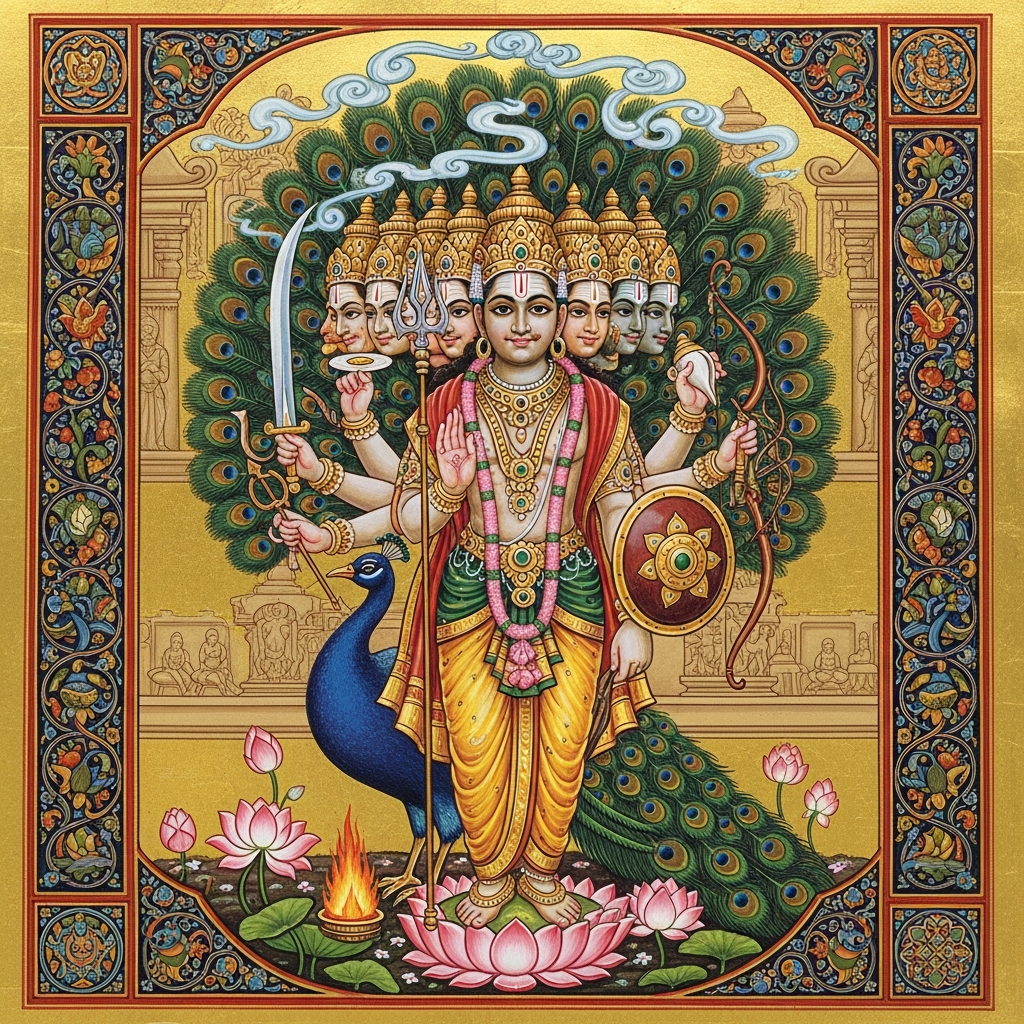
Combat Profile
Vel Strike
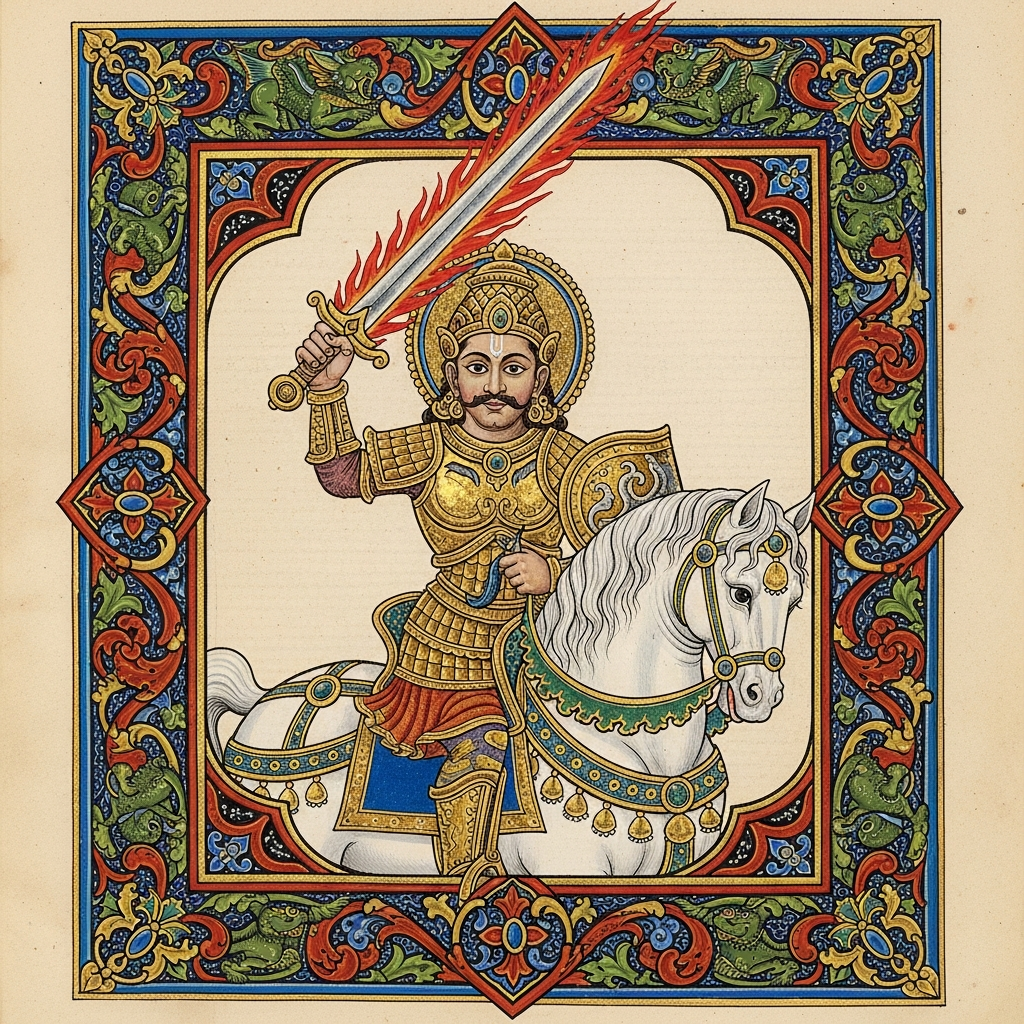
Murugan hurls his divine spear with unstoppable force, piercing through all defenses and guaranteeing victory in righteous combat.
Youth's Vigor
Murugan embodies eternal youthfulness and perpetual victory, granting him immunity to despair and continuously sharpening his martial prowess.
Karttikeya was conceived to solve a theological problem. The asura Tarakasura had received a boon from Brahma that he could only be slain by a son of Shiva — a god so withdrawn in meditation that fatherhood seemed impossible (Skanda Purana 1.1). The devas conspired to bring Shiva and Parvati together. The resulting spark of Shiva’s seed was so potent it had to be carried by Agni, then the Ganges, then deposited in a forest of reeds, where six divine nurses (the Krittikas, the Pleiades) raised the child — giving him six faces to suckle from all six mothers at once (Mahabharata 3.213-216). He grew to manhood in days, took up the spear (vel) given by Parvati, and led the divine army to slay Tarakasura at age six.
In South India, particularly Tamil Nadu, Karttikeya is Murugan — arguably the more popular deity than even Shiva or Vishnu. The Tamil Sangam literature (~300 BCE - 300 CE) celebrates him as the indigenous god of the hills, predating Vedic absorption. He has six major temples (the Arupadai Veedu) across Tamil Nadu, each marking a stage of his mythology.
Cross-tradition parallels: Ares/Mars (war god) — though Karttikeya retains divine virtue Ares lacks; Michael the Archangel (commander of the heavenly host who defeats the cosmic adversary, Rev 12:7); Horus the Avenger (young warrior god who defeats his father’s enemy).
1 min read
Skanda Purana, Mahabharata (Vana Parva), Tamil Tirumurai, Kumarasambhava (Kalidasa)