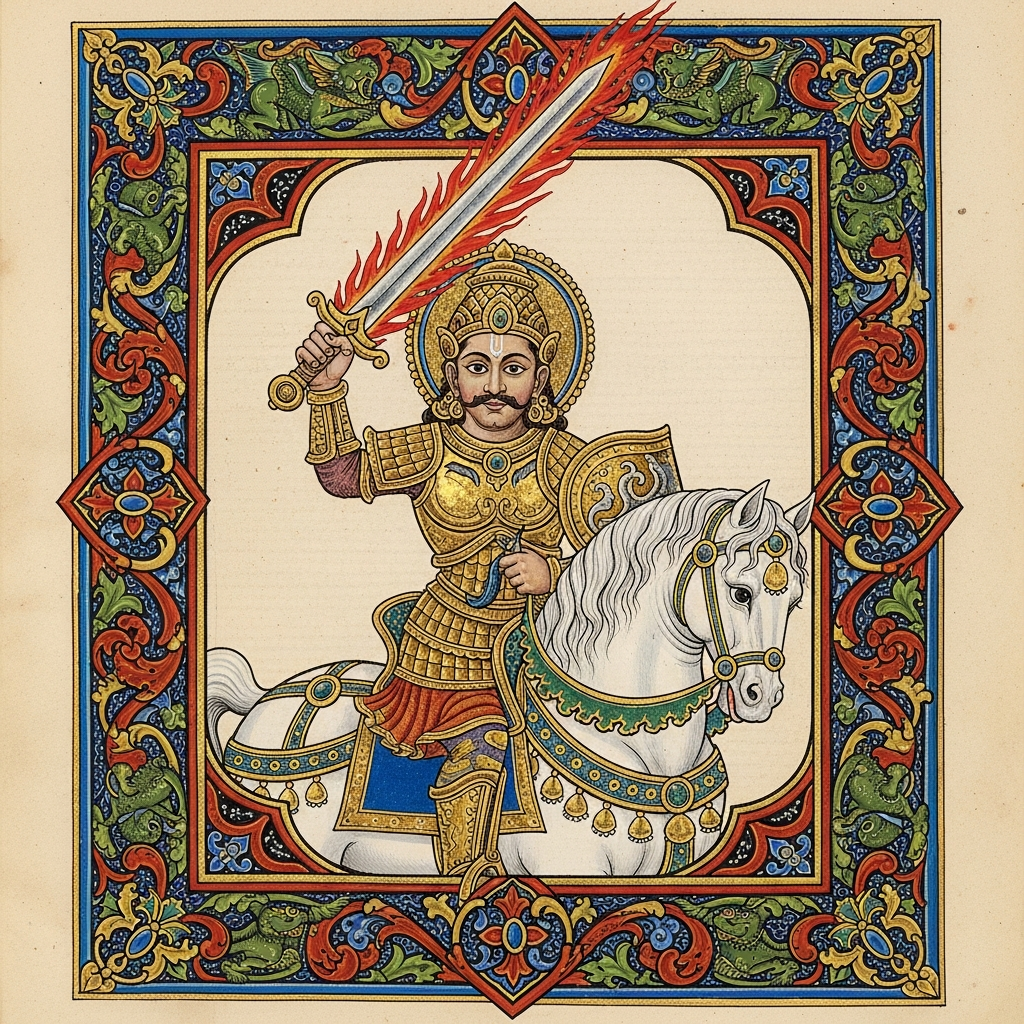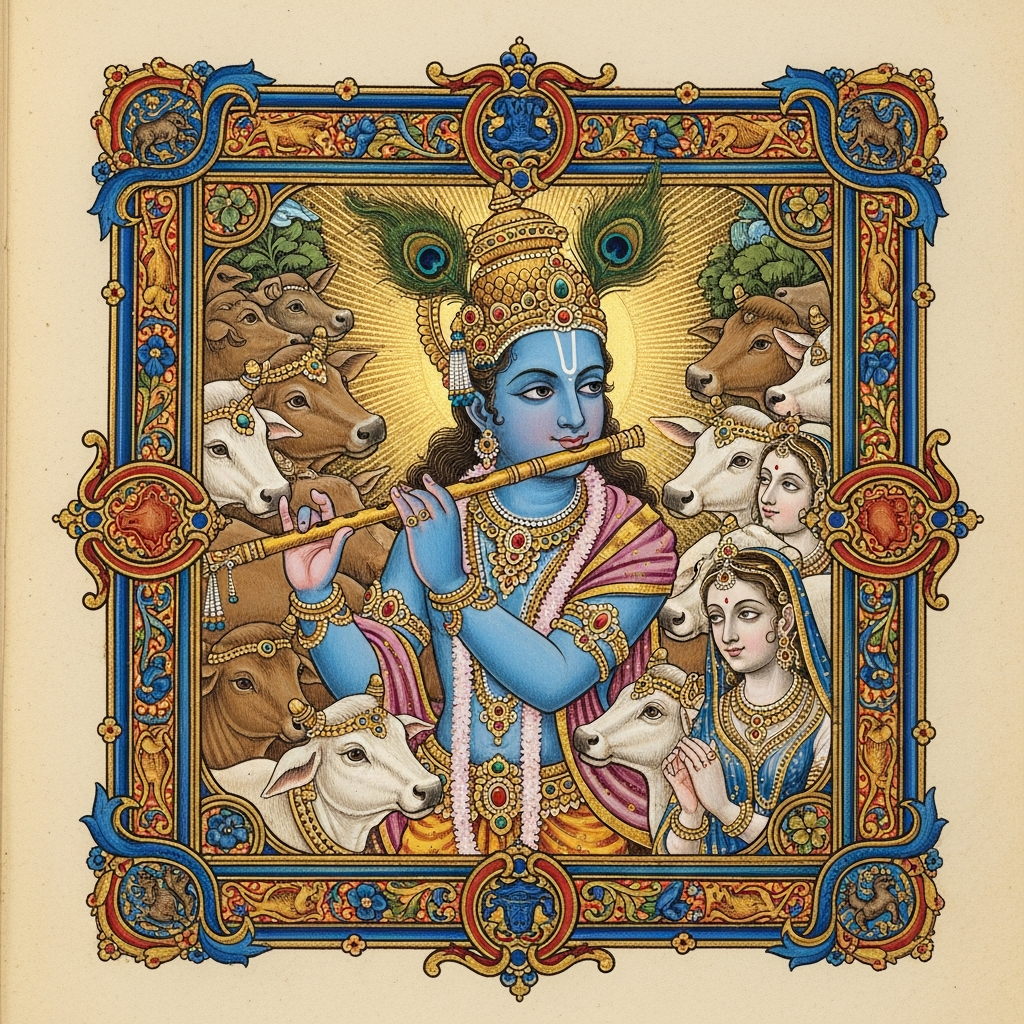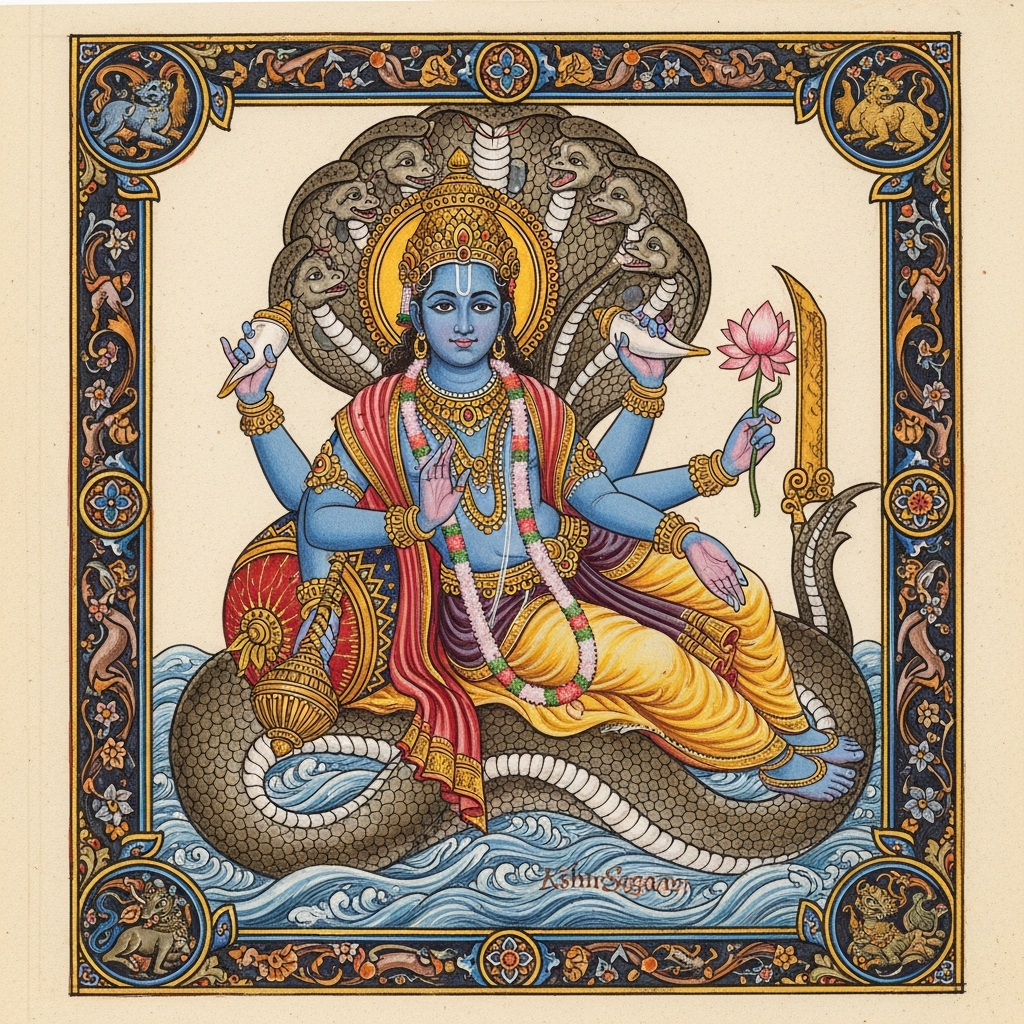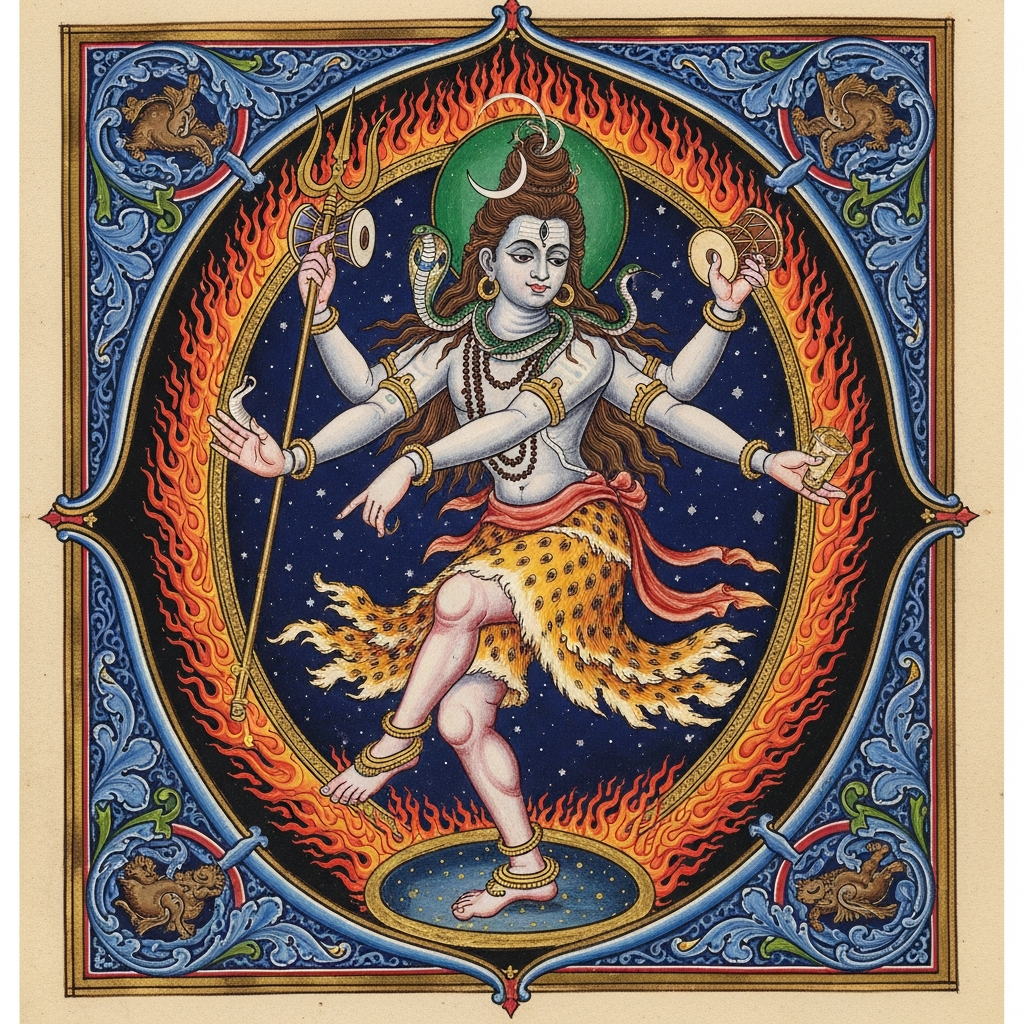
Combat Profile
Purifying Flame
Agni consumes impurity and carries prayers to the heavens, burning away obstacles while establishing divine communion.
Messenger's Passage
Agni exists at the threshold between mortal and divine realms, granting clarity to all who approach with sincere intent.
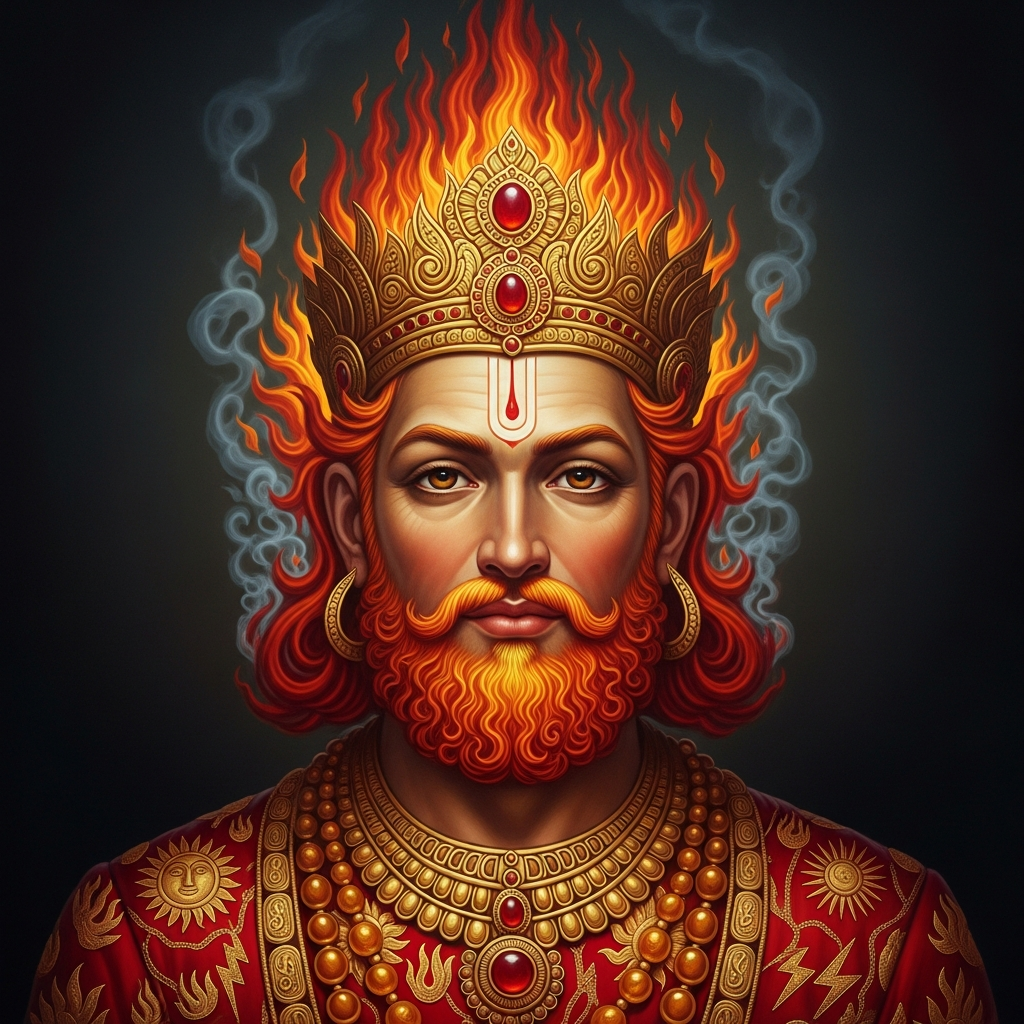
Agni is fire itself deified — not a god who controls fire, but fire as a living divine being (Rig Veda 1.1-1.12). He has two faces (representing his domestic and sacrificial aspects), rides a ram, and is described as having seven tongues of flame (Rig Veda 1.58, 4.7). In Vedic ritual, Agni is indispensable: when an offering is placed in the sacred fire, Agni carries it to the gods (Vedic ritual texts). He is the messenger, the priest, and the path simultaneously. Every Hindu fire ritual (havan/homa) is an invocation of Agni.
The Abrahamic parallels are vivid: the pillar of fire that led Israel through the wilderness (Exodus 13:21); the burning bush through which God spoke to Moses (Exodus 3:2-4); the tongues of flame at Pentecost that descended on the apostles (Acts 2:3). In all three traditions, fire is the medium through which the divine communicates. God appears IN the fire (burning bush), LEADS BY fire (pillar), and SENDS fire (Pentecost). Agni is this principle given a name and a personality.
“I praise Agni, the household priest, the divine minister of sacrifice, the chief priest, the bestower of blessings.” (Rig Veda 1.1.1, the very first verse of Hinduism’s oldest scripture)
1 min read
Rig Veda (second most hymns after Indra), Agni Purana