Combat Profile
Bhakti Ascension
Hanuman's devotion multiplies his strength tenfold when protecting those he serves, making him unstoppable in righteous defense
Unwavering Resolve
Hanuman's celibate discipline and absolute devotion grant him immunity to corruption, fear, and doubt, allowing him to accomplish impossible feats through pure will
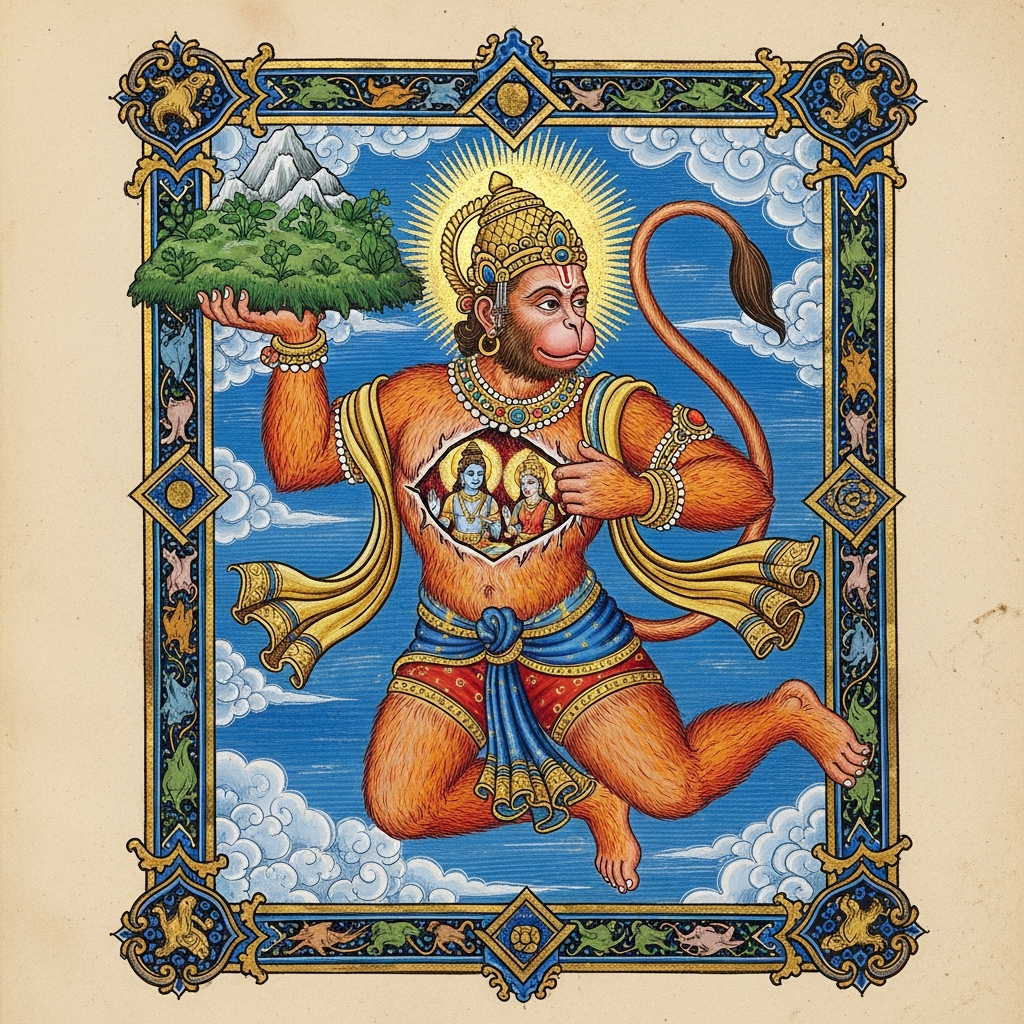
Hanuman is the son of Vayu (the wind god), blessed with the ability to fly, change his size at will, and possess virtually limitless strength (Ramayana, Sundara Kanda). As a child, he mistook the sun for a ripe fruit and leapt toward it — crossing the sky before Indra struck him down. His devotion to Rama is the defining feature of his entire existence (Ramayana). When Rama needed to find Sita in Lanka, Hanuman leaped across the ocean in a single bound. When Lakshmana was mortally wounded and needed a specific herb from a Himalayan mountain, Hanuman — unable to identify the correct herb — tore the entire mountain from the earth and carried it to the battlefield (Ramayana, Yuddha Kanda).
The most famous image: when doubters questioned his devotion, Hanuman tore open his own chest to reveal Rama and Sita dwelling inside his heart (Ramayana, popular Hindu devotional tradition). This is not metaphor in the tradition — it is literal, and it represents the ultimate statement of bhakti: the divine lives within the devotee, and the devotee’s entire being is the temple.
The parallel to angelic service is structural: Hanuman serves as the perfect intermediary between the divine (Rama) and the crisis on earth. His selfless, absolute devotion mirrors the angelic role of faithful service — Gabriel delivering messages, Michael fighting battles, Raphael healing the afflicted. Hanuman does all three.
1 min read
Ramayana, Hanuman Chalisa (Tulsidas, 16th century)