Combat Profile
Shower of Blessings
Lakshmi bestows divine fortune upon the worthy, granting abundance and prosperity that manifests as tangible wealth and opportunity.
Divine Grace
All allies in Lakshmi's presence experience enhanced fortune and protection; negative outcomes become increasingly unlikely in her favor.
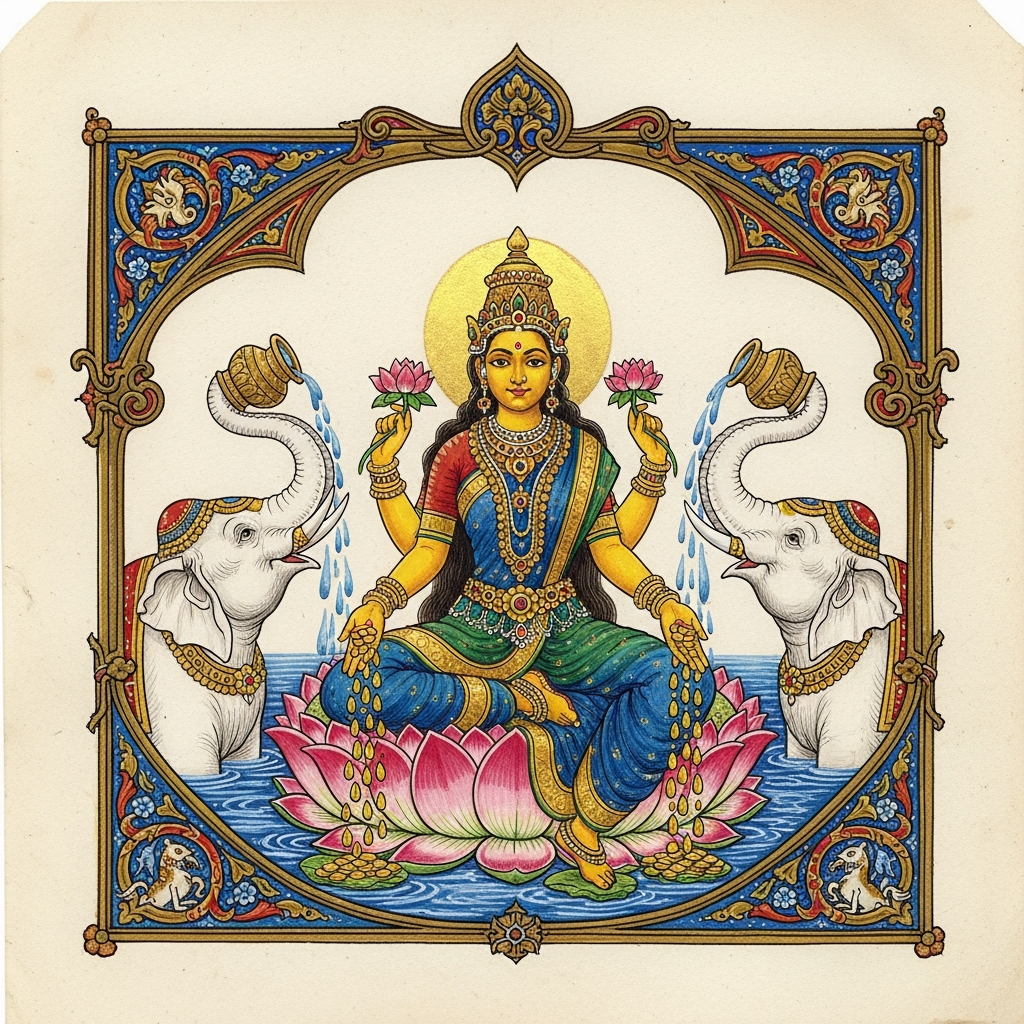
Lakshmi is depicted standing or seated on a lotus, draped in red and gold, with gold coins flowing from her open hands (she gives ceaselessly), flanked by elephants (royal authority and cosmic abundance) (Lakshmi Tantra, Bhagavata Purana 1.3). She holds lotuses in her upper hands and makes gestures of blessing and generosity. Her emergence from the churning of the cosmic ocean (when the devas and asuras cooperated to churn the ocean of milk) (Vishnu Purana 1.9) parallels Aphrodite’s birth from the sea foam — divine beauty and abundance arising from the primal waters.
Lakshmi accompanies Vishnu in every incarnation: when Vishnu descended as Rama, Lakshmi incarnated as Sita; when Vishnu descended as Krishna, she incarnated as Rukmini (Bhagavata Purana). She is inseparable from the divine preserver. The parallel to Wisdom’s gifts in Proverbs is notable — “Riches and honor are with me, enduring wealth and prosperity” (Proverbs 8:18) — as is the resonance with the Bride in the Song of Solomon, the feminine figure whose union with the beloved represents divine-human intimacy.
1 min read
Rig Veda (as Shri), Vishnu Purana, Lakshmi Tantra, Bhagavata Purana