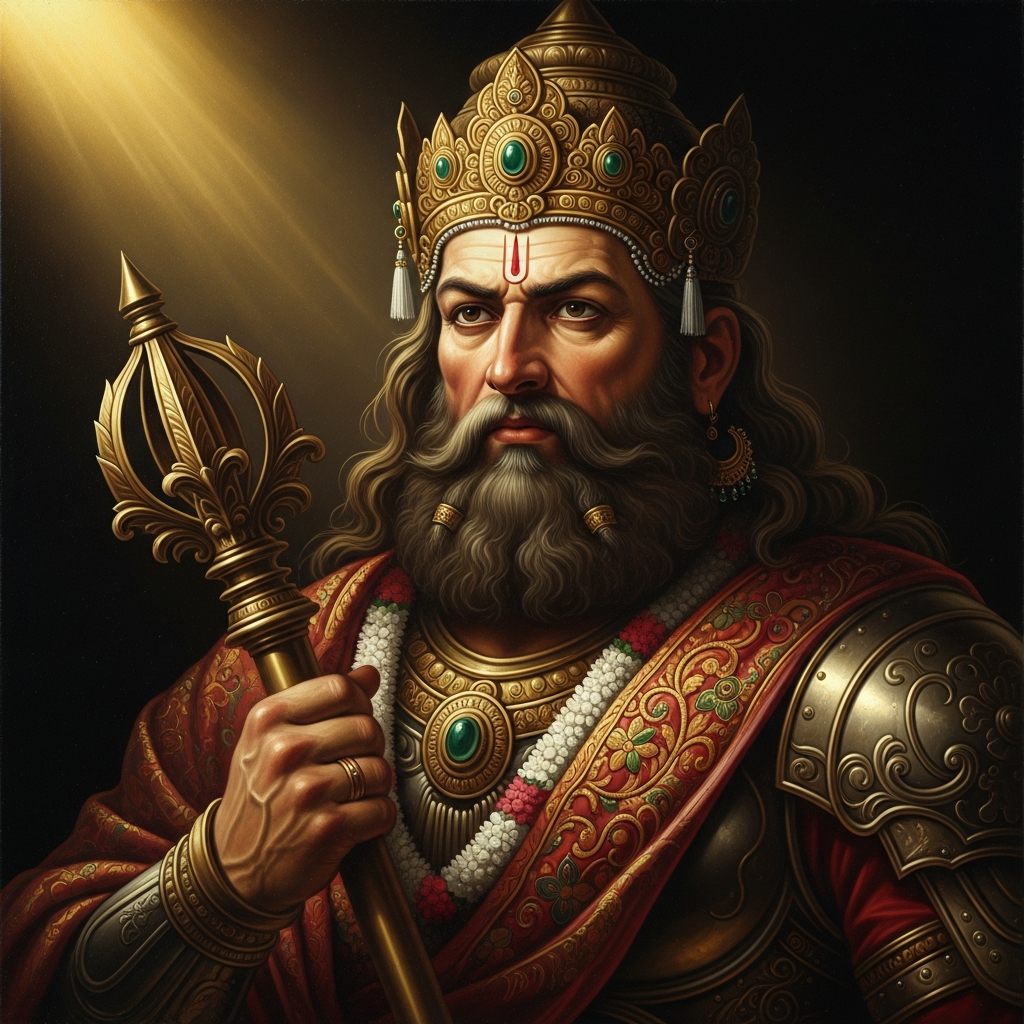
Combat Profile
Vajra Strike
Indra hurls his indestructible thunderbolt weapon to obliterate enemies with divine lightning, granting him overwhelming offensive dominance in battle.
Lord of Heaven
Indra's presence commands authority over storms and celestial forces, increasing his power in conflicts and granting him sovereignty over lesser beings.
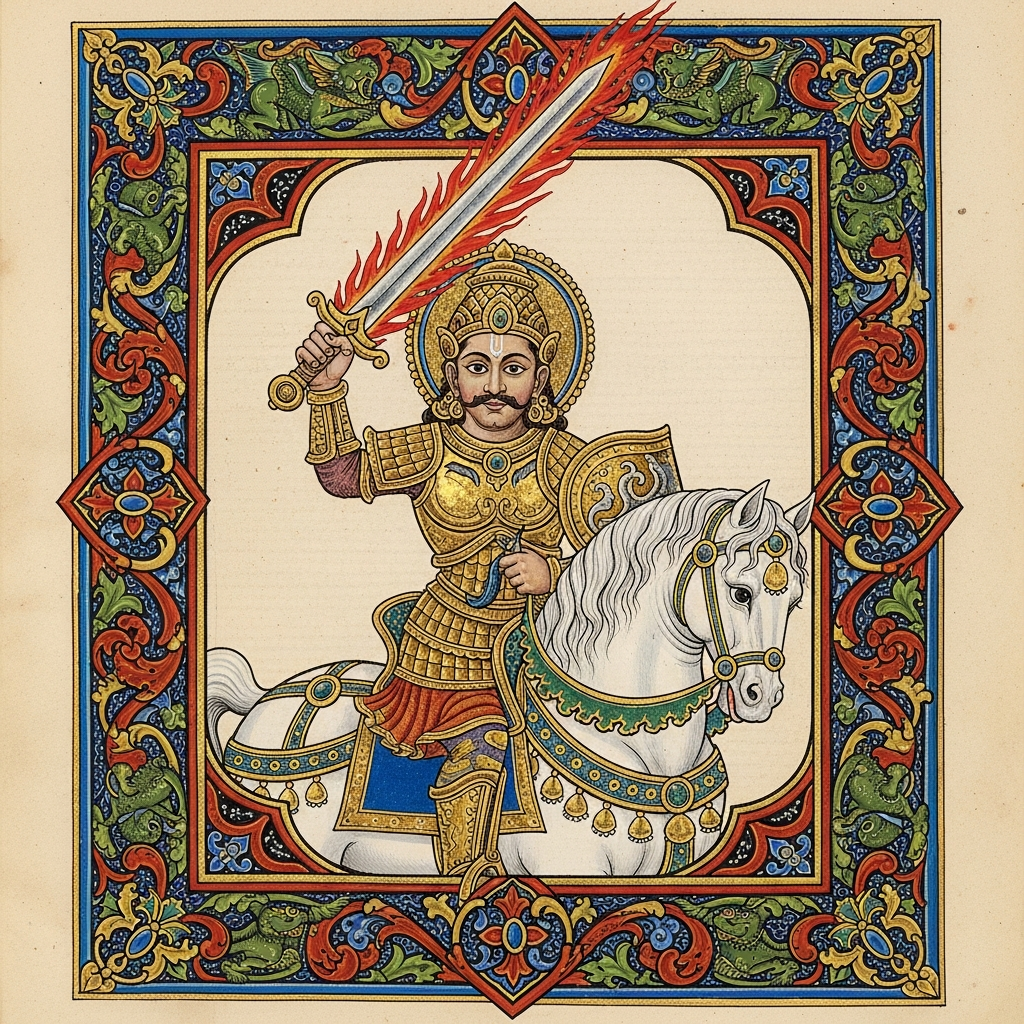
In the earliest Vedic literature (c. 1500-1200 BCE), Indra is the supreme deity — the king of heaven, wielder of the thunderbolt (vajra), rider of the divine elephant Airavata, drinker of soma (the sacred intoxicant), and the warrior who defeated the primordial chaos-dragon Vritra to release the waters of life (Rig Veda 1.32, 2.11). He receives more hymns in the Rig Veda than any other deity.
And then he was demoted. As Hindu theology evolved, Vishnu and Shiva rose to supreme status, and Indra became a lesser king — still lord of heaven, but now subordinate, sometimes foolish, occasionally humiliated (Puranas). He is the Zeus of India (storm god, king of gods, wielder of thunderbolt, prone to excess) who lost his primacy. The parallel to the Canaanite Baal is also striking: Baal was a storm god and divine king whom YHWH superseded and whose worship the prophets condemned. Indra’s “demotion” in Hinduism happened internally, through theological evolution; Baal’s happened externally, through prophetic confrontation. The trajectory is the same: the storm god yields to a greater conception of the divine.
1 min read
Rig Veda (most frequently mentioned deity), Atharvaveda, Puranas