Combat Profile
Rita's Binding
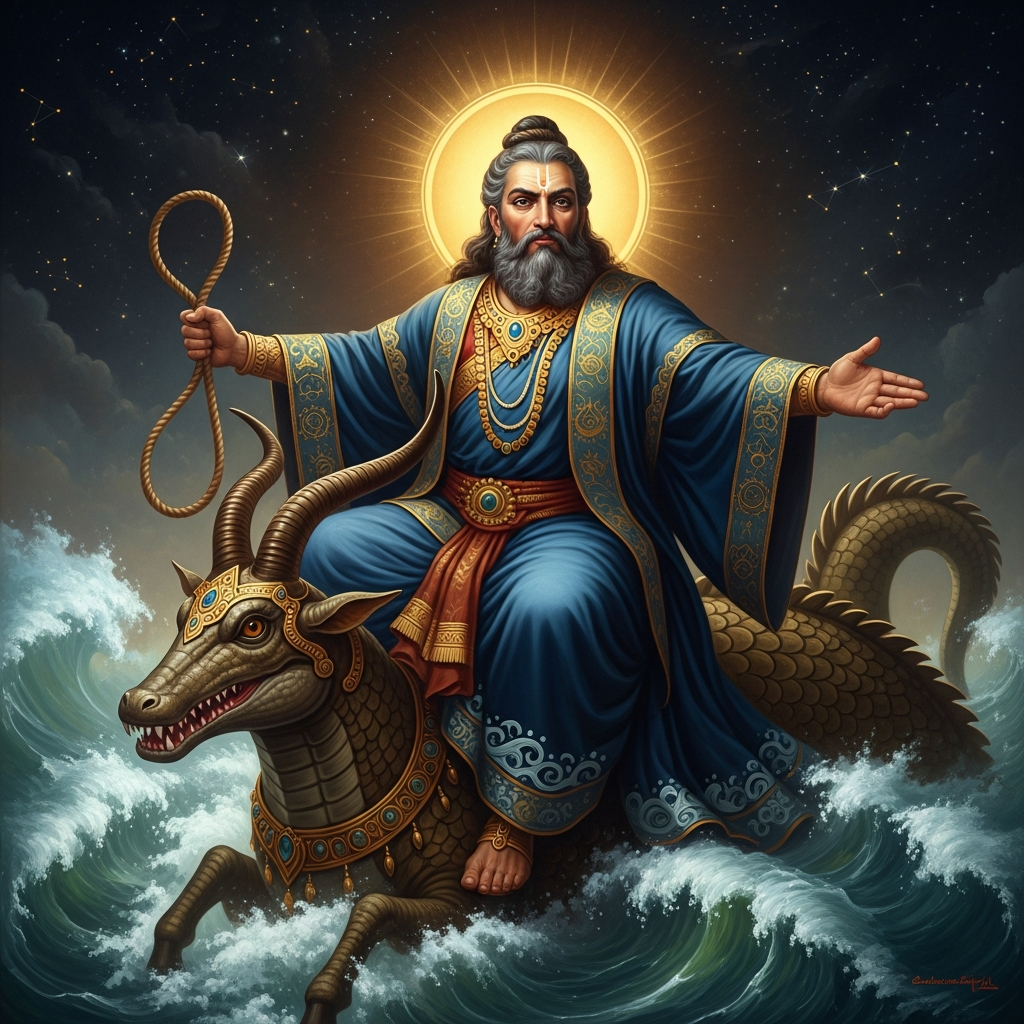
Varuna enforces cosmic law by binding transgressors in unbreakable celestial bonds, compelling truth and oath-keeping across all realms.
Lord of the Waters
Varuna's presence commands all oceans, rivers, and celestial waters while maintaining the fundamental moral order that sustains creation itself.
In the earliest stratum of the Rig Veda, Varuna is the supreme moral deity — the all-seeing sovereign whose spies (the stars) report every human deed (Atharva Veda 4.16.1-5). Where Indra is power, Varuna is law. Hymns to him are unique in Vedic poetry for their tone of guilt and contrition: “Whatever law of yours, O God Varuna, we men violate again and again, do not hand us over to death” (Rig Veda 7.89). He is the closest the Vedic pantheon gets to a moralizing high god comparable to YHWH.
Like Indra, Varuna was demoted as Hindu theology evolved. In later texts he becomes merely the god of the oceans, riding the makara (a sea-monster) and wielding his noose for criminals (Vishnu Purana 1.9). The cosmic moral function he once held passed upward to Vishnu and Shiva.
Cross-tradition parallels: Ouranos (Greek personification of the sky, etymologically related); Ahura Mazda (the Zoroastrian wise lord of cosmic order, asha = rita); YHWH as the moral lawgiver (Psalm 139’s all-seeing God parallels Varuna’s spies).
1 min read
Rig Veda 1.25, 7.86, 7.88, Atharva Veda 4.16, Mahabharata, Vishnu Purana