Combat Profile
Shakti Manifestation
Durga channels the combined divine power of all gods to unleash a devastating assault that annihilates evil and protects the innocent with unstoppable force.
Divine Protector
Durga's presence grants immunity to corruption and malice while strengthening all who fight for righteousness and justice.
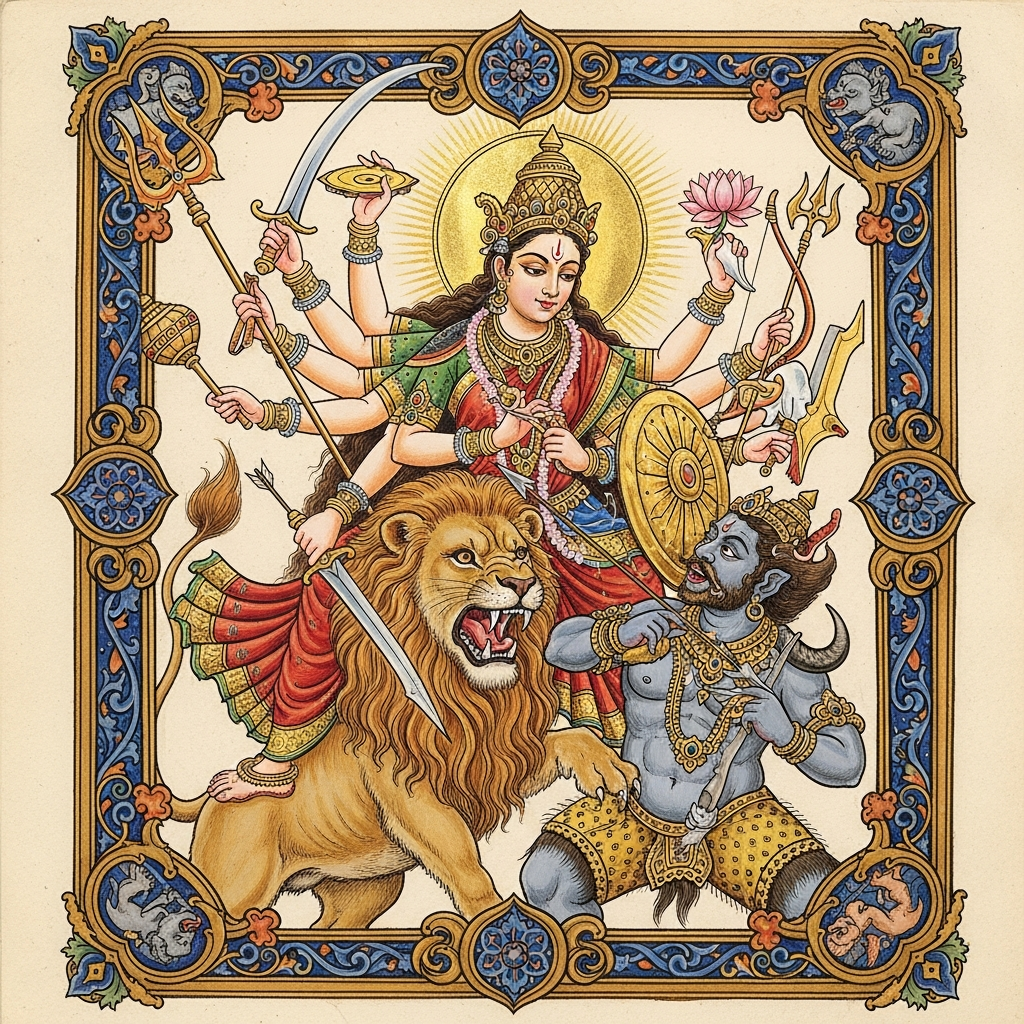
When the buffalo demon Mahishasura received a boon that no male could kill him, he conquered the three worlds and dethroned the gods. The male deities — Brahma, Vishnu, Shiva, all of them — could not defeat him (Devi Mahatmya, Markandeya Purana). In desperation, they pooled their collective energy, and from that combined divine fire, Durga manifested: a goddess with eight (or ten, or eighteen) arms, each bearing a weapon donated by one of the gods — Shiva’s trident, Vishnu’s discus, Indra’s thunderbolt, and so forth (Devi Bhagavata Purana). She rode a lion (or tiger) into battle and destroyed Mahishasura after a ferocious nine-day war.
The theological point: the masculine divine was insufficient. Victory required the feminine (Devi Mahatmya). This is a radical statement about the necessity of Shakti (feminine divine power) that has no exact Abrahamic parallel, though structural echoes exist. The Woman Clothed with the Sun in Revelation 12 battles the Dragon. Jael drives a tent peg through Sisera’s skull when the male general Barak hesitates (Judges 4-5). Judith beheads Holofernes when no man dares approach. Esther saves her people when the king cannot act. In each case, evil that the masculine cannot or will not confront is undone by the feminine. Durga is this principle deified.
The festival of Navaratri (nine nights), celebrating Durga’s victory, is one of the most important Hindu festivals, observed by hundreds of millions annually.
1 min read
Devi Mahatmya (Markandeya Purana), Durga Saptashati, Devi Bhagavata Purana