Combat Profile
Swift Liberation
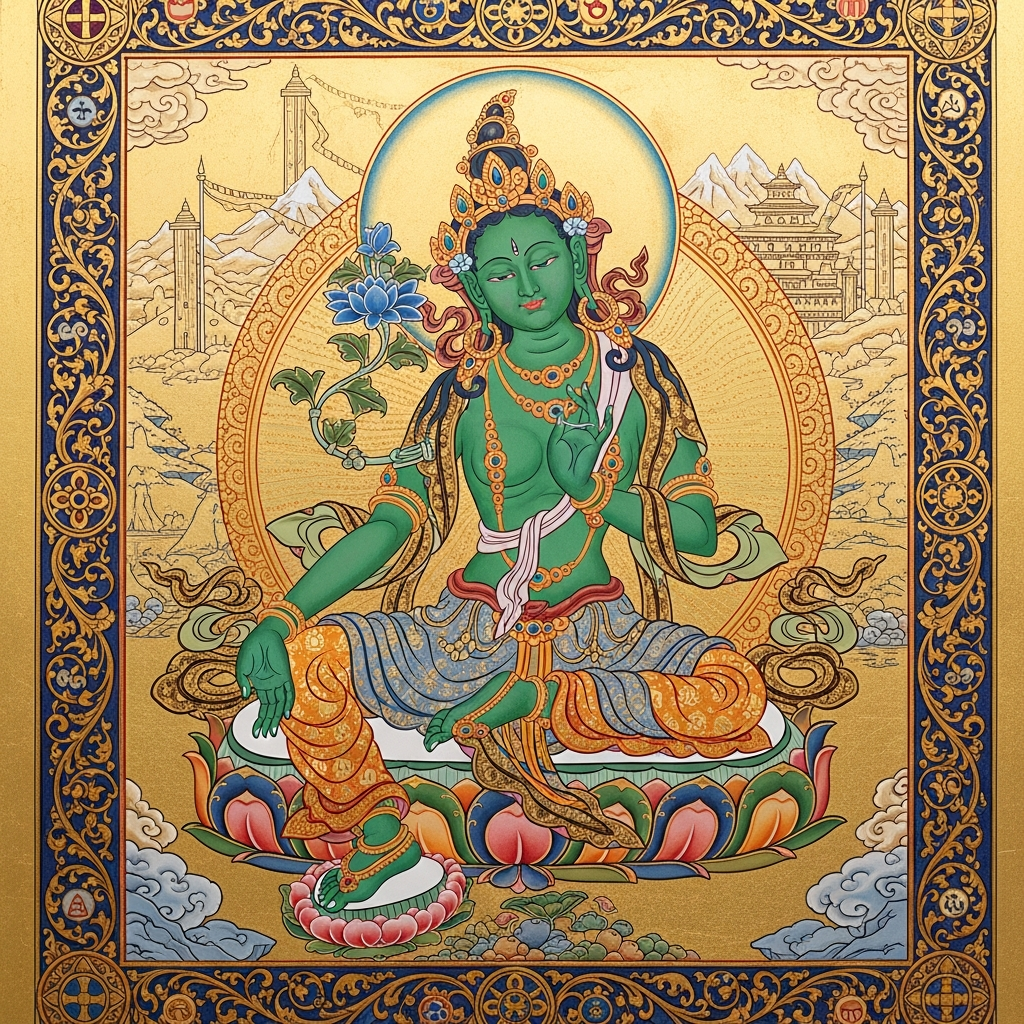
Instantly removes all afflictions and grants fearlessness to those in peril, manifesting wherever suffering calls.
Compassionate Mother
All healing amplified and all allies gain resistance to despair and mental torment through her boundless loving-kindness.
“I will achieve enlightenment in a female form, and continue to liberate beings in female form, until samsara itself is empty.”
Tara is the most beloved female deity in Tibetan Buddhism — the swift one, the savior who is invoked when danger is immediate. Her origin myth is among the most theologically pointed in the entire Buddhist canon: in a previous life as Princess Yeshe Dawa, she was told by monks that she should pray to be reborn as a man in order to attain enlightenment. She refused, declaring that “those bound to gender are deluded” and vowing to remain female through every rebirth until all beings are freed. She has 21 forms; the two most venerated are Green Tara (the active, swift liberator from the eight great fears: lions, elephants, fire, snakes, robbers, prison, water, demons) and White Tara (the bestower of long life and healing). She was elevated to a central position in Tibetan Buddhism by Atisa (982-1054 CE) and remains the personal deity of millions.
Cross-tradition parallels: Guanyin in her female form (the East Asian feminization of Avalokiteshvara is closely linked to Tara’s iconography); Mary as Mother of Mercy and the Stella Maris (“Star of the Sea” — Tara literally means “Star”); Saraswati (Hindu goddess of wisdom); Kuan Yin’s swift response to those who call her name (Lotus Sutra Ch. 25).
1 min read
*Tara Tantra*; *Praises to the Twenty-One Taras*; *Origin of Tara Tantra* (Taranatha, 1604); Atisa's *Bodhipathapradipa*