Combat Profile
Demon-Binding Mandala
Subdues and transforms hostile forces through wrathful compassion, converting enemies into protectors of the dharma.
Terma Revelation
Hidden teachings spontaneously manifest in hostile lands, awakening dormant spiritual capacity in all beings within their presence.
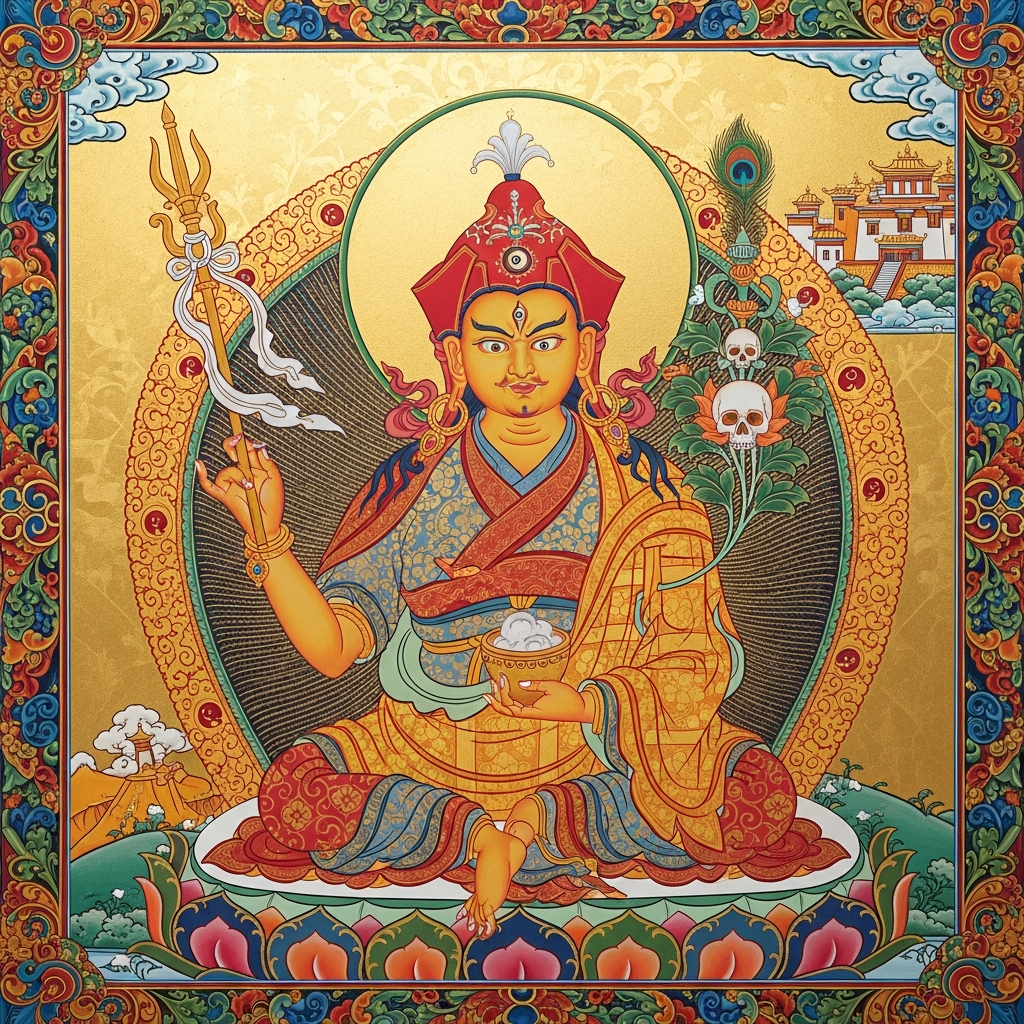
“Born from a lotus on Lake Dhanakosha, with no human father and no human mother, I came into being to tame what could not be tamed.”
Padmasambhava (“Lotus-Born”; Tibetan: Guru Rinpoche, “Precious Master”) is the second-most-venerated figure in Tibetan Buddhism after Shakyamuni Buddha himself, and in many Nyingma lineages he is regarded as a Buddha equal in stature. Invited from Uddiyana (modern Swat, Pakistan) by King Trisong Detsen in the late 8th century, he encountered fierce resistance from the indigenous Bon religion’s deities. Rather than exterminating them, he subdued each one in tantric combat and bound them under sacred oath as Buddhist dharmapalas (protectors). This is the founding act of Tibetan Buddhism: not replacement of the old religion, but enforced conversion of its spirits. He concealed thousands of teachings (terma) in rocks, lakes, and the minds of future incarnations, to be discovered (tertons) when their time came — an ongoing revelatory tradition unique to Tibetan Buddhism. His consort Yeshe Tsogyal recorded his teachings; his other consort Mandarava attained immortality with him.
Cross-tradition parallels: Patrick of Ireland (subdued the druids and indigenous spirits, converted Ireland to Christianity through tantric-style spiritual combat); Solomon binding demons under his seal in Testament of Solomon; St. Boniface felling Donar’s Oak (716 CE, Germany) — another founding-by-confrontation pattern; Manjushri’s swordsmanship as compassionate violence against ignorance.
1 min read
*Padma Bka'i Thang Yig* (Chronicle of Padmasambhava); *Bardo Thodol* (Tibetan Book of the Dead, attributed to him as *terma*); the *Nyingma* canon; eyewitness records of Yeshe Tsogyal