Combat Profile
Terminator of Yama
Yamantaka channels the ultimate conquest of death itself, permanently severing the bonds of mortality from a target and rendering them immune to the final judgment
Destroyer of Illusion
All fear-based effects and deception crumble in Yamantaka's wrathful presence; he pierces through ignorance and delusion with perfect clarity
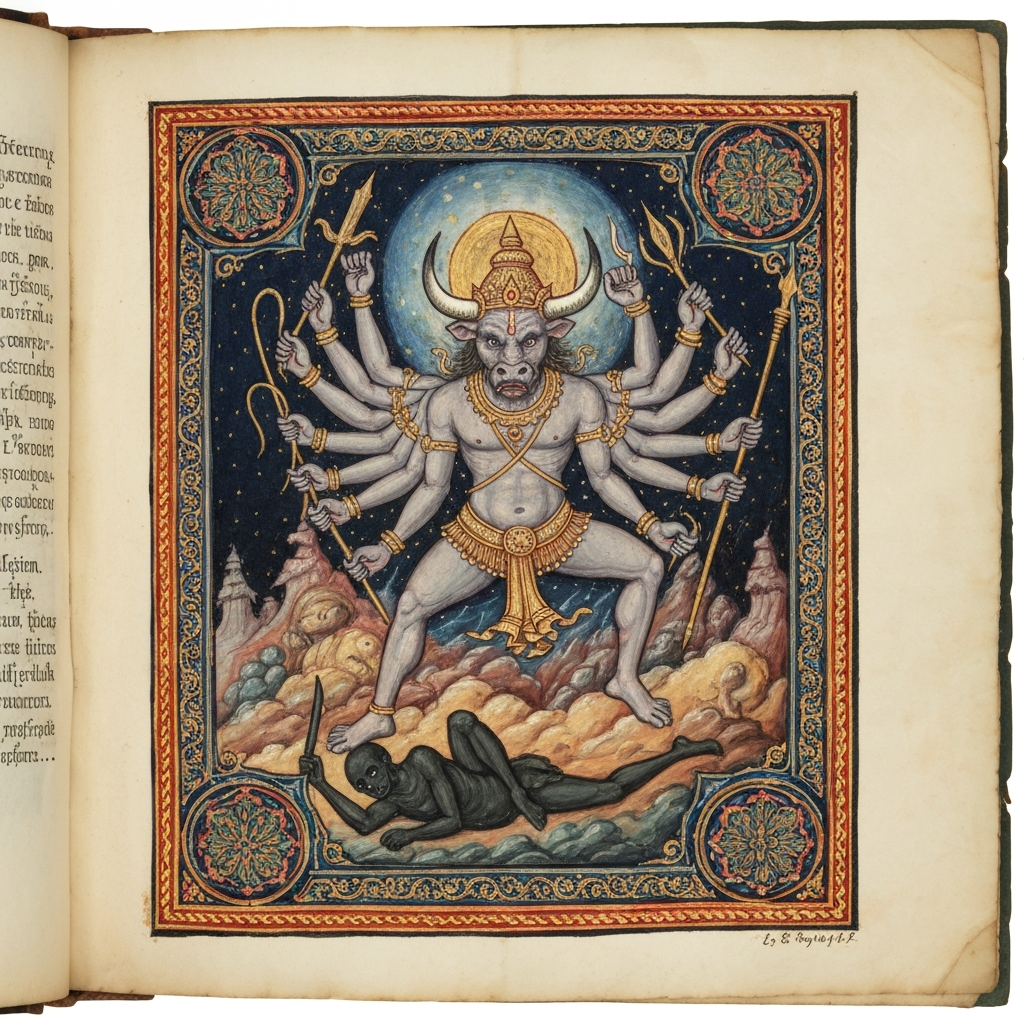
Yamantaka — “The Terminator of Yama (Death)” — has the head of a water buffalo (because Yama rides a water buffalo, and Yamantaka adopted the form of his enemy to defeat him), multiple arms bristling with weapons, and a body wreathed in flames. He is a wrathful emanation of Manjushri, the gentle bodhisattva of wisdom — meaning that it is WISDOM, not brute force, that ultimately conquers death.
The story: Yama, the lord of death, was destroying beings indiscriminately. Manjushri manifested as Yamantaka, took a form even more terrifying than Death itself, and defeated Yama — not by killing him (you cannot kill Death) but by subjugating him, turning Death into a servant of the dharma. Death still exists, but it no longer has ultimate power. This is Buddhist eschatology compressed into a single image.
The Christian parallel is 1 Corinthians 15:26: “The last enemy to be destroyed is death.” Christ’s resurrection is understood as the definitive defeat of death — not its elimination from the world (people still die) but the removal of its ultimate power (“O death, where is your sting?”). Yamantaka accomplishes the same thing through a different mechanism: where Christ defeats death by passing through it and emerging alive, Yamantaka defeats death by becoming more terrifying than death itself. Both traditions insist that death is not the final word.
“Death is not destroyed by avoiding it. Death is destroyed by facing it with a wisdom more terrible than death itself.”
1 min read
Yamantaka Tantra; Vajrabhairava Tantra; Tibetan Buddhist liturgical texts