Combat Profile
Dharma's Judgment
Yama pronounces irreversible judgment on a soul based on its karmic balance, determining its eternal fate across all realms.
Lord of Naraka
Yama's presence enforces the cosmic law of karma; no soul can escape his dominion, and all mortals eventually answer to his judgment.
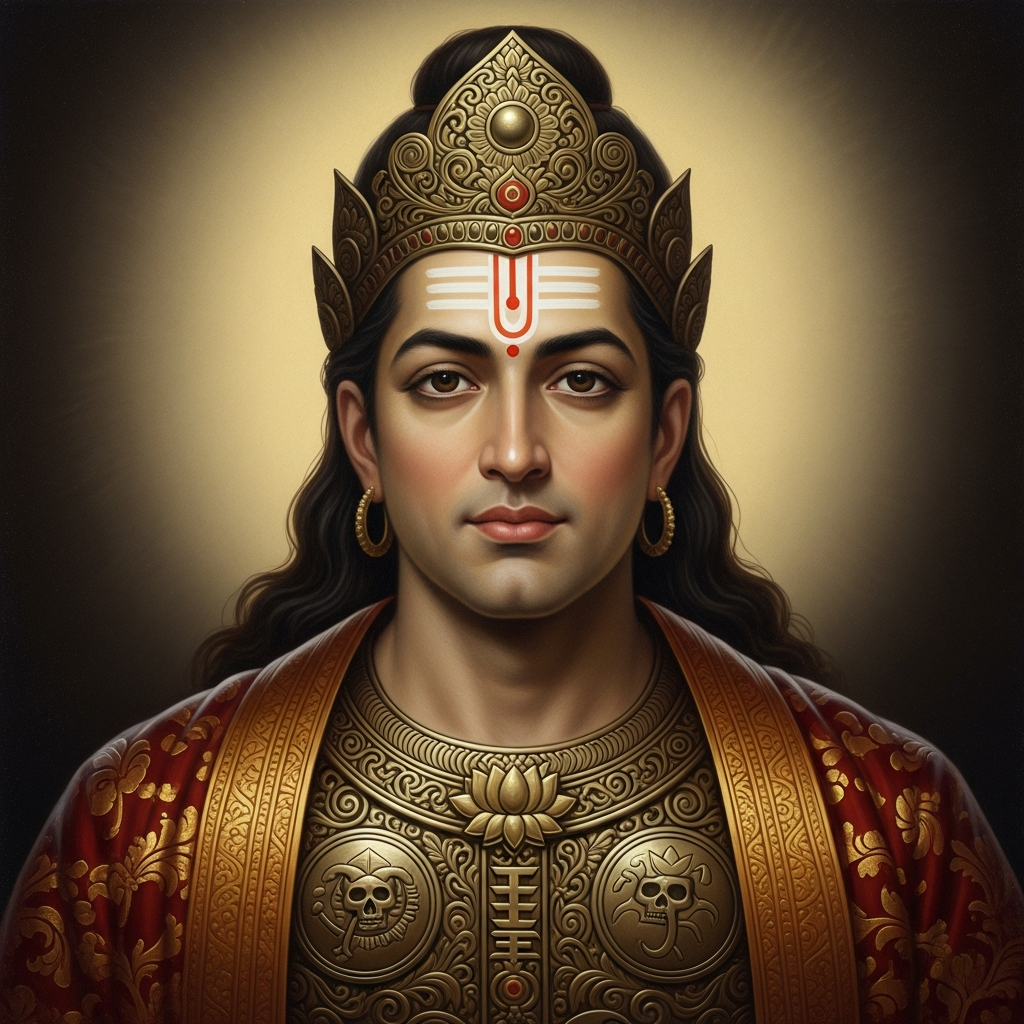
Yama is the first human who ever died. Rather than simply ceasing to exist, he became the lord of the realm of the dead — the pioneer who discovered what lies beyond death and established order there (Rig Veda 10.14, Atharva Veda 18.2). He rides a black buffalo, carries a noose (pasha) to capture souls, and holds the danda (staff of justice) (Garuda Purana). His assistant Chitragupta keeps the record of every soul’s deeds, from which Yama judges.
The Katha Upanishad contains one of Hinduism’s most profound texts: the boy Nachiketa is sent to Yama’s door by his angry father. Nachiketa waits three days for Yama, who grants him three boons (Katha Upanishad 1.1-1.2). The third boon is the secret of what happens after death. Yama tries to dissuade him, offering wealth, power, and pleasure instead. Nachiketa refuses them all. Yama, impressed, reveals the nature of the Atman (the eternal Self) and the path to liberation (Katha Upanishad 2.5).
The parallels are multiple: the Angel of Death in Abrahamic tradition (the figure who brings death and escorts souls); Osiris in Egyptian religion (who died, became lord of the dead, and judges souls); the judgment seat of God (Romans 14:10, Revelation 20:12). Yama’s role as the first mortal who died and then became the lord of death is a unique theological concept — death itself was discovered, not designed. It transforms the afterlife from an arbitrary punishment into a navigated territory.
1 min read
Rig Veda 10.14, Katha Upanishad, Garuda Purana, Vishnu Purana