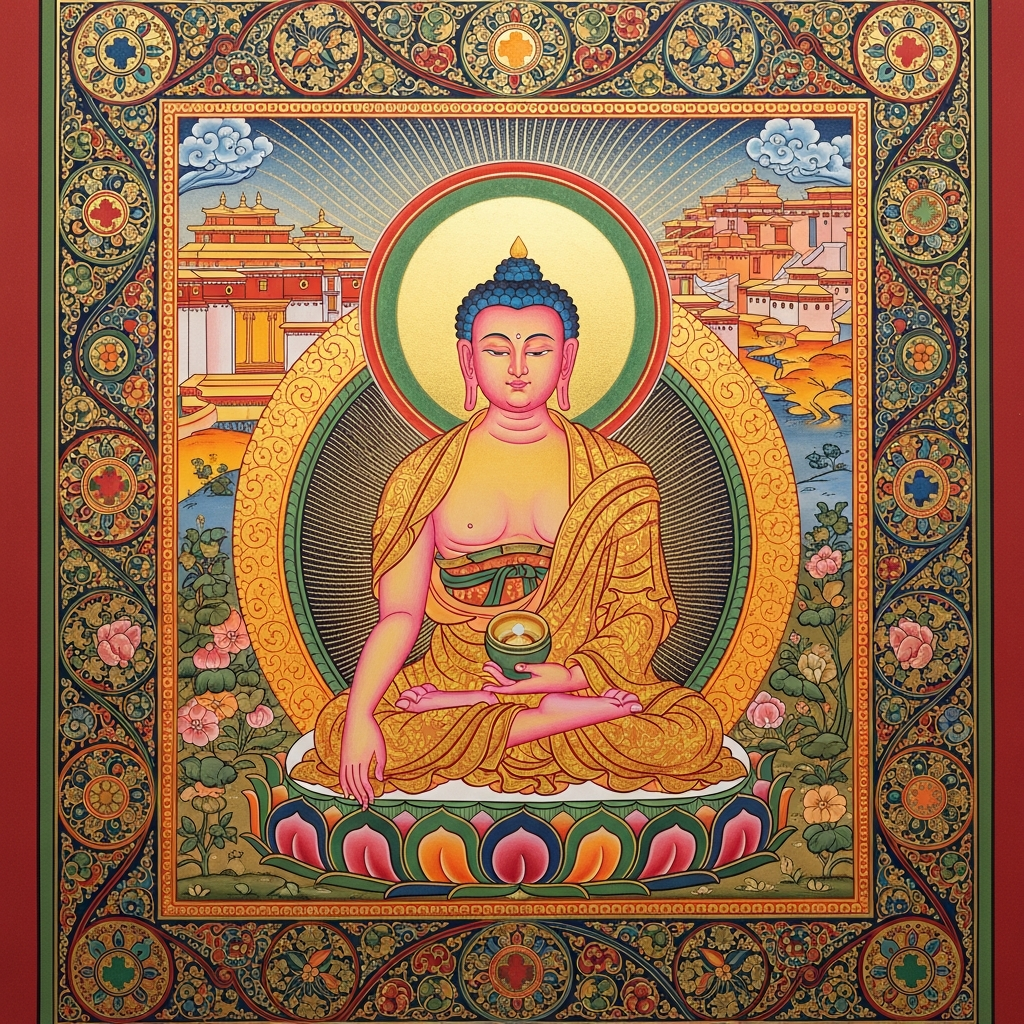
Combat Profile
Infinite Compassion
All allies within his presence gain salvation from suffering, restoring vitality and immunity to despair with each invocation of his name.
Pure Land Emanation
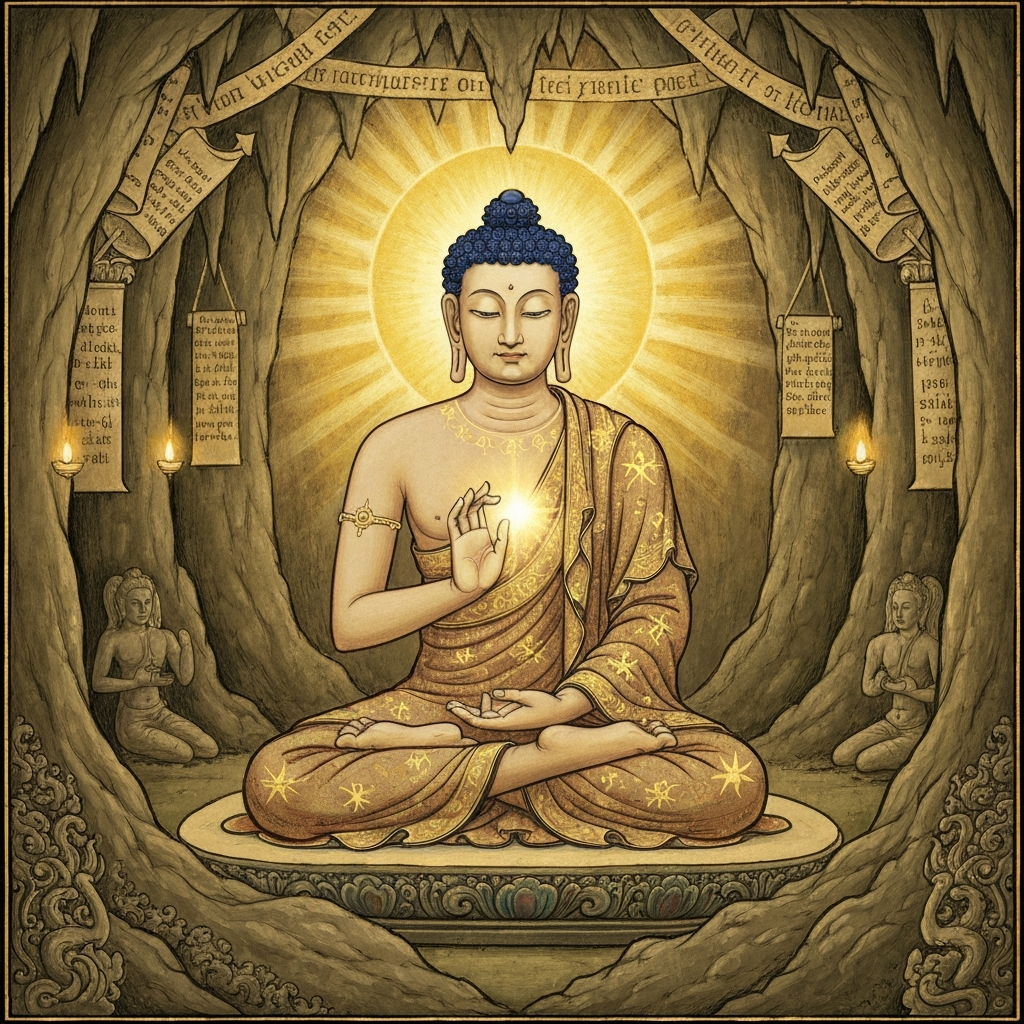
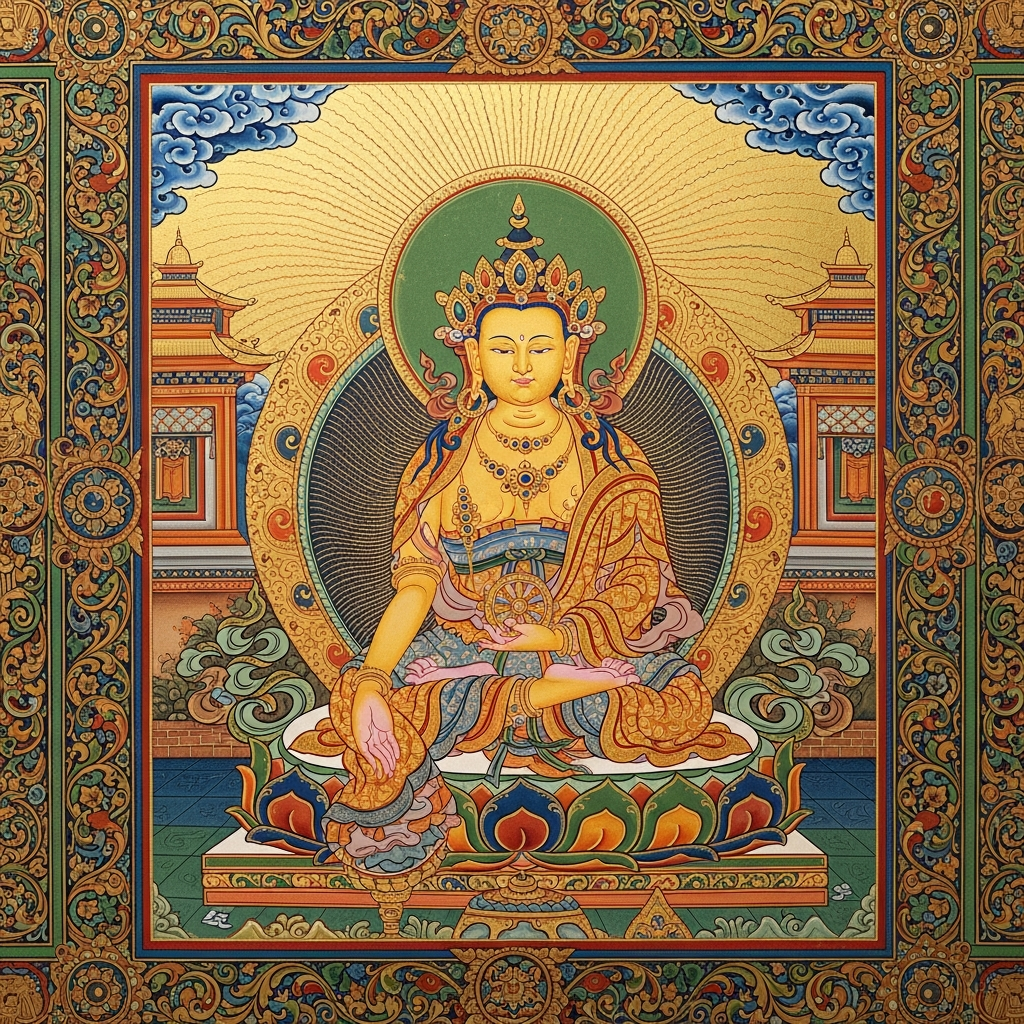
Amitabha radiates boundless light that grants safe passage to enlightenment; those who call upon him are drawn toward transcendence rather than annihilation.
“Namu Amida Butsu” — “I take refuge in Amitabha Buddha.” (The nembutsu, the simplest and most consequential phrase in East Asian Buddhism.)
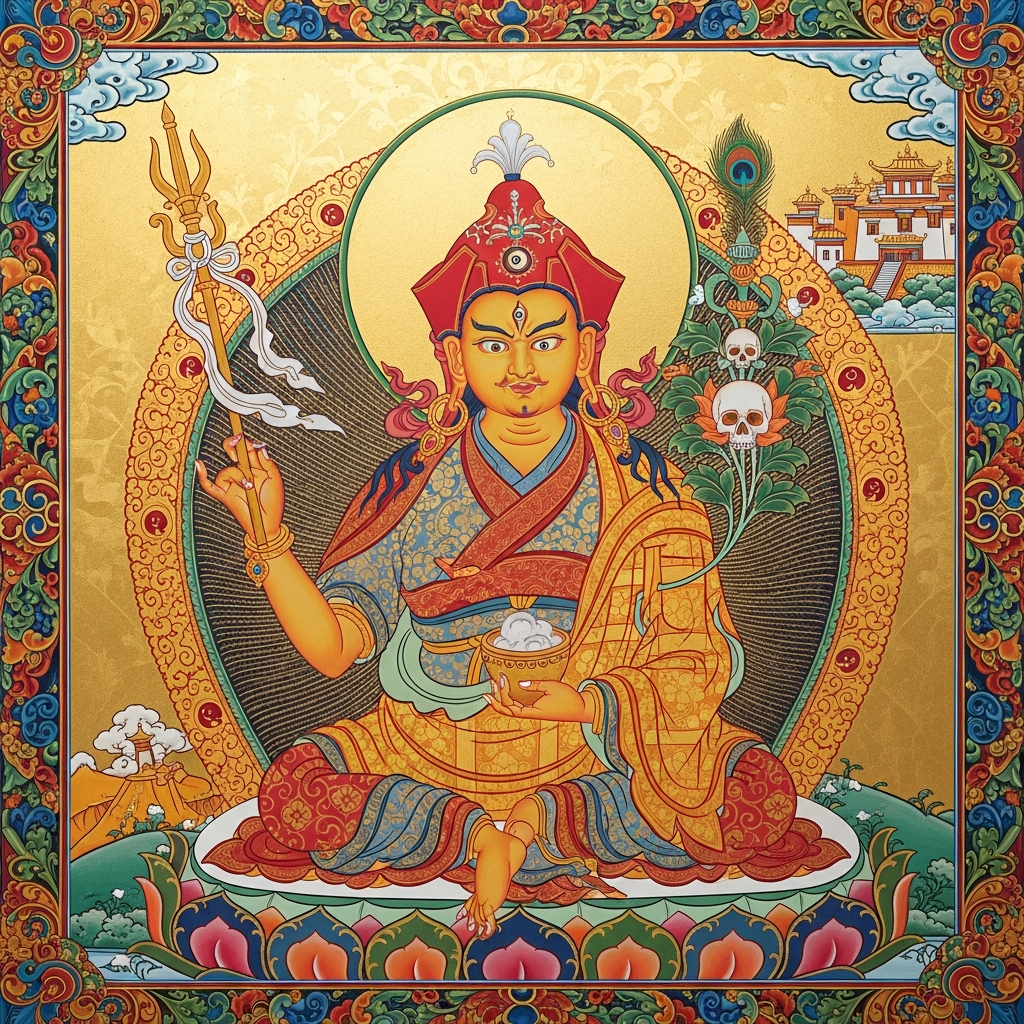
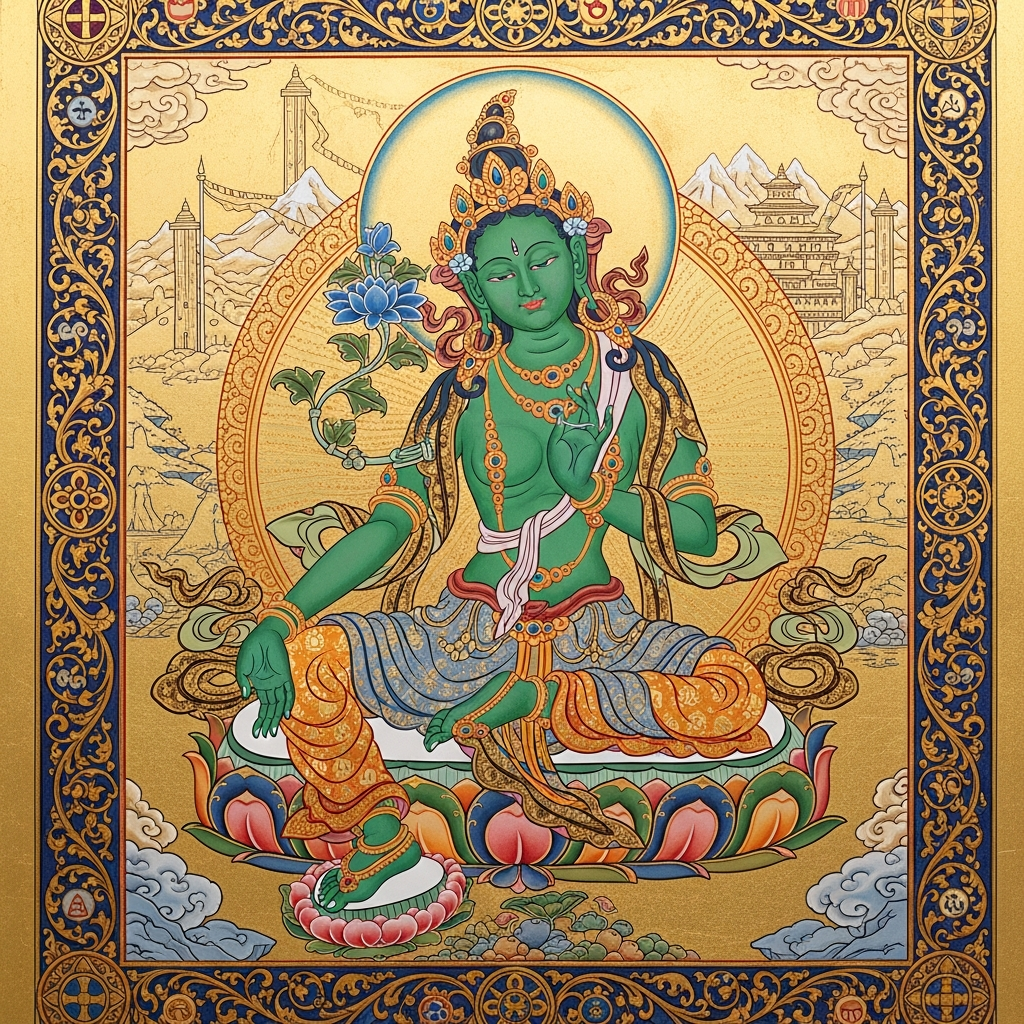
Amitabha (Sanskrit: “Infinite Light”; Japanese: Amida; Chinese: Amituofo) is the most-worshipped Buddha in East Asia by sheer headcount. Pure Land Buddhism — founded on Amitabha’s Original Vow that anyone who sincerely calls his name will be reborn in Sukhavati (“the Land of Bliss,” his Pure Land in the West) — spread from China to Korea, Japan, and Vietnam, where it became the dominant form of Buddhism for the laity. In Honen’s Jodo-shu (1175 CE) and Shinran’s Jodo Shinshu (13th century), the nembutsu (recitation of “Namu Amida Butsu”) is the only practice required: salvation is by faith in Amitabha’s vow, not by accumulated merit or self-cultivation. The structural parallel to Protestant sola fide is so striking that 16th-century Jesuit missionaries to Japan accused Shin Buddhism of being “the Lutheran heresy.”
Cross-tradition parallels: Christ as the savior accessed by faith (Romans 10:9-13, “If you confess with your mouth that Jesus is Lord… you will be saved… whoever calls on the name of the Lord shall be saved” — structurally identical to the nembutsu); the Hindu bhakti tradition (salvation through devotion to a personal god); Krishna’s promise in Bhagavad Gita 9.30-31 (devotion overrides sin). Comparative scholars have written extensively on the Pure Land / Protestant parallel.
1 min read
*Larger Sukhavativyuha Sutra*; *Smaller Sukhavativyuha Sutra*; *Amitayur-dhyana Sutra*; the writings of Honen (1133-1212) and Shinran (1173-1263)