The Story
Buddhism is the religion of a man who refused to be a god. Around 563 BCE — the traditional date, though some scholars place him a century later (Rhys Davids dating ~480 BCE) — a prince named Siddhartha Gautama was born into the Shakya clan in what is now southern Nepal (Lalitavistara). His father received a prophecy: the boy would become either a world-ruling monarch or a world-renouncing sage. The king chose. He locked his son inside a palace of perpetual pleasure — young, beautiful, healthy, never permitted to see suffering. At 29, Siddhartha slipped past the guards.
The Four Sights (~534 BCE): On four trips outside the palace gates, he saw what was hidden: an old man, a sick man, a corpse, a wandering ascetic (Buddhacarita). Diagnosis: aging, illness, death come for everyone. Prescription: there is a path. That night he abandoned wife, son, and kingdom. He cut off his hair, exchanged silks for rags, and walked into the forest.
Six Years of Asceticism (~534-528 BCE): Siddhartha studied the best meditation teachers of his age, mastered their techniques, found them insufficient (Majjhima Nikaya). He starved — ribs visible, breath held until his ears rang. Nearly dead. Then a village girl named Sujata offered milk-rice, and he accepted. The middle way — neither indulgence nor mortification — was born.
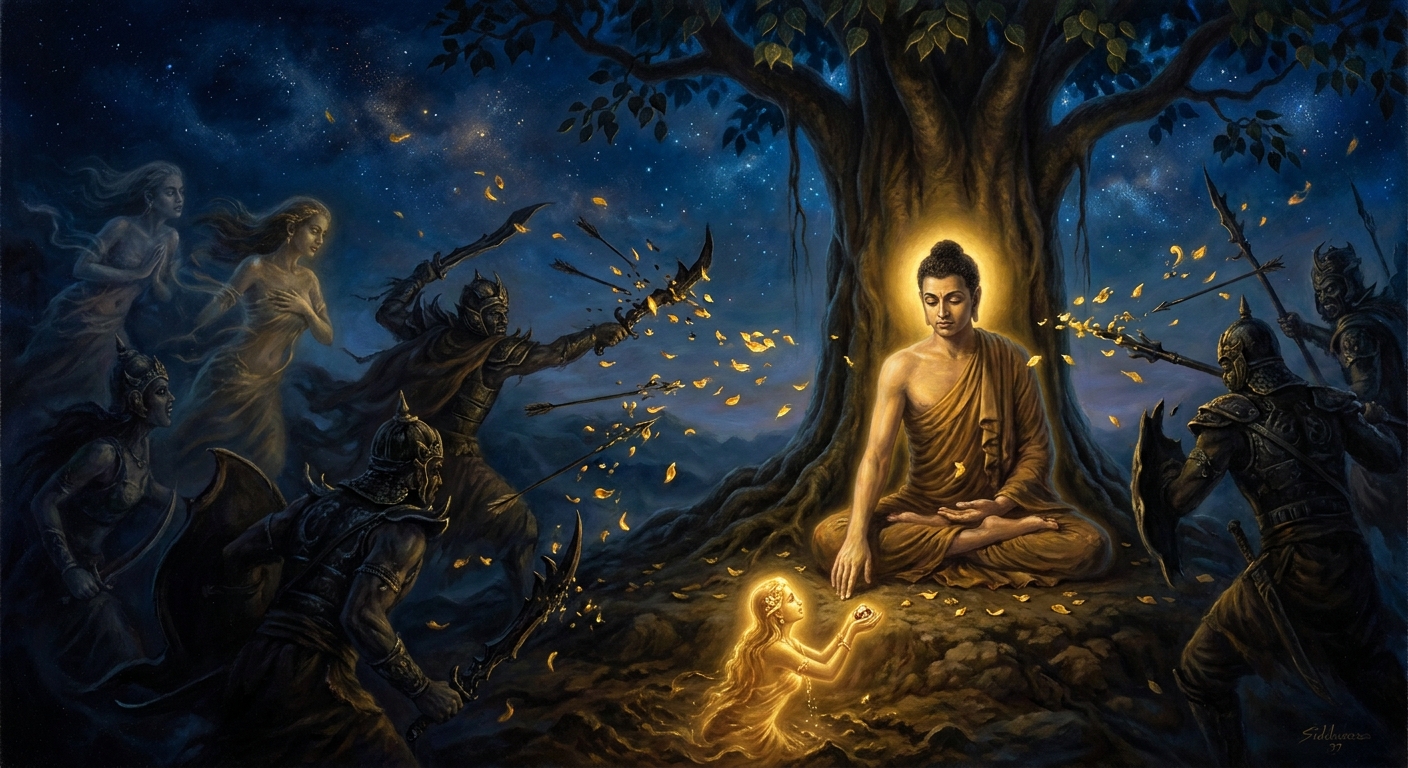
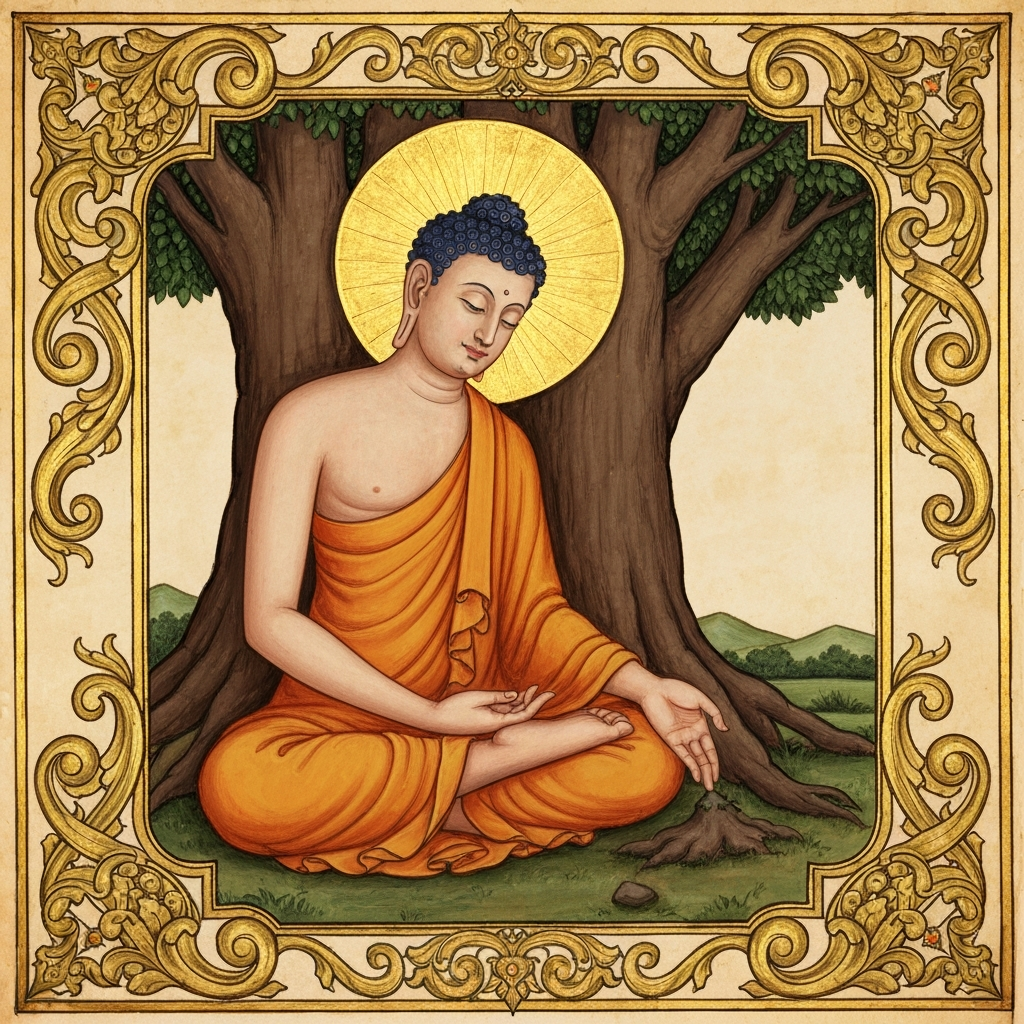
Enlightenment Under the Bodhi Tree (~528 BCE): At Bodh Gaya, Siddhartha sat beneath a pipal tree and vowed not to rise until he understood. Through the night, Mara — the demon-lord of desire and death — attacked him: armies, seductions, doubt. Siddhartha touched the earth. The earth is my witness. Mara fled. By dawn he had seen his past lives, the karma of all beings, the Four Noble Truths. He was the Buddha, the Awakened One.
The Sangha (~528-483 BCE): At the Deer Park in Sarnath he gave his first sermon (Dhammacakkappavattana Sutta) to the five ascetics who had abandoned him — “turning the wheel of Dharma” (Samyutta Nikaya 56:11). They became the first monks. Over 45 years he walked northern India teaching, founded the Sangha (monastic community), admitted women as nuns at his aunt Mahapajapati’s request (Vinaya Pitaka), and built a tradition that outlasted him.
Parinirvana (~483 BCE): At 80, after a meal that may have been spoiled pork or mushrooms, the Buddha lay between two sal trees at Kushinagar (Mahaparinibbana Sutta) and entered final nirvana. His last words: “All compounded things are impermanent. Strive on with diligence.” His body was cremated; relics divided among eight kingdoms.
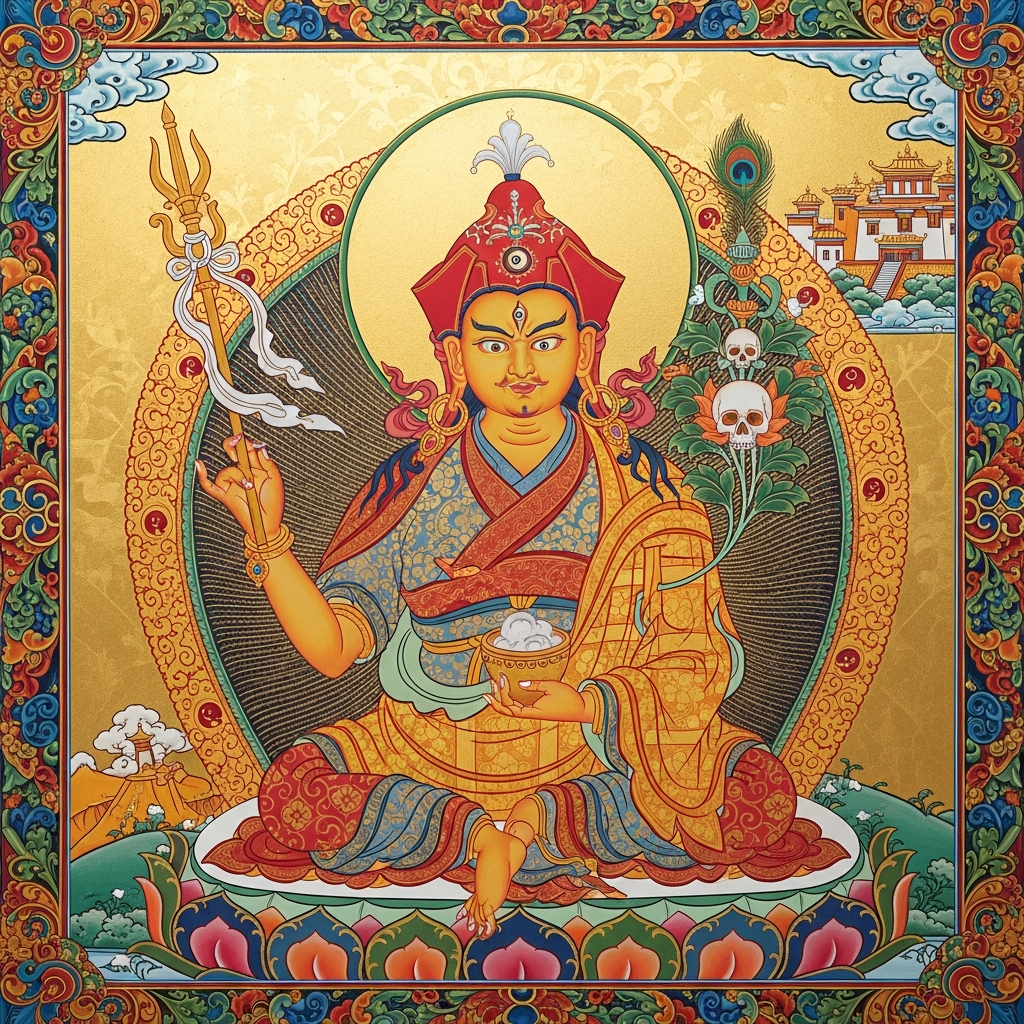
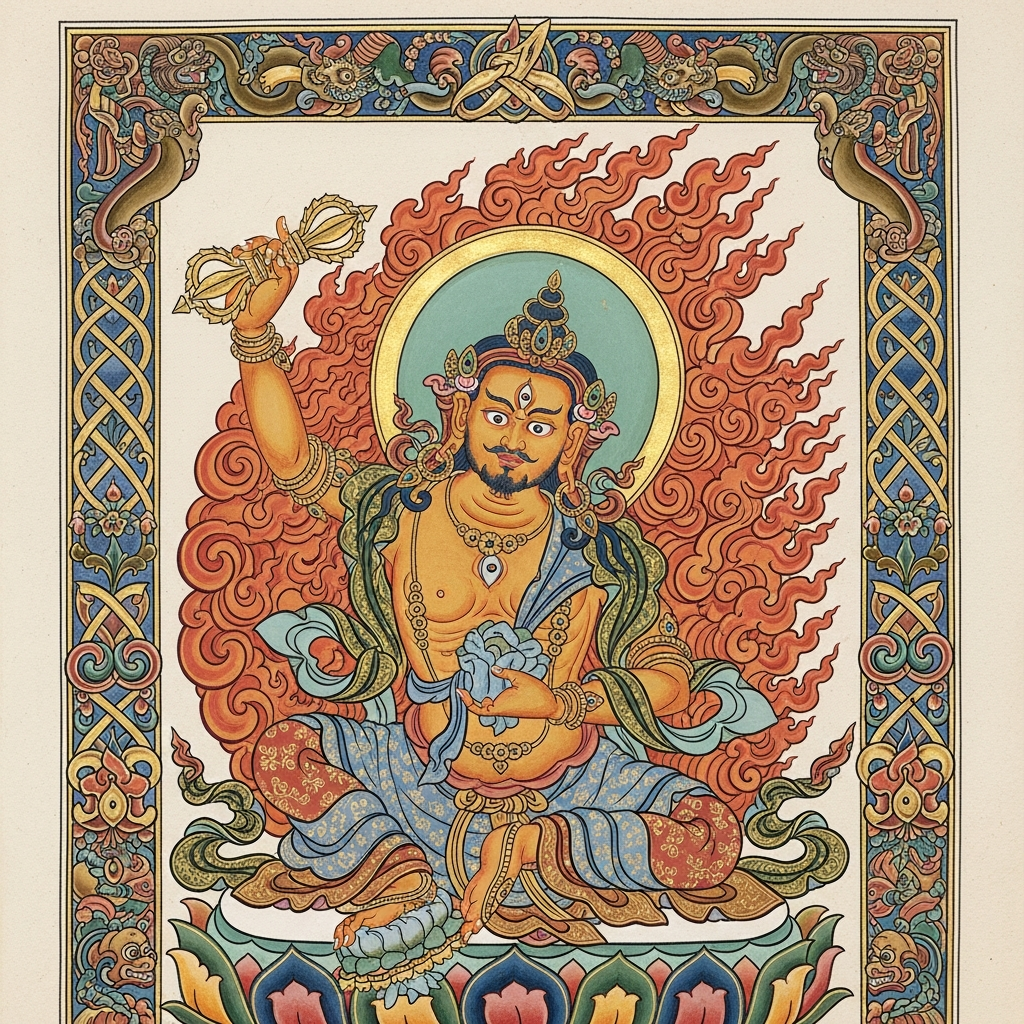
Councils and Schism (~483 BCE - 100 CE): Three councils preserved the teachings as oral tradition, then writing. By the 1st century BCE the tradition split: Theravada (“Way of the Elders” — Pali canon, individual liberation, dominant in Sri Lanka, Thailand, Burma) and Mahayana (“Great Vehicle” — Sanskrit/Chinese canon, Bodhisattva ideal, liberating all beings; Lotus Sutra, Prajnaparamita Sutras). Mahayana later seeded Vajrayana (“Diamond Vehicle”), the tantric path of mantras, mandalas, visualization, which took root in Tibet from the 7th century under Padmasambhava (Tibetan chronicles).
The Silk Road and Beyond (~100 BCE - 1500 CE): Buddhism traveled with merchants and missionaries — to China by the 1st century CE, Korea by the 4th, Japan by the 6th, Tibet by the 7th. Each culture absorbed and reshaped it: Chan in China became Zen in Japan (Platform Sutra); Pure Land devotion to Amitabha became East Asia’s most popular form; Tibetan tantra produced the Dalai Lama lineage from the 14th century.
Today: Approximately 500 million practitioners worldwide. The 14th Dalai Lama, exiled from Tibet in 1959, became the most globally recognized Buddhist of the modern era. Western converts, Engaged Buddhism (Thich Nhat Hanh, the Dalai Lama applying Dharma to social justice), and secular mindfulness have made Buddhist meditation a global lingua franca — sometimes stripped of its metaphysics, sometimes restored to it. Twenty-six centuries after the Bodhi Tree, the wheel is still turning.
Pivotal Events
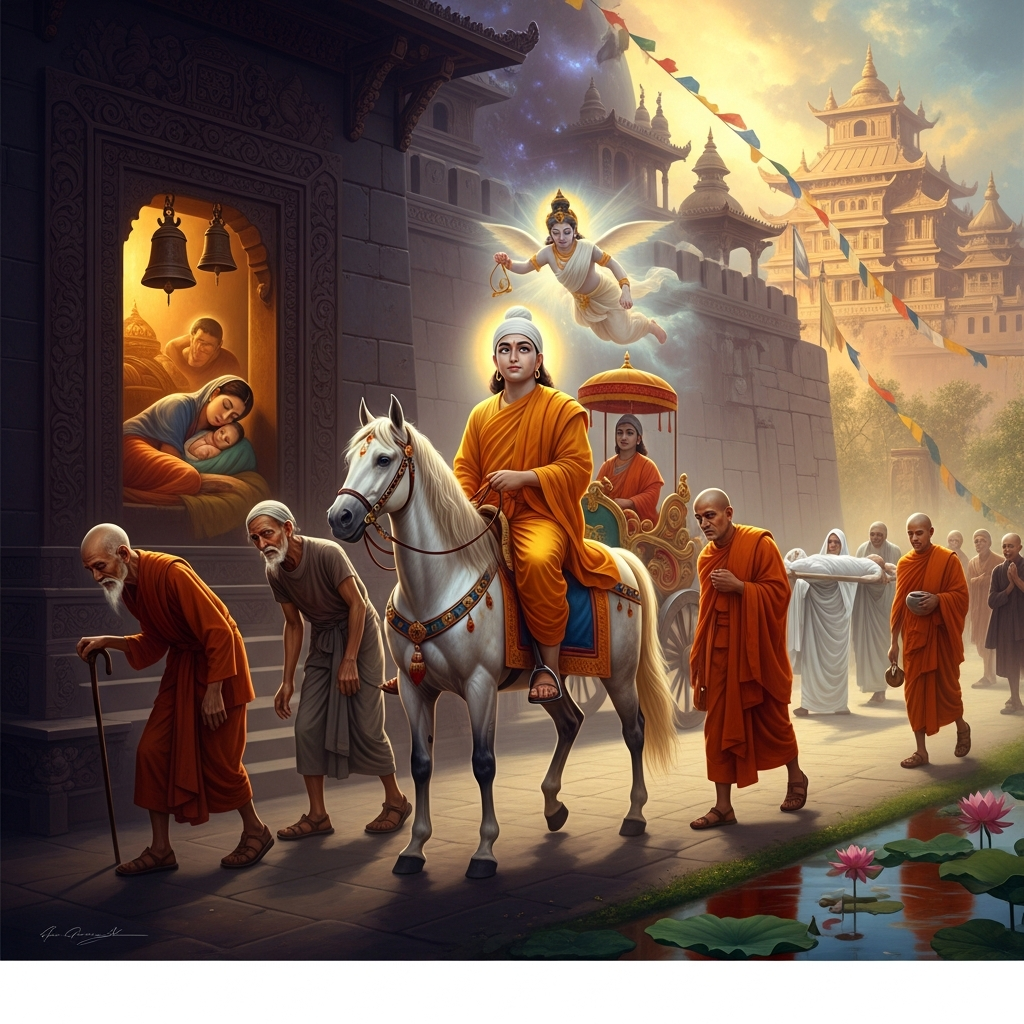
A prince sheltered from old age, sickness, and death saw all three on four chariot rides outside the palace gates. Then a wandering ascetic whose calm suggested an answer. That night he kissed his sleeping wife and son, slipped past the guards, rode to the forest’s edge, cut his hair with his sword, and gave his silks to a huntsman. This act of departure — choosing homelessness over kingship at 29 — created Buddhism itself. The Great Departure is the founding renunciation of an entire tradition; every monk’s tonsure still echoes the moment a prince walked away from a throne.
After six years of failed teachers and near-death starvation, Siddhartha sat beneath a pipal tree at Bodh Gaya and vowed not to rise. Through the night Mara — desire personified, the cosmic adversary — threw everything: demon armies, seductive daughters, the accusation “who are you to claim awakening?” Siddhartha touched the earth: The earth is my witness. Mara fled. By dawn he had seen the Four Noble Truths. This is the Buddhist crucifixion-and-resurrection in one night: temptation, cosmic confrontation, transformation. Every meditation hall, every Dharma teaching flows from this tree.
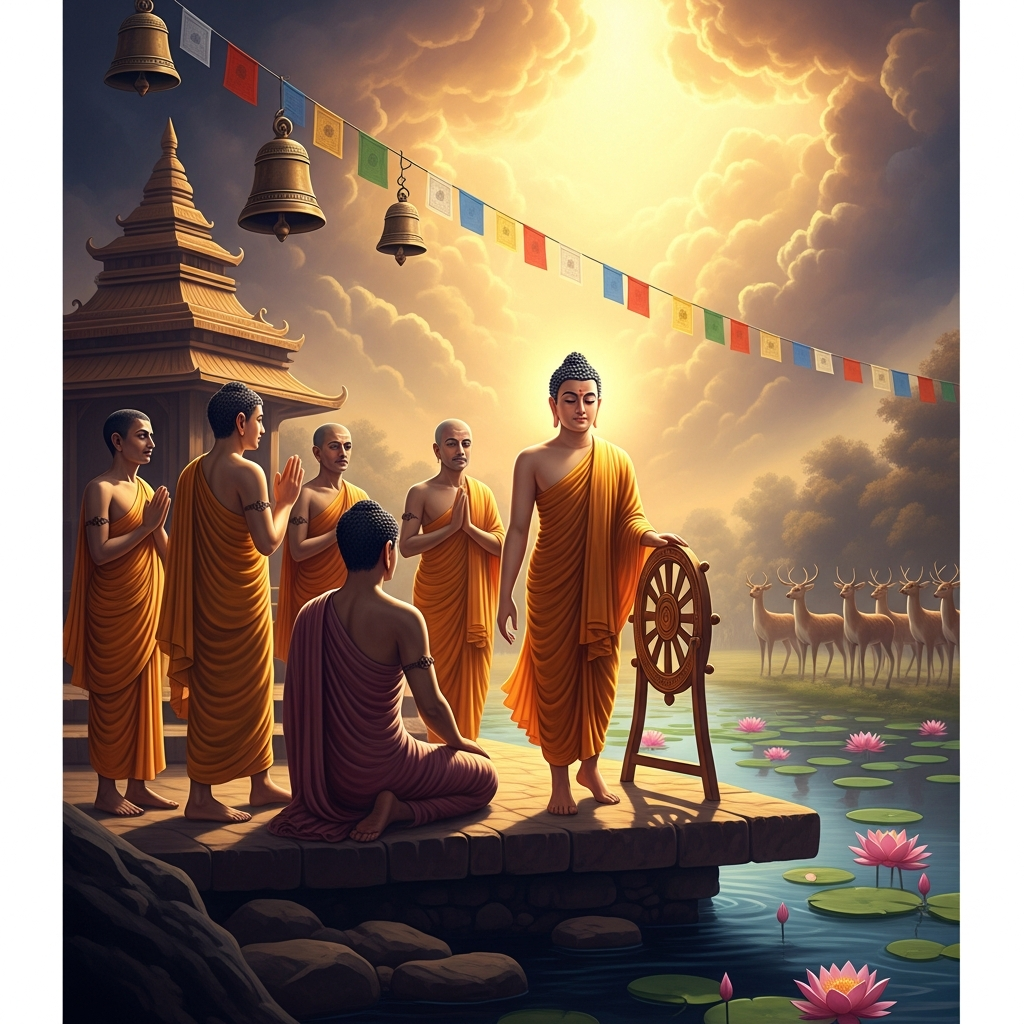
The five ascetics who abandoned Siddhartha meditating at Sarnath heard the Buddha teach the Four Noble Truths and Eightfold Path. Tradition calls this Dhammacakkappavattana — “Turning the Wheel of Dharma.” A private awakening became a public teaching. Buddhism transformed from one man’s experience into a religion. The five became the first monks; the Sangha was born. The eight-spoked Dharma Wheel on every Buddhist flag memorializes that afternoon.
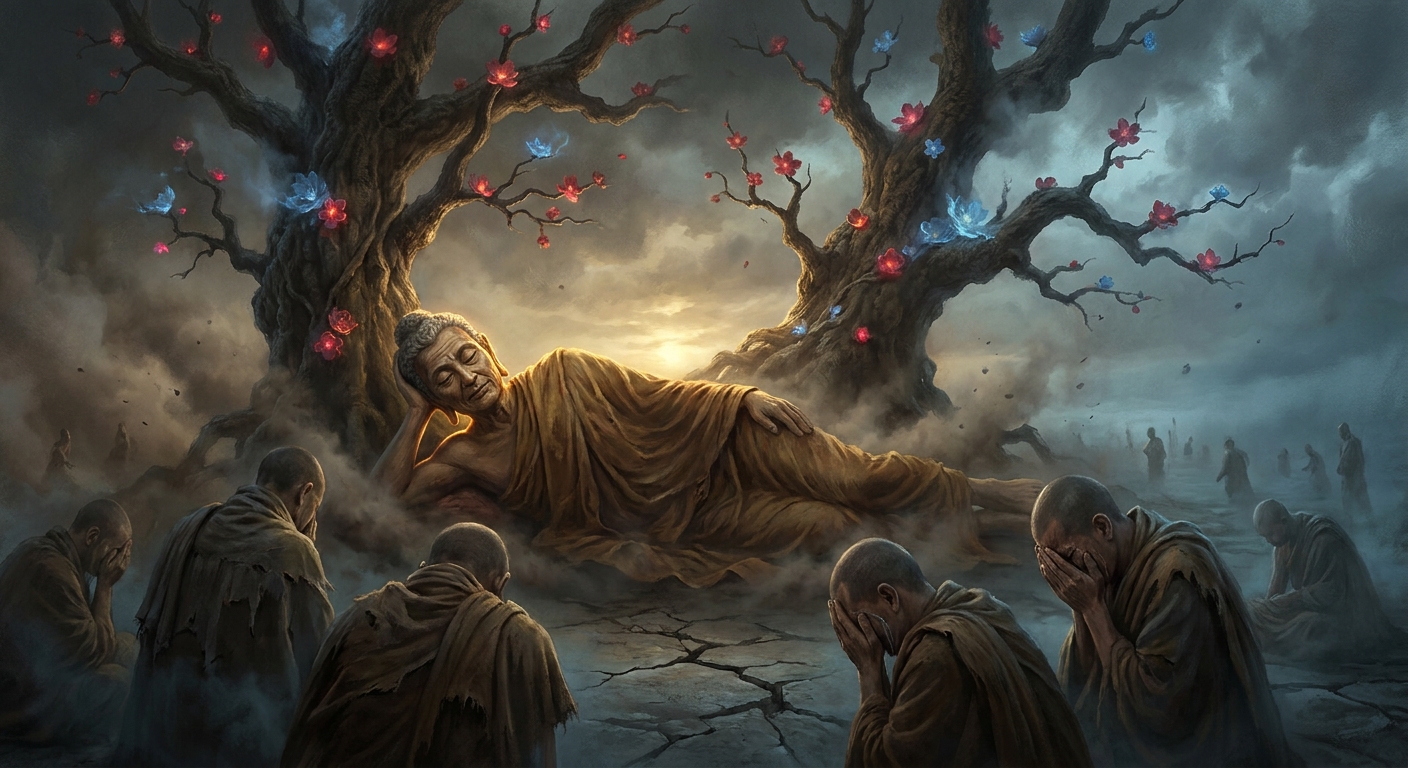
At 80, after 45 years of teaching, the Buddha accepted a meal from a blacksmith named Cunda — traditionally tainted pork or wild mushrooms — fell ill, and walked to Kushinagar. He lay between two sal trees and gave his final teaching: “All compounded things are impermanent. Strive on with diligence.” Then he entered Parinirvana — final nirvana, the end of rebirth. His body was cremated; relics divided among eight kingdoms and enshrined in stupas. He appointed no successor. His instruction: “Be lamps unto yourselves. Take refuge in the Dharma.” That refusal of personal succession — the teaching is the teacher — is one of history’s most consequential decisions.
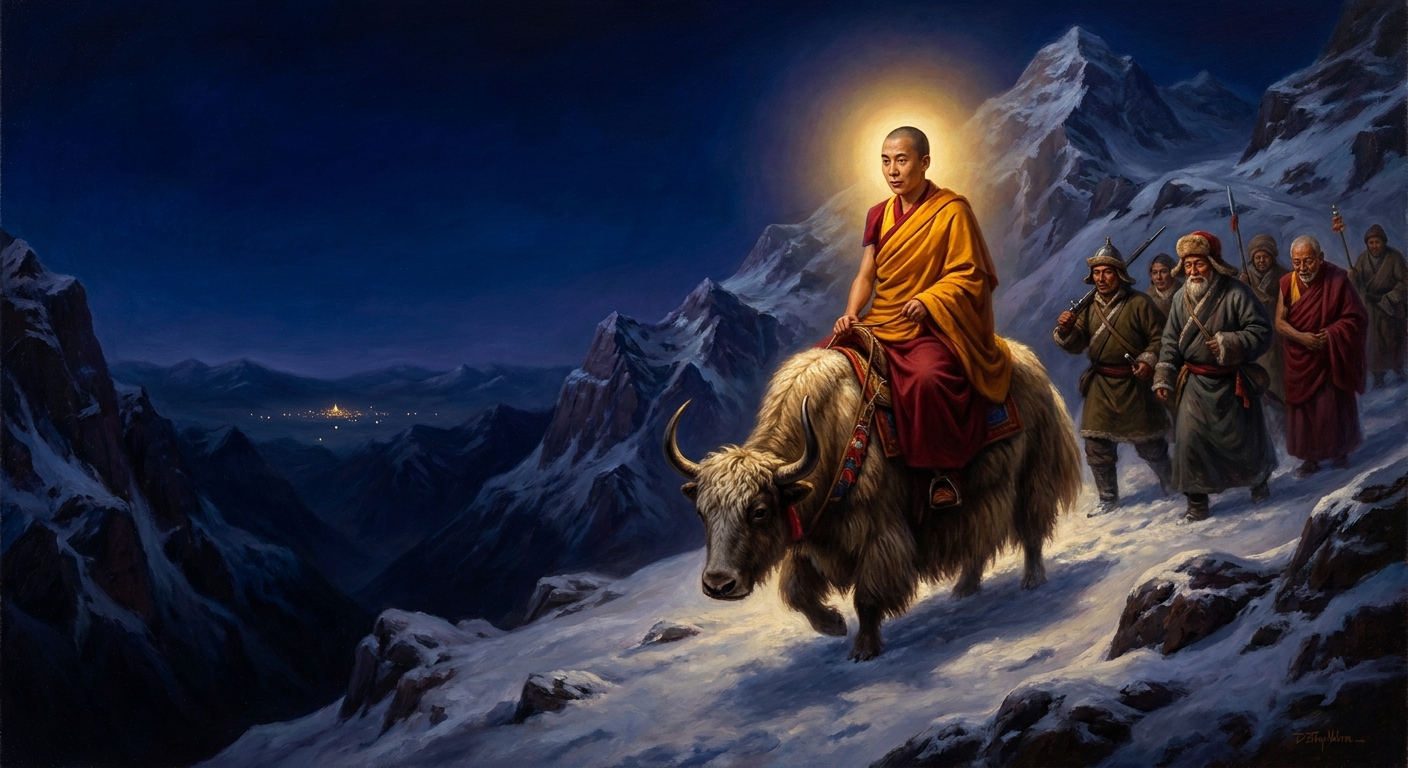
In March 1959, as the People’s Liberation Army approached Lhasa, the 24-year-old 14th Dalai Lama — Tenzin Gyatso, recognized as the reincarnation of his predecessor — fled across the Himalayas to India. He carried a tradition sealed inside Tibet for thirteen centuries into the modern world. The Chinese state destroyed roughly 6,000 monasteries during the Cultural Revolution and claims authority over future incarnations. From exile in Dharamshala, the Dalai Lama became the most globally recognized Buddhist of the modern era — 1989 Nobel Peace Prize, decades of Western teaching, the public face of a tradition under existential pressure. The diaspora seeded Tibetan Buddhism into the West on an unprecedented scale. A geopolitical catastrophe became one of the great religious transmissions in modern history.
Timeline
| Era | Date | Event | Source |
|---|
| Birth (traditional) | 563 BCE | Siddhartha Gautama born in Lumbini (some scholars date c. 480 BCE) | Pali Canon; Lalitavistara |
| The Four Sights | ~534 BCE | Prince sees old age, sickness, death, ascetic | Buddhacarita |
| The Great Departure | ~534 BCE | Siddhartha leaves the palace at age 29 | Buddhacarita |
| Six Years of Asceticism | ~534-528 BCE | Studies with teachers; near-death fasting | Majjhima Nikaya |
| Enlightenment | ~528 BCE | Awakening under the Bodhi Tree; defeat of Mara | Vinaya Pitaka |
| First Sermon | ~528 BCE | Dhammacakkappavattana at Deer Park, Sarnath | Samyutta Nikaya 56:11 |
| Sangha Founded | ~528-483 BCE | 45 years of teaching across northern India | Vinaya Pitaka |
| Parinirvana | ~483 BCE | Buddha dies at Kushinagar; relics divided | Mahaparinibbana Sutta |
| First Council | ~483 BCE | Rajagaha; Ananda recites the suttas | Vinaya Cullavagga |
| Second Council | ~383 BCE | Vesali; first proto-schism over monastic discipline | Theravada chronicles |
| Ashoka Converts | ~260 BCE | Mauryan emperor adopts Buddhism after Kalinga | Ashokan edicts |
| Theravada / Mahayana Split | ~100 BCE - 100 CE | Mahayana sutras emerge; Bodhisattva ideal | Lotus Sutra; Prajnaparamita |
| Buddhism Reaches China | ~67 CE | Han Emperor Ming receives Buddhist monks | Mouzi Lihuolun |
| Nagarjuna | ~150-250 CE | Madhyamaka philosophy; emptiness (sunyata) | Mulamadhyamakakarika |
| Buddhism Reaches Japan | 552 CE | Korean envoys present Buddhist scriptures | Nihon Shoki |
| Padmasambhava in Tibet | ~770 CE | Vajrayana established; Samye monastery founded | Tibetan chronicles |
| Bodhidharma & Chan / Zen | ~520-1200 CE | Chan in China becomes Zen in Japan | Platform Sutra |
| Pure Land Movement | ~400-1200 CE | Devotion to Amitabha; Honen, Shinran in Japan | Pure Land sutras |
| Buddhism Largely Vanishes from India | ~1200 CE | Muslim invasions destroy Nalanda monastery | historical records |
| First Dalai Lama | 1391-1474 | Gendun Drup; Gelug school | Tibetan tradition |
| Buddhism Reaches the West | 1893 | World’s Parliament of Religions, Chicago | Anagarika Dharmapala |
| D.T. Suzuki Popularizes Zen | 1927-1960 | Essays in Zen Buddhism in English | Suzuki publications |
| 14th Dalai Lama Flees Tibet | 1959 | Tenzin Gyatso exiled to Dharamshala, India | historical record |
| Cultural Revolution | 1966-1976 | ~6,000 Tibetan monasteries destroyed | historical records |
| Mindfulness Movement | 1979- | Jon Kabat-Zinn founds MBSR; secular meditation goes mainstream | UMass program |
| Dalai Lama Nobel Peace Prize | 1989 | International recognition of Tibetan cause | Nobel Committee |
| Engaged Buddhism | 1960s- | Thich Nhat Hanh; Buddhism applied to social justice | Interbeing |
| Present | 2026 | ~500M practitioners worldwide; Theravada / Mahayana / Vajrayana | demographic studies |
 MYTHIC
  RARE
RARE  LEGENDARY
  LEGENDARY
 LEGENDARY
  MYTHIC
  MYTHIC
  LEGENDARY
 LEGENDARY
  MYTHIC
  MYTHIC
  MYTHIC