The Story
Daoism is one of the oldest continuously practiced traditions on earth, and one of the hardest to pin down. Its philosophical texts shimmer with paradox; its religious institutions rival anything in Asia; its cultural shadow — Chinese medicine, qigong, taiji, feng shui, internal alchemy — touches a billion lives who would never claim the name. Roughly 12 million formal practitioners today. The actual footprint is orders of magnitude larger.
The narrative arc, with appropriate hedges where myth and history blur:
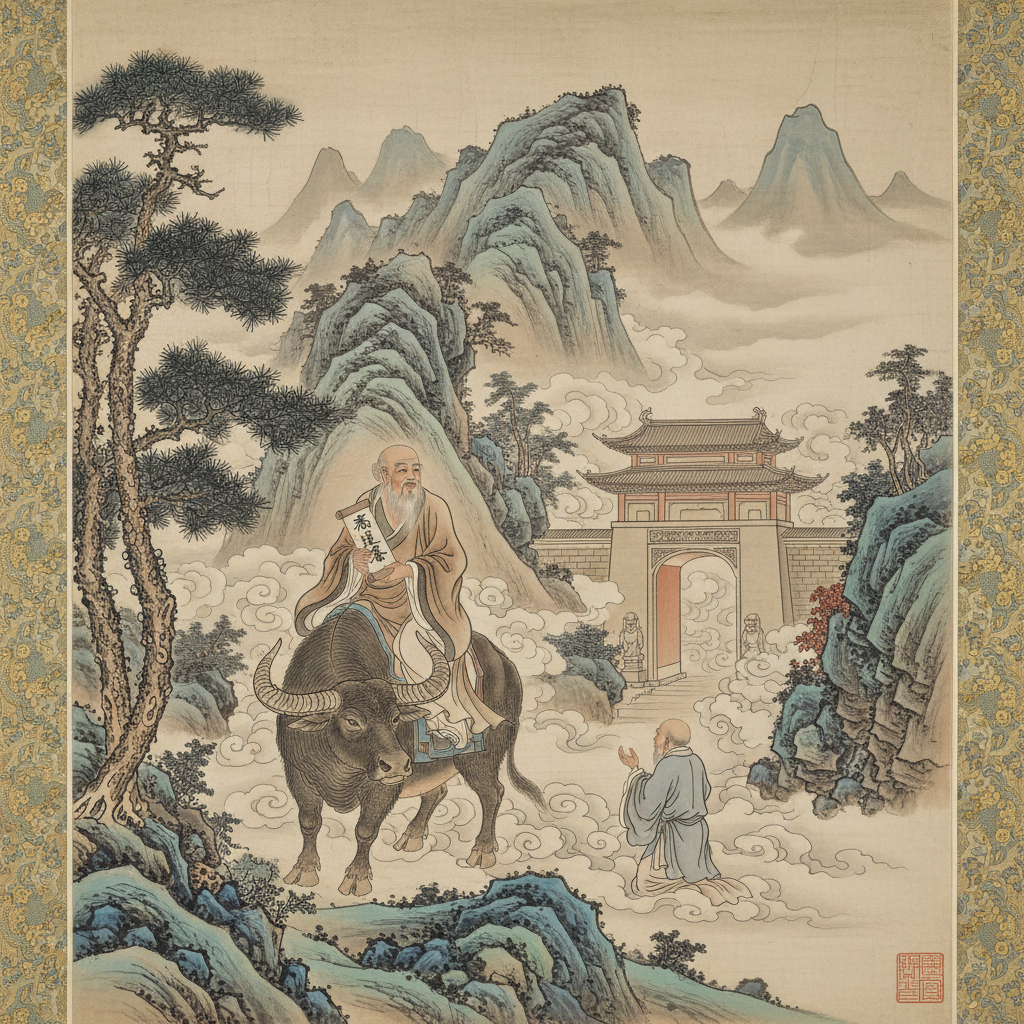
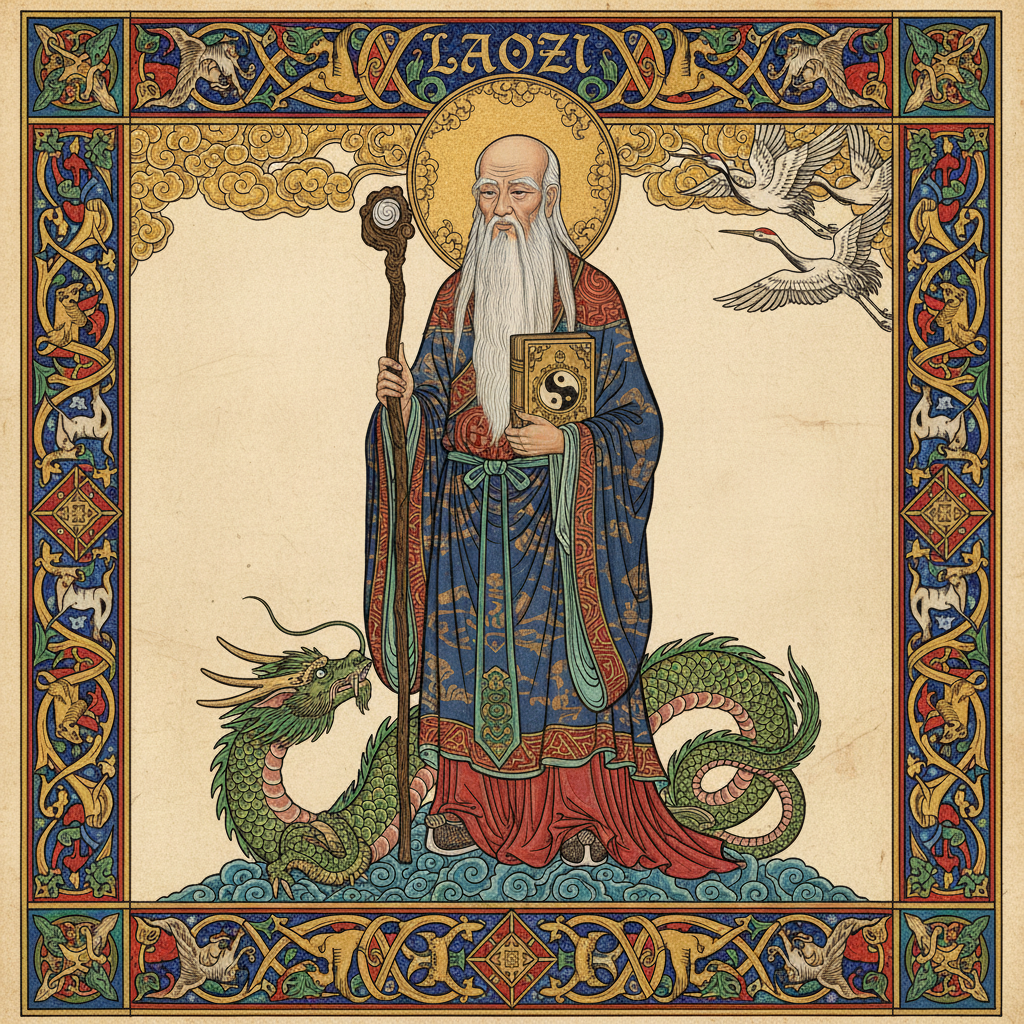
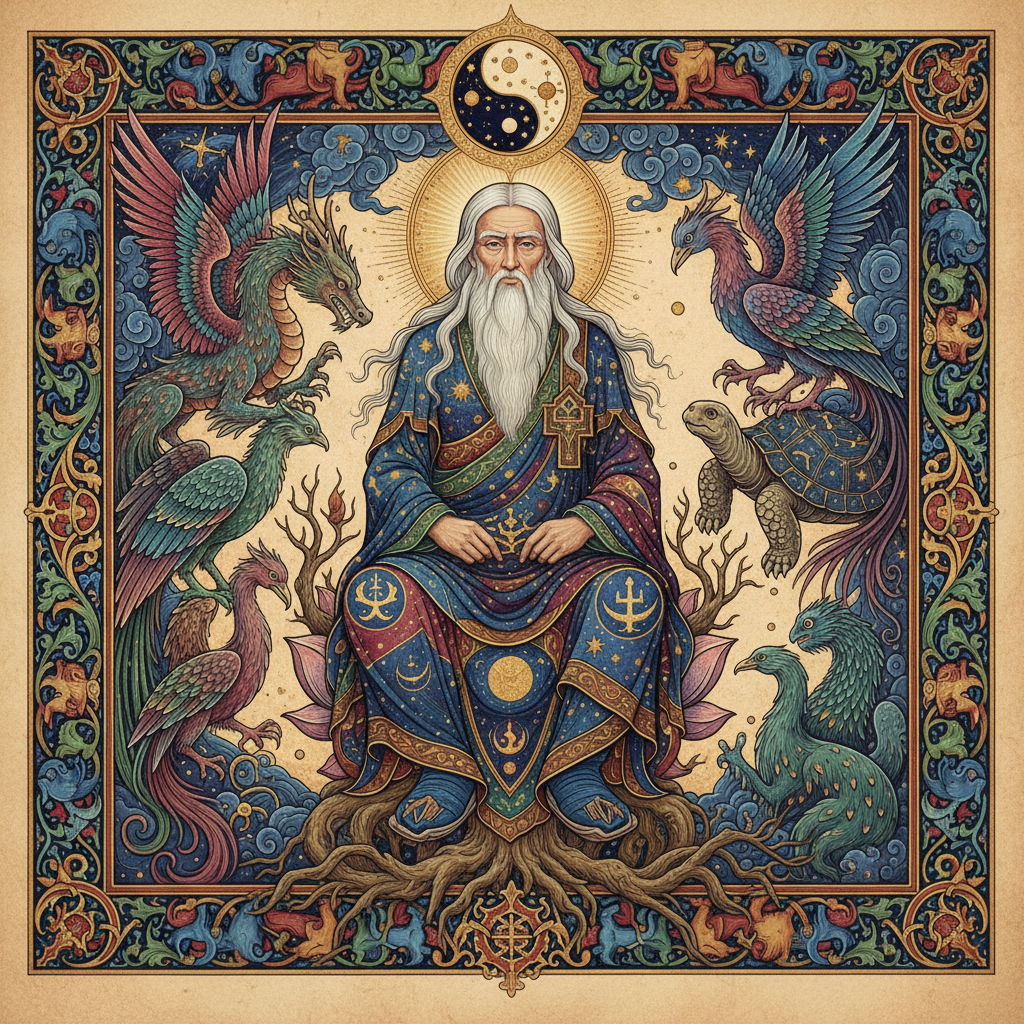
Laozi (~6th century BCE, possibly composite): Daoism begins with a figure who may not have existed. The legend: Laozi, sick of the Zhou court’s decay, rides a water buffalo west. At the Hangu Pass, the gatekeeper Yinxi stops him, demands a teaching, and gets the Tao Te Ching — 81 paradoxical chapters written on the spot (Daodejing). Laozi vanishes into the mountains. Scholars still debate whether one author, many, or none at all wrote it. The text is real. The founder, contested.
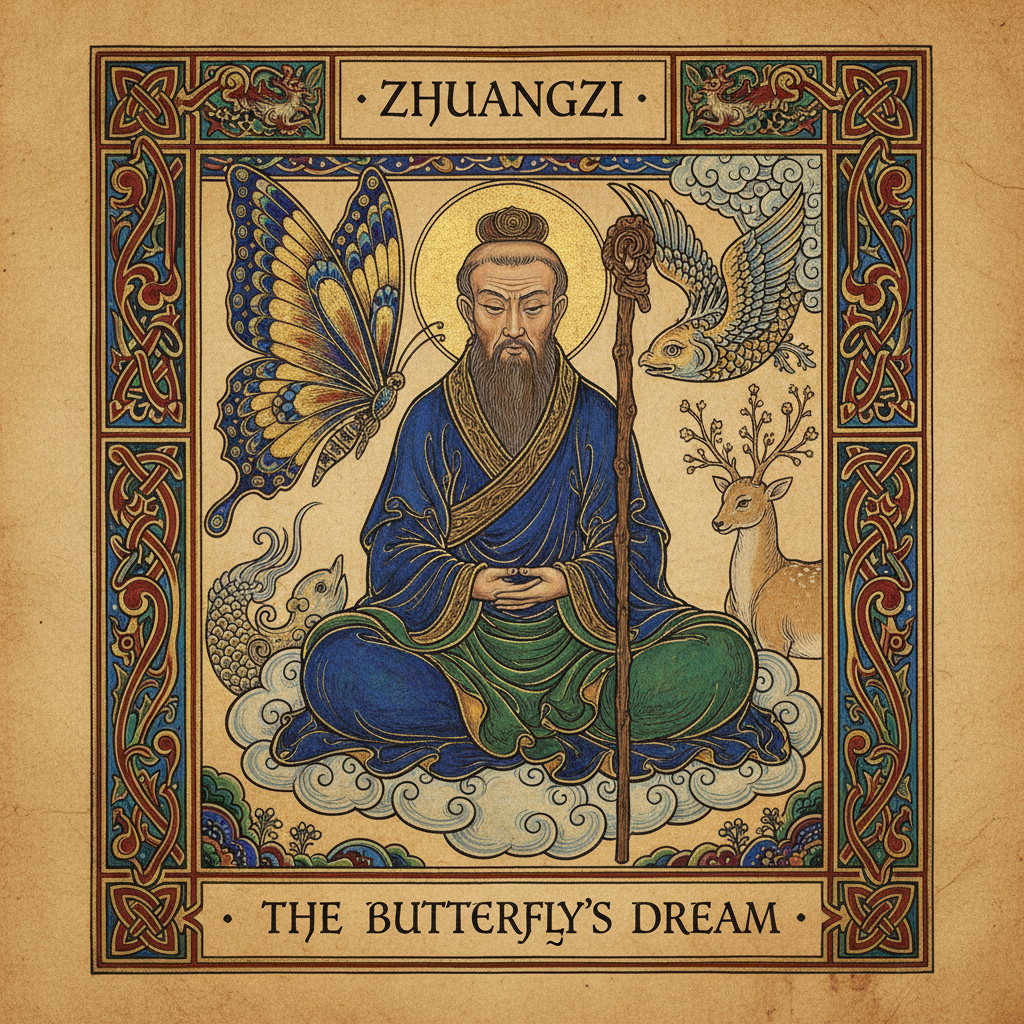
Zhuangzi (~4th century BCE): Zhuang Zhou takes philosophical Daoism wild. The Zhuangzi sprawls with stories, butterflies dreaming they are men, masters carving oxen by the Tao, arguments that refuse to finish. Together with the Daodejing, they establish daojia — philosophical Daoism, pure contemplation, no temples (Zhuangzi, Inner Chapters 1-7).
The Way of the Celestial Masters (142 CE): Daoism becomes daojiao — religion with teeth. Zhang Daoling, on Mount Heming, receives revelation from the deified Laozi (Taishang Laojun, “Most High Lord Lao”). He builds priesthood, confession, talismanic healing, tax-collecting parishes (Daoist hagiography). Philosophy gets structure.
The Yellow Turban Rebellion (184 CE): Zhang Jue’s Taiping Dao (“Way of Great Peace”), a Daoist movement, raises an apocalyptic peasant army and nearly crushes the Han dynasty (Hou Hanshu). Hundreds of thousands die. The Han limps on but never recovers. Daoism enters power as a dynastic threat.
Quanzhen and Zhengyi schools (12th-13th c. CE): Two schools solidify. The Zhengyi (“Orthodox Unity”) descends from the Celestial Masters — married priests, rituals, exorcisms. The Quanzhen (“Complete Perfection”), founded by Wang Chongyang in the 12th century, goes monastic and ascetic, closer to Buddhism (Quanzhen hagiography). Both survive to now.
The Daozang (Daoist Canon, completed 1444 CE): Over centuries, scribes assemble the Daozang (Daozang) — 1,400 texts on ritual, alchemy, philosophy, hagiography, meditation. The 1444 Ming version is standard. It dwarfs most religions’ scriptures.
Suppression and Survival: Imperial favor swings between Daoism, Buddhism, Confucianism. The 20th century crushes it: Republicans secularize temples; the Cultural Revolution (1966-1976) closes nearly all temples, burns texts, imprisons priests. Daoism survives in Taiwan, Hong Kong, exile.
Post-Mao Revival and Global Diffusion: From the 1980s, policy softens. Temples reopen. Today 12+ million identify as Daoist in mainland China, millions more in Taiwan and diaspora. The footprint is vastly larger: TCM, qigong, taiji, feng shui, the Daodejing (one of the most translated books ever) circulate globally, often stripped of theology. Western “spiritual but not religious” takes on “the Tao” range from apt to comical. Four thousand years in, it still flows.
Philosophical vs. Religious Daoism: Western scholars once split daojia (philosophy) from daojiao (religion), privileging one and dismissing the other as superstition. Modern scholarship rejects the divide — the two are fused. The Daodejing is liturgically chanted in temples it supposedly predates. Both are real. Both are Daoism.
Pivotal Events
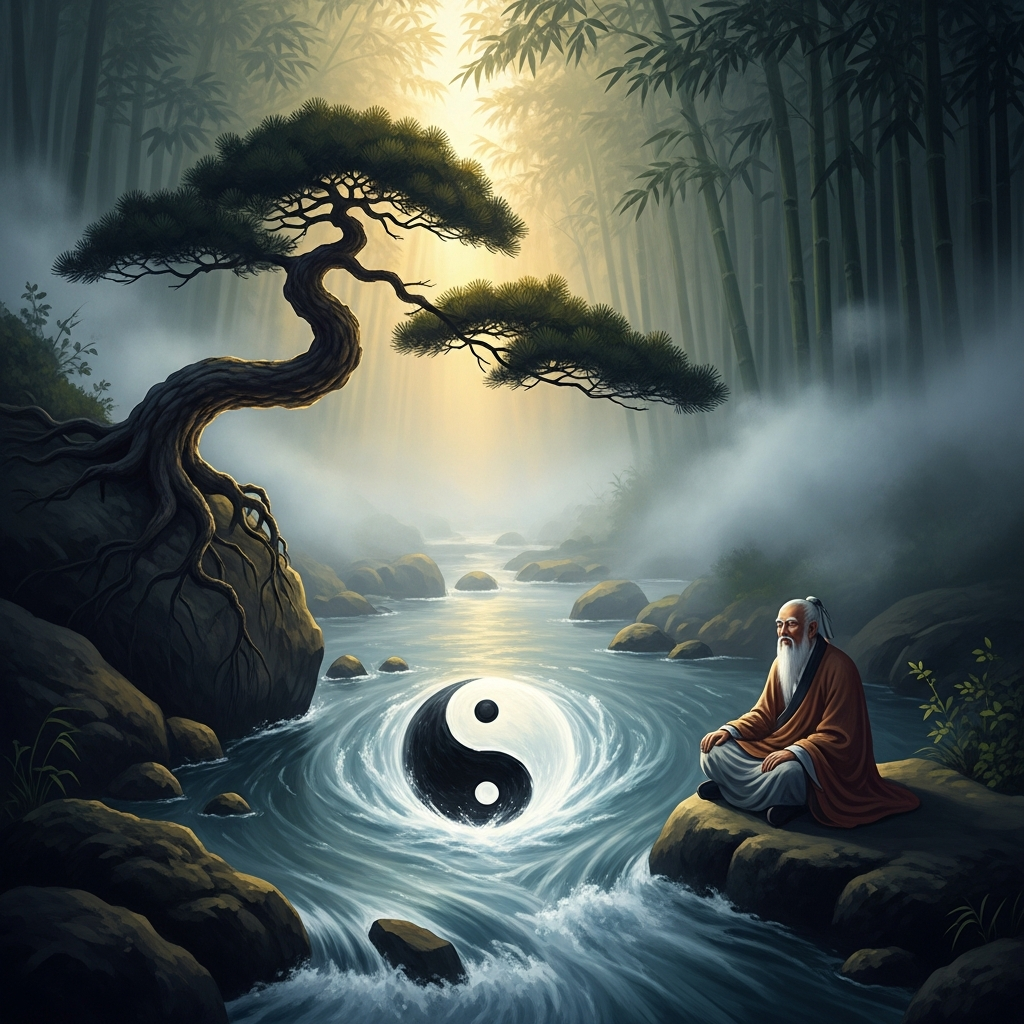
Daoism opens with its most luminous image: an old sage, sickened by Zhou court rot, mounts a water buffalo and rides west. Never comes back. At the Hangu Pass, the gatekeeper Yinxi blocks him, demands a teaching, gets the Daodejing — 81 paradoxical chapters, written on the spot. Laozi rides on. Whether he was one man, several, or pure legend is uncertain. What is not: the text exists, the image endures, and the sage on the ox riding toward dissolution defines the Way.
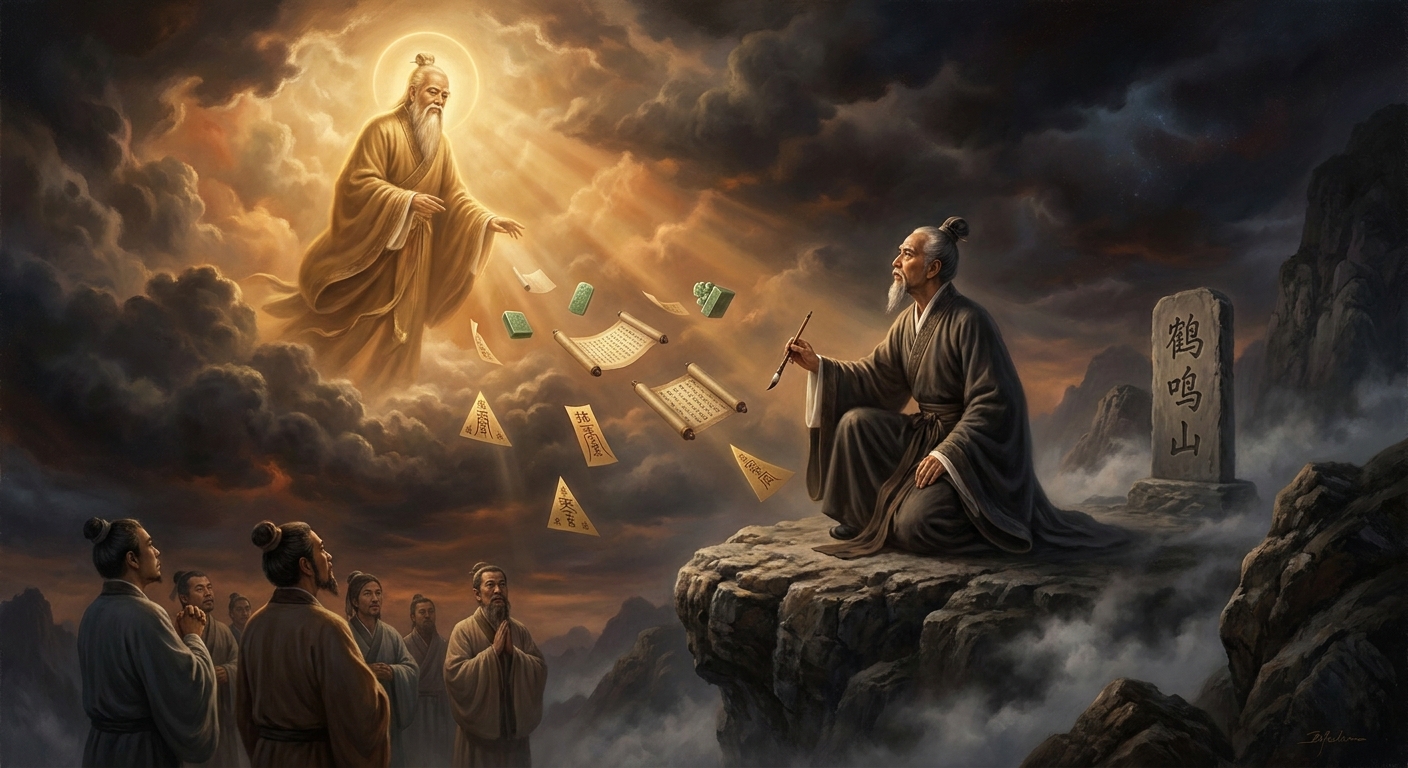
In 142 CE, on Mount Heming in Sichuan, Zhang Daoling receives direct revelation from the deified Laozi (Taishang Laojun). He founds the Tianshi Dao — the first organized Daoist religion. Hereditary priesthood (the title passes through his line today, now at 65th generation), rice-tax parishes, talismanic healing, ritualized confession. Philosophy becomes religion with institutional backbone.
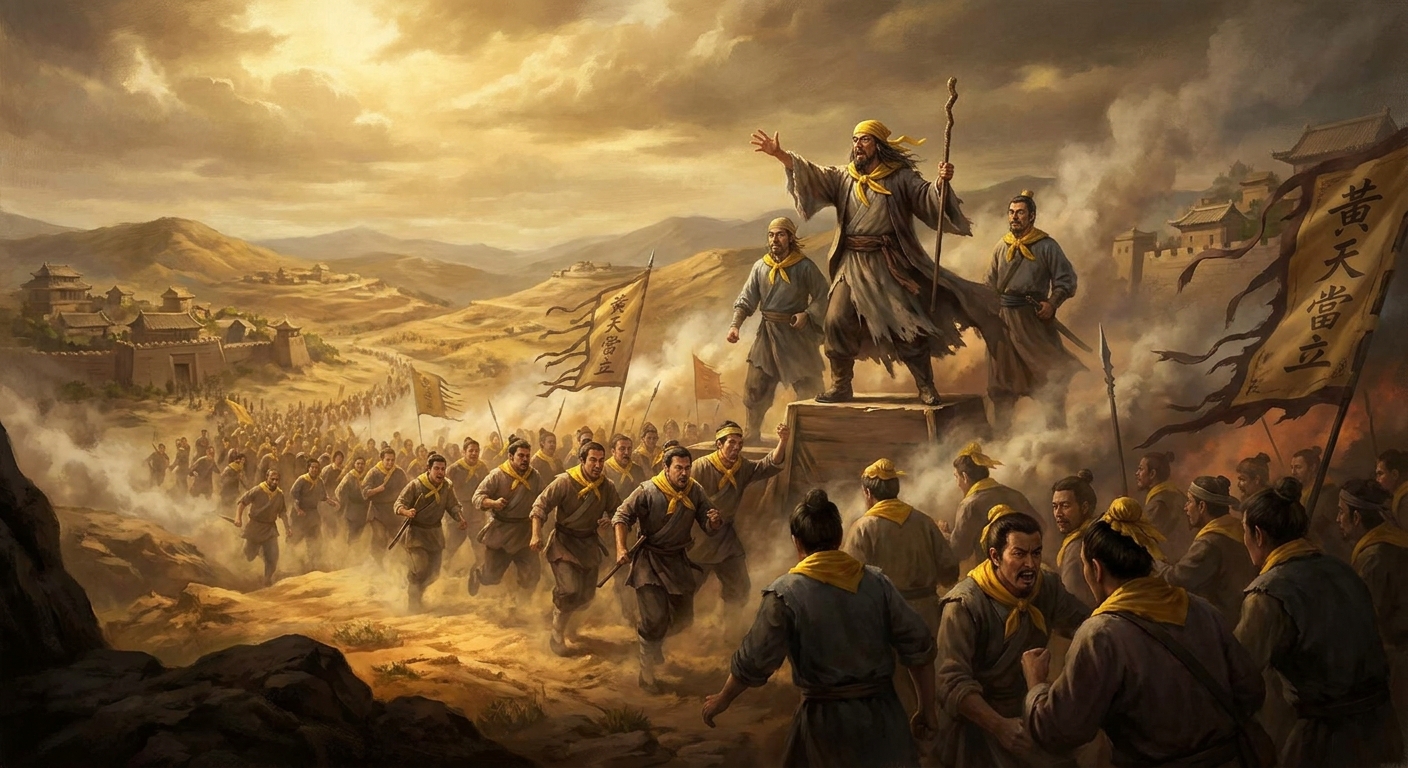
In 184 CE, the faith healer Zhang Jue raises an apocalyptic peasant army under the Taiping Dao (“Way of Great Peace”). Hundreds of thousands wear yellow headscarves, chant “The Blue Heaven is dead; the Yellow Heaven shall rise.” Crushed at enormous cost, the Han never recovers. Within decades, the empire shatters into the Three Kingdoms. Daoism enters power as a dynastic threat — a memory that makes every emperor afterward wary of Daoist mass movements.
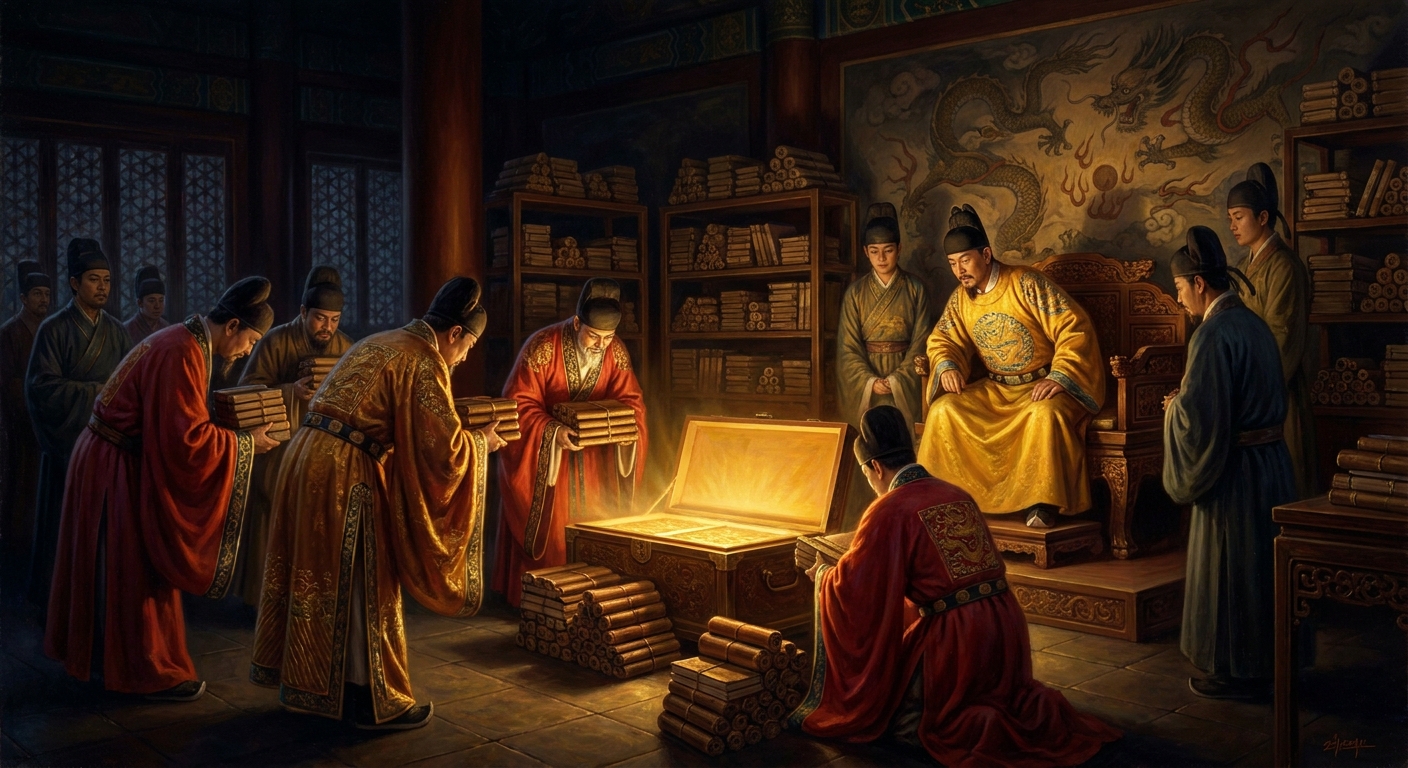
The Daozang (“Treasury of the Dao”) is the official canon — 1,400+ texts on ritual, alchemy, philosophy, hagiography, meditation, divination, talismans. Standard version completed in 1444 (Ming Zhengtong Emperor, 5,318 fascicles). One of history’s largest religious corpora — larger than Bible, Talmud, Quran combined. Most texts encrypt esoteric ritual or alchemical formulas for ordained priests only. The Daozang proves Daoism is no mere paradox but a vast, structured, multi-millennial intellectual tradition.
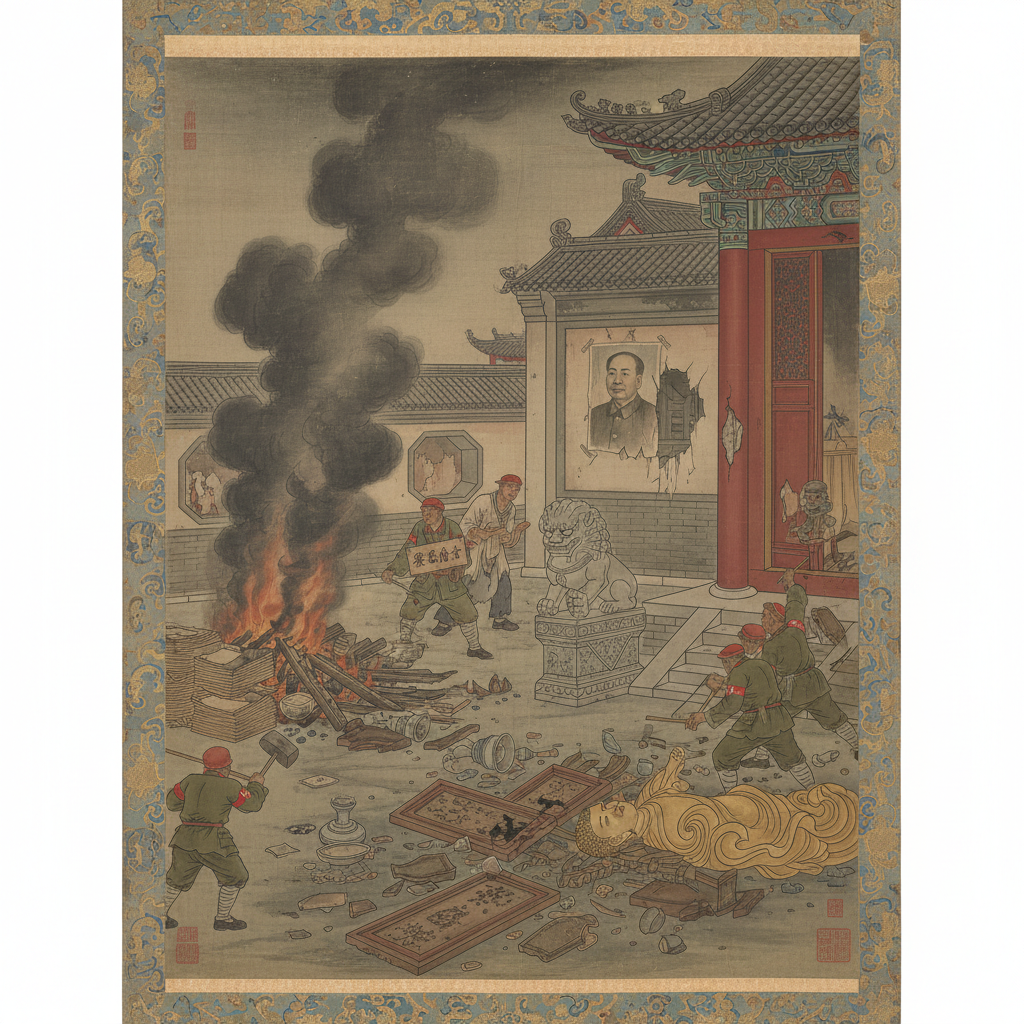
Between 1966 and 1976, Mao declares war on the “Four Olds” — customs, culture, habits, ideas. Daoism is a primary target. Red Guards smash statues, burn texts, beat priests. Nearly every mainland temple closes or burns. Ordinations stop. The Daozang disappears. Two-thousand-year lineages face extinction in ten years. It survives in Taiwan, Hong Kong, and in old priests’ memories. From the 1980s, policy reverses: temples reopen, ordinations resume, the canon reprints. Recovery is ongoing.
Timeline
| Era | Date | Event | Source |
|---|
| Mythic Origins | ~2697 BCE (legendary) | Yellow Emperor (Huangdi) — later claimed as proto-Daoist culture hero | Huangdi Neijing tradition |
| Philosophical Daoism | ~6th century BCE (contested) | Laozi composes (or is credited with) the Daodejing | Daodejing; Shiji 63 |
| Zhuangzi | ~4th century BCE | Zhuang Zhou expands philosophical Daoism; the Zhuangzi | Zhuangzi |
| Han Synthesis | ~2nd century BCE | Huang-Lao Daoism dominant at early Han court | Shiji; Hanshu |
| Celestial Masters Founded | 142 CE | Zhang Daoling receives revelation from Laojun on Mount Heming | Sanguozhi; Daoist hagiography |
| Yellow Turban Rebellion | 184 CE | Zhang Jue’s Taiping Dao uprising nearly topples the Han | Hou Hanshu |
| Shangqing Revelations | 364-370 CE | Yang Xi receives Highest Clarity scriptures at Mount Mao | Zhen’gao |
| Lingbao Scriptures | ~400 CE | Numinous Treasure scriptures appear, integrating Buddhist elements | Lingbao corpus |
| Kou Qianzhi Reform | 424-448 CE | Northern Wei adopts reformed Daoism as state religion | Weishu |
| Tang Imperial Patronage | 618-907 CE | Tang emperors claim descent from Laozi; Daoism flourishes | Tang dynastic records |
| Quanzhen School Founded | ~1170 CE | Wang Chongyang founds the Complete Perfection monastic school | Quanzhen hagiography |
| Zhengyi Consolidation | 13th century CE | Celestial Masters lineage formalized as Zhengyi (“Orthodox Unity”) | Yuan court records |
| Daozang Compiled | 1444 CE | Ming Zhengtong Daoist Canon completed — 5,318 fascicles | Zhengtong Daozang |
| Qing Suppression | 1644-1911 | Manchu Qing dynasty restricts Daoist institutional power | Qing edicts |
| Republican Secularization | 1912-1949 | Temple property confiscated; modernizers attack “superstition” | Republican legal records |
| Cultural Revolution | 1966-1976 | Mao’s campaign closes nearly every temple in mainland China | contemporary accounts |
| Reform-Era Revival | 1980s-present | Temples reopen; ordinations resume; Daozang reprinted | Chinese Daoist Association |
| Global Diffusion | late 20th century | TCM, qigong, taiji, feng shui spread worldwide | cross-cultural studies |
| 64th Celestial Master | 1969 | Zhang Yuanxian becomes 64th Celestial Master in Taiwan | Zhengyi lineage records |
| Present | 2026 | ~12M+ formal Daoists; vastly larger cultural footprint | demographic studies |
Summary Statistics
| Entity | ATK | DEF | SPR | SPD | INT | Tier |
|---|
| Laozi | 10 | 95 | 100 | 30 | 100 | S — Cosmic |
| Zhuangzi | 5 | 80 | 98 | 70 | 100 | S — Cosmic |
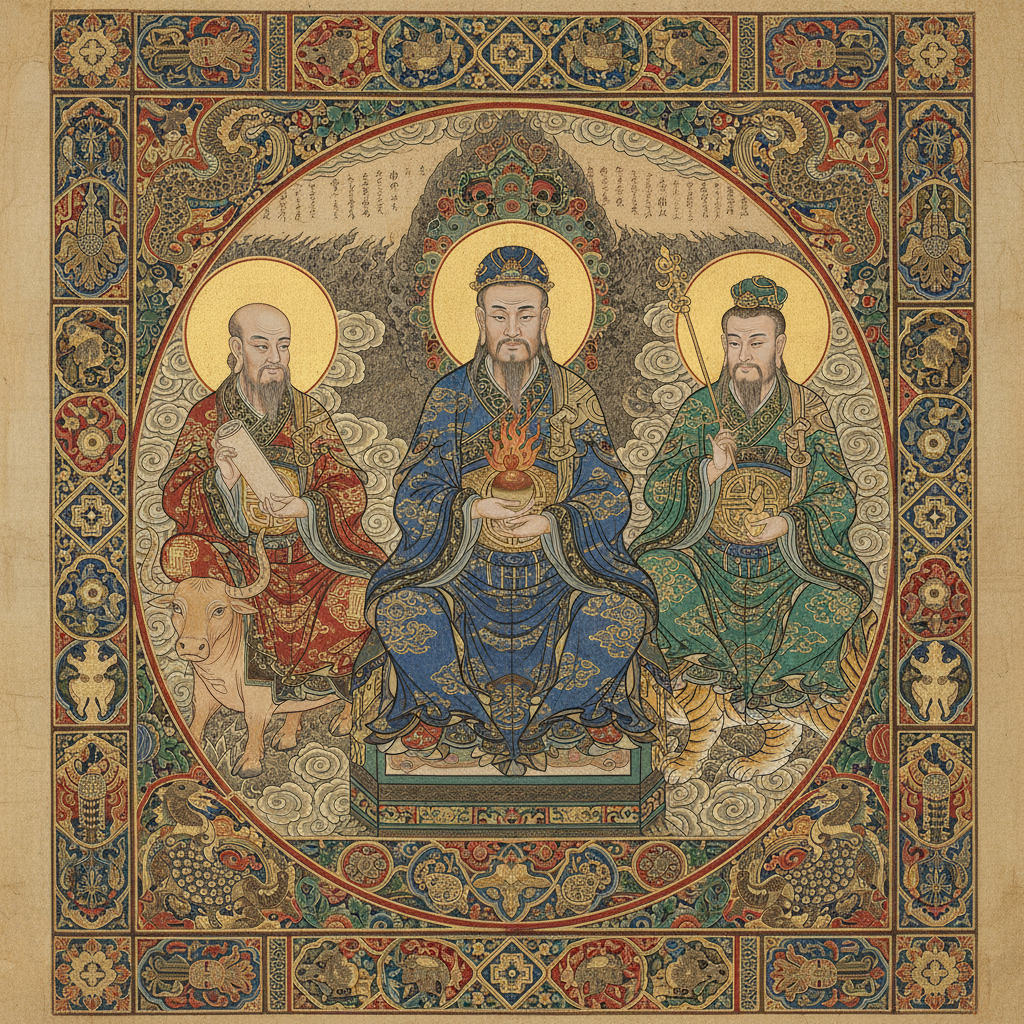
| The Three Pure Ones | 70 | 100 | 100 | 80 | 100 | S+ — Transcendent |
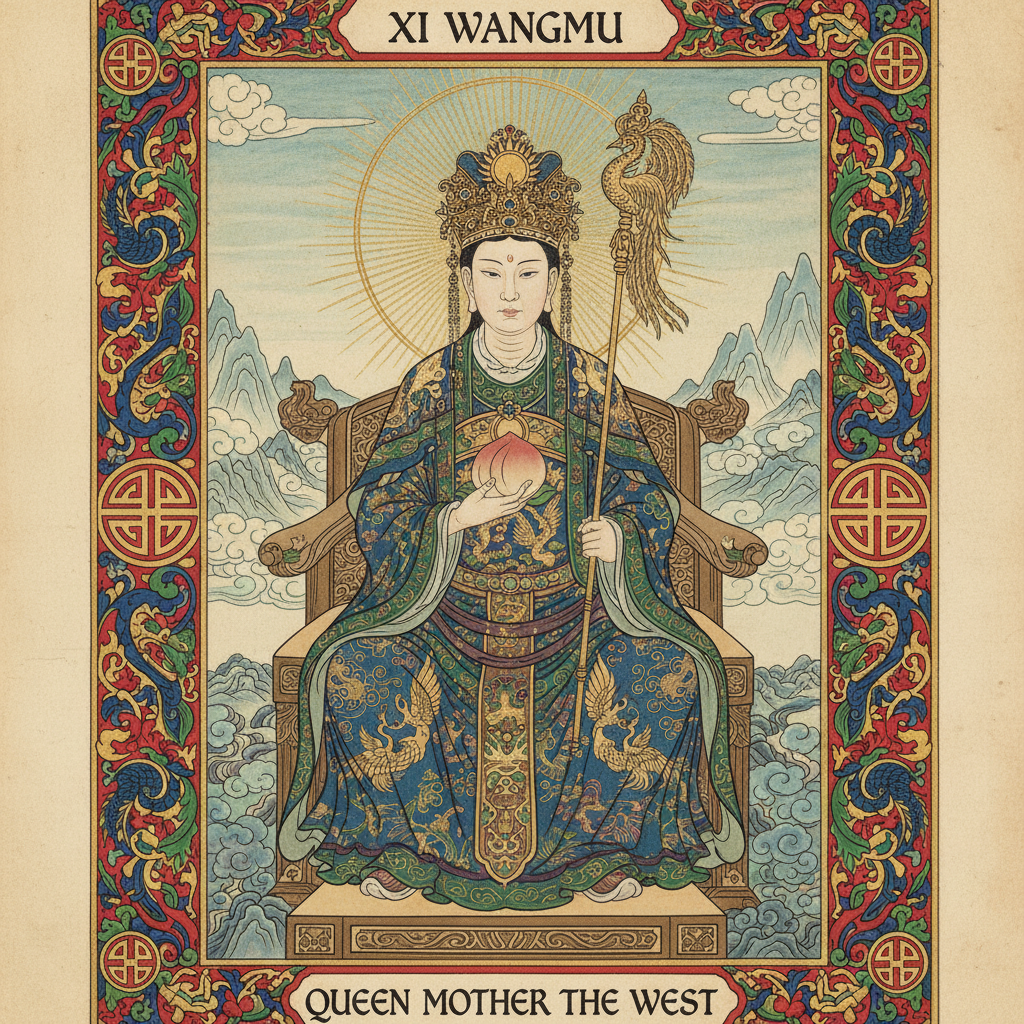
| Xi Wangmu | 65 | 92 | 98 | 75 | 95 | S — Cosmic |
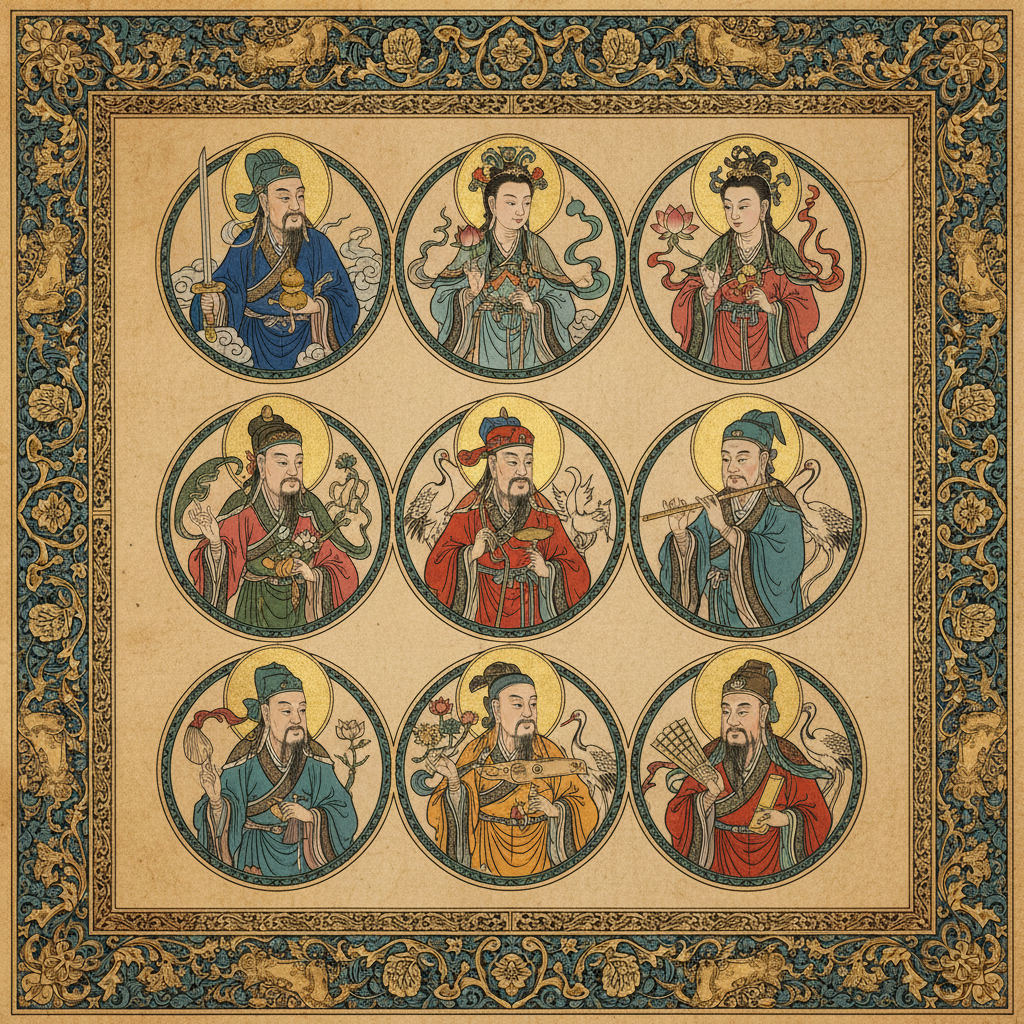
| The Eight Immortals | 60-85 | 75-90 | 85-95 | 70-90 | 80-95 | A — Archangelic (collective) |
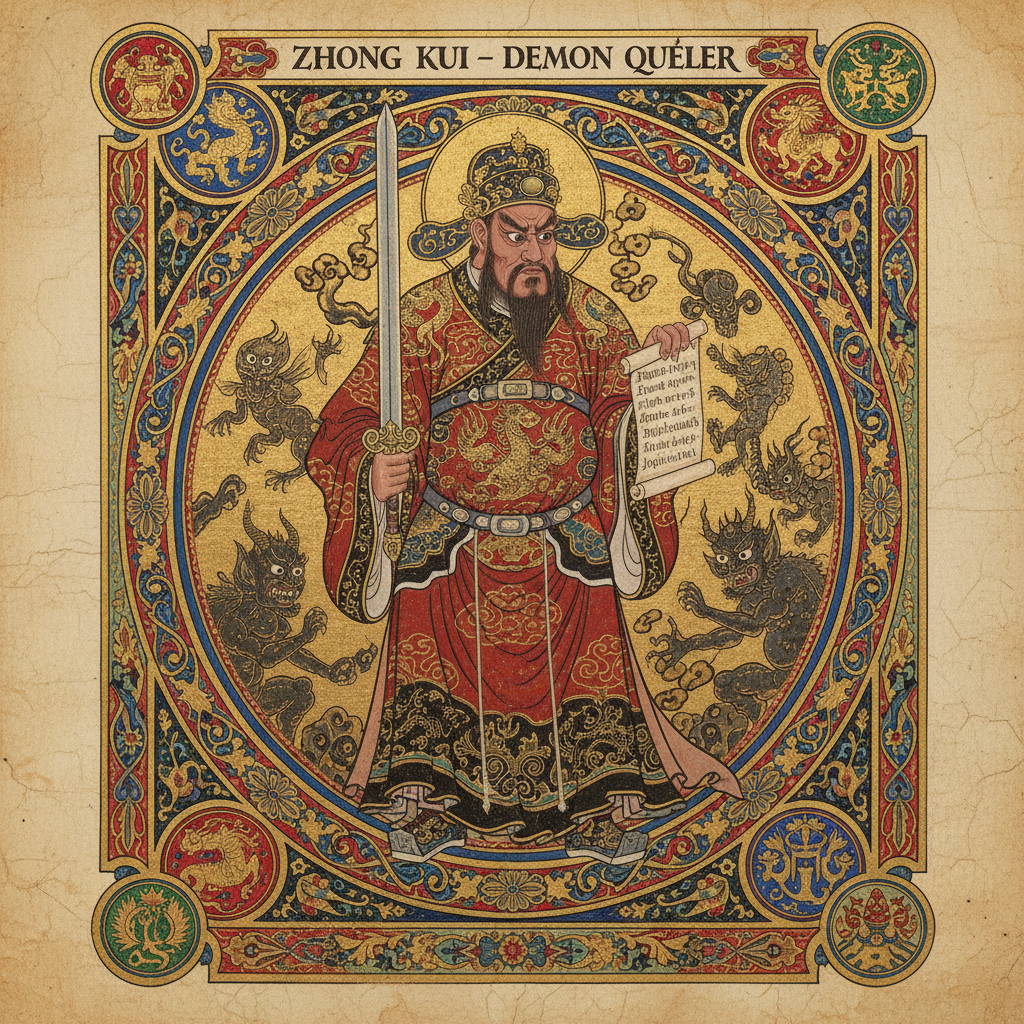
| Zhong Kui | 92 | 80 | 85 | 75 | 90 | A — Archangelic |
| The Tao | — | — | — | — | — | Beyond Tier (unrankable) |
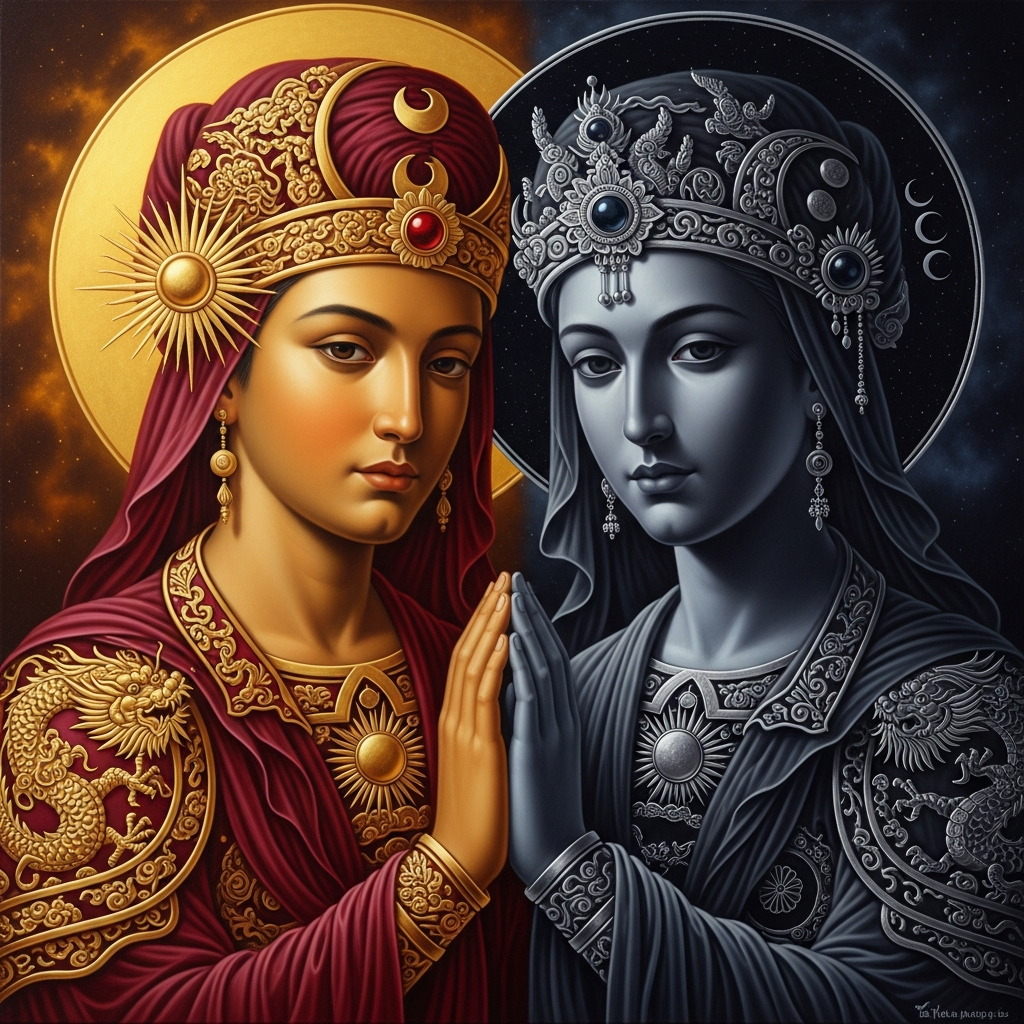
| Yin and Yang | — | — | — | — | — | Beyond Tier (principle) |
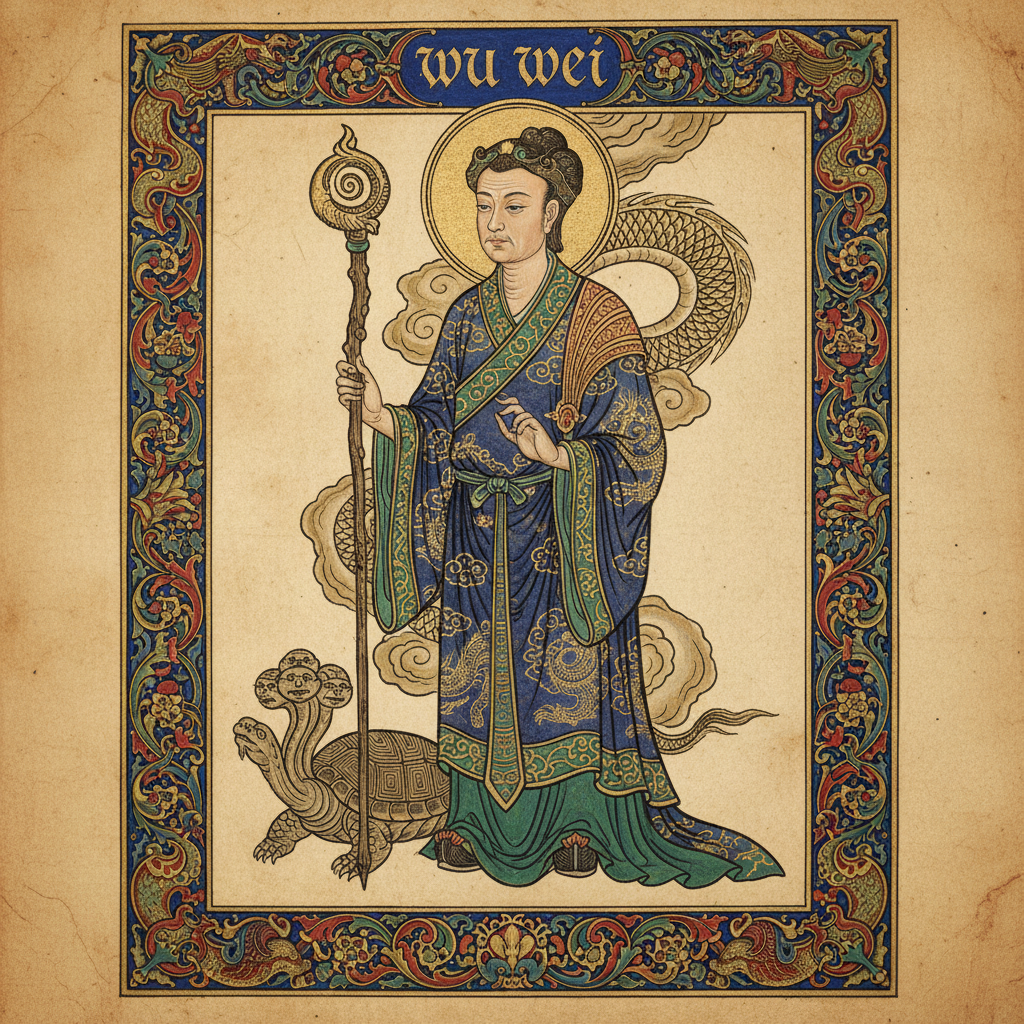
| Wu Wei | — | — | — | — | — | Beyond Tier (practice) |
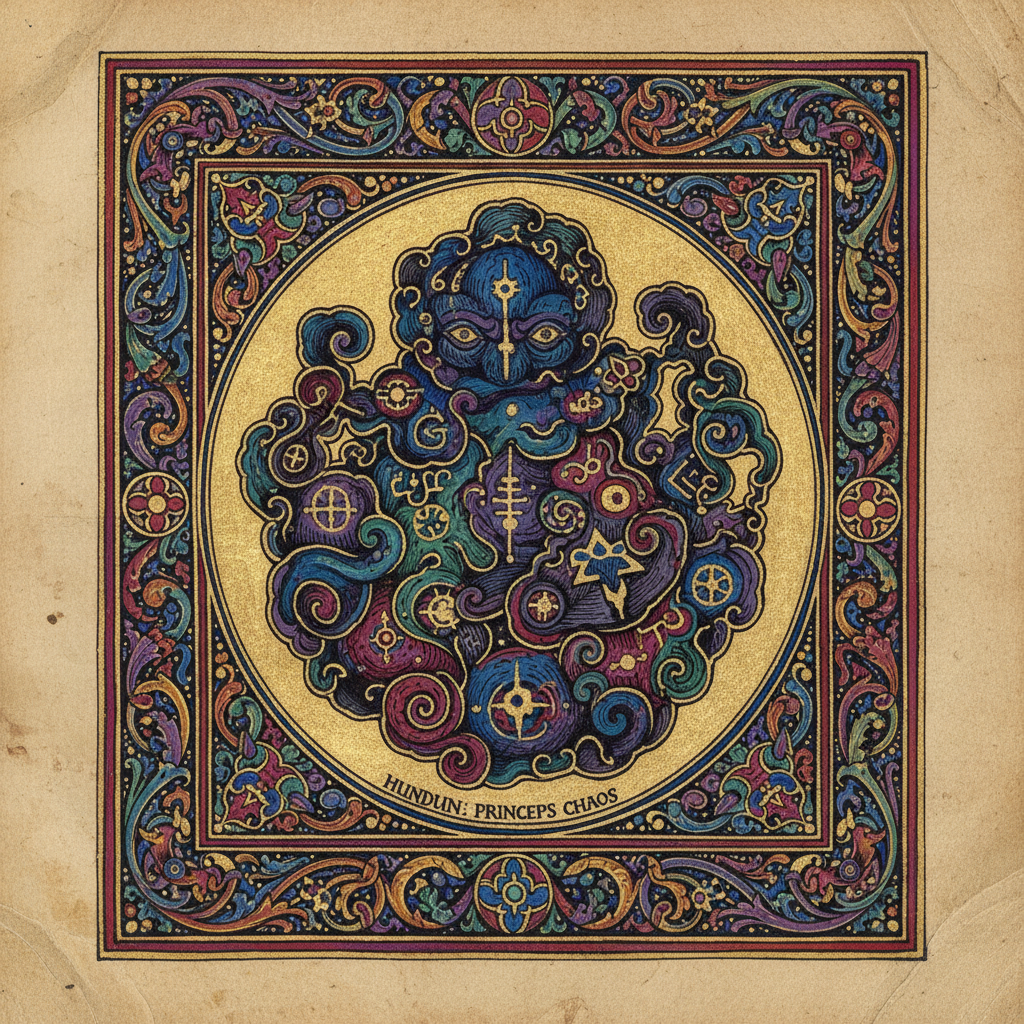
| Hundun | — | 100 | 100 | — | — | S — Cosmic (primordial) |
Cross-Tradition Parallels
| Taoist Entity | Closest Parallel | Tradition | The Connection |
|---|
| Laozi | The Buddha / Enoch | Buddhist / Hebrew | Sage who left transformative teaching and vanished from the world |
| Zhuangzi (butterfly dream) | Descartes (evil demon) / Plato (Cave) / Maya | Western / Hindu | Radical doubt about the nature of perceived reality |
| The Three Pure Ones | The Trinity / The Trimurti | Christian / Hindu | One ultimate reality expressed as three distinct persons/aspects |
| Xi Wangmu | Eve / Idunn / Persephone | Hebrew / Norse / Greek | Feminine figure controlling access to the fruit/boundary of mortality |
| The Eight Immortals | Saints / Bodhisattvas / Arhats | Christian / Buddhist | Diverse humans who achieved transcendence through varied paths |
| Zhong Kui | Van Helsing / Ghostbusters / The Punisher | Western fiction | Scholar/ghost who hunts evil — but himself a product of injustice |
| The Tao | Brahman / Ein Sof / The Dreaming | Hindu / Kabbalistic / Aboriginal | The unknowable ground of all reality, prior to all distinctions |
| Yin and Yang | Zoroastrian dualism (inverted) | Zoroastrian | Complementary opposites — but where Zoroastrianism opposes good/evil, Taoism harmonizes them |
| Wu Wei | The Middle Way / “My yoke is easy” / Flow state | Buddhist / Christian / Secular | Effortless action in harmony with a deeper reality |
| Hundun | Ein Sof / Tohu va-Bohu / Apophatic theology | Kabbalistic / Hebrew / Christian mystical | The formless state before order — and the loss inherent in imposing form |
Sources & Further Reading
| Source | Focus | Notes |
|---|
| Tao Te Ching / Daodejing (道德经) | The foundational Taoist text: 81 chapters of paradoxical wisdom on the Way, virtue, governance, and non-action | Attributed to Laozi, 6th-5th century BCE. Over 250 English translations exist; recommended: D.C. Lau (Penguin), Stephen Mitchell, Ursula K. Le Guin (interpretive) |
| Zhuangzi (莊子) | The second foundational text: parables, philosophy, humor, radical doubt, the butterfly dream, the useless tree, the death of Hundun | Inner Chapters attributed to Zhuang Zhou, 4th century BCE. Recommended: Burton Watson, The Complete Works of Zhuangzi (Columbia, 1968); A.C. Graham (partial, scholarly); Brook Ziporyn (complete) |
| Liezi (列子) | The third classical Taoist text: cosmology, fate, stories of the supernatural | Attributed to Lie Yukou, 5th century BCE (but likely compiled later). Less well-known but rich in Taoist mythology |
| Huainanzi (淮南子) | Daoist cosmology and philosophy, Yellow Emperor legends | Compiled 2nd century BCE. Key source for early Daoist thought |
| Baopuzi (抱朴子) | Collected teachings on immortality, alchemy, and esoteric Daoism | Ge Hong, 4th century CE. The classic text on immortality cultivation |
| Livia Kohn, Daoism Handbook (2000) | Comprehensive reference covering Daoist history, texts, practice, and theology | The most authoritative and detailed scholarly handbook on all aspects of Daoism |
| Livia Kohn, Daoism and Chinese Culture (2001) | Comprehensive academic introduction to Taoism in its cultural context | The best single-volume scholarly overview of Taoist history, practice, and thought |
| Livia Kohn, The Taoist Experience (1993) | Anthology of primary Taoist texts in translation | Essential for hearing Taoist voices directly rather than through secondary interpretation |
| Isabelle Robinet, Taoism: Growth of a Religion (1997) | Historical development of organized Taoism from the Celestial Masters to the present | The best scholarly narrative of how Taoism evolved from philosophy to religion over two millennia |
| Kristofer Schipper, The Taoist Body (1993) | Taoist ritual, the body as microcosm, internal alchemy, the priesthood | The definitive work on Taoist liturgical practice by a scholar who was himself ordained as a Taoist priest |
| Stephen Bokenkamp, Early Daoist Scriptures (1997) | Translations and analysis of foundational Daoist religious texts | Scholarly treatment of the Lingbao and other central scriptures |
| Eva Wong, The Shambhala Guide to Taoism (1997) | Accessible introduction to Taoist philosophy, practice, and history | Good entry point for readers new to the tradition |
| Edward Slingerland, Effortless Action: Wu-wei as Conceptual Metaphor and Spiritual Ideal in Early China (2003) | Academic study of wu wei as a concept across early Chinese philosophy | Essential for understanding wu wei in its full philosophical context, not just the Taoist version |
| N.J. Girardot, Myth and Meaning in Early Taoism: The Theme of Chaos (Hun-tun) (1983) | The Hundun myth and its significance for Taoist cosmology and philosophy | The definitive scholarly treatment of the chaos theme in Taoism |
| Suzanne Cahill, Transcendence and Divine Passion: The Queen Mother of the West in Medieval China (1993) | Xi Wangmu’s evolution from primal goddess to celestial queen | The standard scholarly work on the Queen Mother figure |
Taoism is not a relic. The Taoist priesthood maintains continuous lineages — the Celestial Masters (Zhengyi) and the Complete Perfection (Quanzhen) orders have operated for centuries. Taoist temples across China, Taiwan, Hong Kong, Singapore, Malaysia, and diaspora communities worldwide hold regular ceremonies of healing, exorcism, cosmic renewal, and community protection. The Tao Te Ching is the second most translated book in human history after the Bible. Tai chi, qigong, traditional Chinese medicine, feng shui, and Chinese martial arts all have deep Taoist roots. The influence of Taoist aesthetics on Chinese painting, poetry, calligraphy, garden design, and tea ceremony is incalculable. Chan Buddhism (Zen) — one of the most globally influential Buddhist traditions — is as much Taoist as it is Buddhist. When someone practices meditation, drinks tea mindfully, appreciates the beauty of an empty room, or lets go of the need to control an outcome, they are practicing something that Taoism has been teaching for twenty-five centuries. The tradition that says “stop trying” has never stopped working.
This compendium covers 10 entities from the Taoist tradition. Taoism is a living faith practiced by millions worldwide. The entities described here — particularly the Three Pure Ones, Xi Wangmu, and the Eight Immortals — are objects of active devotion. The philosophical concepts — the Tao, yin and yang, wu wei — have shaped civilizations. The tradition would like you to know that reading about it is not the same as understanding it, and that understanding it is not the same as living it, and that living it is not something you can try to do. “The Tao that can be spoken is not the eternal Tao.” You have been warned.

 MYTHIC
  LEGENDARY
  LEGENDARY
  LEGENDARY
  LEGENDARY
  LEGENDARY
  LEGENDARY