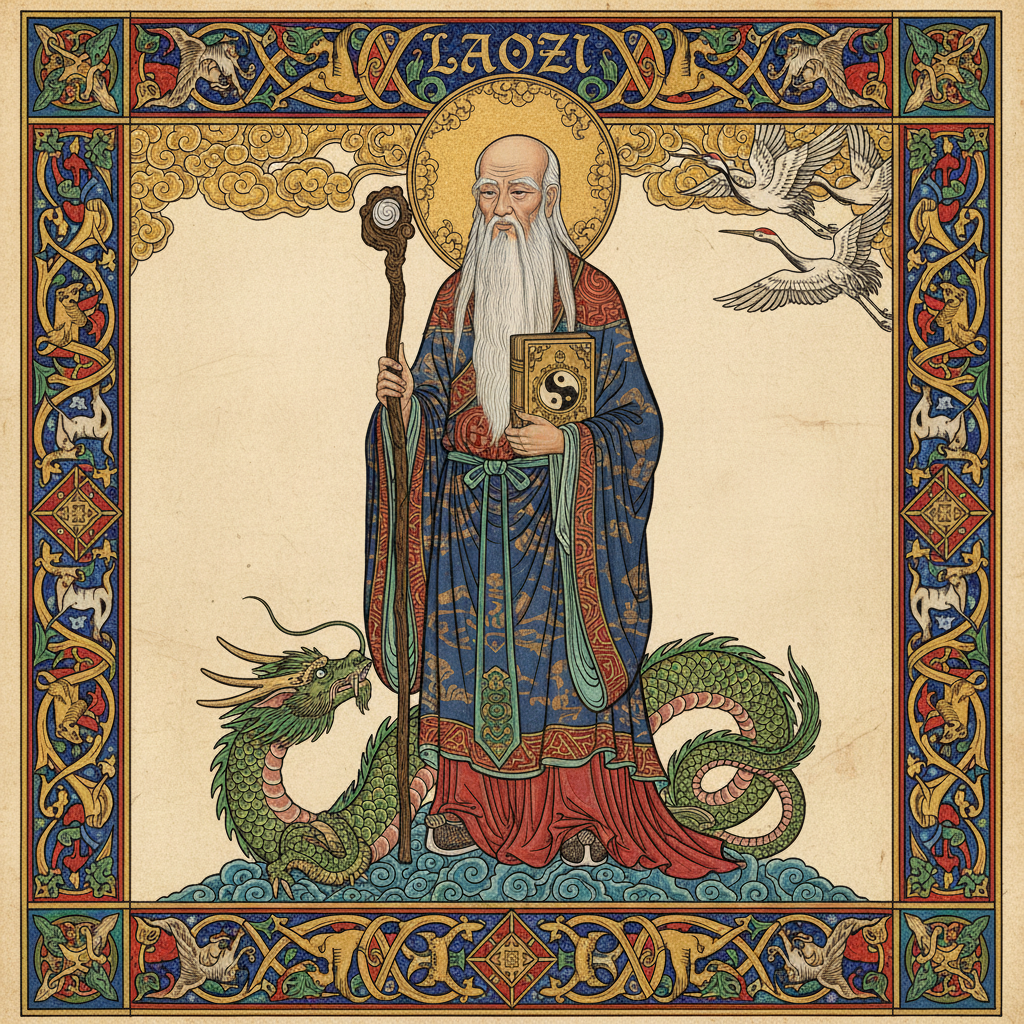
Combat Profile
Wu Wei
By embracing non-action and paradox, Laozi nullifies all direct opposition and causes enemies to exhaust themselves against their own momentum.
The Unknowable Way
Laozi's true nature remains inscrutable; attacks against him have diminished accuracy and he cannot be fully comprehended by divination or prediction.
May not have existed. The historical evidence for Laozi is thin enough that some scholars consider him a composite figure or pure legend. This is, of course, the most Taoist possible weakness: the founder of the tradition that says "the Tao that can be named is not the eternal Tao" may himself be unnameable
“The Tao that can be spoken is not the eternal Tao. The name that can be named is not the eternal name.”
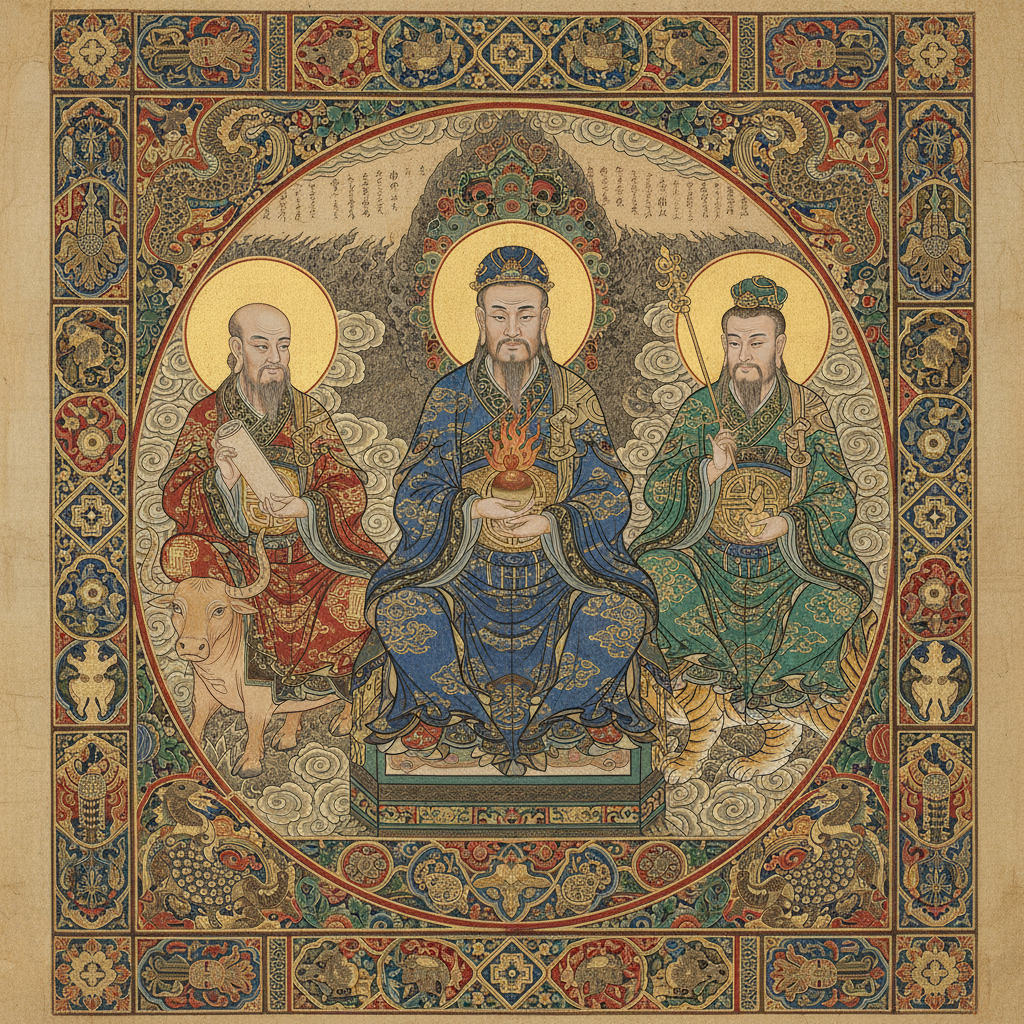
Lore: Laozi (“Old Master” or “Old Child” — even his name is paradoxical) is the legendary founder of Taoism and the attributed author of the Tao Te Ching, arguably the most influential short text in world philosophy. According to Sima Qian’s Records of the Grand Historian (the earliest historical source, c. 94 BCE), Laozi served as a court archivist in the Zhou dynasty before becoming disillusioned with the decline of the kingdom. He decided to leave China entirely, riding a water buffalo westward. At the Hangu Pass on the western frontier, the gatekeeper Yin Xi recognized him as a sage and begged him to leave something of his wisdom before departing. Laozi sat down and wrote the Tao Te Ching — 81 chapters of radical, paradoxical philosophy — in a single session. Then he rode his water buffalo through the pass and disappeared from history (Records of the Grand Historian, Sima Qian).
The story is almost certainly legendary, and Laozi himself may be a composite of several historical figures, a literary fiction, or a genuine individual whose biography has been mythologized beyond recognition. Taoist tradition, characteristically, does not find this troubling. The text exists. The teaching works. Whether the teacher was “real” in the historical sense is a question that only a Confucian would insist on answering.
In Taoist religious tradition, Laozi was deified as Daode Tianzun, the third of the Three Pure Ones — the highest gods in the Taoist pantheon. The historical philosopher became a cosmic being, one aspect of the Tao itself made manifest. This deification occurred gradually over centuries, reaching its full form in the organized Taoist church of the Han dynasty and after.
Parallel: The most direct comparison is with the Buddha: both renounced the world, both left behind a transformative teaching, both may have historical cores wrapped in legend, and both were deified by their followers. But the differences are instructive. The Buddha sat under a tree and achieved enlightenment through intense effort over a single night. Laozi wrote a book and left. The Buddha founded a community (the Sangha) and spent 45 years teaching. Laozi handed 5,000 characters to a gatekeeper and vanished. The Buddha’s path requires decades of disciplined practice. Laozi’s path requires you to stop practicing. Compare also Enoch (Genesis 5:24), who “walked with God, and he was not, for God took him” — another sage who simply vanished from the world, leaving no body and no explanation.
2 min read
Confucius (according to legend, Laozi met Confucius and left him bewildered -- "I know a bird can fly, a fish can swim, a beast can run. But the dragon -- I cannot tell how it rides the wind and clouds. Today I have met Laozi, and he is like a dragon"). In truth, nothing "counters" Laozi because he does not oppose
*Tao Te Ching* (attributed); *Records of the Grand Historian* (Sima Qian, c. 94 BCE); Taoist liturgical traditions; *Zhuangzi* (references)