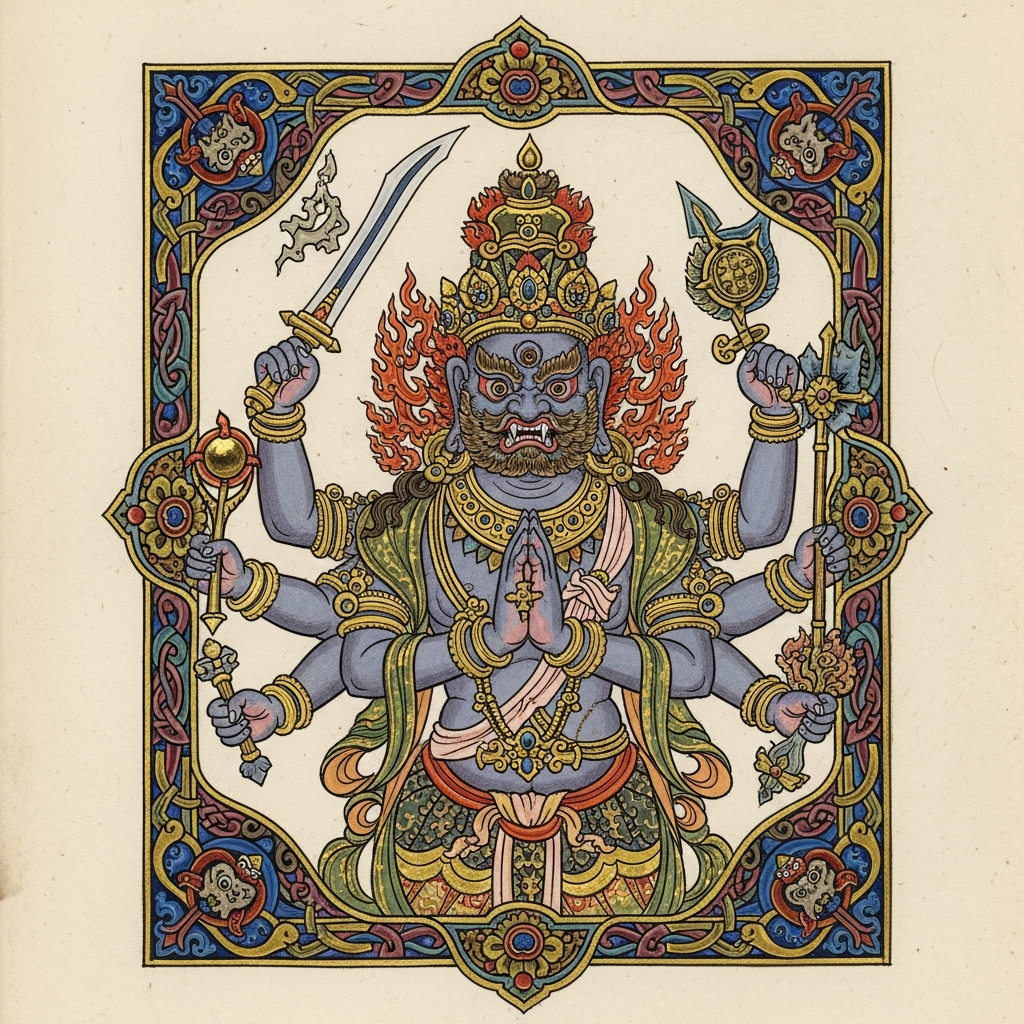
Combat Profile
Prideful Ascension
Asuras gain exponentially increasing power each time they are thwarted, transforming frustration into devastating combat strength.
Eternal Rivalry
Asuras compulsively challenge any being they perceive as stronger, unable to accept submission or defeat without immediate retaliation.
Consumed by envy; always at war with the devas; can never enjoy what they have because they obsess over what others have
The asuras are powerful beings — stronger than humans, longer-lived, and possessing great material wealth. But they are consumed by jealousy. In Buddhist cosmology, the asuras and the devas (gods) were once unified, but the asuras were expelled from heaven after a conflict and now wage endless war against the gods, trying to reclaim what they lost. They can see the splendor of the deva realm above them, and it drives them mad with envy.
The asura realm is not a realm of evil — it is a realm of comparison. Asuras are not wicked; they are competitive. They do not want to destroy the good — they want to HAVE the good that others have. Their suffering is the suffering of the person who has a beautiful house but is miserable because their neighbor’s house is larger. They have everything except the ability to enjoy it.
The parallels:
- Fallen Angels: The asuras’ expulsion from heaven and their subsequent war against the gods directly parallels the fall of Satan and his angels (Revelation 12:7-9). Both are powerful beings cast out of paradise who wage perpetual war against the divine order. The difference: in Christianity, the fallen angels are morally evil (they rebelled against God); in Buddhism, the asuras are psychologically trapped (they are consumed by envy, not by malice).
- The Titans: In Greek mythology, the Titans were the older gods defeated by the Olympians and imprisoned in Tartarus. The structural parallel to the asuras is precise: a race of powerful beings at war with the ruling gods, defeated but not destroyed, perpetually resentful.
- Corporate culture, politics, academia: Buddhist teachers frequently use asuras as a metaphor for environments where brilliant, capable people destroy themselves and each other through competitive jealousy. The asura realm is anywhere that success is measured by comparison rather than by inherent worth.
“The asura has everything he needs to be happy. He has only one problem: he knows someone who has more.”
2 min read
Equanimity and contentment -- the antidotes to jealousy
Abhidharmakosa; Digha Nikaya; Sakkapanha Sutta