Combat Profile
Wisdom Sword
Manjushri's blade of insight pierces through ignorance and delusion, instantly resolving confusion and revealing hidden truths to all allies.
Gentle Glory
All allies gain enhanced clarity and understanding; magical accuracy increases and illusory effects lose potency in Manjushri's presence.
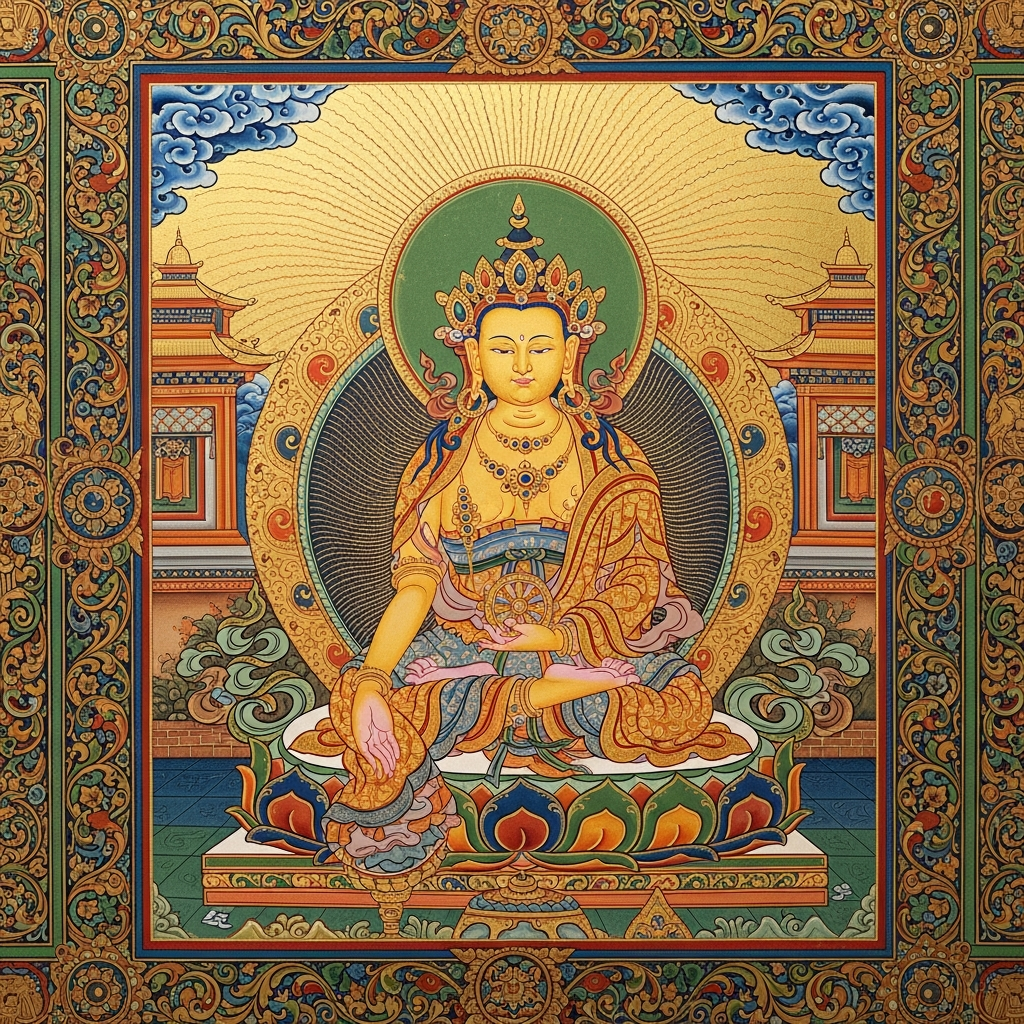
Manjushri is the bodhisattva of transcendent wisdom — the sharp, penetrating insight that sees through all illusion to the nature of reality. He is depicted as a beautiful youth (wisdom never ages) riding a lion (truth is fearless) and wielding a flaming sword in his right hand. This sword is not a weapon of war but of liberation: it cuts through ignorance, the root cause of all suffering. In his left hand he holds a lotus flower bearing the Prajnaparamita Sutra — the “Perfection of Wisdom” scripture.
The parallel to Michael is immediate: both are youthful, beautiful figures who wield flaming swords in service of the highest good. Michael’s sword defeats Satan (evil); Manjushri’s sword defeats avidya (ignorance). In both traditions, the sword is the signature weapon of the figure who represents the highest form of spiritual combat. The difference reveals the traditions’ priorities: Christianity’s primary enemy is moral evil; Buddhism’s primary enemy is cognitive ignorance.
The parallel to Sophia (Wisdom) is equally precise: In Proverbs 8, Wisdom is personified as a figure who was present at creation, who “delights in the human race,” and whose rejection leads to death. In Gnostic Christianity, Sophia is a divine feminine emanation whose fall creates the material world. Manjushri IS wisdom personified — and his cult center at Mount Wutai in China has been a major pilgrimage destination for over a thousand years.
“Manjushri’s sword does not destroy enemies — it destroys the illusion that there ARE enemies.”
1 min read
Lotus Sutra; Vimalakirti Sutra; Manjushri-mulakalpa