Combat Profile
Vajra Strike
Channels indestructible diamond-like energy to shatter illusions and spiritual obstacles with overwhelming force
Unbreakable Truth
All defenses gain immunity to doubt and illusion; protection extends to all who seek enlightenment
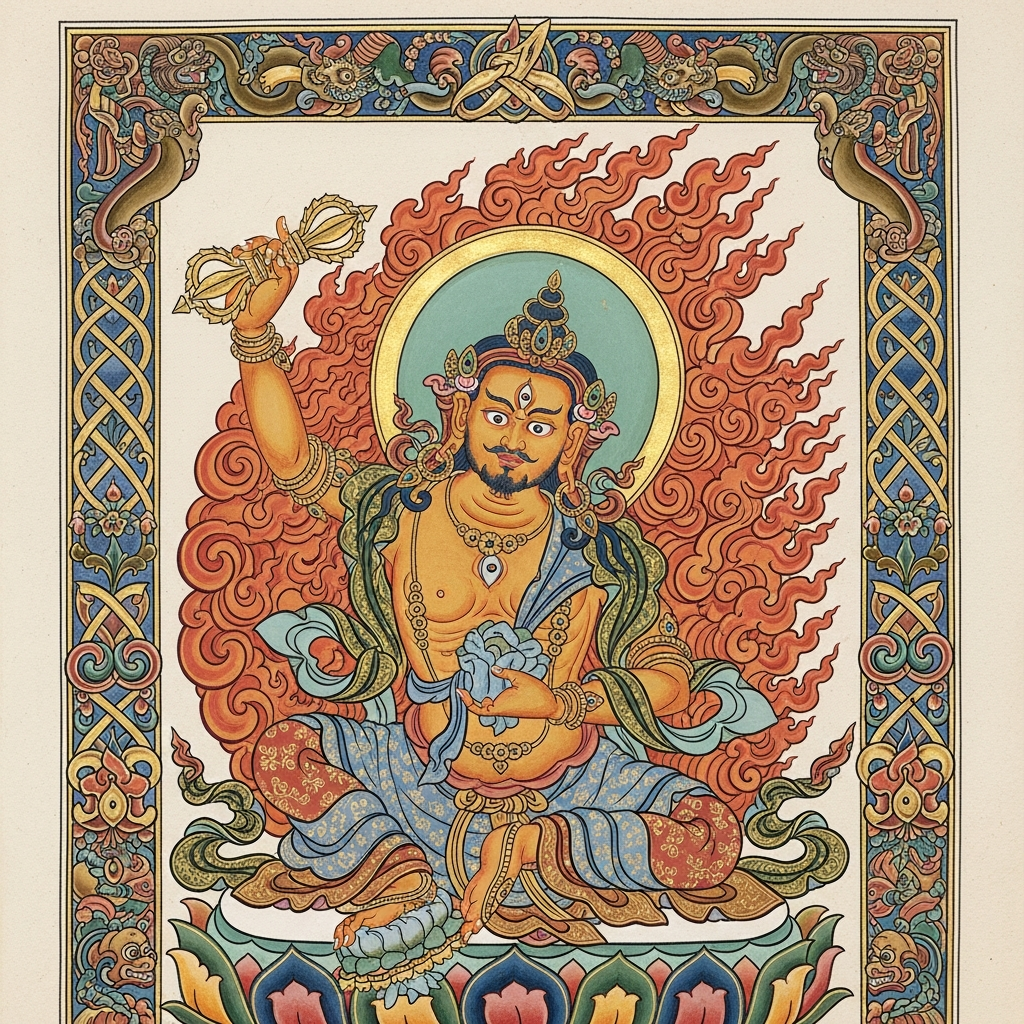
Vajrapani is the bodhisattva of spiritual power — the muscular, wrathful figure who wields the vajra (thunderbolt/diamond scepter), the indestructible weapon that symbolizes the adamantine nature of enlightened truth. He serves as the Buddha’s personal bodyguard, appearing in Pali Canon stories as a yaksha (nature spirit) hovering behind the Buddha with his thunderbolt raised, ready to split the skull of anyone who lies to the Buddha or threatens the dharma. He is not subtle.
The parallels converge from multiple traditions:
- Michael defending God: Vajrapani’s role as the martial protector of the Buddha directly parallels Michael’s role as the commander who defends the divine order. Both are warrior figures who serve a being of peace.
- Thor with Mjolnir: The iconography is strikingly similar — a powerful figure wielding a thunderbolt/hammer, associated with storms, strength, and the destruction of cosmic enemies. The vajra and Mjolnir are cognate symbols.
- Indra with the vajra: This parallel is not coincidental. Vajrapani’s iconography is directly borrowed from Indra, the Vedic king of the gods who wields the vajra against the cosmic serpent Vritra. As Buddhism absorbed and transformed Hindu elements, Indra’s weapon became a Buddhist symbol of indestructible truth.
In Gandharan Buddhist art (1st-5th century CE, in modern Pakistan/Afghanistan), Vajrapani is depicted as a figure remarkably resembling Heracles — muscular, bearded, wielding a club — because Gandharan artists worked in a Greco-Buddhist tradition that fused Greek and Indian iconography. The thunderbolt-wielding protector is one of the most universal archetypes in world religion.
“The vajra cannot be cut, cannot be burned, cannot be broken. It is truth itself, wielded by compassion.”
1 min read
Pali Canon (Ambattha Sutta); Lotus Sutra; Vajrapani dharani texts