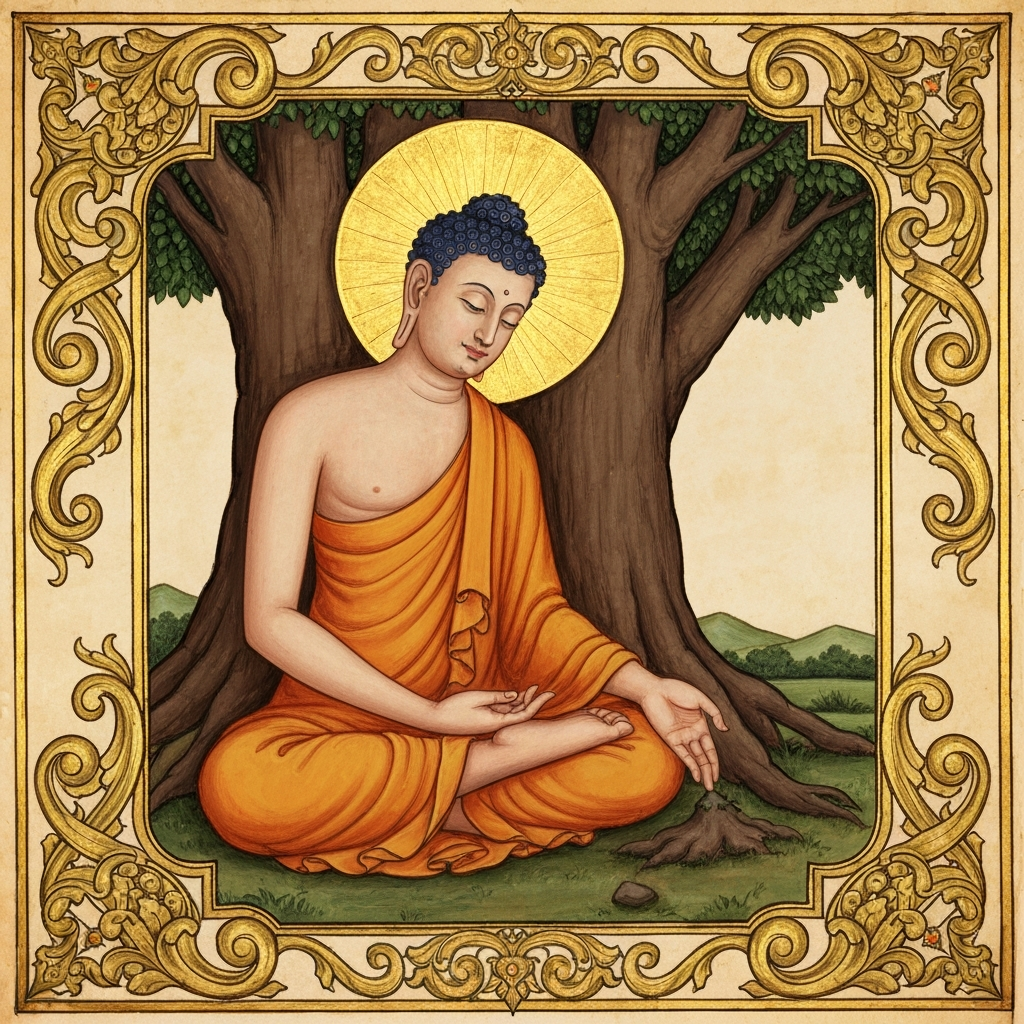
Combat Profile
Bodhi Awakening
grants perfect understanding of suffering's root causes and bestows liberation upon those who embrace the Four Noble Truths
Perfect Wisdom
radiates enlightenment that dissolves delusion and ignorance in all who encounter the Buddha's presence
Siddhartha Gautama was born a prince of the Shakya clan in Lumbini (modern Nepal), around the 5th century BCE. His father, King Suddhodana, tried to shield him from all suffering — surrounding him with luxury, youth, and beauty. But on four excursions beyond the palace, Siddhartha encountered an old man, a sick man, a corpse, and a wandering ascetic. These “Four Sights” shattered his illusions: aging, sickness, and death are inescapable, and the only meaningful response is to seek liberation.
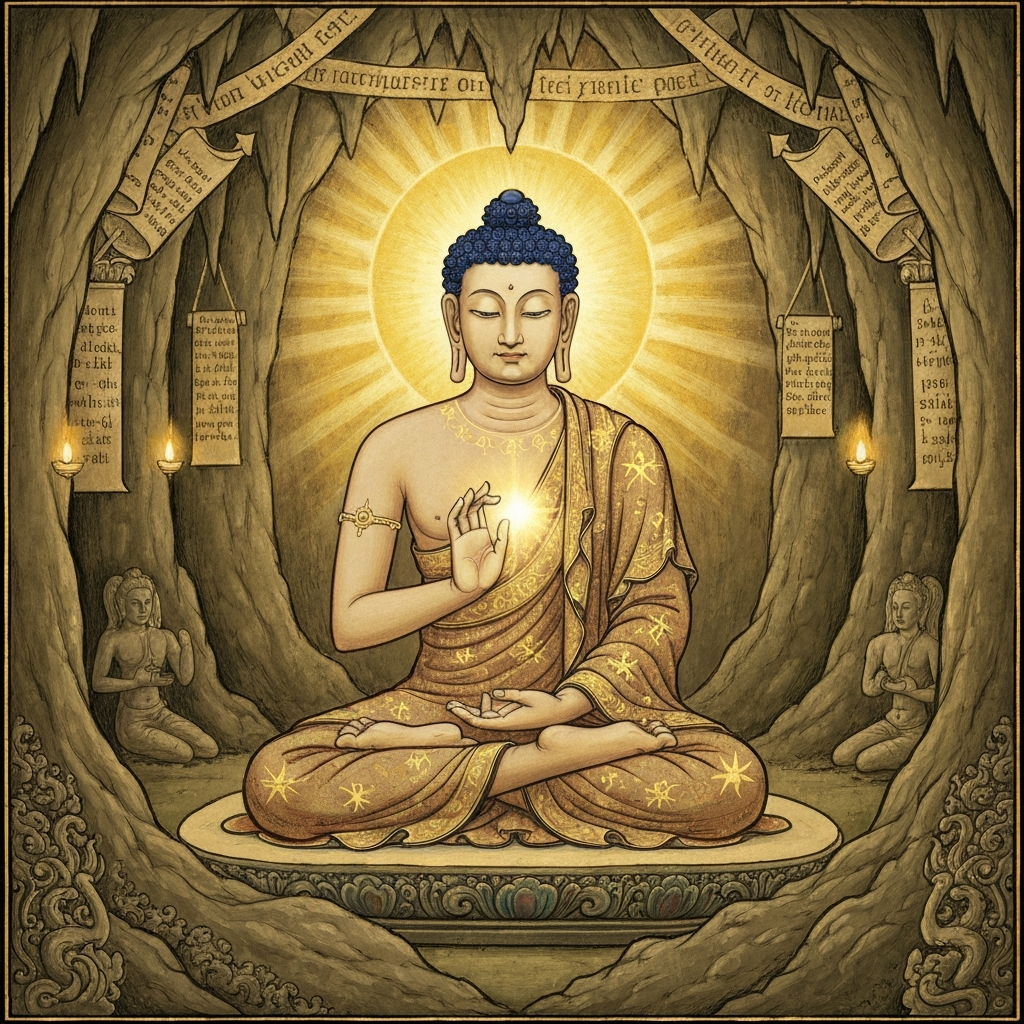
He renounced his throne, his wife Yasodhara, and his infant son Rahula. He practiced extreme asceticism for six years, nearly starving himself to death, before realizing that neither luxury nor self-torture leads to awakening. He chose the Middle Way — the path between extremes — sat beneath the Bodhi tree at Bodh Gaya, and vowed not to rise until he had achieved enlightenment.
That night, Mara attacked. And the Buddha did not fight back.
After his enlightenment, he spent the remaining 45 years of his life teaching the Four Noble Truths (suffering exists; suffering has a cause — craving; suffering can end; the Eightfold Path leads to the end of suffering; Dhammacakkappavattana Sutta) and the Eightfold Path (right view, intention, speech, action, livelihood, effort, mindfulness, concentration; Sutta Pitaka). He died at age 80 in Kushinagar, entering parinirvana — final liberation from the cycle of rebirth.
The Jesus parallel is extraordinary: Both were born into circumstances of prophecy. Both renounced worldly power. Both endured a defining confrontation with a tempter (Mara / Satan). Both taught radical compassion, non-violence, and the primacy of inner transformation over external ritual. Both gathered communities of disciples. Both promised liberation from the deepest form of human suffering. The structural parallels are so precise that early Christian missionaries in Asia sometimes called the Buddha “a saint who got the details wrong” — and Buddhist scholars returned the compliment.
The critical difference: Jesus claims to BE the salvation (“I am the way, the truth, and the life”); the Buddha claims to have FOUND the salvation and to be pointing the way. Christ is the door; Buddha is the finger pointing at the moon.
“I am awake.” — The meaning of “Buddha” (from the Sanskrit root budh, “to awaken”)
2 min read
Pali Canon (Tipitaka); Buddhacarita (Ashvaghosha, 2nd century CE); Jataka Tales; Lalitavistara Sutra