Combat Profile
Delusion Veil
Mara shrouds the battlefield in illusions and false desires, causing enemies to strike their allies or waste turns pursuing phantom targets
Lord of Desire
Mara's mere presence amplifies greed, lust, and fear; affected enemies have reduced willpower and are susceptible to temptation-based effects
Equanimity, mindfulness, non-attachment -- cannot affect one who does not crave
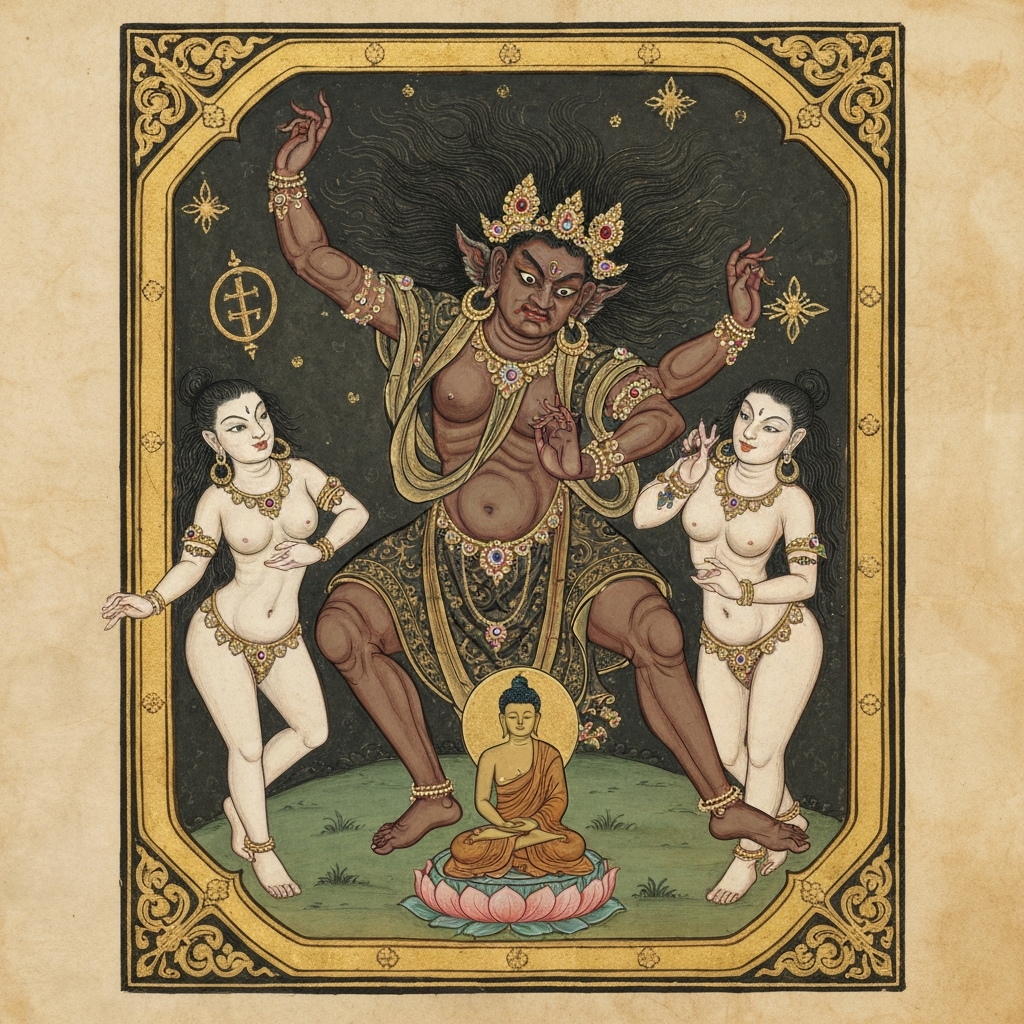
Mara is the embodiment of everything that keeps beings trapped in samsara — craving, fear, doubt, and the illusion of self. His name means “death” or “destroyer,” and he rules the highest heaven of the desire realm (Kamadhatu), a realm of sensory pleasure so intoxicating that its inhabitants never seek liberation. He is not a rebel against God (there is no creator God in Buddhism to rebel against); he is the personification of the cycle itself — the force that keeps the wheel turning.
On the night of the Buddha’s enlightenment, Mara deployed a three-stage assault (Sutta Nipata; Buddhacarita IV):
Stage 1 — Desire: Mara sent his three daughters — Tanha (Craving), Arati (Aversion/Boredom), and Raga (Passion/Lust) — to seduce Siddhartha with beauty, pleasure, and attachment. They danced, transformed into women of every age and type, offered every worldly delight. Siddhartha did not move.
Stage 2 — Fear: Mara unleashed his demonic armies — storms of flaming rocks, arrows, boiling mud, and darkness. Monstrous beings surrounded the Bodhi tree. Every weapon turned to flower petals before reaching Siddhartha. He did not flinch.
Stage 3 — Doubt: Mara’s most dangerous weapon. He challenged Siddhartha’s right to sit on the seat of enlightenment: “Who witnesses your worthiness? Who are you to claim awakening?” This is the attack on identity itself — the whisper that says you are not enough, you do not belong, you have no right to transcend.
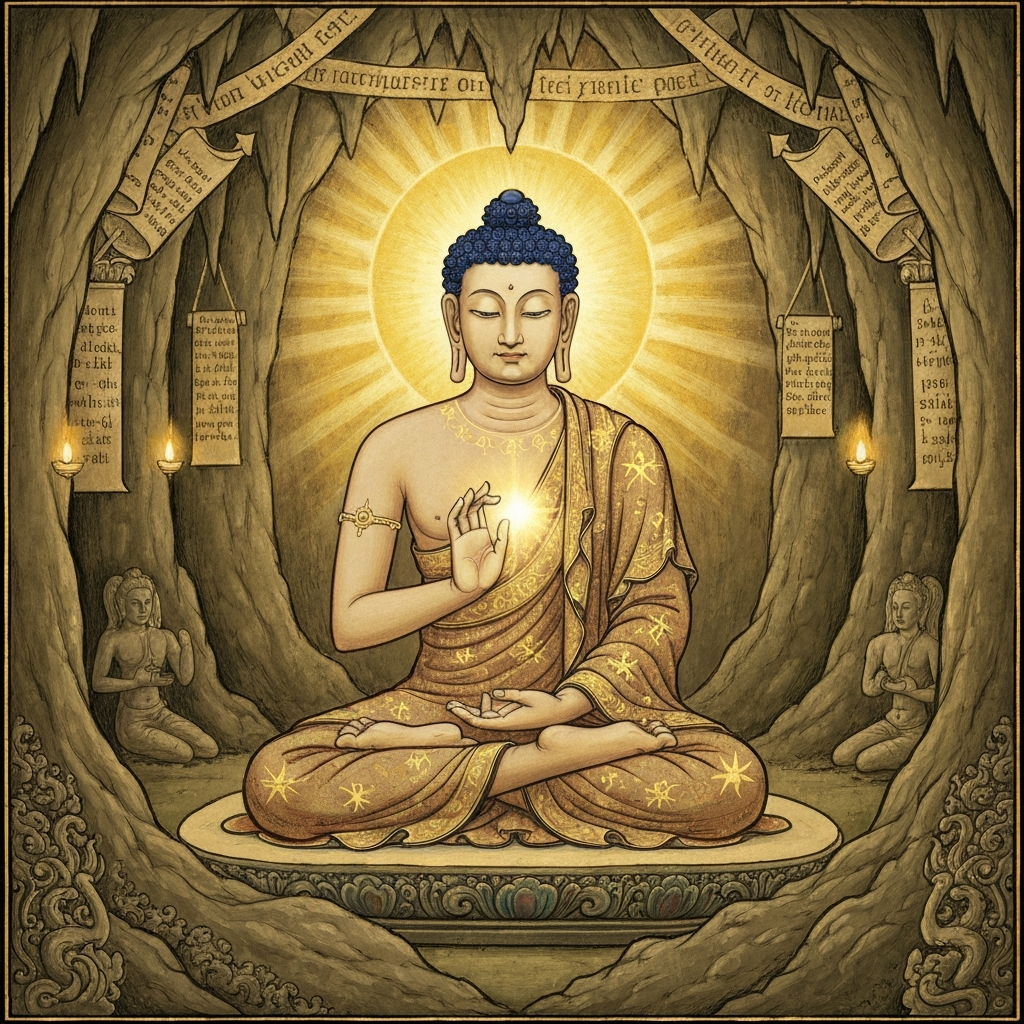
Siddhartha’s response is one of the most iconic moments in world religion: he reached down and touched the earth with his right hand. “The earth is my witness.” The earth trembled, and Mara was defeated. Not by force, not by argument, not by divine intervention — but by the simple act of grounding oneself in reality and refusing to be moved by craving, fear, or self-doubt.
The Satan parallel is virtually identical in structure. See the comparison table below.
Mara does not disappear after the Buddha’s enlightenment. He returns throughout the Buddha’s teaching career, appearing at moments of doubt, fatigue, or vulnerability — whispering that the Buddha should give up, stop teaching, enter nirvana early. The Buddha always recognizes him: “I see you, Mara.” And recognition is enough to dispel him. This is Buddhist psychology distilled: you cannot destroy temptation, but you can see it clearly, and in seeing it, remove its power.
“I know you, Mara. You are not my master.” — Samyutta Nikaya (Mara-samyutta)
2 min read
The Buddha (directly defeated him); any awakened mind
Sutta Nipata; Samyutta Nikaya (Mara-samyutta); Buddhacarita; Lalitavistara Sutra