Combat Profile
Thousand-Armed Salvation
instantly heals all suffering beings within reach and grants them protection from future harm
Boundless Compassion
all allies gain continuous healing regeneration and immunity to despair effects
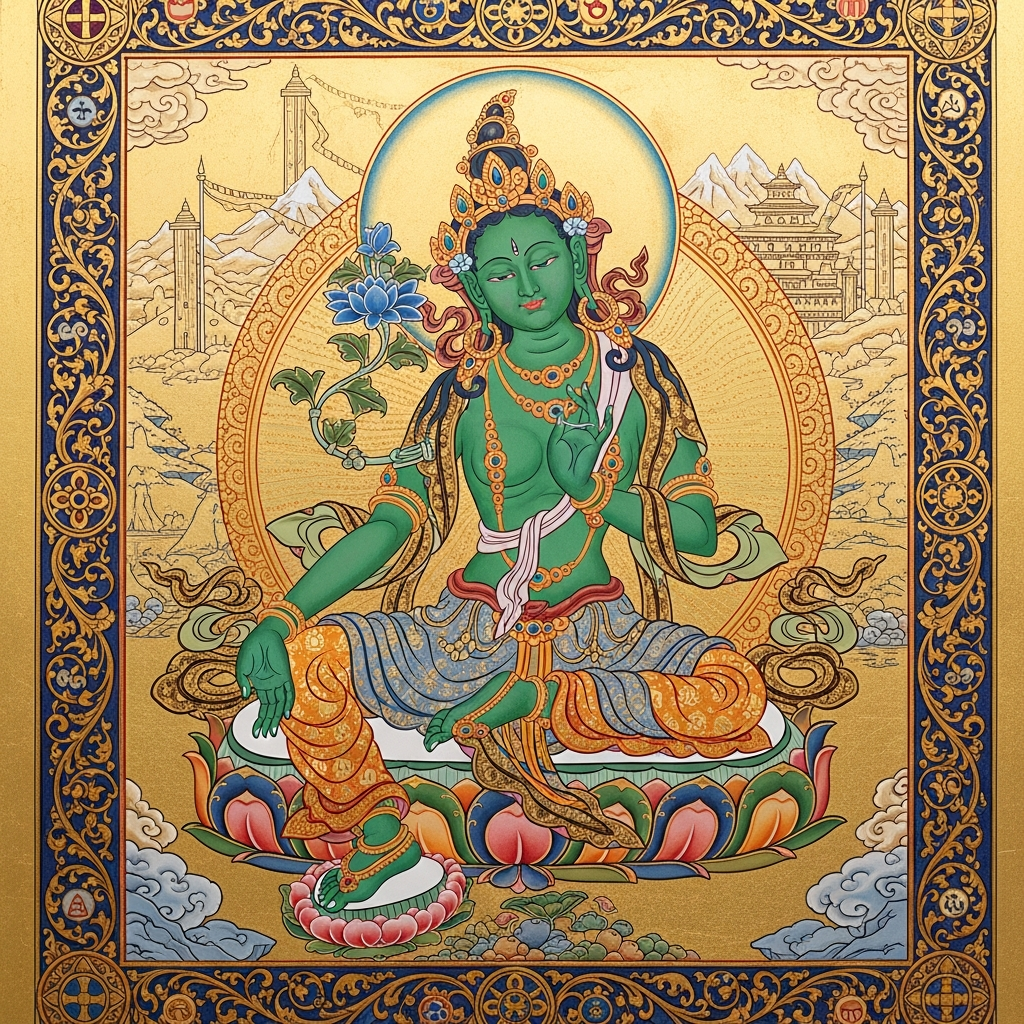
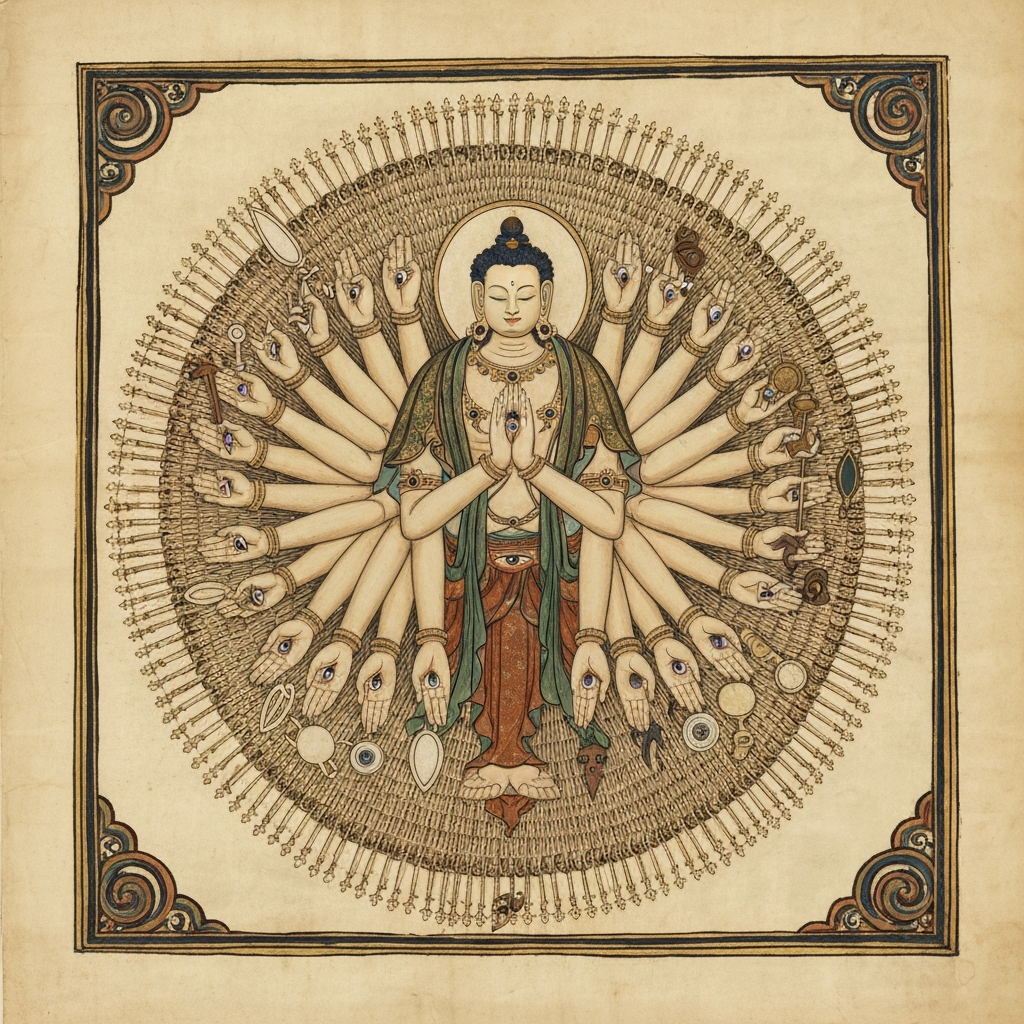
Avalokiteshvara is the bodhisattva who embodies the compassion of all Buddhas (Lotus Sutra, ch. 25). The name means “The Lord Who Gazes Down [at the World’s Suffering]” — a being of infinite awareness who perceives every cry of pain in every realm of existence and responds. In one famous account, Avalokiteshvara looked upon the suffering of all beings in all realms and wept. From his tears, the goddess Tara was born (Karandavyuha Sutra). In another, he vowed to liberate every being from samsara, but when he saw how many beings still suffered, his head split into eleven pieces from grief. The Buddha Amitabha reassembled his head into eleven faces — so he could see suffering in all directions simultaneously — and gave him a thousand arms, so he could reach out to help everyone at once.
In East Asian Buddhism, Avalokiteshvara underwent one of the most remarkable gender transformations in religious history: the male Indian bodhisattva became Guanyin (Chinese) / Kannon (Japanese) / Quan Am (Vietnamese) — a female figure of maternal compassion who is one of the most widely worshipped figures in all of Asia. The transformation likely reflects the association of compassion with the feminine, the influence of indigenous goddess traditions, and the spiritual needs of women practitioners who wanted a divine female figure to pray to (Lotus Sutra, devotional commentaries).
The Christian parallels are layered:
- Christ descending to save: Like Jesus, Avalokiteshvara descends from a place of spiritual perfection into the realms of suffering to rescue others — not because he must, but because compassion compels him.
- The Virgin Mary / Divine Mercy: Guanyin’s role in East Asian devotion closely mirrors Mary’s role in Catholic devotion — an intercessor of infinite mercy to whom ordinary people pray in moments of desperation. Both are “refuge of sinners.” Both are approached when the divine feels too remote or judgmental.
- The concept of delayed glory: A bodhisattva who could enter nirvana but chooses not to — for the sake of others. Compare Philippians 2:6-7: Christ “did not consider equality with God something to be grasped, but emptied himself, taking the form of a servant.”
The Dalai Lama is considered a living manifestation of Avalokiteshvara. The mantra Om Mani Padme Hum — the most recited mantra in the world — is Avalokiteshvara’s.
“Should even one being be left behind, I shall not enter into perfect peace.” — Bodhisattva vow
2 min read
Lotus Sutra (Saddharmapundarika); Heart Sutra; Karandavyuha Sutra