The Story
The Black Church is the foundational institution of Black American life — older than the NAACP, older than the historically Black colleges, older than emancipation itself. It is the only major American institution built by Black people, for Black people, in the teeth of a society that legally denied them the right to read, gather, marry, or own their bodies. Its story is the story of how a people reforged their captors’ religion into a theology of liberation.
African Religious Heritage (1619-1750s): Roughly 388,000 Africans arrived across the Middle Passage carrying the spiritual traditions of West and Central Africa: Yoruba Orisha worship, Kongo cosmology, Akan ancestor veneration, and Islamic faith (Raboteau, Slave Religion, 1978). American chattel slavery systematically destroyed these bonds. Drumming was outlawed (it could carry messages). Languages forbidden. Families sold. What survived went underground — into Hoodoo, the ring shout, spirituals with double meanings, the structure of how Black Christianity would be sung.
The Invisible Church and the Hush Harbors (1750s-1830s): Most masters forbade Christianity — they knew “let my people go” was dangerous. But by the mid-1700s, Methodist and Baptist revivalists preached personal conversion and spiritual equality. Enslaved people heard the real sermon. They gathered in secret — “hush harbors,” the “invisible church” (Raboteau, Slave Religion, 1978) — where the Bible was not the master’s book of obedience but the slave’s book of Exodus. Here African rhythms met King James; something wholly new took form.
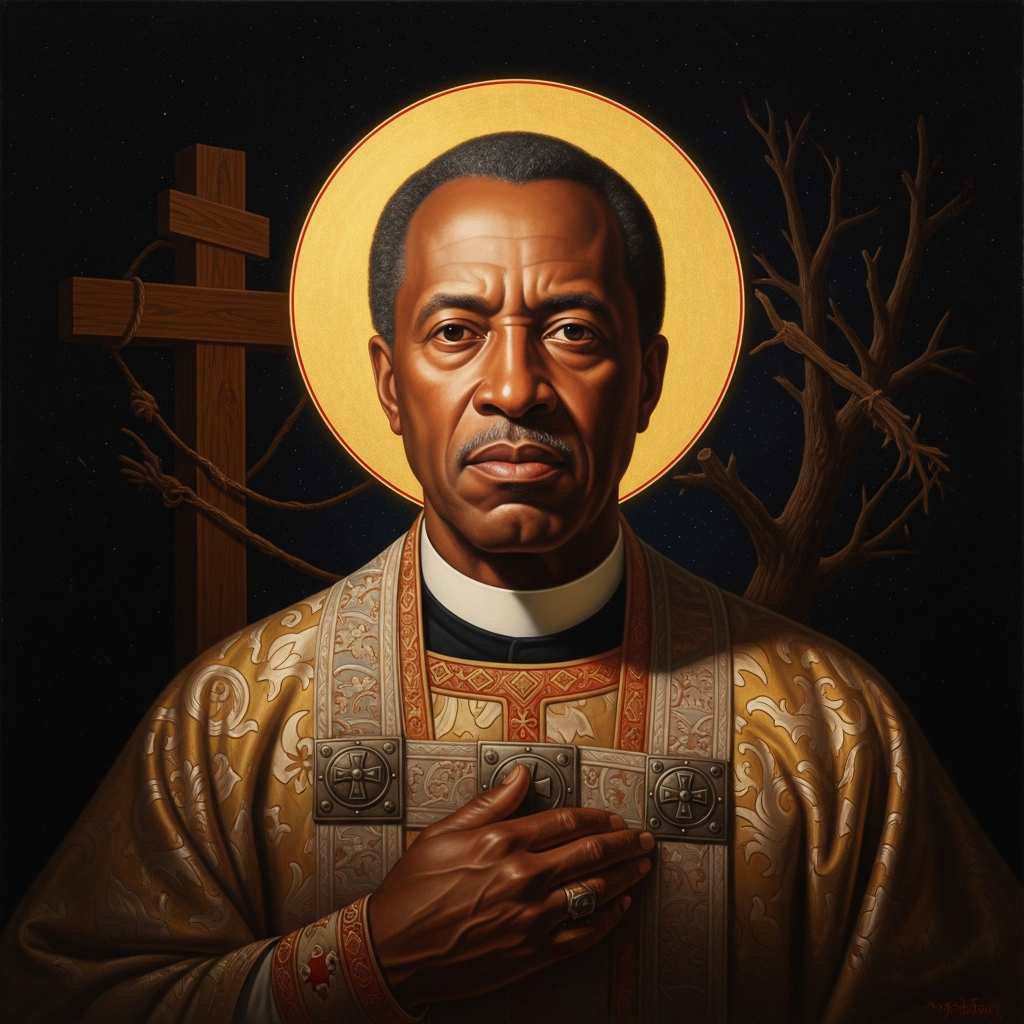
Founding the Black Denominations (1816-1870): In 1787, Richard Allen and Absalom Jones were dragged from their knees at St. George’s Methodist Church for sitting in the white section. They left. In 1816, Allen formally organized the first independent Black denomination: the African Methodist Episcopal Church. The AME Zion Church (1821) and National Baptist Convention (1895) followed. The Black Church became, in W.E.B. Du Bois’s words, “the social center of Negro life” (Du Bois, Souls of Black Folk, 1903).
Reconstruction and Jim Crow (1865-1955): Emancipation freed four million people with nothing: no land, wages, schools, or institutions. The Black Church became all of these. It built the colleges. It hid the Railroad. It buried the lynched (Raboteau, Slave Religion, 1978). When Reconstruction died in 1877 and Jim Crow descended, the Church remained the one space where Black personhood existed.
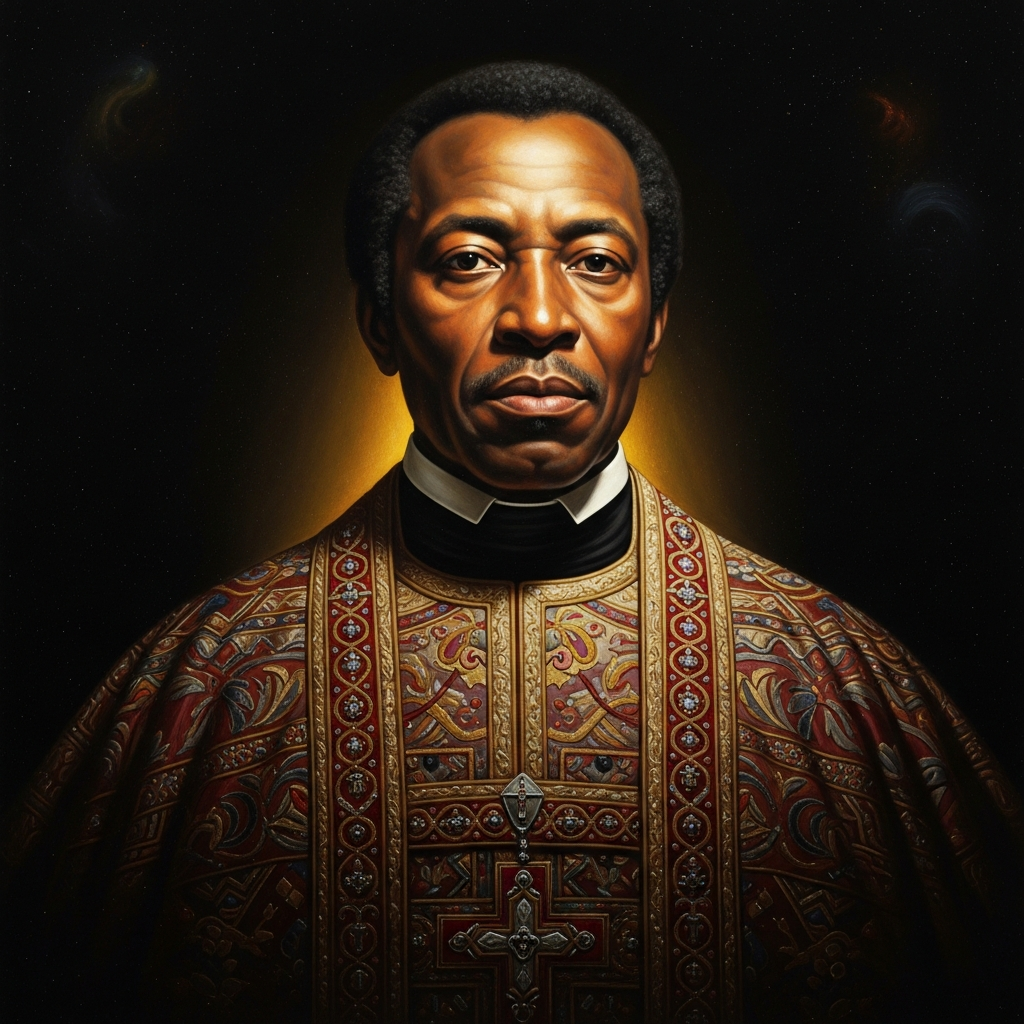
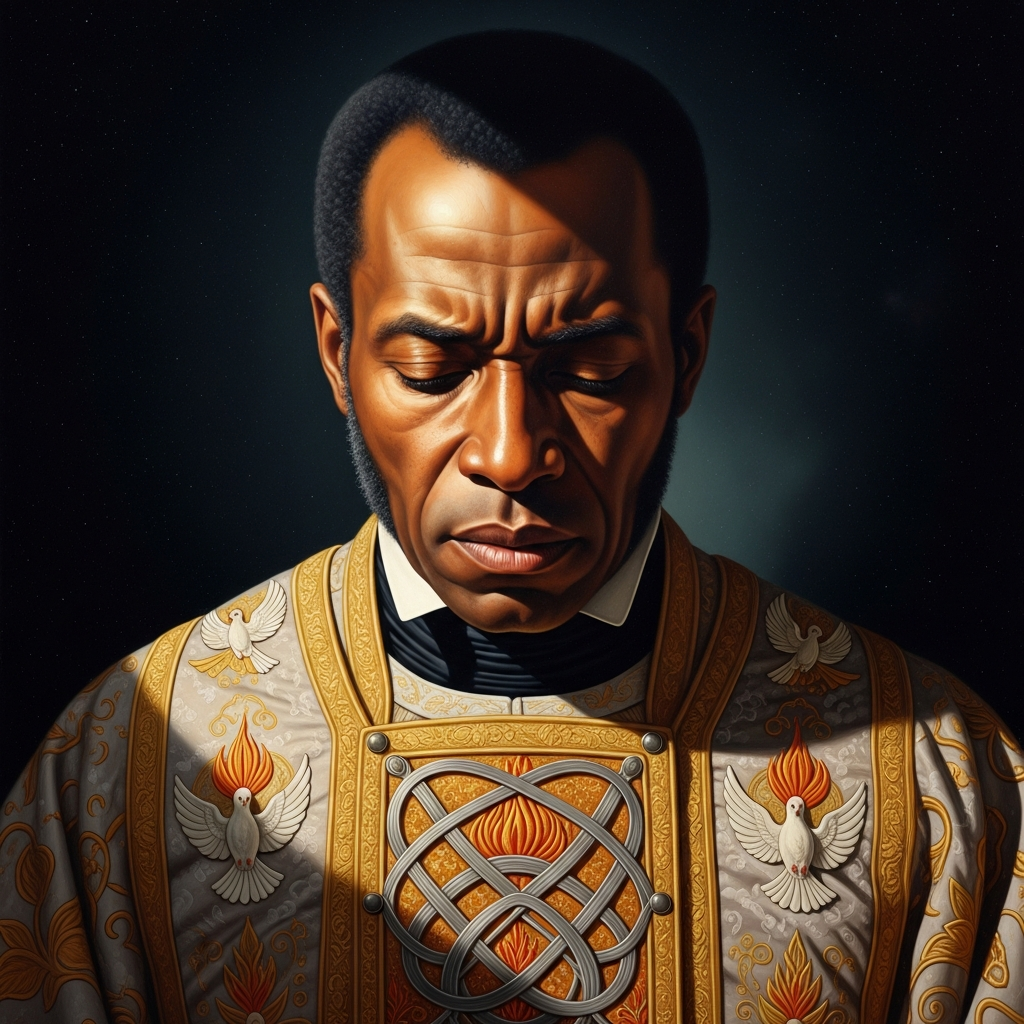
Pentecostalism and the Azusa Street Revival (1906): In April 1906, William Seymour — son of enslaved parents, blind in one eye — led a multiracial revival in a Los Angeles livery stable that birthed global Pentecostalism (Bartleman, Azusa Street, 1925). For three years, Black, white, Latino, and Asian worshippers prayed together, spoke in tongues, and shattered segregation. From this Black-led revival descend the Church of God in Christ and 600 million Pentecostals worldwide.
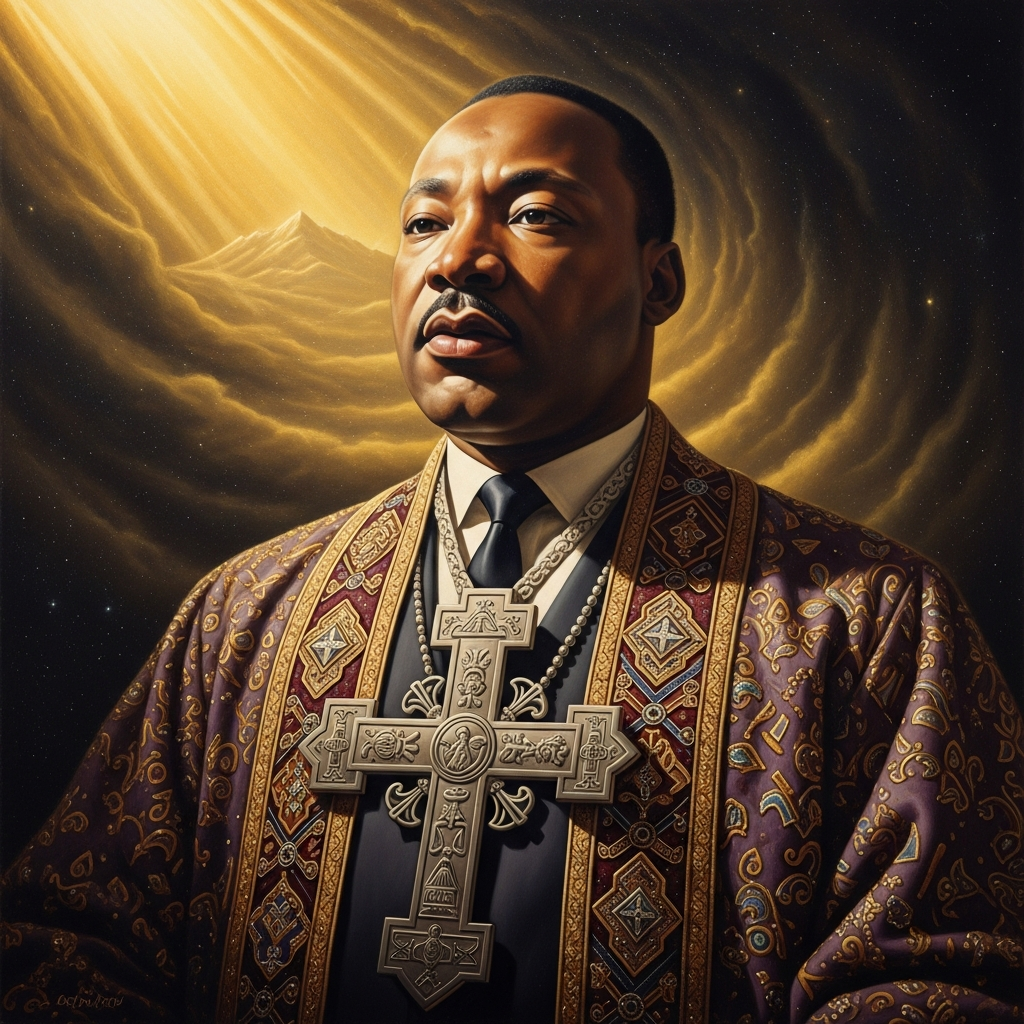
Civil Rights and Black Liberation (1955-1968): The Montgomery Bus Boycott began December 5, 1955, organized from the basement of Dexter Avenue Baptist Church (King, Why We Can’t Wait, 1964). Its 26-year-old pastor was Martin Luther King Jr.. The Southern Christian Leadership Conference (1957) was a coalition of Black ministers. Birmingham, Selma, the Lincoln Memorial — all organized through Black churches, sung with Black church music, prayed in Black church cadence. King was assassinated April 4, 1968, the day after he preached “I’ve Been to the Mountaintop” at Mason Temple (King, I’ve Been to the Mountaintop, 1968).
Black Liberation Theology (1969-Present): In 1969, James Cone at Union Theological Seminary published Black Theology and Black Power (Cone, 1969). He argued: “if God is not for us, against the white racist structures of this society, then God is a murderer.” Cone systematized the Civil Rights movement’s lived theology. Womanist theologians — Delores Williams, Katie Cannon, Jacquelyn Grant — expanded it to the Black woman’s experience, reading Hagar as wilderness-survivor archetype (Williams, Sisters in the Wilderness, 1993).
The Contemporary Moment (2000-2026): The Black Church today is contested terrain. Prosperity gospel megachurches face critique from theologians who see capitulation to capitalism (Pinn, Why, Lord?, 1995). Black Lives Matter had fractured relationships with institutional churches — some marched early; others resisted the movement’s queer-affirming, decentralized model. The 2015 Mother Emanuel massacre (nine murdered during Bible study) reopened the oldest debate: justice now, or grace eternal. The families’ public forgiveness astonished the nation and exposed an impossible burden Black Christians have always borne.
The Black Church remains what it has always been: a tradition of survival and prophetic witness. It is where the slaveholder’s religion was reread as the slave’s, and the slave’s reading proved the truer one.
Pivotal Events
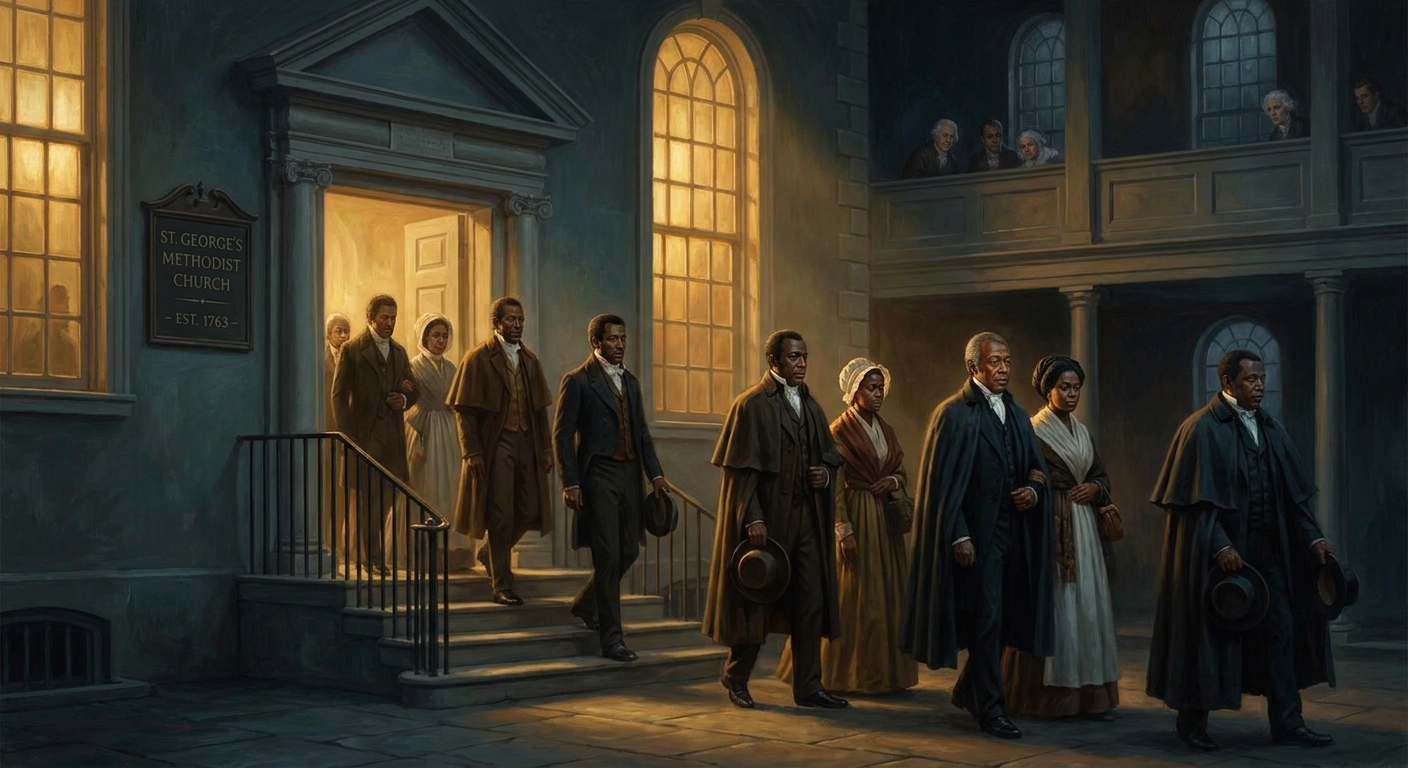
In 1787, Richard Allen and Absalom Jones were dragged from prayer at St. George’s Methodist Church for sitting in the white section. They left with the Black congregation. Over three decades, Allen built Bethel into a network of independent congregations. On April 9, 1816, sixteen congregations formally organized the African Methodist Episcopal Church — the first independent Black denomination and the first Black institution to operate at scale in American history. Allen became its first bishop. The AME was at once church and political organization: it sheltered the Underground Railroad, founded Wilberforce University (1856), and shaped every Black denomination that followed.
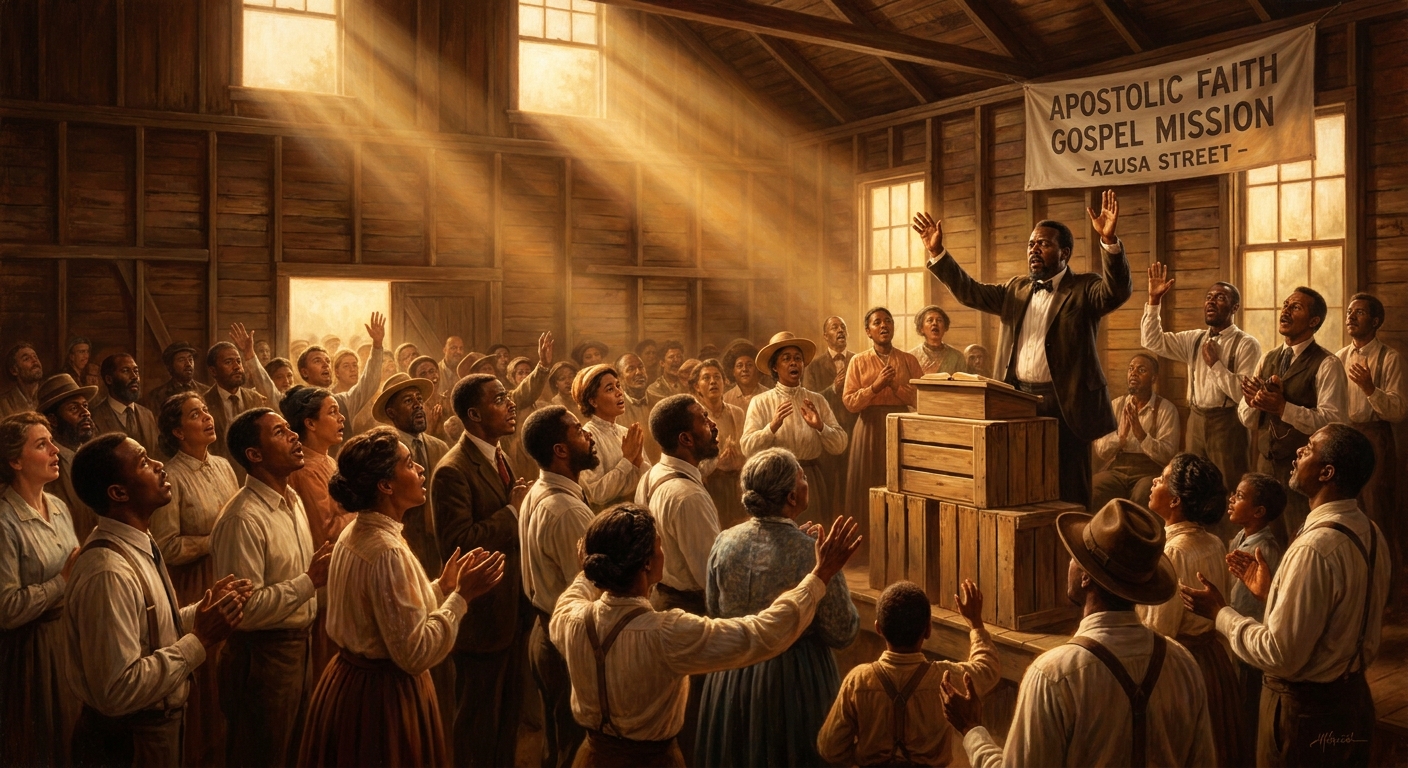
William J. Seymour, son of formerly enslaved Louisianans and blind in one eye, arrived in Los Angeles in 1906 preaching that speaking in tongues signaled Spirit baptism. Locked out of his first congregation, he began preaching at home. On April 9, 1906, the Holy Spirit reportedly fell with such force the porch collapsed. The revival relocated to a former livery stable at 312 Azusa Street and ran three services daily for three years. Azusa was not singular for tongues — holiness revivals were common — but for racial composition. Black, white, Latino, Asian, and immigrant worshippers prayed, preached, and were baptized together as segregation hardened into law. Frank Bartleman wrote: “the color line was washed away in the blood.” From Azusa descend the Church of God in Christ, the Assemblies of God, and 600 million Pentecostals worldwide.
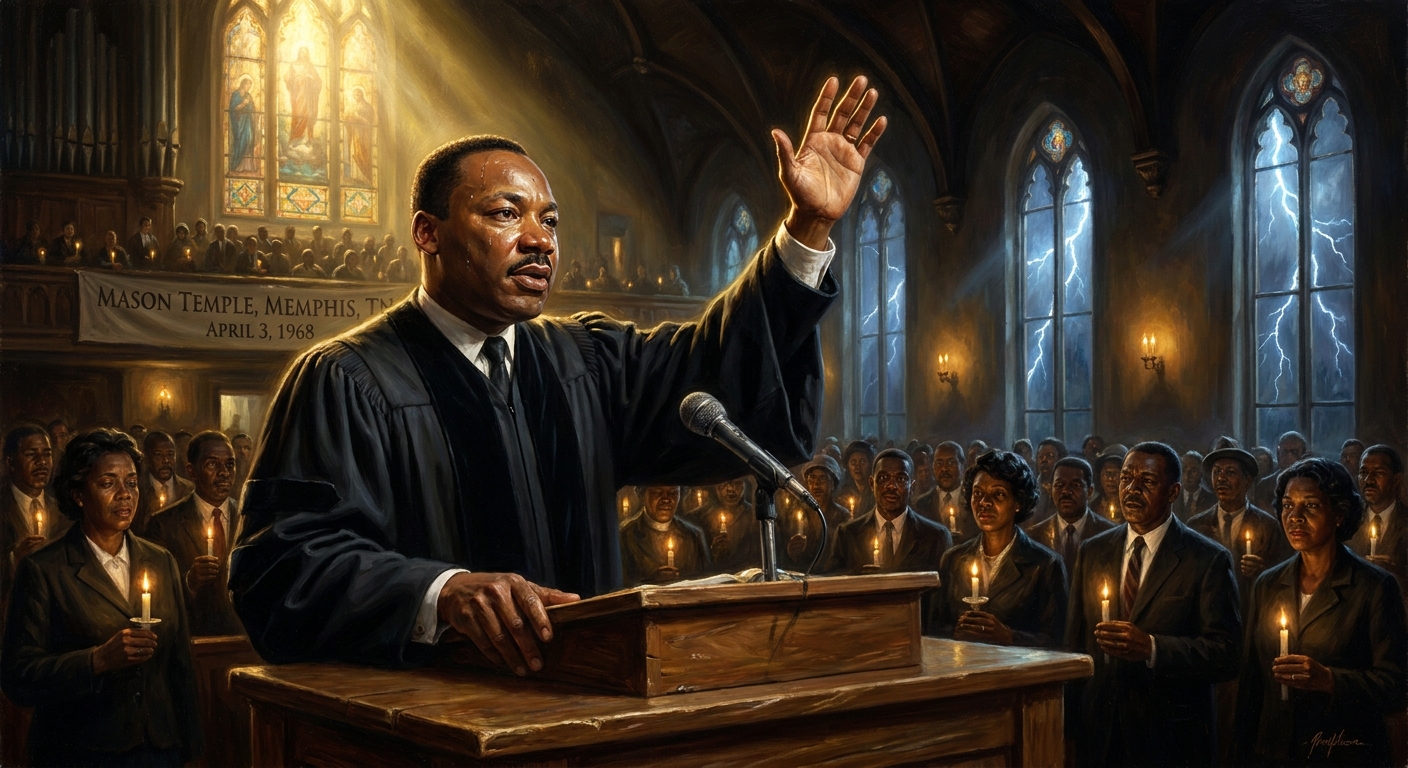
On December 1, 1955, Rosa Parks refused her seat on a Montgomery bus. Four days later, Black ministers at Dexter Avenue Baptist Church organized a one-day boycott. They elected the church’s 26-year-old pastor, Martin Luther King Jr., as spokesman. The boycott lasted 381 days and won a Supreme Court ruling against bus segregation. Over thirteen years — Birmingham, the March on Washington, Selma, Vietnam opposition, the Poor People’s Campaign — King was both the century’s most visible American religious leader and the FBI’s target. Hoover wiretapped, blackmailed, tried to break him (see Conspiracies.md on COINTELPRO). On April 3, 1968, King preached at Mason Temple: “I’ve been to the mountaintop. I’ve seen the Promised Land. I may not get there with you. But we, as a people, will get there.” He was assassinated the next evening. He was thirty-nine.
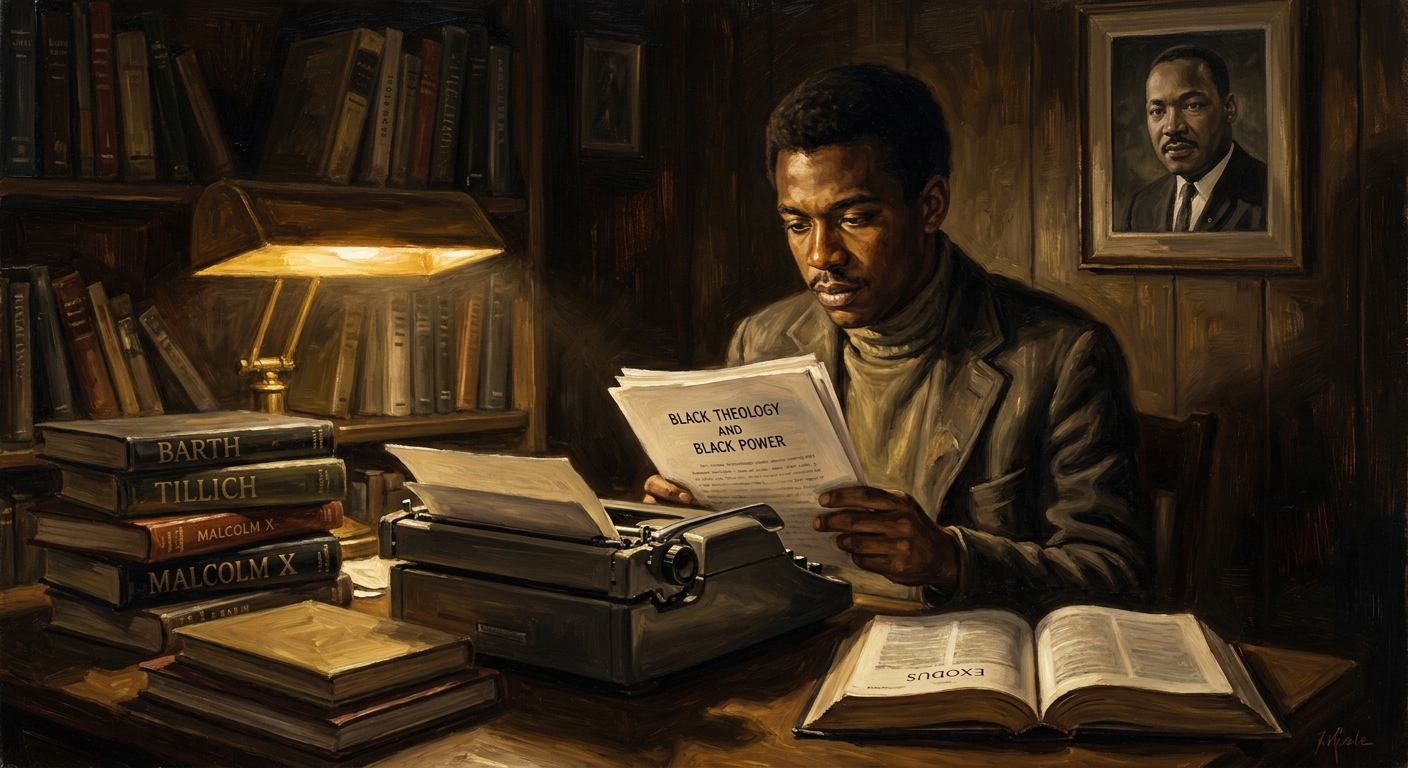
In 1969, James Cone at Union Theological Seminary published Black Theology and Black Power, systematizing the Civil Rights movement’s lived faith. Born in segregated Arkansas, he had watched Detroit burn in 1967 and concluded white theology — which counseled patience with racism — was bankrupt. Cone wrote: “Christ is black.” His thesis: God identifies with the oppressed and wars against systems that crush them. The book alienated white liberals, scandalized Black evangelicals, and forced every seminary to reckon. A Black Theology of Liberation (1970) and God of the Oppressed (1975) followed. Cone’s work birthed womanist theology (Delores Williams reading Hagar as archetype), shaped liberation theologies across Latin America, Asia, and Palestine. He died in 2018.
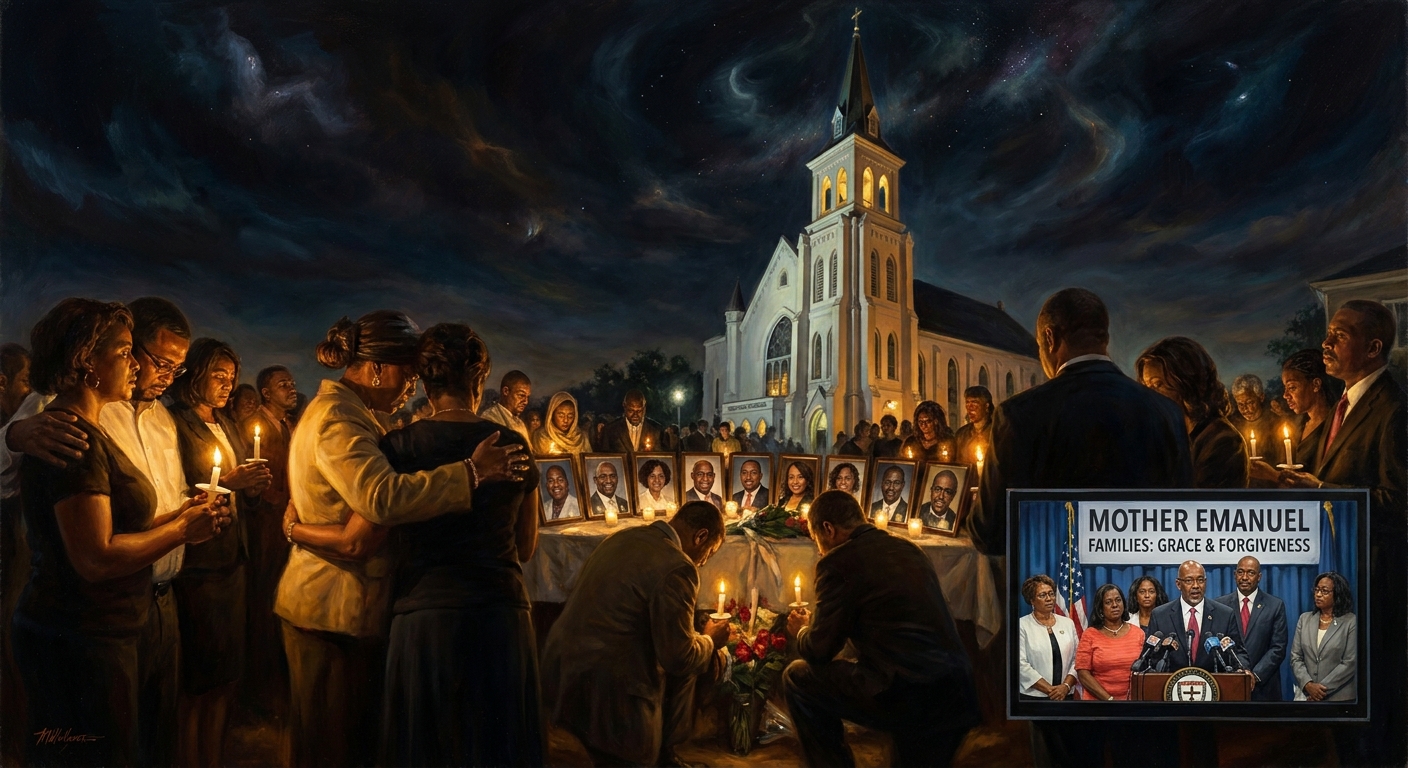
On June 17, 2015, a 21-year-old white supremacist sat through Bible study at Mother Emanuel AME in Charleston, then drew a Glock and opened fire. Nine murdered, including Senior Pastor Clementa Pinckney (also a state senator). Mother Emanuel was founded in 1816 by Denmark Vesey, whose 1822 revolt plot led authorities to burn it. The church had burned and been bombed across two centuries. At the bond hearing two days later, victims’ families publicly forgave the killer. The nation watched, unable to look away. Whether that forgiveness was gospel’s highest expression or the impossible burden Black Christians have always borne remains the tradition’s most painful internal debate. Both readings are honest. The funerals lasted weeks. Confederate flags came down across the South. Mother Emanuel still meets every Sunday.
Timeline
| Era | Date | Event | Source |
|---|
| Hush Harbors | ~1750s | Enslaved Africans gather in secret brush arbors after the master sleeps; the “invisible institution” forms | Albert Raboteau, Slave Religion |
| Great Awakening | 1730s-1770s | Methodist and Baptist revivalists preach to enslaved people; conversions spread | Wesley/Whitefield records |
| First Black Baptist Church | 1773-1775 | Silver Bluff Baptist Church, South Carolina, founded by enslaved preacher David George | Baptist denominational history |
| St. George’s Walkout | 1787 | Richard Allen and Absalom Jones pulled from prayer; lead Black exodus from St. George’s, Philadelphia | Allen, Life Experience and Gospel Labors |
| AME Founded | April 9, 1816 | Richard Allen formally organizes the African Methodist Episcopal Church | AME General Conference records |
| Denmark Vesey Plot | 1822 | Mother Emanuel co-founder organizes planned slave revolt; executed; church burned by Charleston | court records |
| Nat Turner’s Rebellion | 1831 | Black Baptist preacher leads slave revolt in Virginia | Confessions of Nat Turner |
| AME Zion Founded | 1821 | The “freedom church” — Harriet Tubman, Frederick Douglass, Sojourner Truth all members | AME Zion records |
| Frederick Douglass | 1845 | Narrative of the Life of Frederick Douglass, an American Slave published | Douglass autobiography |
| Underground Railroad | 1830s-1865 | Black churches function as stations; Harriet Tubman leads ~70 to freedom | Harriet, the Moses of Her People |
| Emancipation | 1863-1865 | Emancipation Proclamation; Thirteenth Amendment | National Archives |
| Black Methodists / Baptists Surge | 1865-1900 | Massive Black exodus from white-controlled denominations; CME founded 1870 | denominational records |
| National Baptist Convention | 1895 | Largest Black denomination organized; today ~7M members | NBC records |
| Plessy v. Ferguson | 1896 | ”Separate but equal” Jim Crow legalized | U.S. Supreme Court |
| Azusa Street | April 1906 - 1909 | William Seymour leads multiracial Pentecostal revival; modern Pentecostalism born | Frank Bartleman, Azusa Street |
| Church of God in Christ | 1907 | Charles H. Mason founds COGIC, today ~6M members worldwide | COGIC records |
| Great Migration | 1910-1970 | ~6M Black Americans move from rural South to urban North; Black urban churches explode | Isabel Wilkerson, The Warmth of Other Suns |
| Howard School of Divinity | 1926 | Howard Thurman becomes dean; meets Gandhi 1936 | Thurman, With Head and Heart |
| Montgomery Bus Boycott | Dec 1955 - Dec 1956 | 381-day boycott; King launches as national leader | SCLC records |
| SCLC Founded | 1957 | Southern Christian Leadership Conference; coalition of Black ministers | SCLC records |
| Birmingham Campaign | 1963 | ”Letter from Birmingham Jail”; March on Washington; “I Have a Dream” | King, Why We Can’t Wait |
| 16th Street Baptist Bombing | Sept 15, 1963 | Four Black girls murdered in Birmingham church bombing | FBI records |
| Civil Rights Act | 1964 | Public accommodations integrated | U.S. Code |
| Selma to Montgomery | March 1965 | Bloody Sunday; Voting Rights Act passes August 1965 | Eyes on the Prize |
| MLK Assassinated | April 4, 1968 | Mountaintop sermon April 3; killed at Lorraine Motel April 4 | FBI/DOJ records |
| COINTELPRO Exposed | 1971 | FBI domestic spying on Black churches and ministers documented | Senate Church Committee |
| Cone’s Black Theology and Black Power | 1969 | Black Liberation Theology systematized | Cone, 1969 |
| Womanist Theology | 1980s-1990s | Delores Williams, Katie Cannon, Jacquelyn Grant develop the framework | Williams, Sisters in the Wilderness (1993) |
| Mother Emanuel Massacre | June 17, 2015 | Nine murdered at Charleston AME Bible study; families forgive at bond hearing | court records |
| BLM and the Black Church | 2014-Present | Movement for Black Lives engages and contests with traditional Black Church leadership | journalistic record |
| Present | 2026 | ~16M Black Protestants in the U.S.; the tradition continues | Pew Research |
Distinctive Theology
The Black Church reads the Bible as a book about itself. Where white American Protestantism, broadly speaking, learned to read scripture as a story of personal salvation, the Black Church reads it as a story of collective liberation: Israel in Egypt is not a metaphor but a description; the Exodus is not ancient history but ongoing reality; the prophets denouncing Israel’s kings for grinding the faces of the poor are denouncing the same kings today, by other names. This is the Exodus paradigm — the lens that produced the spirituals (“Go Down, Moses,” “Wade in the Water”), the abolitionist preaching of Frederick Douglass (Douglass, Narrative, 1845), and the entire rhetorical architecture of the Civil Rights movement (King, Letter from Birmingham Jail, 1963). We are Israel. The Pharaoh is not dead.
Liberation theology in its Black Church form holds that God is not neutral. The God of the Bible takes sides, and the side God takes is the side of the oppressed — not because the oppressed are morally superior, but because oppression is incompatible with the kingdom God is building. James Cone formalized this (Cone, A Black Theology of Liberation, 1970). The lived tradition had been preaching it for two centuries.
Justice now versus the sweet by-and-by is the oldest internal tension in the tradition. The spirituals carried both: there is a heaven where the troubles of this world will end, and there is also a Pharaoh whose army God just drowned. The “sweet by-and-by” reading was useful to slaveholders — be patient, your reward is in heaven, do not run away. The “justice now” reading was useful to Nat Turner, Denmark Vesey, Harriet Tubman, and Martin Luther King Jr. The tradition has always held both, but it knows which one has been used against it.
Call-and-response is not a stylistic flourish; it is theological. Worship is not a transaction between an individual and God, mediated by a clergyman. Worship is a community in dialogue with each other and with the Spirit. The preacher’s “Can I get an amen?” presumes that the congregation is a co-participant in the sermon, not its audience. This is the African inheritance the slaveholders could not stamp out.
The preacher as prophet — the model of pastoral leadership in the Black Church draws less from the Catholic priest or the Protestant pastor than from the Hebrew prophet. The Black preacher is expected to denounce the principalities and powers, to speak truth to Pharaoh, and to do so at personal cost. Nat Turner, Henry Highland Garnet, Adam Clayton Powell Jr., Martin Luther King Jr., and Jeremiah Wright all stand in this lineage.
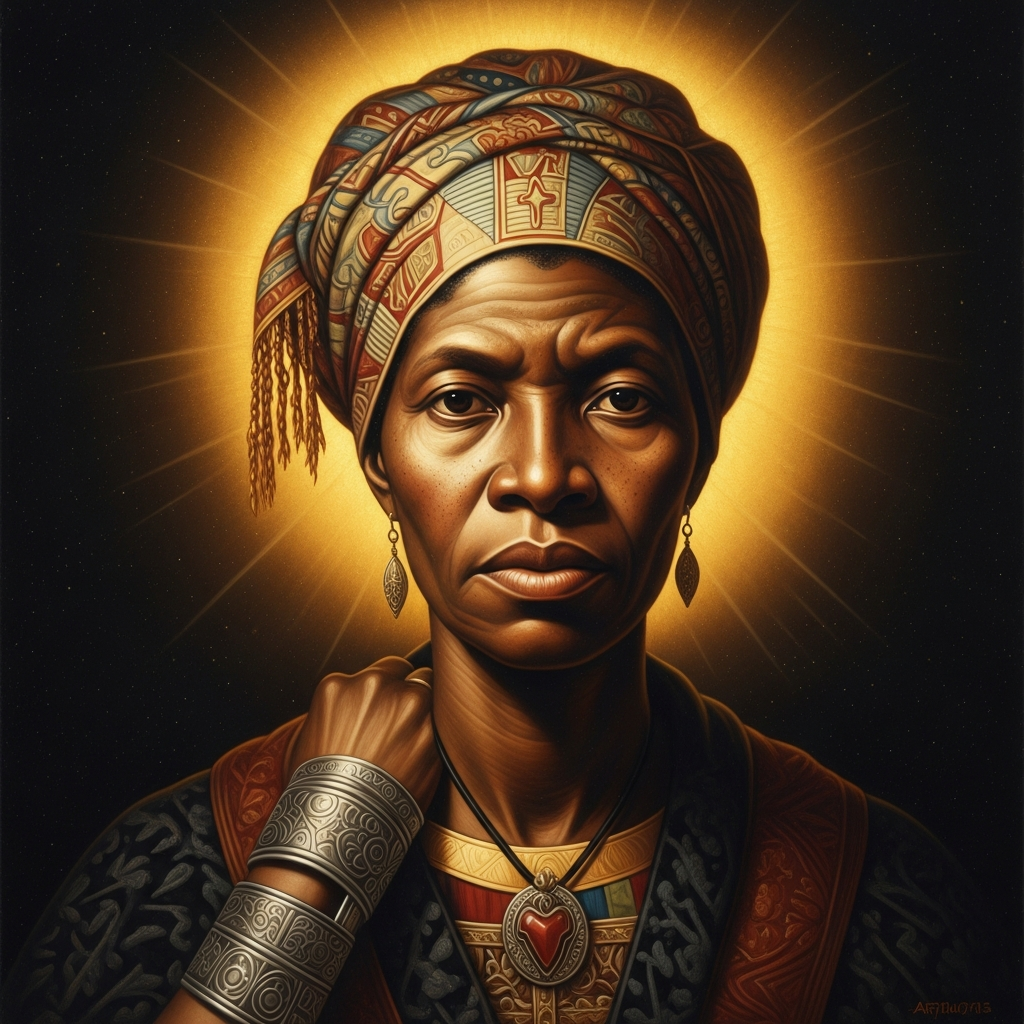
Womanist theology, developed by Delores Williams and others in the 1980s, expands liberation theology by taking the Black woman’s experience — the simultaneous experience of racism, sexism, and (frequently) classism — as a primary theological source (Williams, Sisters in the Wilderness, 1993). Williams’s reading of Hagar (Genesis 16, 21), the enslaved Egyptian woman cast into the wilderness with her son, became central: Hagar survived without being rescued, and her survival is itself revelation.
The prosperity gospel critique is the most contested contemporary debate in the tradition. The “name it and claim it” theology preached in some Black megachurches — that material wealth is evidence of divine favor — has drawn fierce critique from theologians who see it as a capitulation to American consumer capitalism and a betrayal of the liberation tradition (Pinn, Why, Lord?, 1995). Defenders argue that it is empowerment for a people historically denied wealth. The argument continues.
Cross-Tradition Links
- See Yoruba.md for the African religious heritage that fed the Black Church’s deep theological grammar — the ring shout, the call-and-response, the embodied worship that survived the Middle Passage. The Black Church and the Orisha traditions of the Caribbean and Brazil are sibling responses to the same catastrophe; one wore the master’s religion as camouflage, the other wore Catholic saints as camouflage. Both are legitimate. Both are alive.
- See Hoodoo.md for the parallel folk-magical tradition that grew up alongside the Black Church in the American South. Many enslaved people and their descendants practiced both, with no felt contradiction — the rootworker and the preacher were often consulted in series, and sometimes were the same person.
- See Biblical.md for the Exodus narrative and the prophets (Amos, Isaiah, Jeremiah) that the Black Church has always read as primary — the Moses story is the Black Church’s master text. The “suffering servant” of Isaiah 53, read in the Black Church through the lens of lynched Black bodies hanging from American trees, is what James Cone built The Cross and the Lynching Tree around.
- See Jewish.md for the parallel tradition that also reads itself as Israel-in-Egypt, also reads the Exodus as the founding event, and also produced a prophetic tradition that speaks truth to power. The Black Church and Judaism have a long, complicated, and largely cooperative civil rights history — Rabbi Abraham Joshua Heschel marched with King at Selma and said afterward, “I felt my legs were praying.”
- See Conspiracies.md for the documented record of COINTELPRO — the FBI’s domestic intelligence program (1956-1971) that explicitly targeted “Black nationalist hate groups” and Black Christian leadership, including King, the SCLC, the SNCC, the Black Panthers, and the Nation of Islam. This is not speculation. The full archive was released by the Senate Church Committee in 1976.
- See Connections-Atlas.md for the cross-tradition liberation-theology mapping linking the Black Church to Latin American liberation theology (Gustavo Gutierrez), Palestinian liberation theology (Naim Ateek), Dalit theology in India, and minjung theology in Korea.
- See Timeline.md for the unified timeline placing the Black Church’s history alongside the broader American, Christian, and global religious record.

 MYTHIC
  MYTHIC
  LEGENDARY
  MYTHIC
  LEGENDARY
  MYTHIC
  LEGENDARY