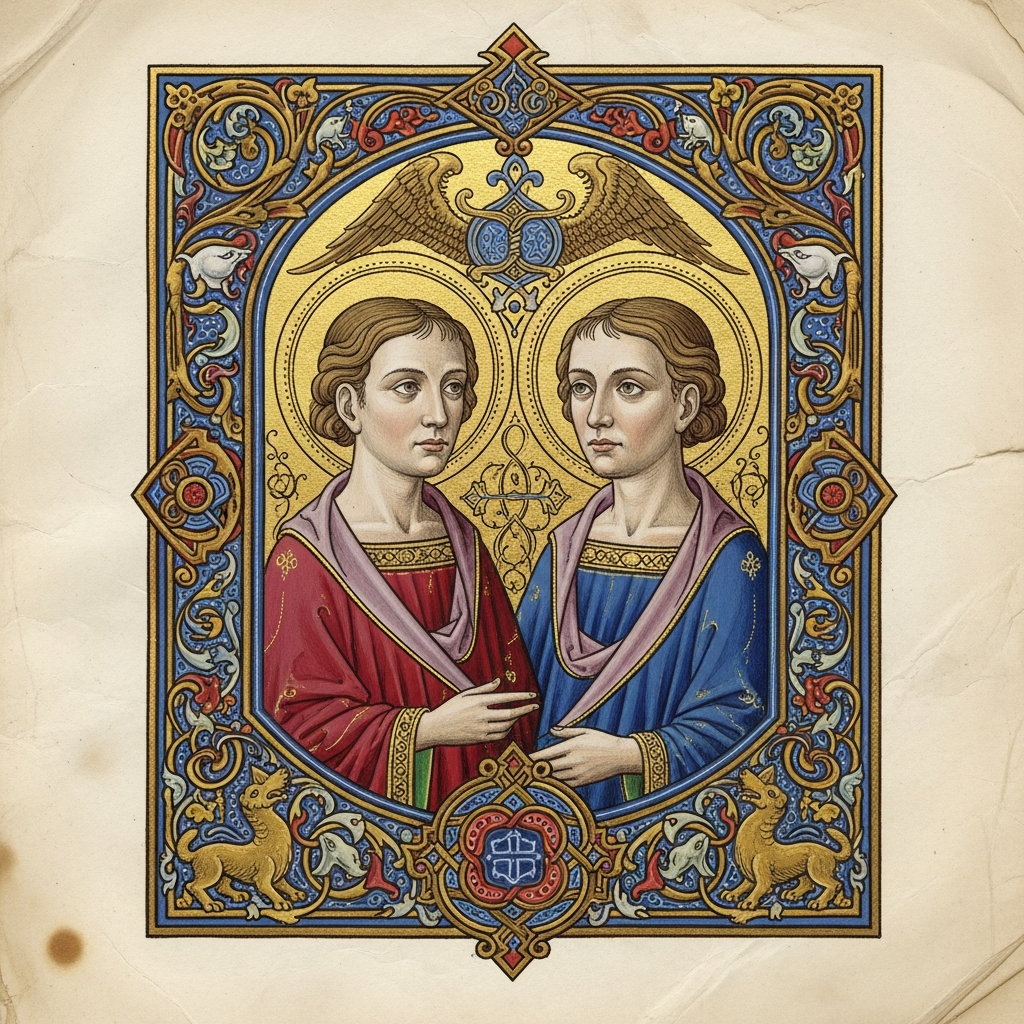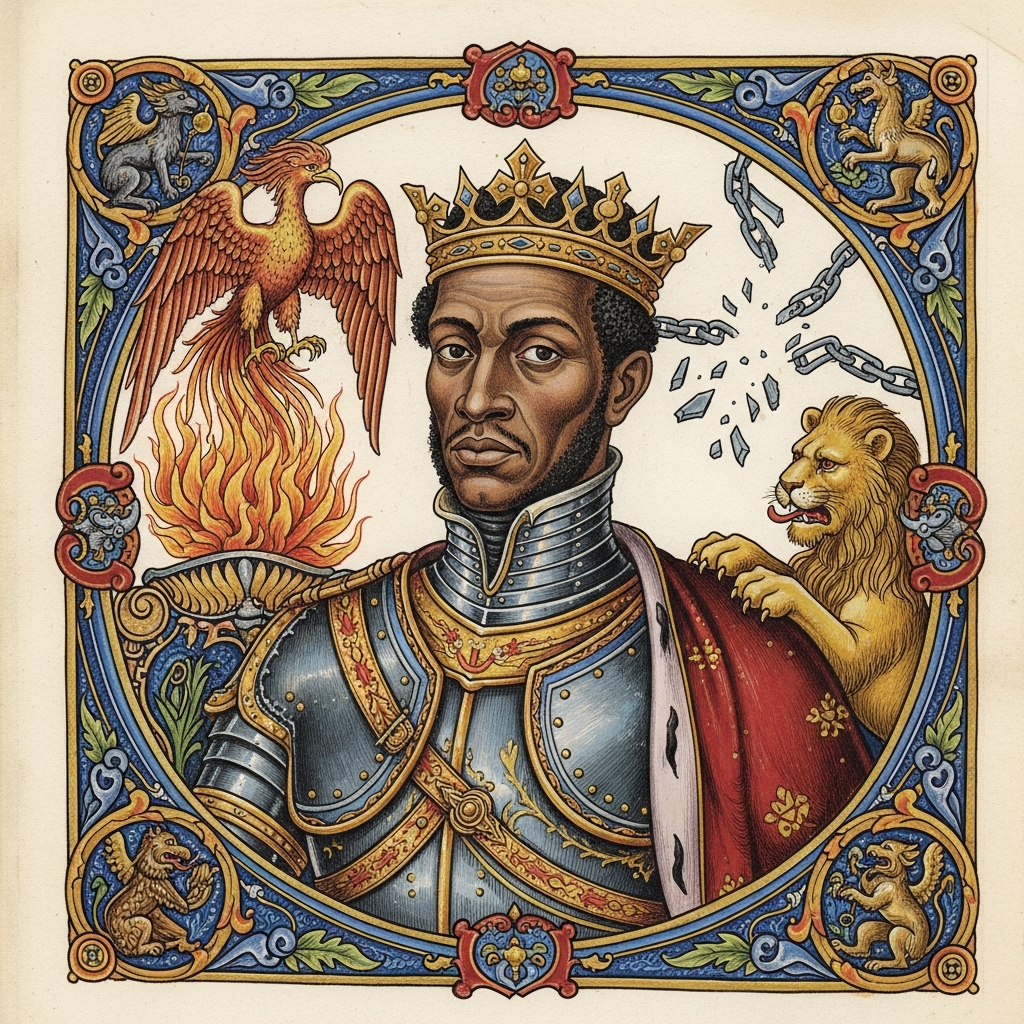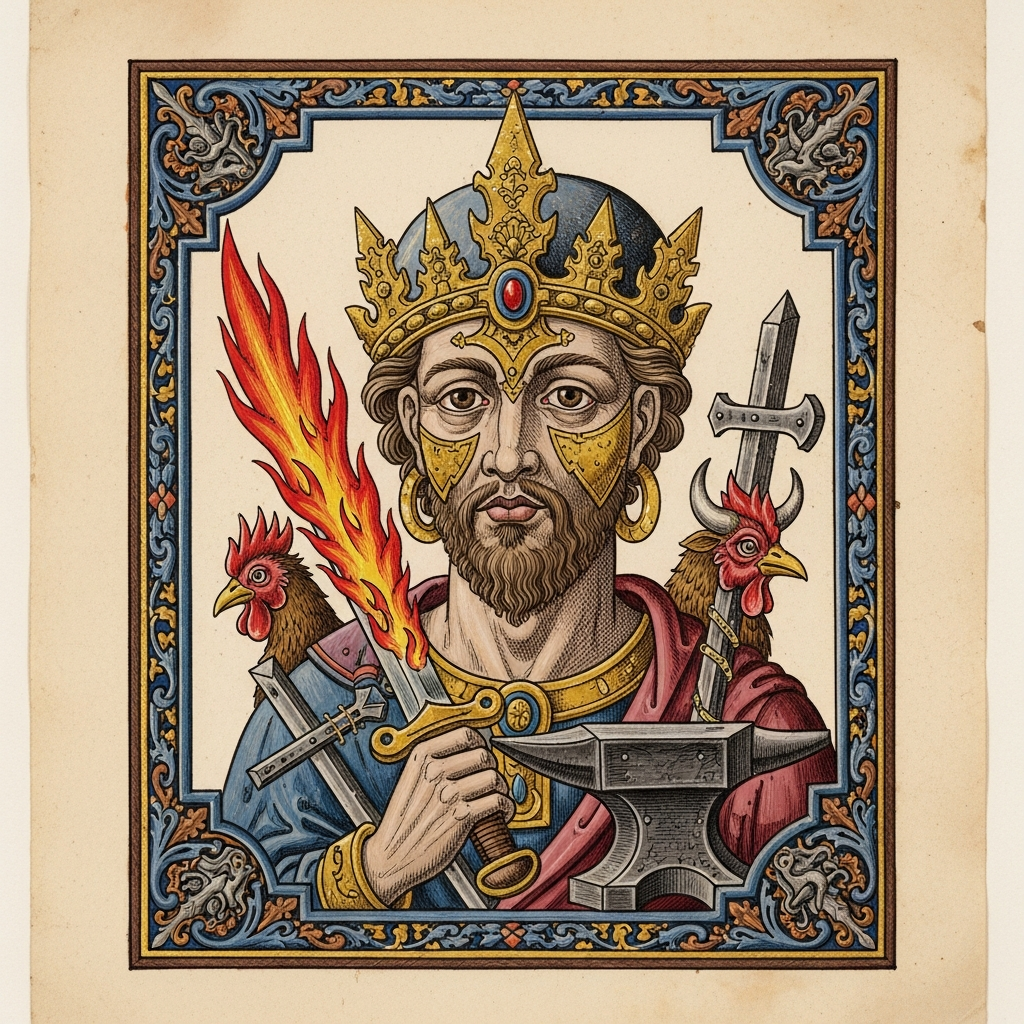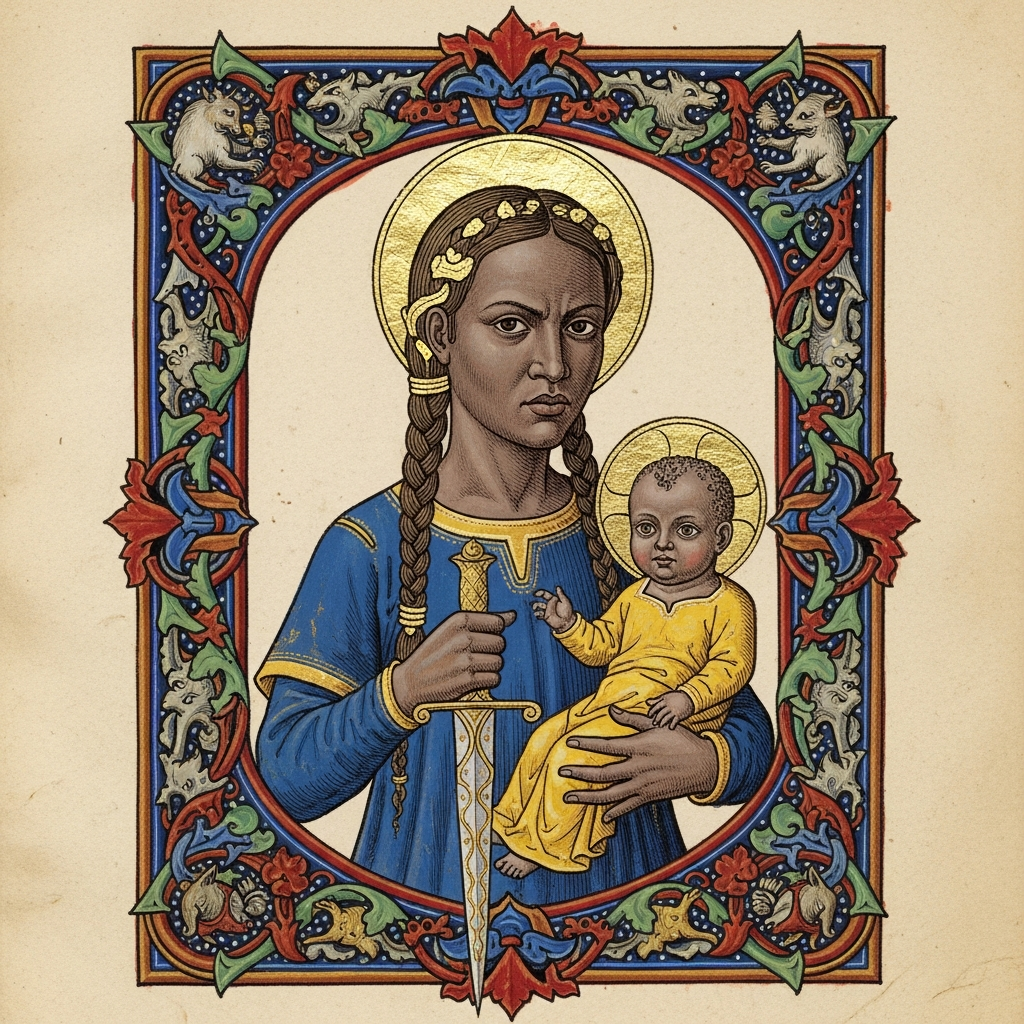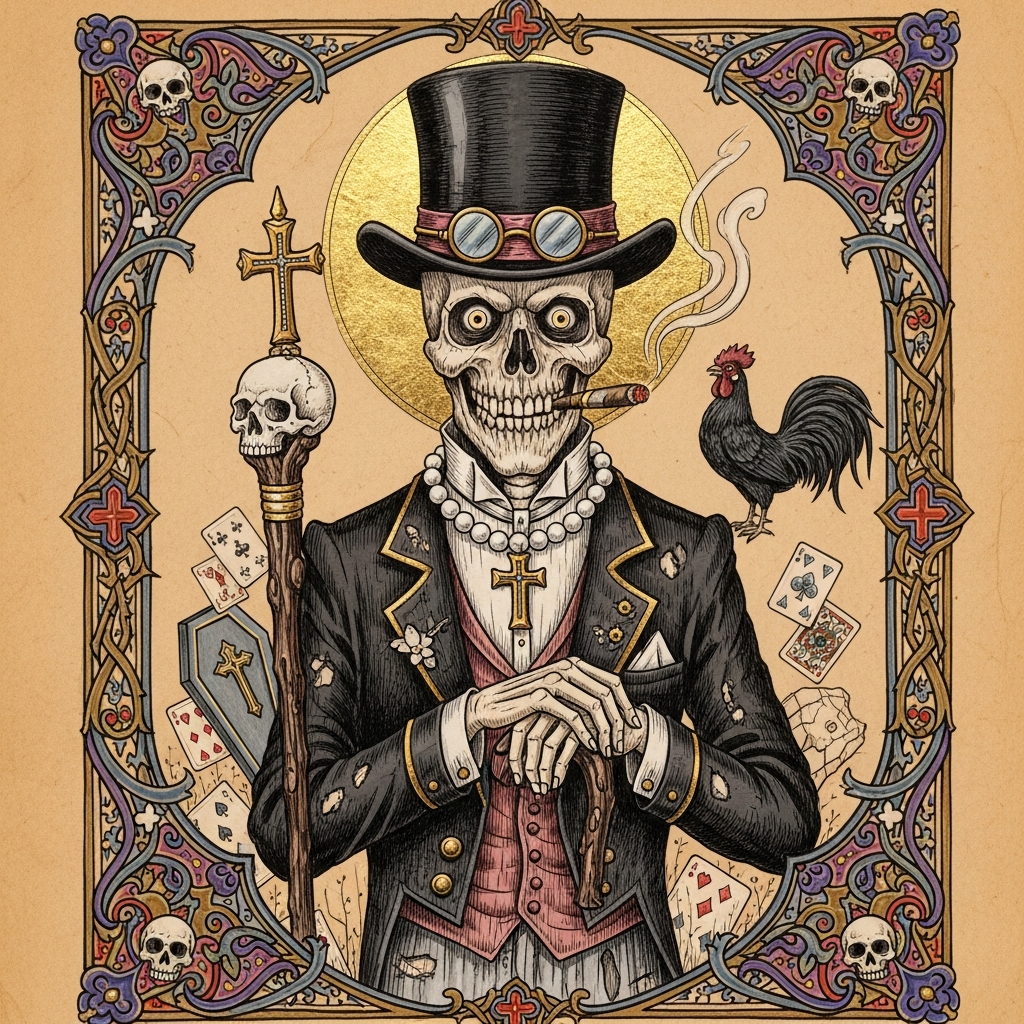
Combat Profile
Threshold Walker
Guede Nibo opens passages between the living world and the afterlife, allowing souls safe passage and granting mortals glimpses of their destined fate at death's door.
Minister of the Veil
Guede Nibo perpetually stands at the boundary between life and death, perceiving all souls in transition and whispering guidance to the newly deceased.
He is caught in the liminal space -- not fully alive, not fully settled in death. He carries the weight of every soul's transition, the moment between one state and another. This liminal existence is both his domain and his burden
“Guede Nibo leads those who have lost their way. He is the kindness at the moment of fear, the light in the darkness between lives.” — Vodou tradition
Lore: Guede Nibo (also Ghedé Nibo) is one of the less famous but deeply important Lwa of the Gede family (the death spirits). While Baron Samedi is the patriarch and judge of the dead, commanding authority and dispensing final judgment, Guede Nibo is the compassionate guide. He appears at the moment of death — to the dying, to the newly dead, to those confused in the space between heartbeat and stillness.
Many Vodou practitioners speak of Guede Nibo as a gentler presence than Baron Samedi, more patient with the confused, more understanding of fear. He does not judge; he guides. He does not mock; he explains. He is the voice that says, “You are dead now. Do not be afraid. Come with me.” This is an essential function in a theology that understands death not as an ending but as a transition, a doorway, a beginning of a different kind of existence.
Parallel: Psychopomp figures across traditions: Hermes/Mercury (who guides souls to the underworld in Greek tradition), Charon (the ferryman), Anubis (the Egyptian guide of the dead), Yama (the Hindu lord of death), and the Angel of Death in Jewish mysticism. But Guede Nibo’s particular gift is gentleness — he is the guide who does not terrify but comforts.
1 min read
Those who accept death pass beyond his domain. His power is over the confused, the stuck, the newly dead who don't yet understand their condition. The dead who have come to peace no longer need his guidance
Maya Deren, *Divine Horsemen: The Living Gods of Haiti* (1953); Karen McCarthy Brown, *Mama Lola: A Vodou Priestess in Brooklyn* (1991); Alfred Metraux, *Voodoo in Haiti* (1959)