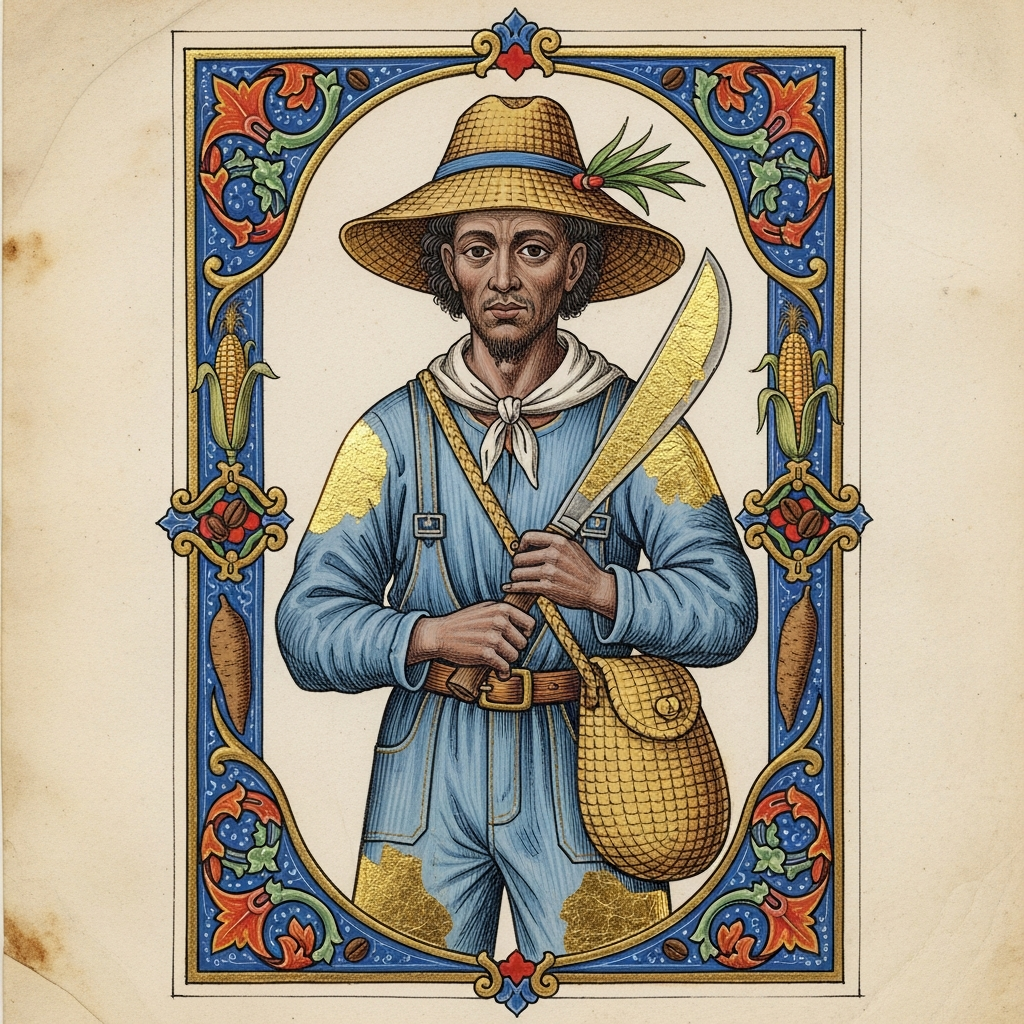
Combat Profile
Fertile Blessing
grants abundant harvests and protection to those who work the land with respect and honest labor
Earthbound Sustenance
the lwa's presence enriches soil and ensures crops flourish where peasants toil faithfully
He is earthbound, connected to the soil, dependent on weather and seasons. Drought, flood, and frost all diminish his power. But his weakness is also his strength: he endures what nature brings
“Kouzen Zaka works from sunrise to sunset. He knows the value of what grows from his hands. He does not ask for much, but what he asks, the land provides.” — Vodou tradition
Lore: Kouzen Zaka (Cousin Zaka, Cousinza) is the peasant farmer among the Lwa — not a distant, magnificent deity but the spirit of the work and the soil itself. He is depicted as an older man in work clothes, with a straw hat, often smoking a pipe, carrying the tools of the farmer’s trade. He is practical, straightforward, and deeply respected because his work is literally the foundation of survival: without farmers, there is no food.
Kouzen Zaka represents the dignity of agricultural labor. In Haiti, where plantation agriculture had been the instrument of slavery and brutalization, Zaka’s power shifts to something different: the peasant farmer working his own small plot, feeding his own family, receiving the blessing of a good harvest. His presence at ceremonies is a blessing of ordinary life, of the good earth, of the possibility that human labor can produce sustenance.
Parallel: Demeter (Greek goddess of agriculture and harvest), Ceres (Roman equivalent), Gaia (the earth mother), Freyr (Norse god of summer, fertility, and agriculture), and the Green Man of medieval Christian tradition (the spirit of growing things). In Indigenous traditions, the corn spirits (Corn Mother, Corn Father). The archetype of the provider through cultivation, the one who understands that patience and good work produce food.
1 min read
Exploitation. Kouzen Zaka is deeply angered by those who exploit the peasant, who take the farmer's labor and give nothing in return. He can curse the crops of those who abuse the rural poor
Maya Deren, *Divine Horsemen: The Living Gods of Haiti* (1953); Karen McCarthy Brown, *Mama Lola: A Vodou Priestess in Brooklyn* (1991); Alfred Metraux, *Voodoo in Haiti* (1959)