The Queen Mother of the West's Peach Banquet
The eternal divine present — with the Sun Wukong incident during the time of Journey to the West · Mount Kunlun in the far west, and the Jade Emperor's peach garden in heaven
Contents
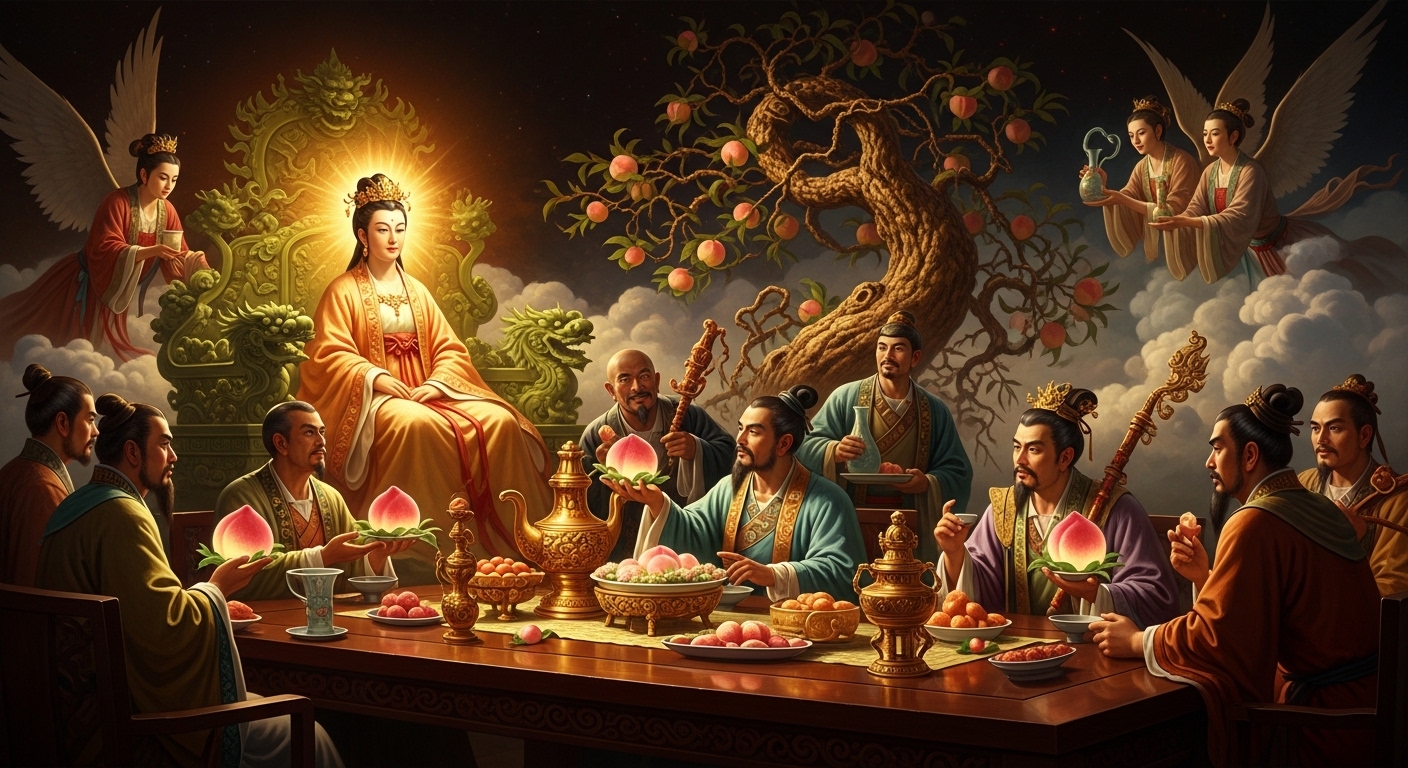
Every three thousand years, the peach trees in the Queen Mother of the West's garden ripen and she holds the Peach Banquet — a feast of immortality to which every god in heaven is invited, except the one who arrives uninvited and eats them all.
- When
- The eternal divine present — with the Sun Wukong incident during the time of Journey to the West
- Where
- Mount Kunlun in the far west, and the Jade Emperor's peach garden in heaven
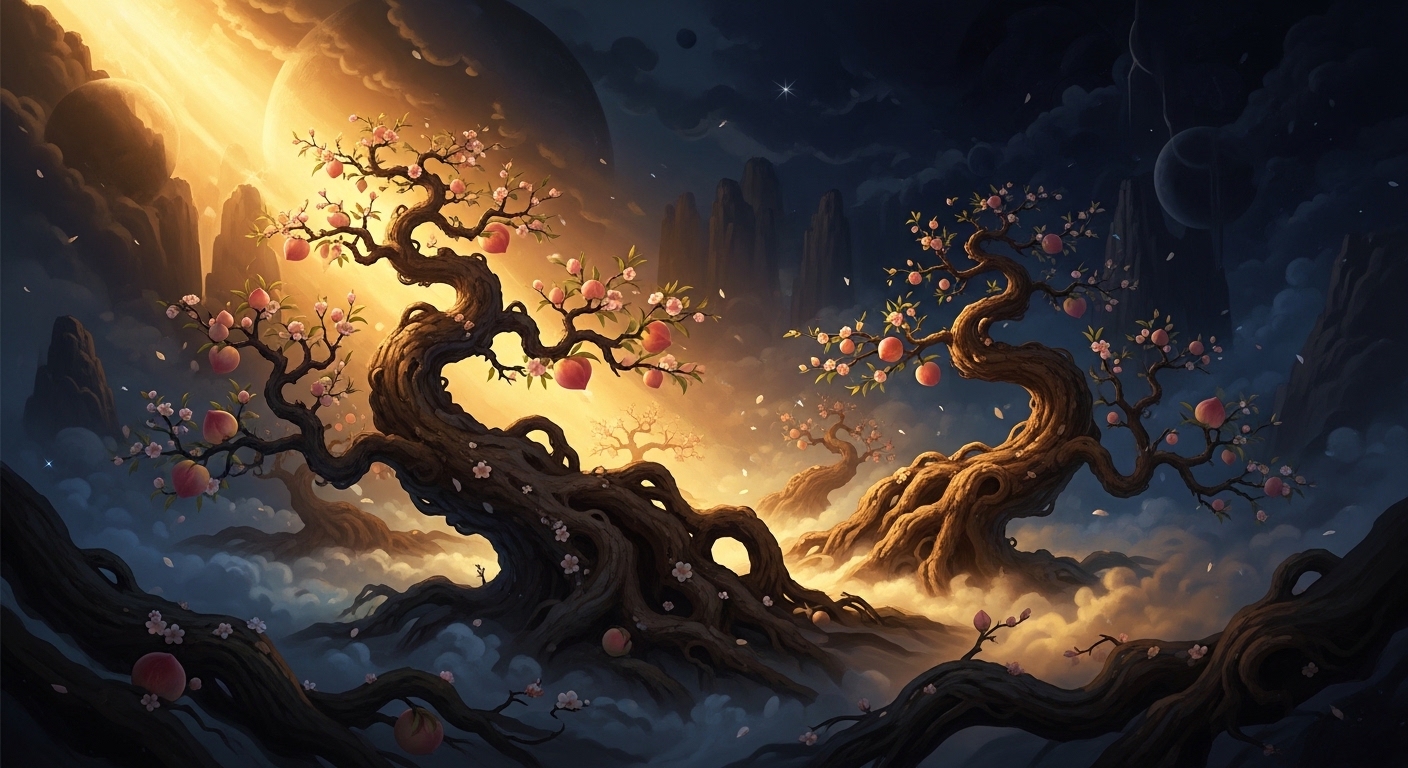
The peach trees take three thousand years to flower and another three thousand years to fruit.
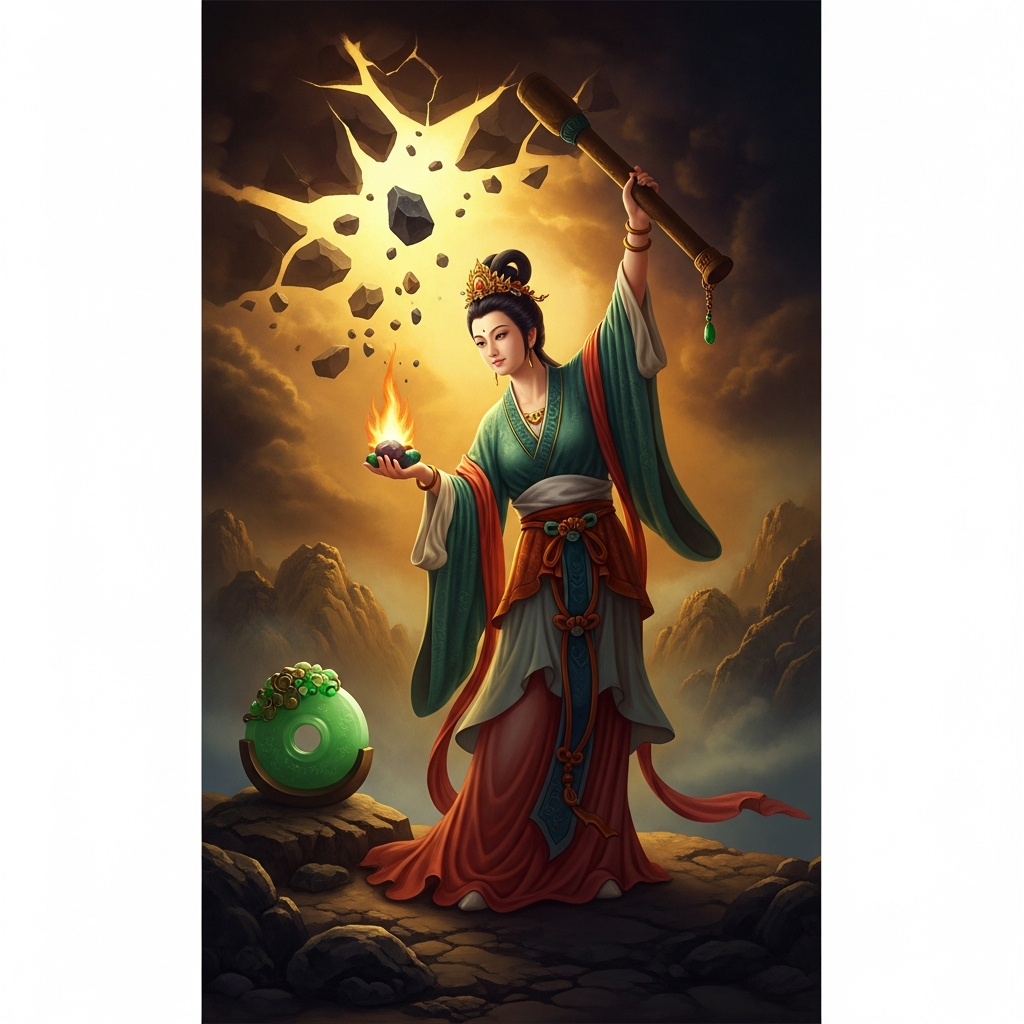
They stand in the garden that the Queen Mother of the West tends on the western edge of heaven, or on the summit of Kunlun Mountain, or in both places at once because the most sacred places in Chinese cosmology have the quality of being in multiple locations that are really one location viewed from different altitudes. The trees are ancient. The Queen Mother is more ancient. She was old when the first texts were written about her — appearing in the Shanhaijing as a tiger-fanged, leopard-tailed goddess with a jade crown who controlled plague and punishment, a figure far more terrifying than the elegant celestial hostess she eventually became.
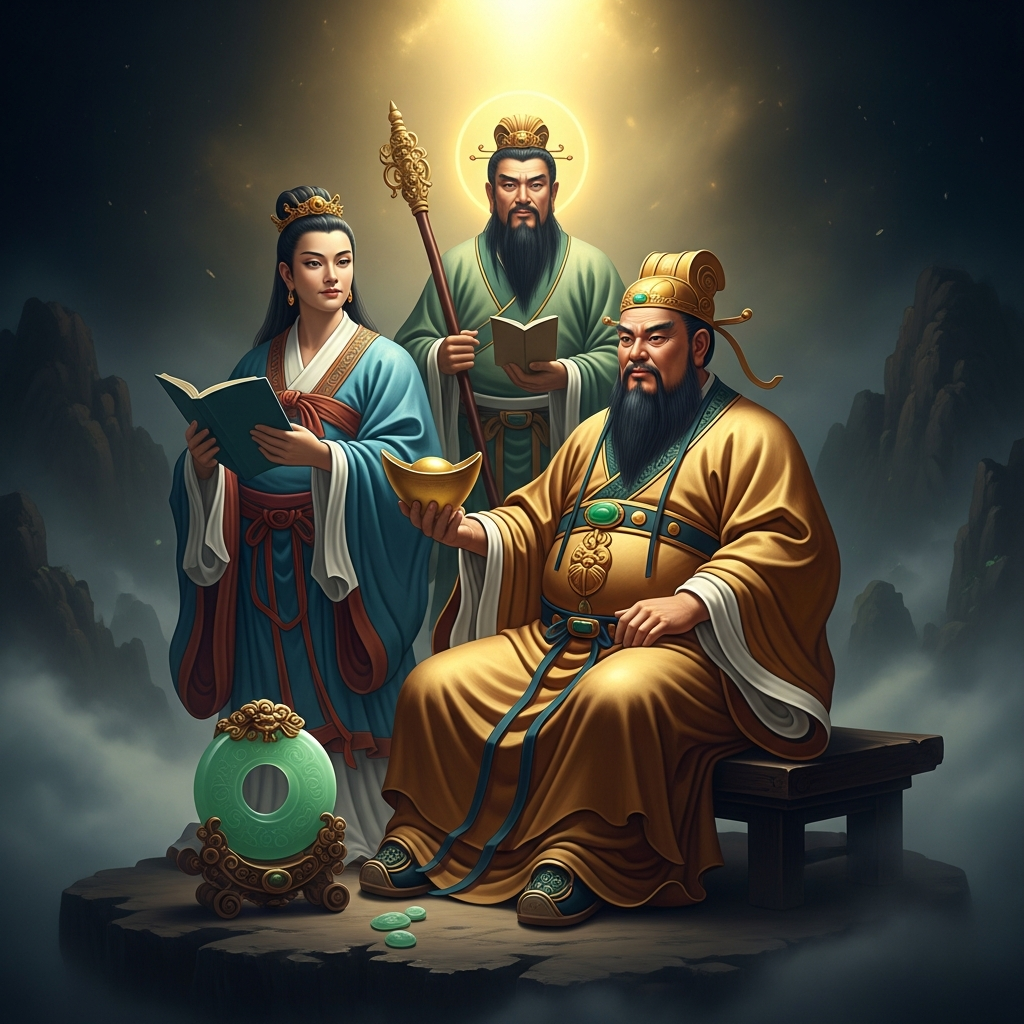
She has been refined by three millennia of theological upgrading. She is now the supreme female power in heaven — the Jade Emperor’s consort, the keeper of the immortality register, the arbiter of which mortals and which gods receive the peach that extends divine life. The fangs are gone from the official iconography. The terror has relocated to her authority.
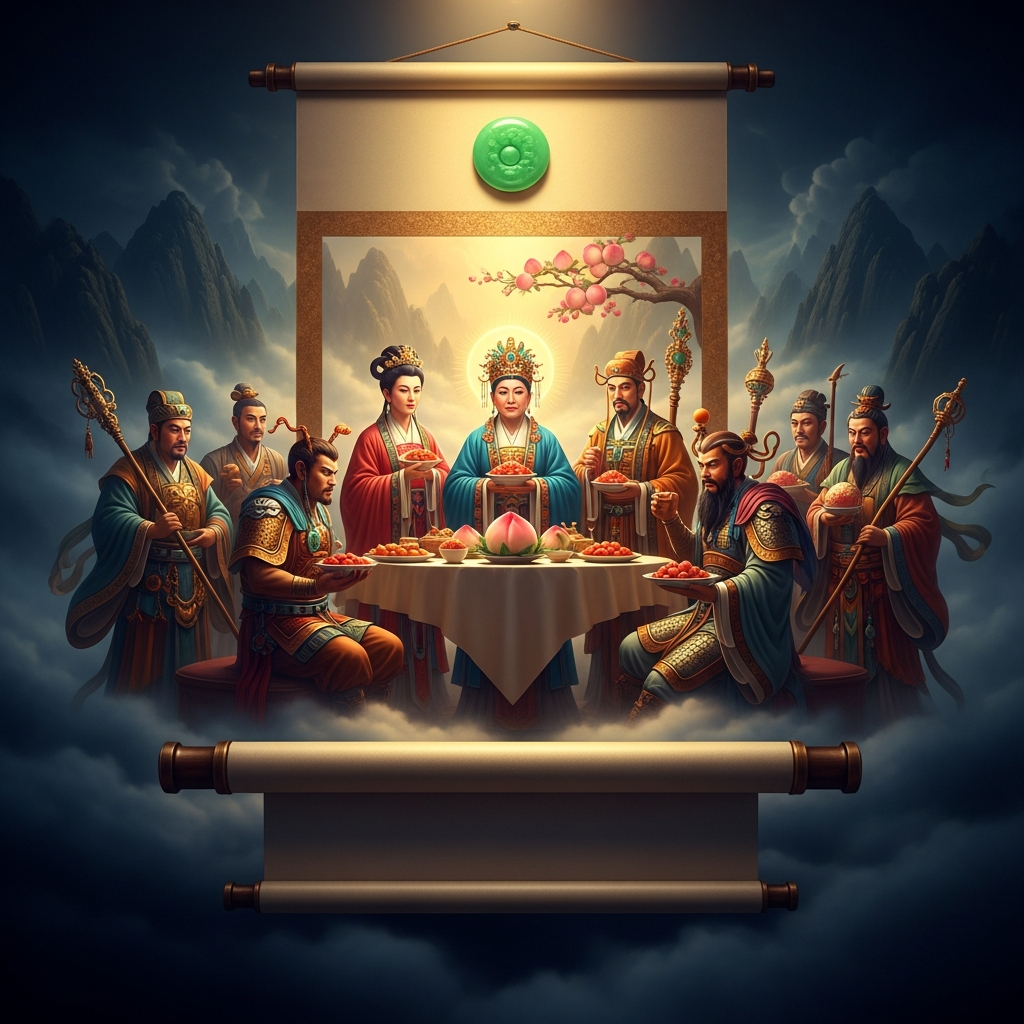
Every six thousand years — three thousand to flower, three thousand to ripen — she holds the Peach Banquet. She sends the Seven Fairies to gather the peaches. They carry them in jade baskets to the celestial kitchens where the divine cooks prepare the feast. Every god in heaven receives an invitation. The ranks are respected in the seating: the highest divinities at the tables closest to the Queen Mother, the lesser gods at the outer tables, the immortals seated by seniority. The peaches are served with celestial wine and the foods that are found only at altitude.
The feast is not merely a celebration. It is a renewal. The gods who attend and eat the peaches extend their divine lives for another six thousand years. The banquet is the mechanism by which the celestial hierarchy perpetuates itself. To be invited is to be confirmed as part of the divine order. To miss the banquet, for whatever reason, is a subtle demotion.
This is why the banquet is important. And this is why what happens in the sixty-fourth chapter of Journey to the West’s essential background — the Monkey King’s intrusion — is so catastrophic.
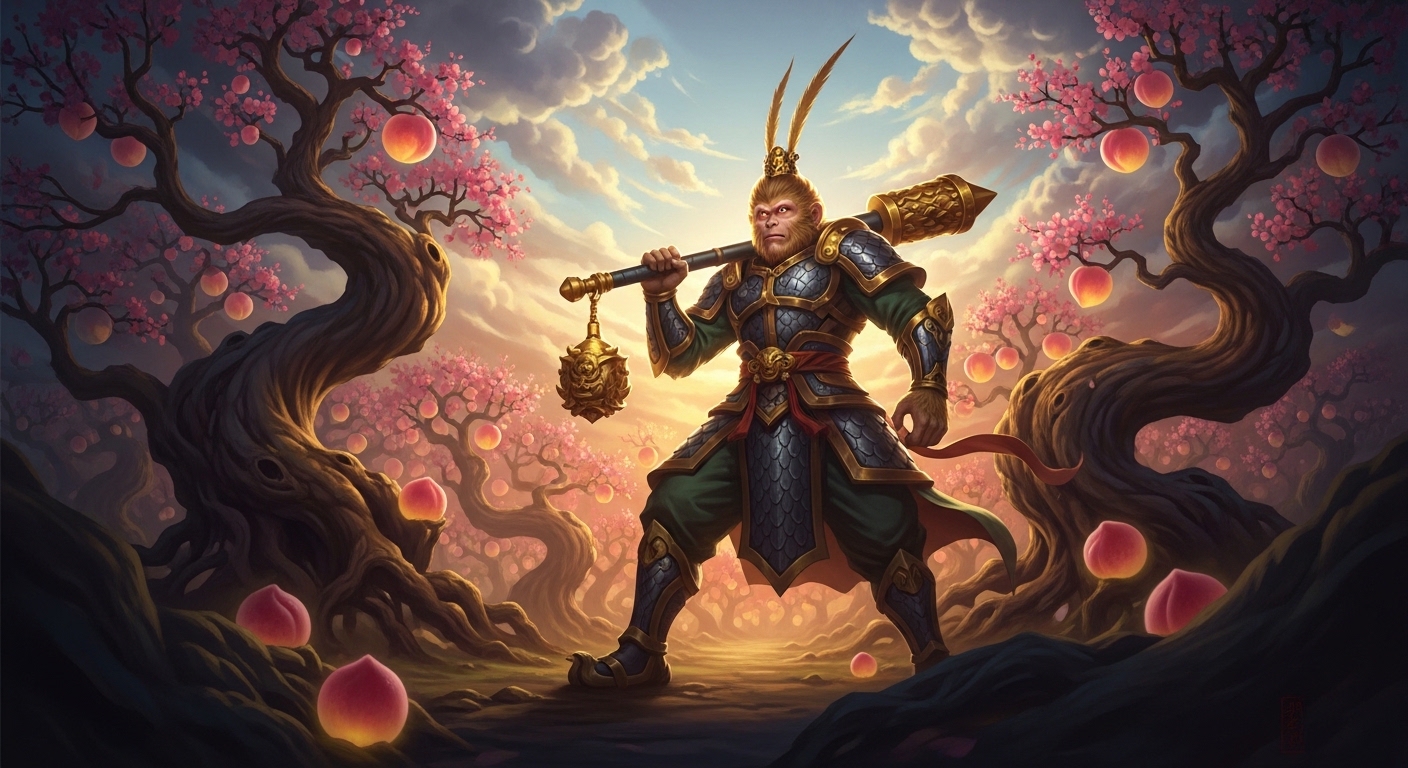
Sun Wukong has been appointed Guardian of the Peach Garden. He is supposed to protect the trees. He is, instead, eating the peaches. Not cautiously, not sampling — he has been eating through the garden systematically, tree by tree, the smaller peaches from the outer rows (three thousand years, merely a moderate immortality) and then the middle rows (six thousand years, a substantial immortality) and then the innermost trees, whose fruit ripens only every nine thousand years and confers an immortality that equals the age of heaven and earth.
He eats them all.
When the Seven Fairies come to gather the peaches for the Queen Mother’s banquet, they find the garden ransacked, the innermost trees stripped. The banquet cannot proceed. The celestial cooks have nothing to cook. The Queen Mother sends her soldiers to find the Monkey King and what follows — the battle in heaven, the disruption of the entire divine order, the eventual defeat of Sun Wukong — is the longest and most consequential consequence of a feast that never happened.
The Queen Mother watches it from the western reaches of heaven with the expression of someone who has been managing immortality long enough to have seen this particular disruption coming. The peach trees need three thousand years to recover. She walks through the empty garden, the stripped branches, the fallen leaves of trees that will not flower again until time has run forward three millennia more. She is ancient and she is patient and she is furious in the way that only the very old can be furious: with the full memory of what was lost, and the full certainty that it can be regained, and the measured stillness of someone who knows exactly how long that will take.
Scenes
Echoes Across Traditions
Entities
- Queen Mother of the West (Xī Wáng Mǔ)
- Sun Wukong
- the Jade Emperor
- the Seven Fairies
- the peach garden
Sources
- Shanhaijing (山海經), earliest description of Xī Wáng Mǔ
- Mu Tianzi Zhuan (穆天子傳), c. 4th century BCE — King Mu's visit to the Queen Mother
- Journey to the West (西遊記), Wu Cheng'en, c. 1592, chapters 4-5
- Suzanne Cahill, *Transcendence and Divine Passion: The Queen Mother of the West in Medieval China* (Stanford, 1993)