Combat Profile
Mandate of Heaven
grants absolute authority over celestial bureaucrats and mortals, decreeing fates that reshape cosmic order itself
Celestial Sovereignty
all divine and mortal actions within his domain are subject to his judgment, and he perceives all cosmic imbalances instantly
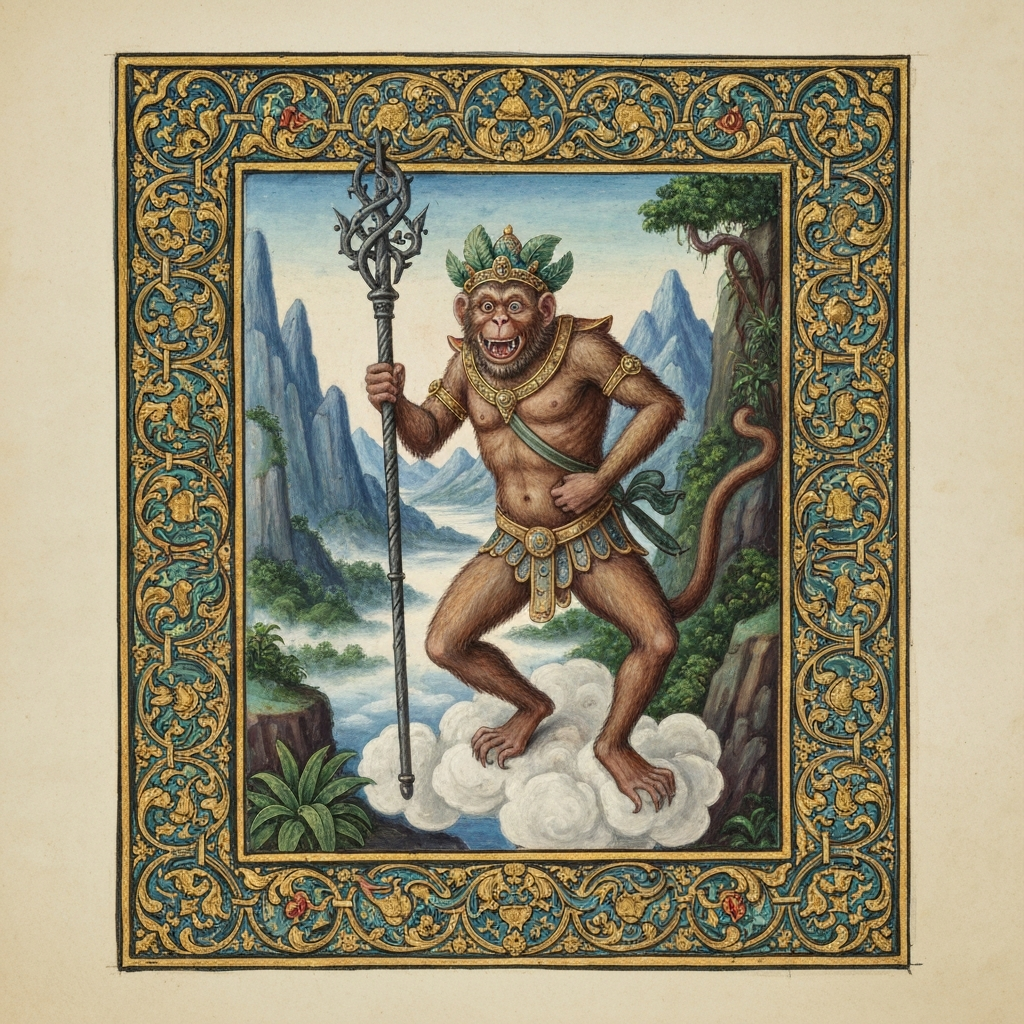
More administrator than warrior -- his authority is institutional rather than personal. In *Journey to the West*, he is unable to subdue Sun Wukong and must call on Buddha for help. His power is the power of the system, not of the sword
“The Jade Emperor sits on his throne and governs heaven as the emperor governs earth — with ministers, reports, promotions, and punishments. Every god has a rank. Every spirit files a report.”
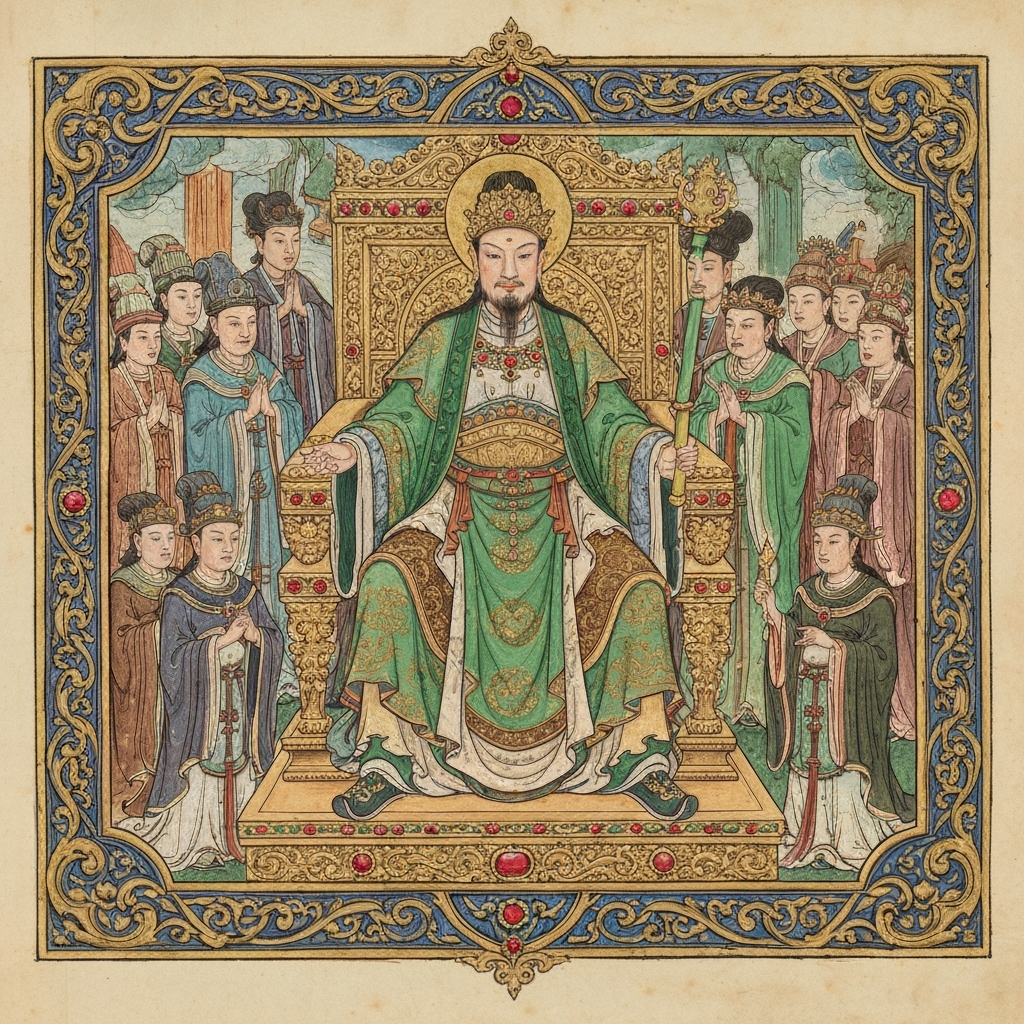
Lore: The Jade Emperor is the supreme deity of Chinese folk religion and the ruler of the heavenly court — but he is not omnipotent in the Western theological sense. He is best understood as the CEO of heaven: he presides over a vast celestial bureaucracy that mirrors (and was modeled on) the Chinese imperial government. Every god, spirit, and natural force has an assigned rank and function, and the Jade Emperor oversees the whole apparatus. The Kitchen God reports on each household. The City Gods manage local affairs. The Dragon Kings control weather. The Judges of Hell process the dead. It is the most elaborately bureaucratic afterlife in any world religion. In Journey to the West, the Jade Emperor is portrayed with gentle satire — he is dignified but somewhat ineffectual, unable to handle Sun Wukong’s rebellion and forced to call on the Buddha to intervene. This reflects a deep Chinese cultural intuition: the system is greater than any individual within it, even the one at the top.
Parallel: The Jade Emperor invites comparison with YHWH on the throne in Revelation and with the Zoroastrian Ahura Mazda, but the differences are illuminating. YHWH is the uncreated creator, omnipotent and singular. The Jade Emperor is one being (albeit supreme) within a larger cosmic order. He governs by bureaucracy, not by fiat. His heaven has paperwork. The closest Christian parallel might be the medieval vision of heaven as a royal court with ranks of angels — Pseudo-Dionysius’s celestial hierarchy made administrative.
1 min read
Sun Wukong (exposed the limits of his power); Buddha (outranks him in the cosmic hierarchy); the mandate of heaven can be withdrawn
*Journey to the West* (Wu Cheng'en, 16th century); Taoist liturgical texts; folk religion traditions dating to at least the 9th century CE