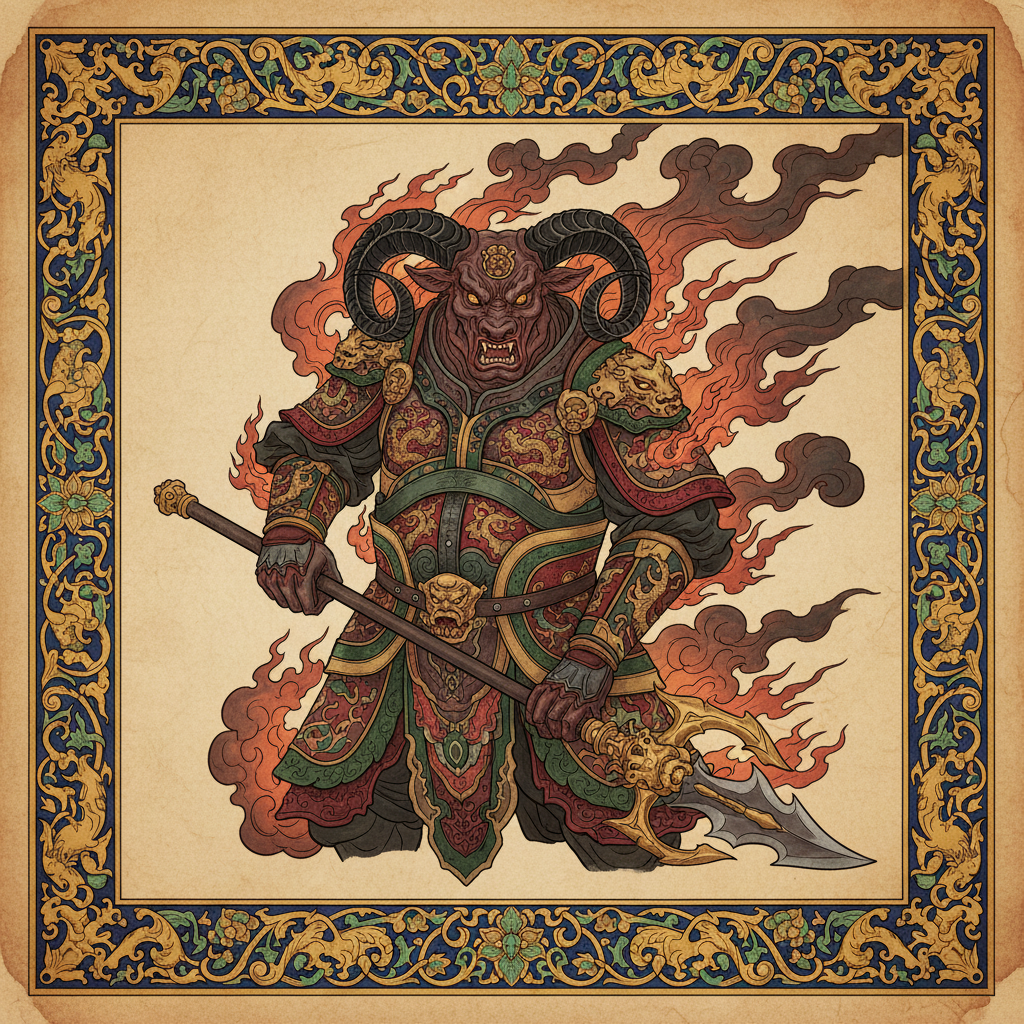
Combat Profile
Samadhi Fire
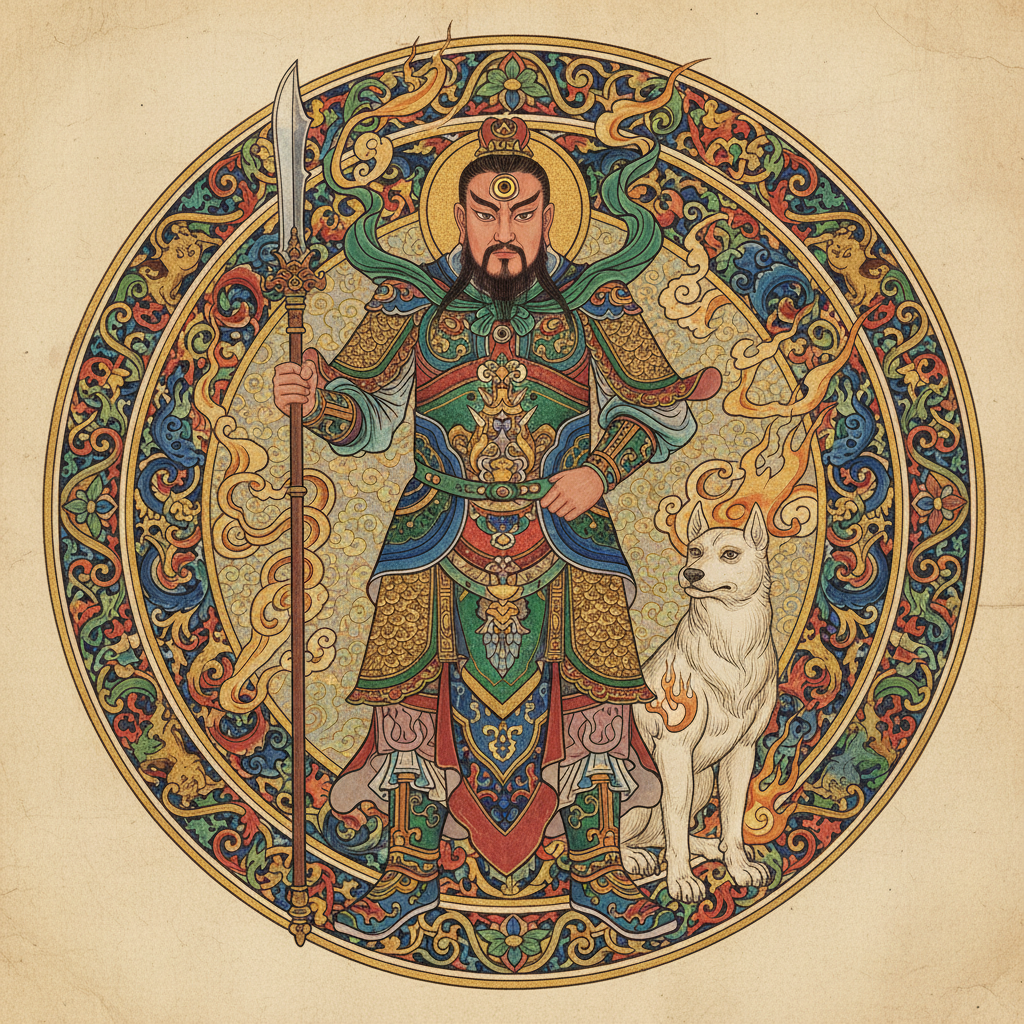
Unleashes uncontrollable celestial flames that consume all in their path, born from the Bull Demon King's primordial rage and divine punishment.
Demoniacal Sovereignty
Commands absolute authority over the Fire Cloud Cave and its legions; immune to mortal weapons and strengthened by acts of betrayal and broken oaths.
Pride and wrath. His refusal to lend the Plantain Fan (his wife Princess Iron Fan's weapon) to Wukong escalates a personal dispute into a catastrophic battle
“They were brothers once. That is what makes it hurt.”
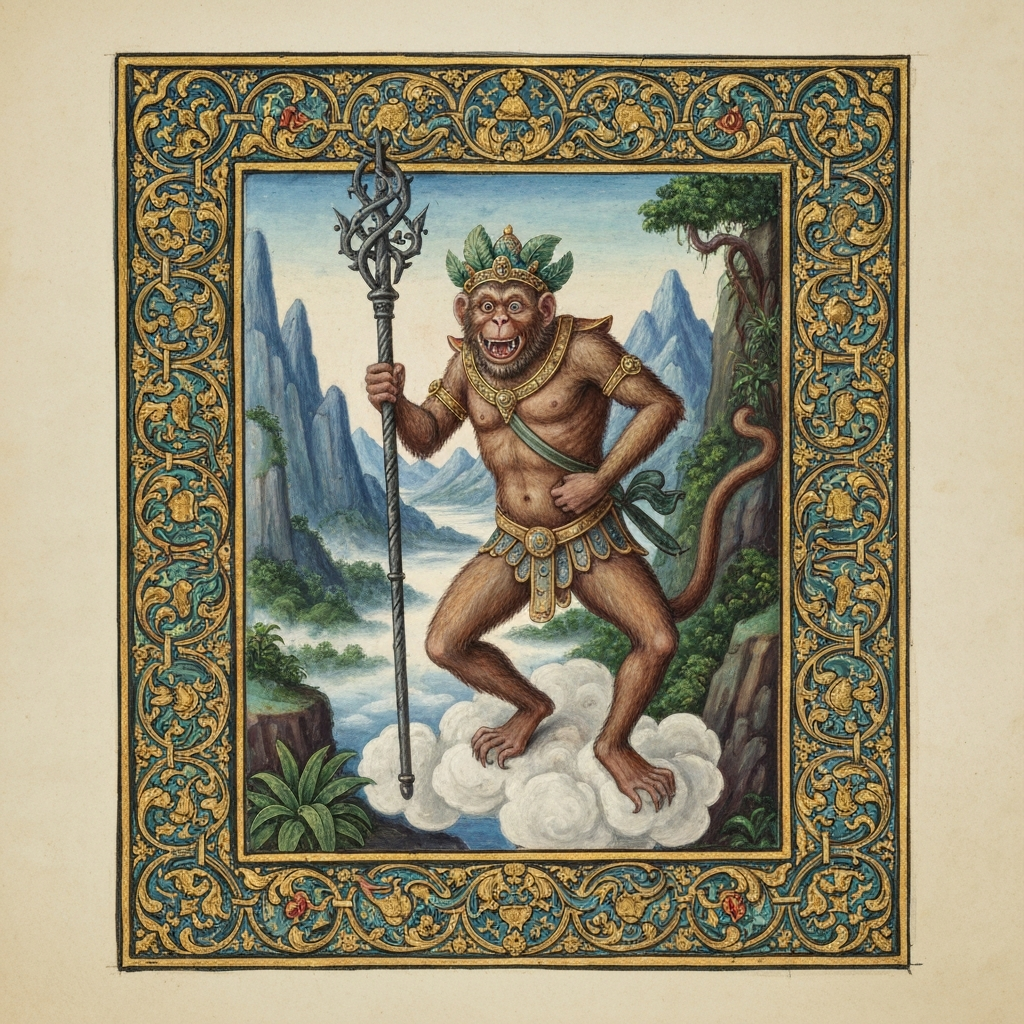
Lore: The Bull Demon King is one of the most powerful demons in Journey to the West and one of the most emotionally complex. He was Sun Wukong’s sworn brother during Wukong’s wild days before the rebellion against heaven — they were part of a band of seven demon kings who drank and fought together. But Wukong’s imprisonment, transformation, and alignment with the Buddhist pilgrimage changed everything. The Bull Demon King sees Wukong’s redemption as betrayal — a brother who switched sides. Their confrontation over the Plantain Fan (needed to cross the Flaming Mountains) is the novel’s exploration of what happens when two people who loved each other end up on opposite sides of a spiritual divide. The Bull Demon King is eventually subdued, but only through the combined efforts of Wukong, Nezha, and heavenly forces. He is powerful enough that no single being can defeat him.
Parallel: The Bull Demon King embodies the archetype of the fallen friend — the brother who becomes the enemy. Compare Absalom’s rebellion against David (2 Samuel 15-18), where the deepest wound is not the political betrayal but the personal one (“O my son Absalom! My son, my son Absalom! Would I had died instead of you,” 2 Samuel 18:33). The Bull Demon King is also a fire demon, inviting comparison with Surtr in Norse mythology and the general association of demonic power with flames across traditions.
1 min read
Sun Wukong (his equal in combat); Nezha (who joins the battle); Guanyin and celestial forces (combined intervention required to subdue him)
*Journey to the West* ch. 59-61; folk demon traditions