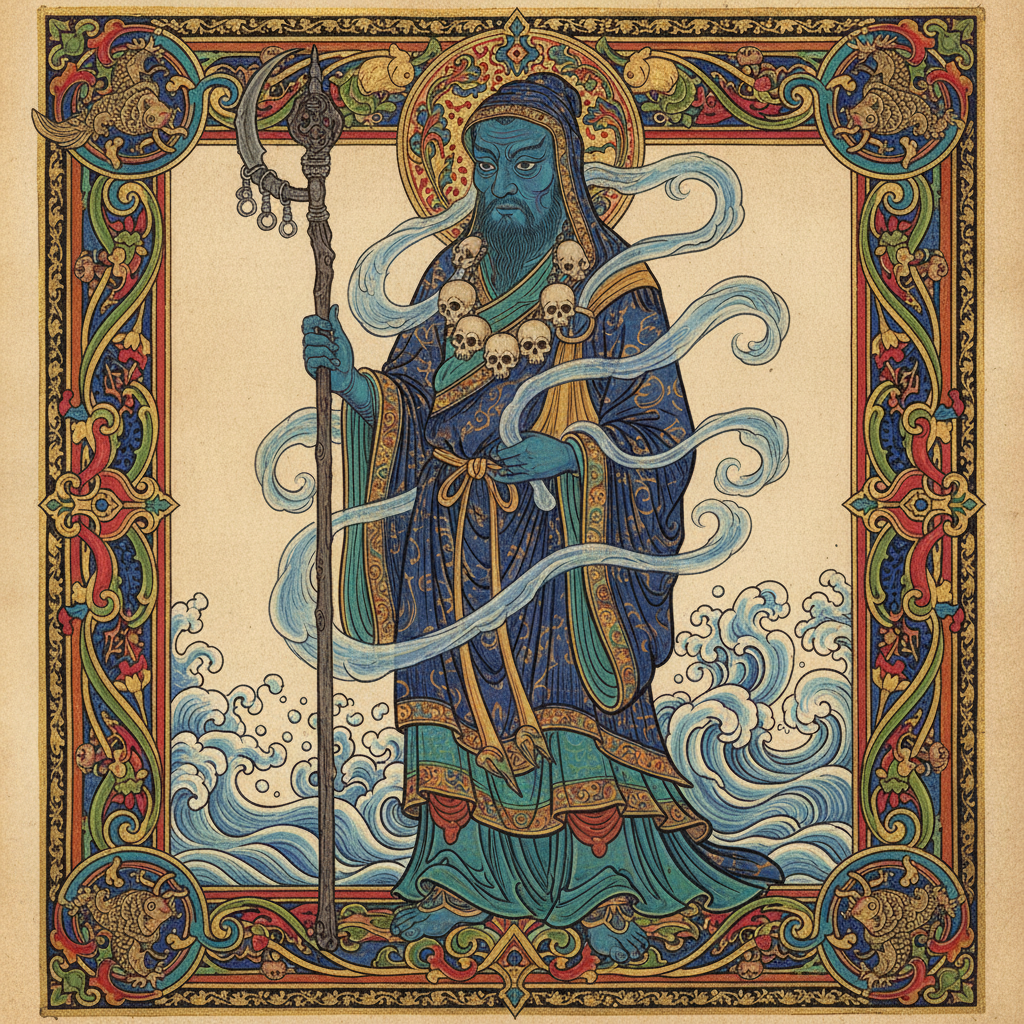
Combat Profile
Burden of Sincerity
Takes damage meant for allies and grows stronger with each hardship endured, converting suffering into protective power
Steady Service
Never falters in duty; reduces damage taken and grants minor healing to those who stand beside him
Unremarkable. He is the least powerful, least interesting, and least discussed of the pilgrims. This is, paradoxically, his strength -- he has no ego to overcome
“Somebody has to carry the luggage.”
Lore: Sha Wujing is the most underestimated character in Journey to the West — and that is exactly the point. He was once a heavenly general, but his crime was trivial (breaking a goblet) and his exile disproportionate. As a river monster, he was fearsome enough, but once recruited for the pilgrimage, he recedes into the background. He carries the luggage. He sets up camp. He mediates arguments between Wukong (who wants to fight) and Bajie (who wants to eat). He does the work that no one notices. In a story full of cosmic battles, shapeshifting duels, and theological debates, Sha Wujing represents the unsung virtue of simply showing up and doing what needs to be done. At the journey’s end, he is rewarded with the title of “Golden-Bodied Arhat” — a rank of enlightened being. The quiet one achieves more than the loud one.
Parallel: Sha Wujing is the faithful servant archetype that appears across traditions — Simon of Cyrene carrying the cross, the unnamed servants in the parables of Jesus who do their master’s work without complaint or recognition. In monastic terms, he is the lay brother who scrubs the floors while others pray and preach. His allegorical role in the Buddhist reading of Journey to the West is sincerity (zhen cheng) — the genuine, unpretentious commitment to the path that carries the spiritual seeker forward when talent, passion, and willpower all fail.
1 min read
Stronger demons can overpower him. He rarely fights alone
*Journey to the West*; folk traditions