Combat Profile
Seventy-Two Transformations
shapeshift into any form or duplicate himself across the battlefield, adapting to any threat with unmatched versatility.
Indomitable Spirit
grows stronger through adversity, gaining permanent stat boosts after each major defeat, and cannot be permanently suppressed or bound by lesser powers.
The golden headband -- when Tang Sanzang chants the Band-Tightening Sutra, it constricts around Wukong's skull, causing agonizing pain. This is the only reliable control over him. Also: his ego, his impatience, and his inability (early on) to see that brute force cannot solve every problem
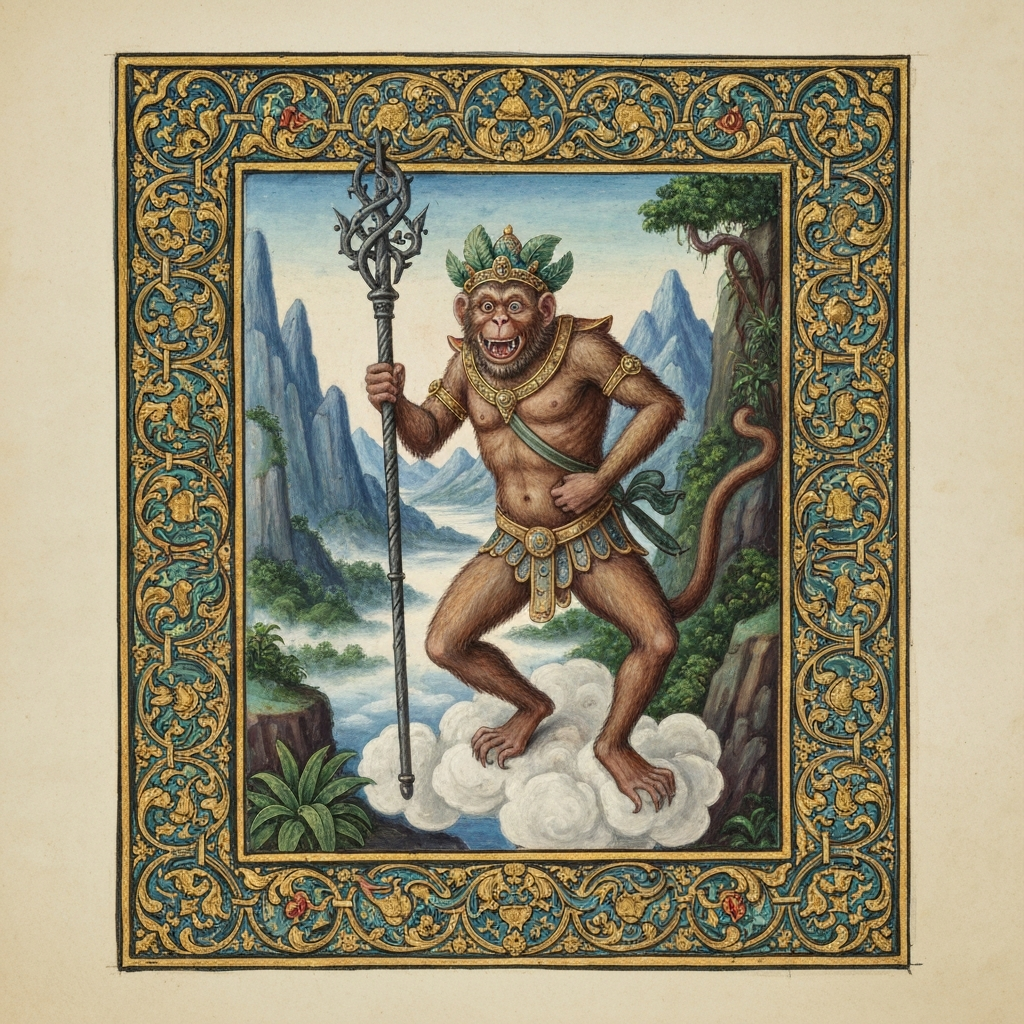
“My name is Sun Wukong. I was born from a stone. I taught myself to be immortal. I stole the weapons of dragons and erased my name from Death’s book. I ate the peaches of the gods and the pills of the immortals. I fought heaven and I lost — but only to the Buddha himself. Now I carry a monk’s luggage on the road to enlightenment, and I am still the strongest thing you will ever meet.”
Lore: Sun Wukong is the most beloved character in Chinese literature and one of the great characters of world fiction. He is born from a stone egg, nourished by the five elements, on the Mountain of Flowers and Fruit. He becomes king of the monkeys, then seeks immortality out of a terror of death. He finds the immortal Subhuti, who teaches him the 72 transformations (he can become anything — a fly, a tree, a temple, another person) and the cloud-somersault (he can travel 108,000 li — roughly 54,000 kilometers — in a single leap). This is not enough. He steals the size-changing iron staff from the Dragon King’s undersea treasury. He erases his name and the names of all monkeys from the registers of Hell. He crashes the Queen Mother of the West’s peach banquet and eats the immortality peaches. He raids Laojun’s laboratory and swallows the pills of longevity. He declares himself “Great Sage Equal to Heaven” and dares heaven to stop him. The entire celestial army cannot. Erlang Shen fights him to a draw. Laojun throws him into the Eight Trigrams Furnace to burn him to ash — but after 49 days, Wukong emerges unscathed, with fiery golden eyes that can see through any disguise. Only the Buddha can stop him: with a casual bet, Buddha traps Wukong under Five Elements Mountain, where the monkey remains imprisoned for 500 years until freed by the monk Tang Sanzang to serve as his protector on the journey west. The headband placed on Wukong by Guanyin ensures his obedience — when the monk chants the sutra, it tightens, causing excruciating pain. The journey is Wukong’s redemption: he learns patience, compassion, humility, and the difference between power and wisdom. He begins as Lucifer; he ends as a Buddha.
Parallel: Sun Wukong’s arc is one of the most extraordinary redemption narratives in world literature. His rebellion against heaven parallels Lucifer’s rebellion — the prideful creature who declares himself equal to the supreme power and is cast down. But where Lucifer’s fall is permanent in Christian theology, Wukong’s imprisonment is purgatorial: he serves his time and is offered a path back. His journey from rebel to enlightened being parallels the arc Christianity reserves for saints — the sinner who becomes holy through suffering and service. His raw physical power (ATK 96, SPD 100) recalls Samson, but Samson never achieves wisdom. Wukong does. The Hanuman comparison is also compelling: both are monkey warriors, both serve a holy figure on a great journey, both possess immense power and shape-shifting ability. Whether there is direct influence (through Buddhist transmission from India to China) or parallel development is debated.
2 min read
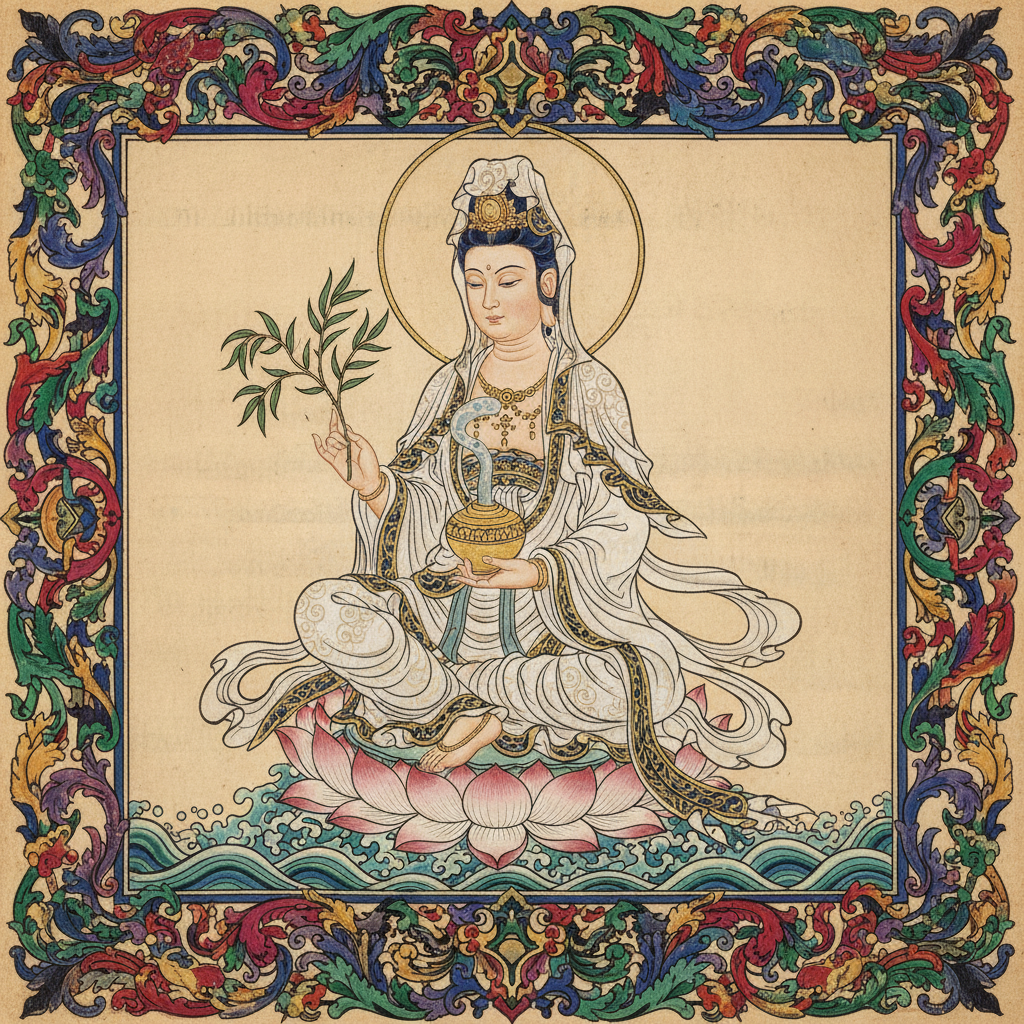
Buddha (imprisoned him under a mountain for 500 years with a single palm); Guanyin (designed the headband system); Erlang Shen (fought him to a draw); Laojun's Eight Trigrams Furnace (attempted to destroy him -- instead gave him fiery golden eyes that see through illusion)
*Journey to the West* ch. 1-7 (rebellion), 8-100 (pilgrimage); folk traditions predating the novel; possibly influenced by the Hindu monkey god Hanuman (debated)