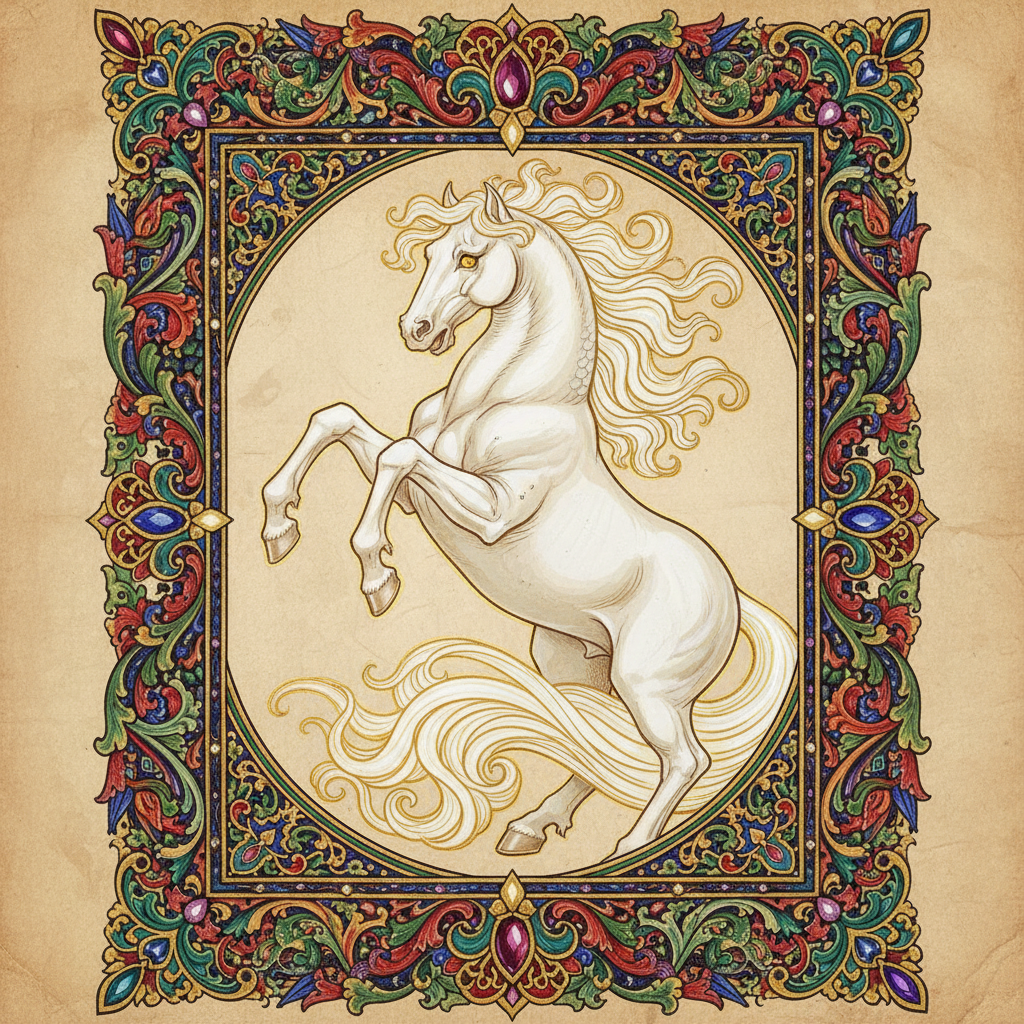
Combat Profile
Pilgrimage's Path
grants the bearer unwavering resolve to overcome any obstacle, transforming suffering into spiritual advancement.
Humble Servant
embodies absolute loyalty and endurance, never wavering in duty regardless of hardship or personal cost.
Trapped in horse form for nearly the entire journey. Cannot speak, cannot fight (in most situations), cannot act as himself. His penance is total self-effacement
“He was a dragon prince. Now he carries a monk on his back in silence. That is what redemption costs.”
Lore: The White Dragon Horse is the most overlooked member of the pilgrimage and the one whose sacrifice is arguably the greatest. He is a dragon prince — a being of immense power and noble birth — who committed a crime, was saved from execution, and accepted a penance of total humiliation: transformation into a horse who carries the monk in silence. He cannot speak. He cannot participate in the camaraderie, the arguments, the battles, or the celebrations of the other pilgrims. He simply walks, step by step, bearing the weight. In the entire novel, he reverts to his dragon form only once, when Tang Sanzang is in mortal danger and the other disciples are absent. He fights to save the monk, then returns to horse form. At the journey’s end, he is restored to dragon form and made a Naga among the Eight Classes of Heavenly Beings.
Parallel: The White Dragon Horse represents redemption through humble service — the most costly and least glamorous form of spiritual transformation. Compare the Christian concept of kenosis (self-emptying, Philippians 2:7, where Christ “emptied himself, taking the form of a servant”). The dragon-become-horse is royalty-become-beast-of-burden, divinity-become-servant. It is the most radical version of the redemption arc in the novel: not the rebel who learns wisdom (Wukong), not the exile who persists (Bajie), but the prince who accepts total erasure of self.
1 min read
The transformation itself. As a horse, he has almost no offensive capability
*Journey to the West*; Dragon King mythology in Chinese folk religion