Combat Profile
Lotus Rebirth
Nezha sacrifices himself to unleash a devastating fiery explosion, then reconstitutes from lotus petals with enhanced power and immunity to the killing blow that triggered it.
Heavenly Warrior's Fury
Each time Nezha takes damage or defies authority, his Fire element attacks increase in potency; he gains strength through rebellion and self-inflicted suffering.
Impulsiveness. His mythological crimes (killing the Dragon King's son, nearly destroying his father's reputation) stem from a child's inability to foresee consequences. His filial rebellion, while spiritually necessary, left deep scars
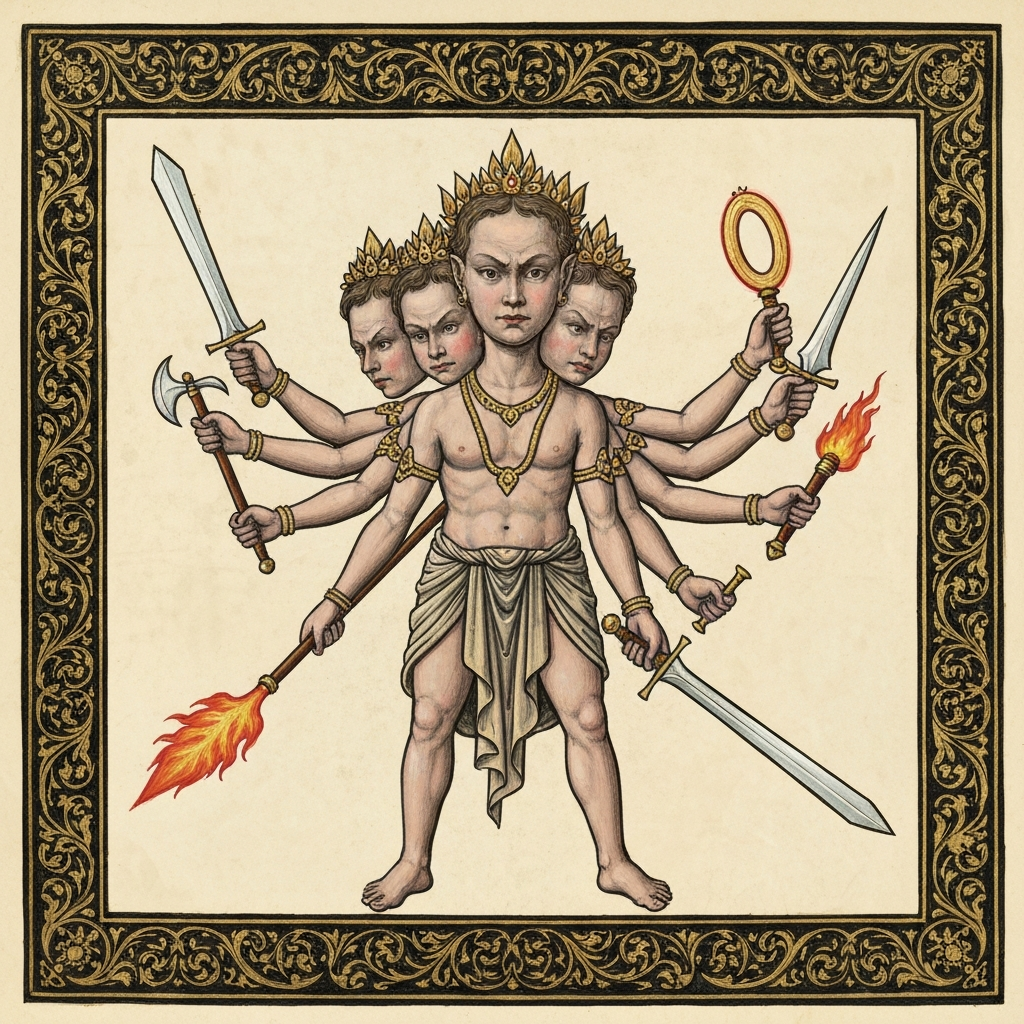
“He cut off his own flesh to save his parents. Then he was reborn from a lotus. Three heads. Six arms. No longer anyone’s child but heaven’s own weapon.”
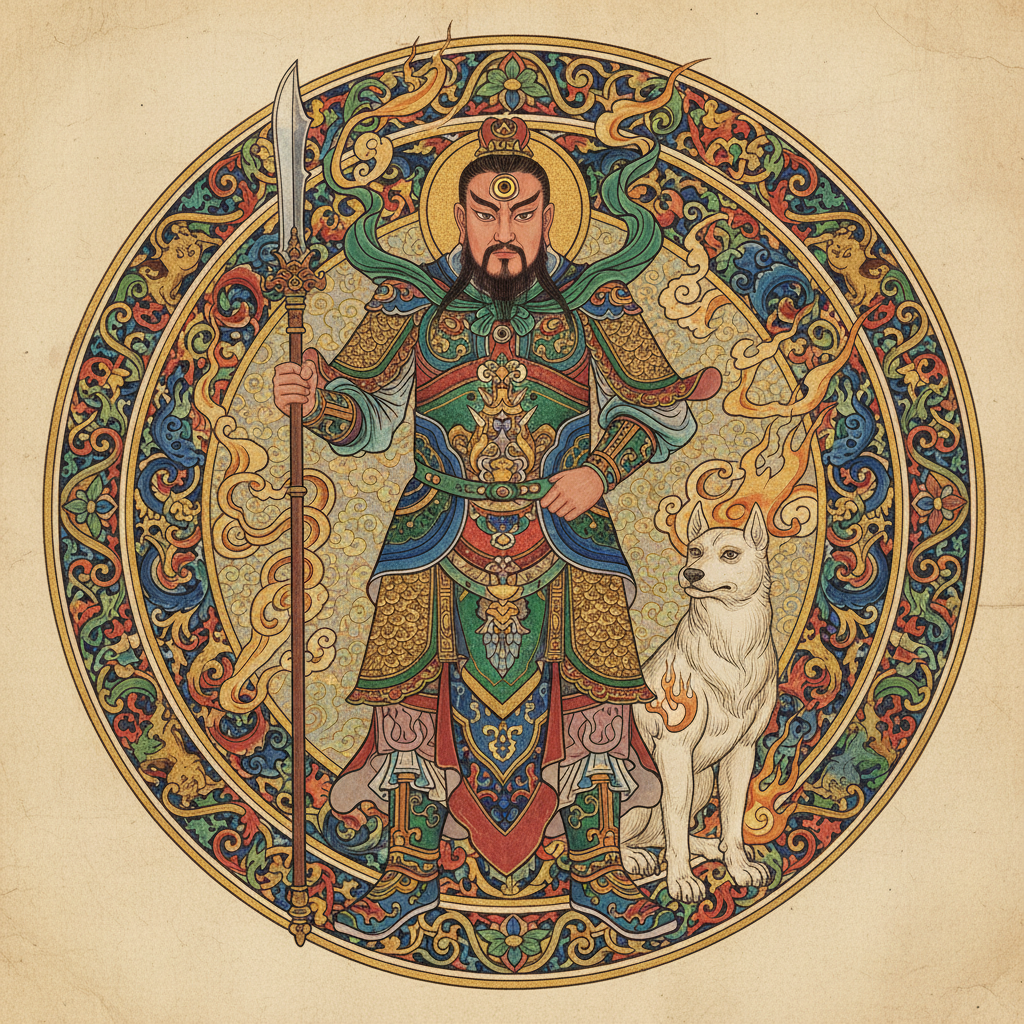
Lore: Nezha is one of the most dramatic figures in Chinese mythology — a child warrior god whose story combines filial piety, rebellion, self-sacrifice, death, and transcendent rebirth. His origin is complex: in Investiture of the Gods, he is born after an unusually long gestation (3 years and 6 months) as a ball of flesh that his father attacks with a sword, releasing the child within. He is preternaturally powerful from birth and quickly gets into trouble — killing a dragon prince, antagonizing the sea gods, bringing catastrophe to his father’s household. The climax of his myth is his self-sacrifice: rather than allow his parents to suffer for his actions, he strips the flesh from his own bones and returns it, taking sole responsibility. His teacher then resurrects him from lotus flowers, and he is reborn as a divine warrior with three heads and six arms, wielding celestial weapons. In Journey to the West, Nezha appears as one of the heavenly warriors sent against Sun Wukong during the great rebellion.
Parallel: Nezha’s self-sacrifice — cutting away the body given by parents to free both himself and them from karmic debt — is one of the most radical self-sacrifice narratives in world mythology. The Christian parallel is Christ’s sacrifice of his body to free humanity from the debt of sin, but Nezha’s version is more intimate and more disturbing: he is a child mutilating himself. His lotus rebirth parallels resurrection traditions broadly (Christ from the tomb, Osiris from death, Baldur’s return after Ragnarok), but the lotus specifically is a Buddhist symbol of purity emerging from mud — enlightenment emerging from suffering. Nezha’s three-headed, six-armed form after rebirth also connects him to Hindu multi-armed deities (Shiva, Durga, Vishnu), suggesting transmission through Buddhist channels.
1 min read
His father Li Jing (the Pagoda-Bearing Heavenly King) was his primary antagonist before their reconciliation. The Dragon Kings sought his destruction
*Investiture of the Gods* (Fengshen Yanyi, 16th century); *Journey to the West* (appears as heavenly warrior); folk religion (one of the most popular gods in Chinese temples)