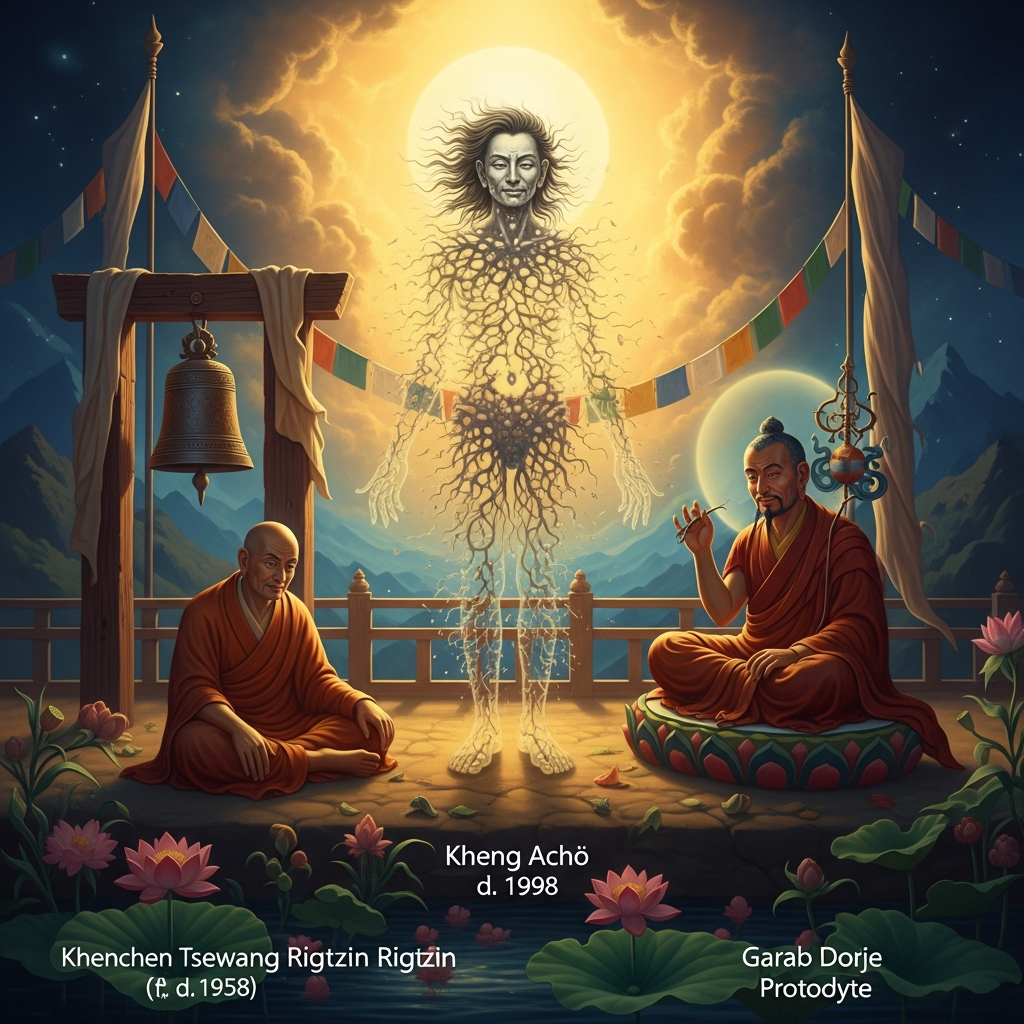
The Body That Leaves Only Hair and Nails
recurring — documented in Tibetan Buddhist tradition from the 8th century to the present, with recent cases in the 20th century · Eastern Tibet (Kham) — the caves and hermitages of the Dzogchen practitioners, most documented cases in Kham and Amdo
Contents
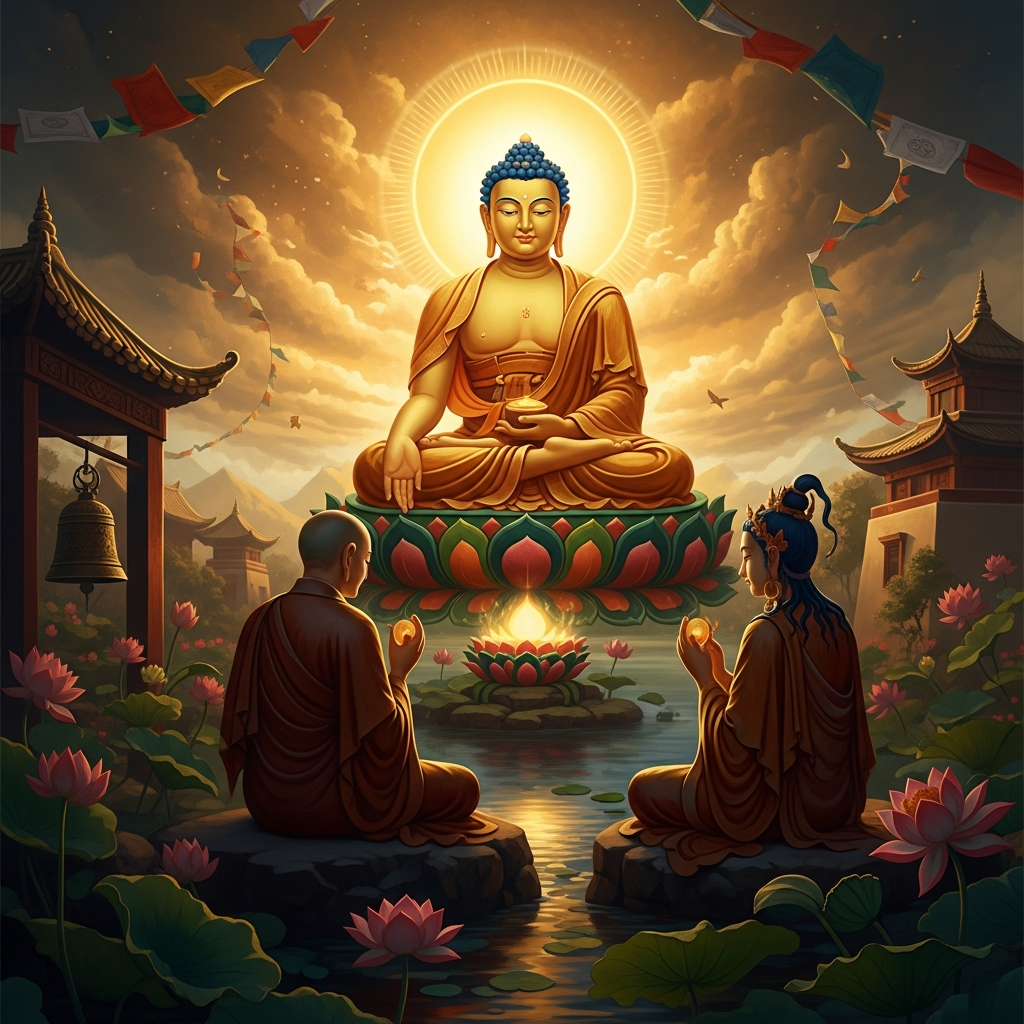
When a Dzogchen master dies in full realization, the physical body does not decompose — it dissolves into light over seven days, shrinking as it radiates, until nothing remains except the hair and nails, which cannot participate in the dissolution of the coarser elements.
- When
- recurring — documented in Tibetan Buddhist tradition from the 8th century to the present, with recent cases in the 20th century
- Where
- Eastern Tibet (Kham) — the caves and hermitages of the Dzogchen practitioners, most documented cases in Kham and Amdo
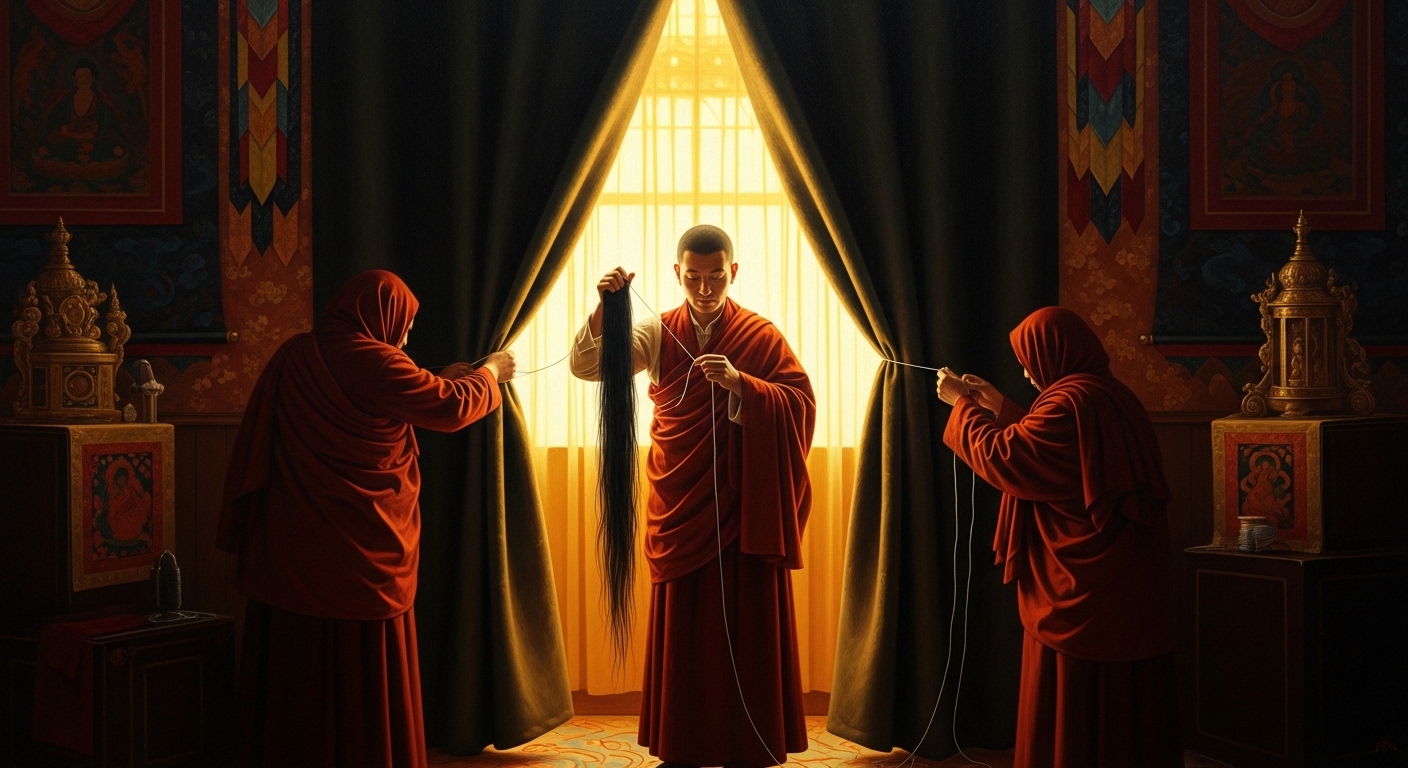
They sew the curtains shut on the morning of the death.
The tradition is precise about this: when a Dzogchen master dies — or rather, when a Dzogchen master who has achieved the direct and sustained recognition of the nature of mind dies — the body is not to be disturbed. A small tent is erected over it, or the curtains of the room are drawn. No one enters. The attendants wait outside and watch.
For seven days, the tent grows smaller.
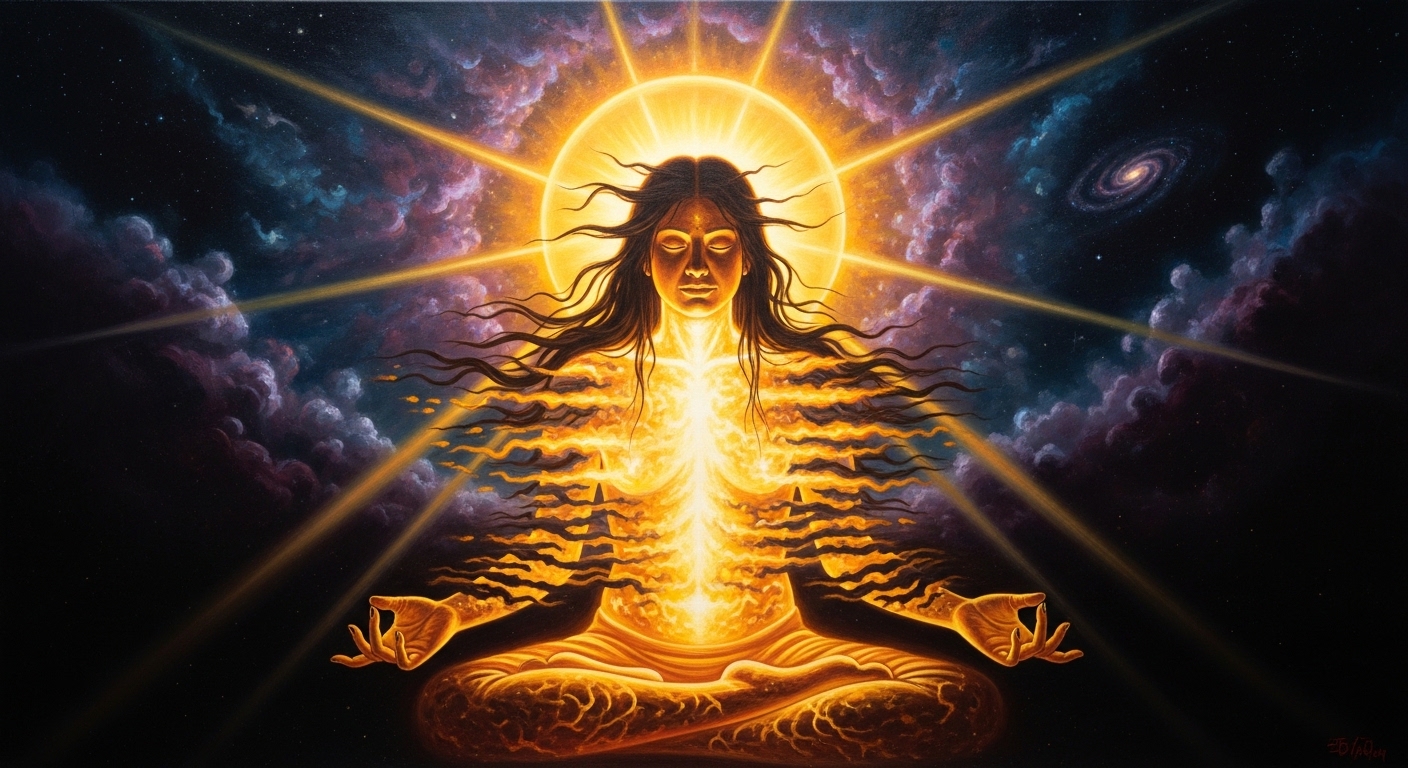
This is the rainbow body dissolution. The body of the realized master does not decompose in the ordinary way. It dissolves from the outside in, gradually — the coarser physical matter releasing into the subtler elements, the subtler elements releasing into light. Witnesses report a smell of flowers from inside the tent. They report seeing colored lights — blues, greens, reds, golds — emanating from the sealed enclosure, visible at night and sometimes in daylight.
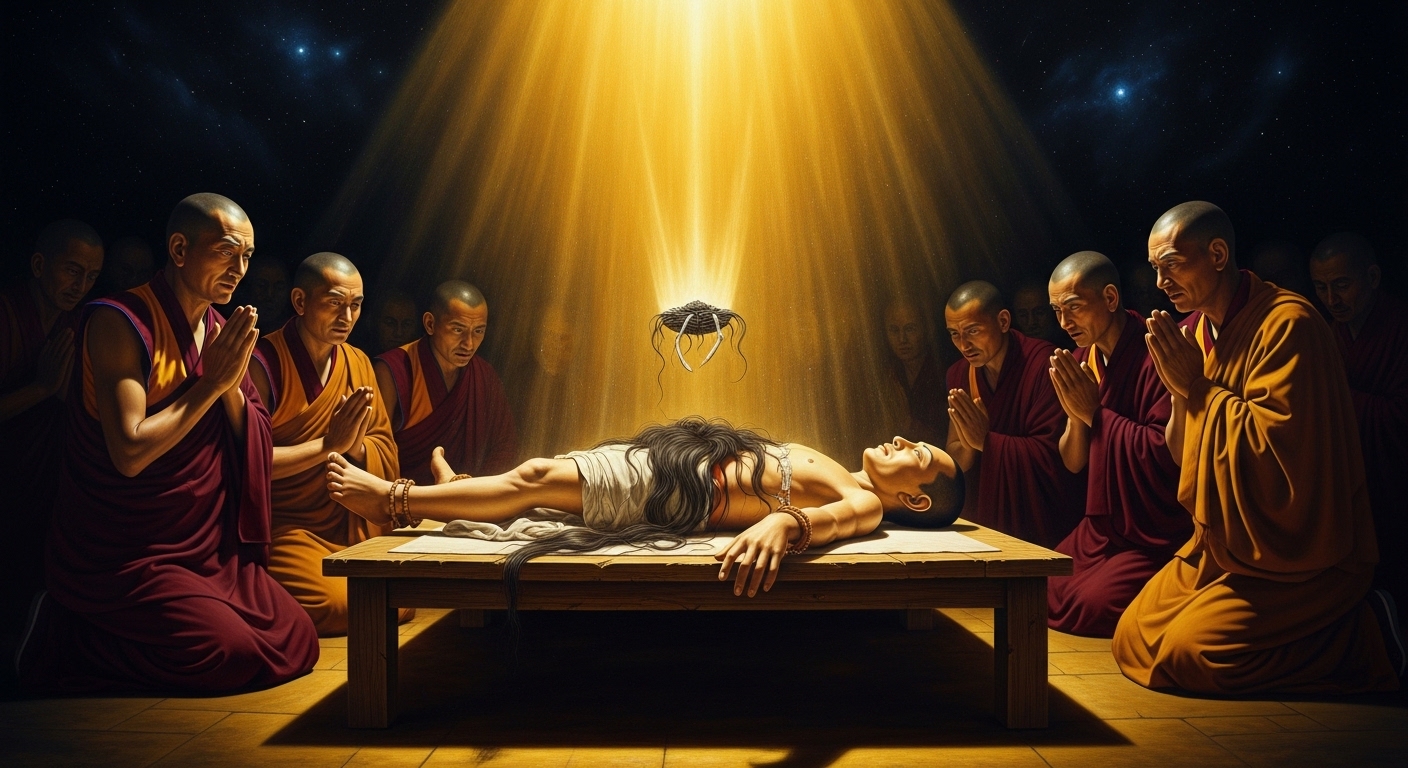
When the curtains are opened on the eighth day, or whenever the process is complete, what remains in the bedding is a small pile of hair and nails. The body is gone.
The hair and nails are the exception because they cannot participate.
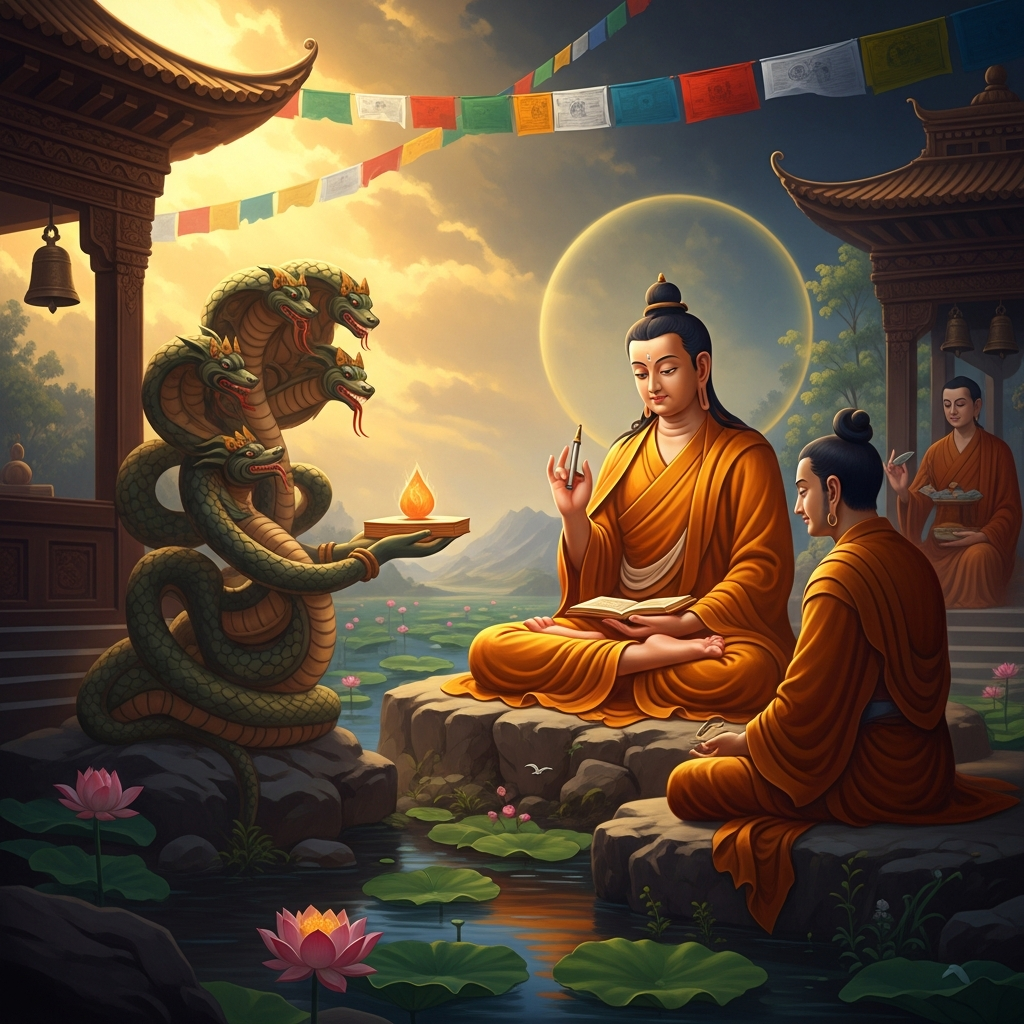
This is the technical explanation given by the tradition: the rainbow body dissolution involves the resolution of the four elements of the physical body — earth, water, fire, air — back into their fundamental nature as light. Hair and nails are technically dead matter even while the person lives; they have already been released from the living system. They are therefore exempt from the dissolution process. They are not an anomaly or a failure of the dissolution; they are exactly what the theory predicts should remain.
What the body dissolves into is not nothing. It dissolves into what it always was — the tradition’s claim is that the physical body is, at its base, nothing other than light that has condensed into apparent solidity through the force of karma and habitual perception. The practitioner who has fully recognized the nature of mind has recognized this about the body too: has seen through the apparent solidity to the light it is made of. At death, when the conditions that maintain the condensation are removed, the body returns to its actual nature.
This is not believed by everyone. The Tibetan tradition is aware that it is not believed by everyone. The tradition’s response to skepticism is to point to the specific cases, the named practitioners, the living witnesses, the documentary evidence that has been gathered especially in the twentieth century when photographs and testimonies could be preserved. Father Francis Tiso, a Catholic priest, was present during and after the death of Khenpo Achö in 1998 and provided an account to Francis V. Tiso’s subsequent documentary. The body shrank. Colored lights appeared. Hair and nails remained.
The implication for living practitioners is not abstract.
If the body is light that has forgotten it is light, then the practice is the process of remembering. Every session of Dzogchen practice — every moment of recognizing the nature of mind, every time the practitioner rests in the awareness that is looking rather than identifying with what is looked at — is a small act of dissolution, a small loosening of the condensation. The rainbow body at death is the completion of a process that begins the moment the pointing-out instruction takes hold.
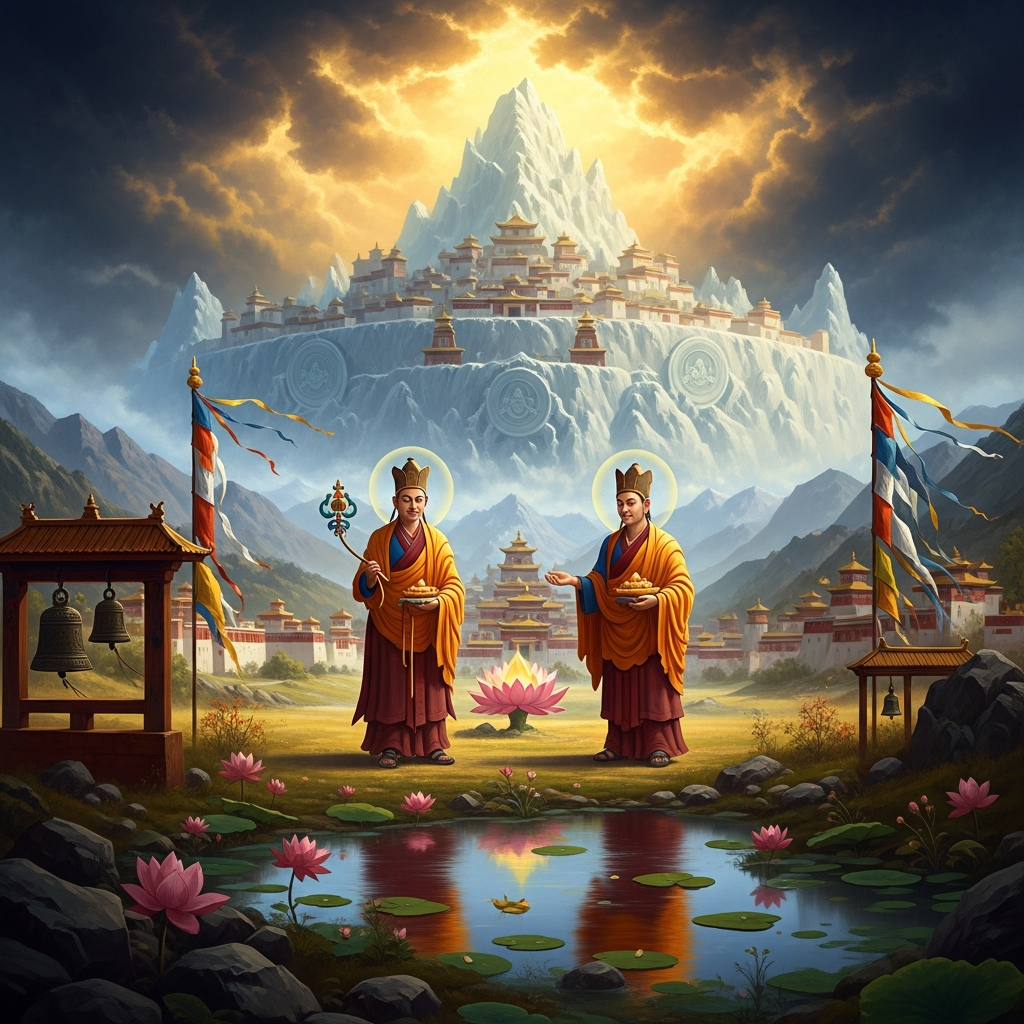
This means the dissolution is not reserved for exceptional masters. It is available to anyone who practices long enough and deeply enough. The Tibetan tradition lists hundreds of rainbow body cases across the centuries, from the eighth century through the twentieth, spanning every school and region. The frequency is not that of miracle — it is that of a well-documented outcome of a specific process, available to anyone who does the work.
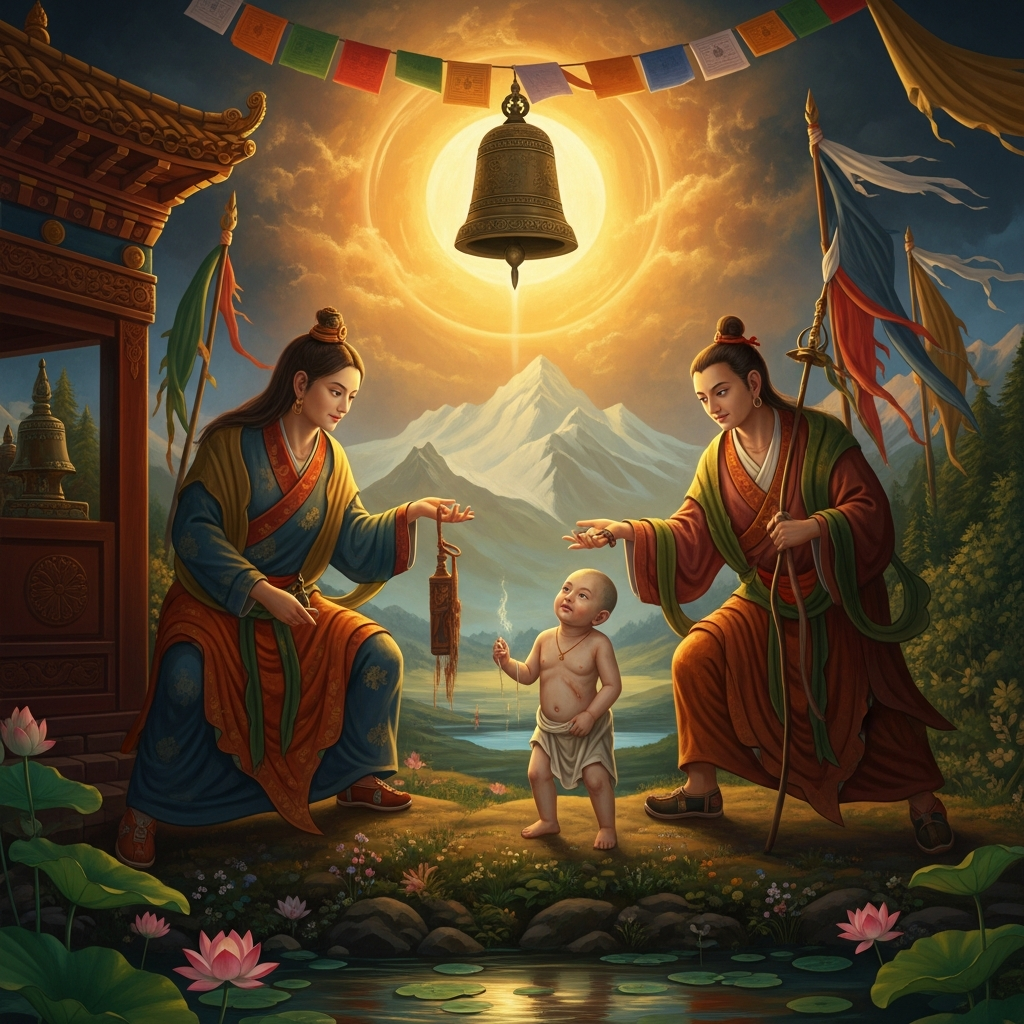
The hair and nails remain. They are placed in reliquary objects and distributed to practitioners as objects of devotion. They are the trace of the light that passed through the body. They are the only part of the physical that could not follow the rest back to where it came from.
Scenes
Echoes Across Traditions
Entities
- Khenchen Tsewang Rigdzin (a recent example, d. 1958)
- Khenpo Achö (d. 1998 — documented in detail)
- Garab Dorje (the prototype)
Sources
- Nyoshul Khen Rinpoche, *A Marvelous Garland of Rare Gems* (Padma Publishing, 2005)
- David Steindl-Rast and Father Francis Tiso, research on Khenpo Achö (1998)
- Sogyal Rinpoche, *The Tibetan Book of Living and Dying* (HarperCollins, 1992)