The Birth of the Saoshyant
At the end of time — three thousand years after Zarathustra's revelation · Lake Kansaoya — the lake in eastern Iran that preserves the prophet's seed
Contents
From a lake that has preserved Zarathustra's seed for millennia, three savior-figures will be born at thousand-year intervals — and the last of these, Astvat-Ereta, will lead the final renovation of creation and the defeat of Angra Mainyu forever.
- When
- At the end of time — three thousand years after Zarathustra's revelation
- Where
- Lake Kansaoya — the lake in eastern Iran that preserves the prophet's seed
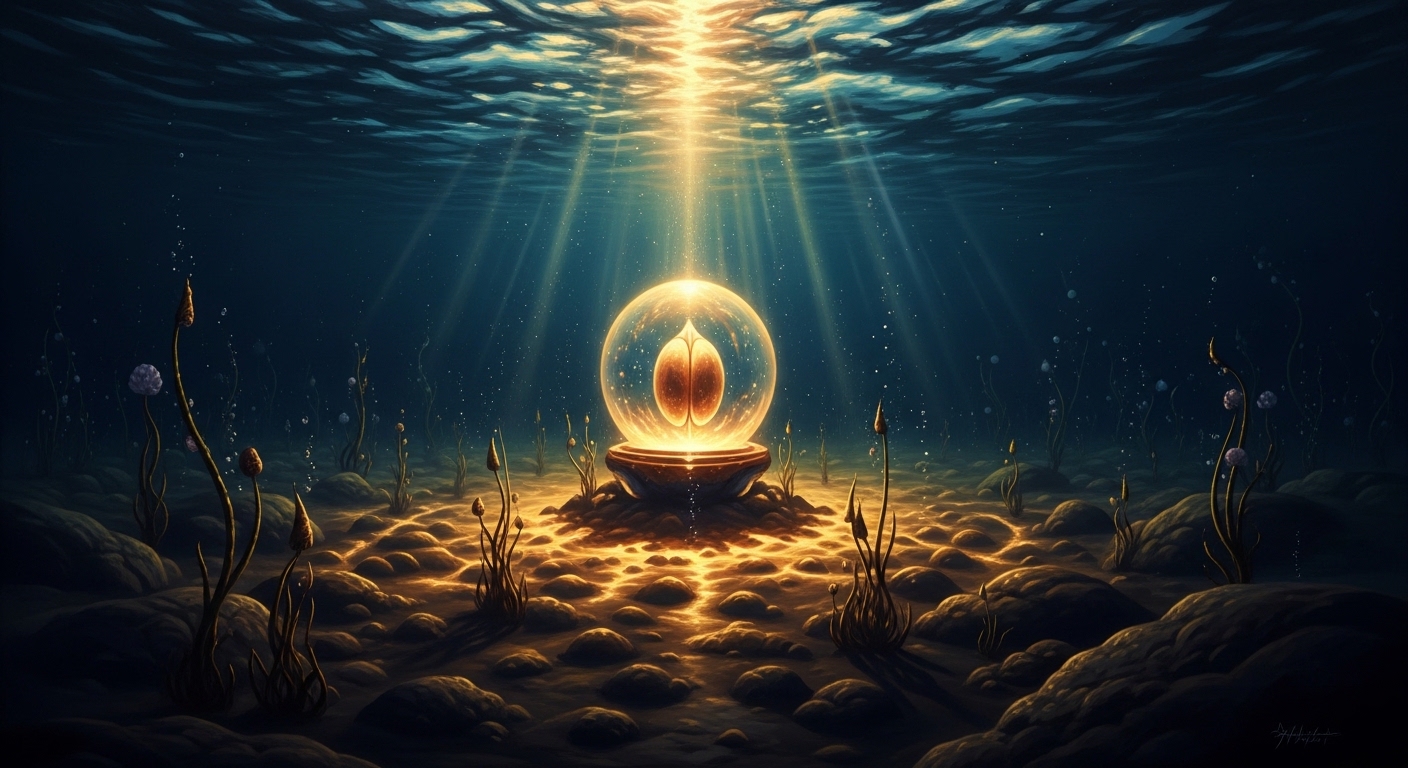
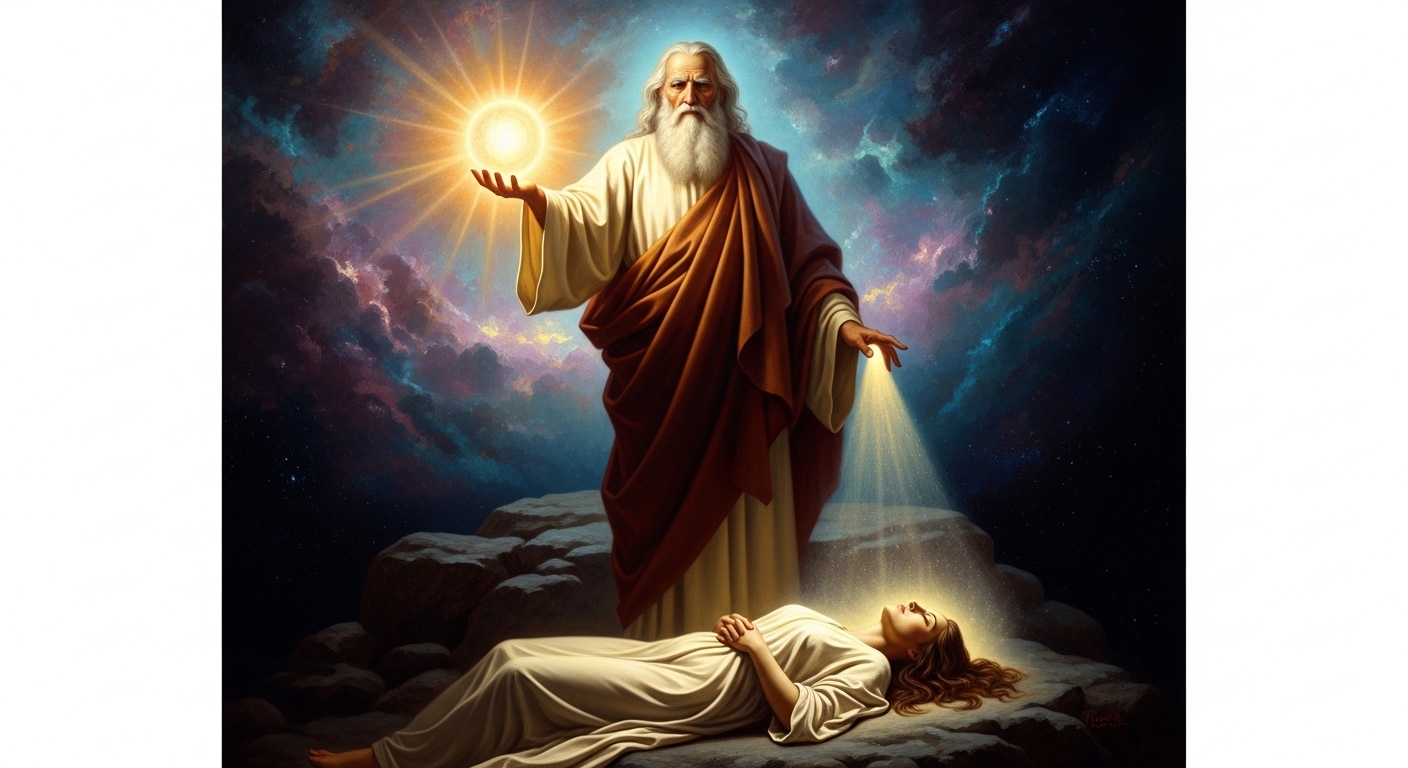
At the bottom of Lake Kansaoya in the eastern lands, the seed of Zarathustra is preserved.
This is what the tradition asserts, and it asserts it with the matter-of-fact confidence of a religious system that has thought carefully about how the cosmos is structured and knows the answer to the problem of evil: the answer is not immediate, but it is certain, and it is specific. Not general goodness eventually prevailing over general evil in some vague way, but a specific person born at a specific time in a specific manner to perform a specific task.
The task is the final renovation of creation.
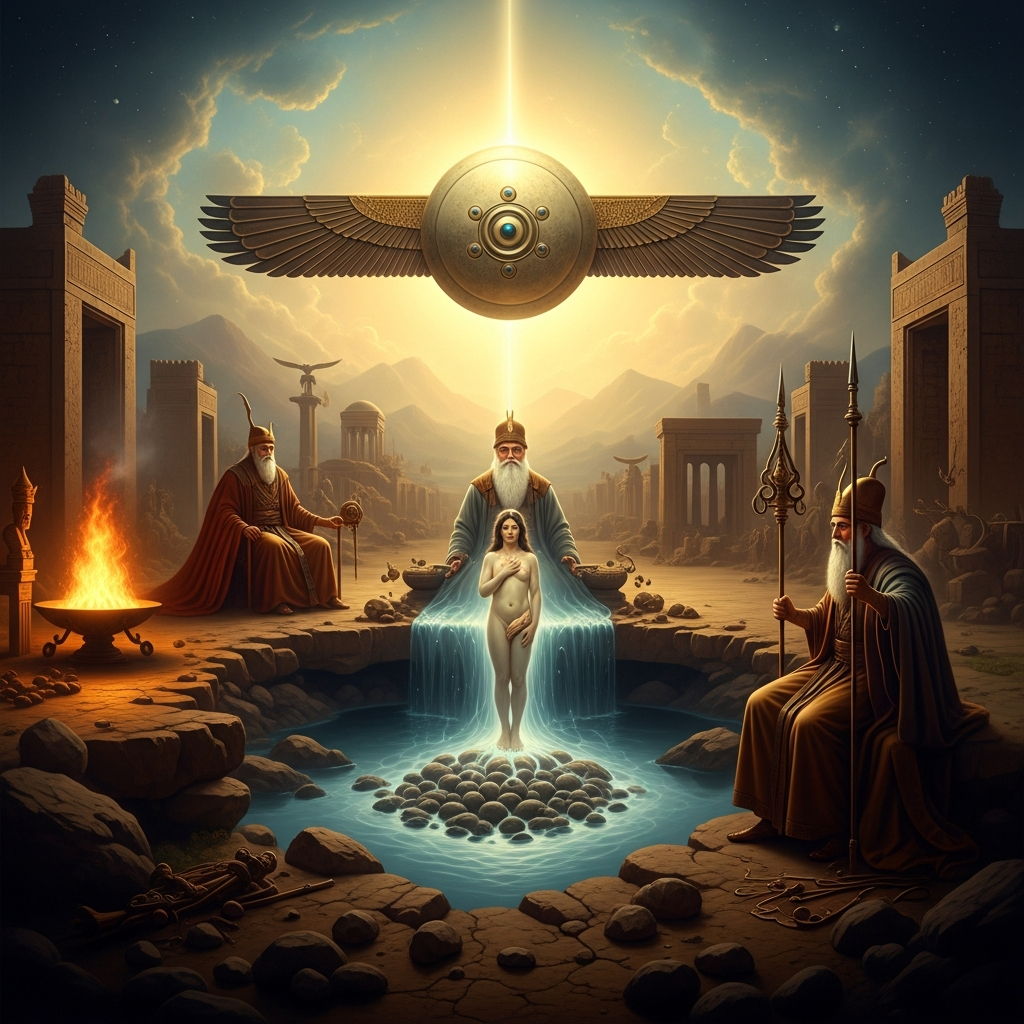
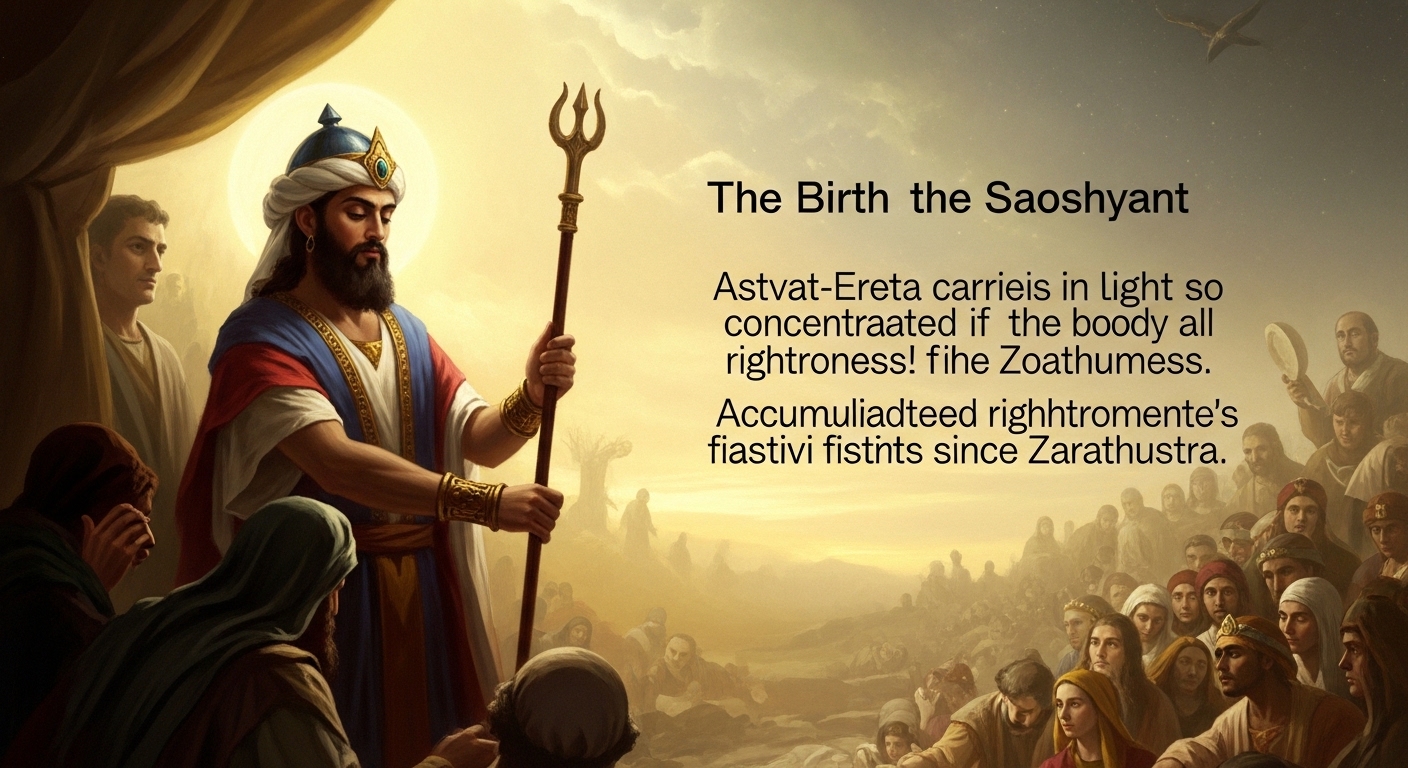
Three times in the three thousand years between Zarathustra’s revelation and the end of the current cosmic age, a virgin will bathe in Lake Kansaoya and be made pregnant by the prophet’s preserved seed. Each time, a savior is born: Uchshyat-Ereta at the first millennium, Uchshyat-Nemah at the second, and Astvat-Ereta — the Corporealization of Righteousness — at the third. These three are the Saoshyants, the Benefactors, the ones who bring benefit to the world at each cosmic threshold.
Astvat-Ereta is the last and greatest.
His name means, in Avestan, one whose righteousness is embodied: not a spiritual quality held at a distance, not the righteousness of the philosopher in his study, but righteousness made physical, made into a person who walks and fights and renews. His mother will be a virgin named Vispa Taurvairi — She Who Overcomes All — who will bathe in the sacred lake at the moment of the third millennium’s completion and emerge carrying the last Saoshyant.
He will be born blazing.
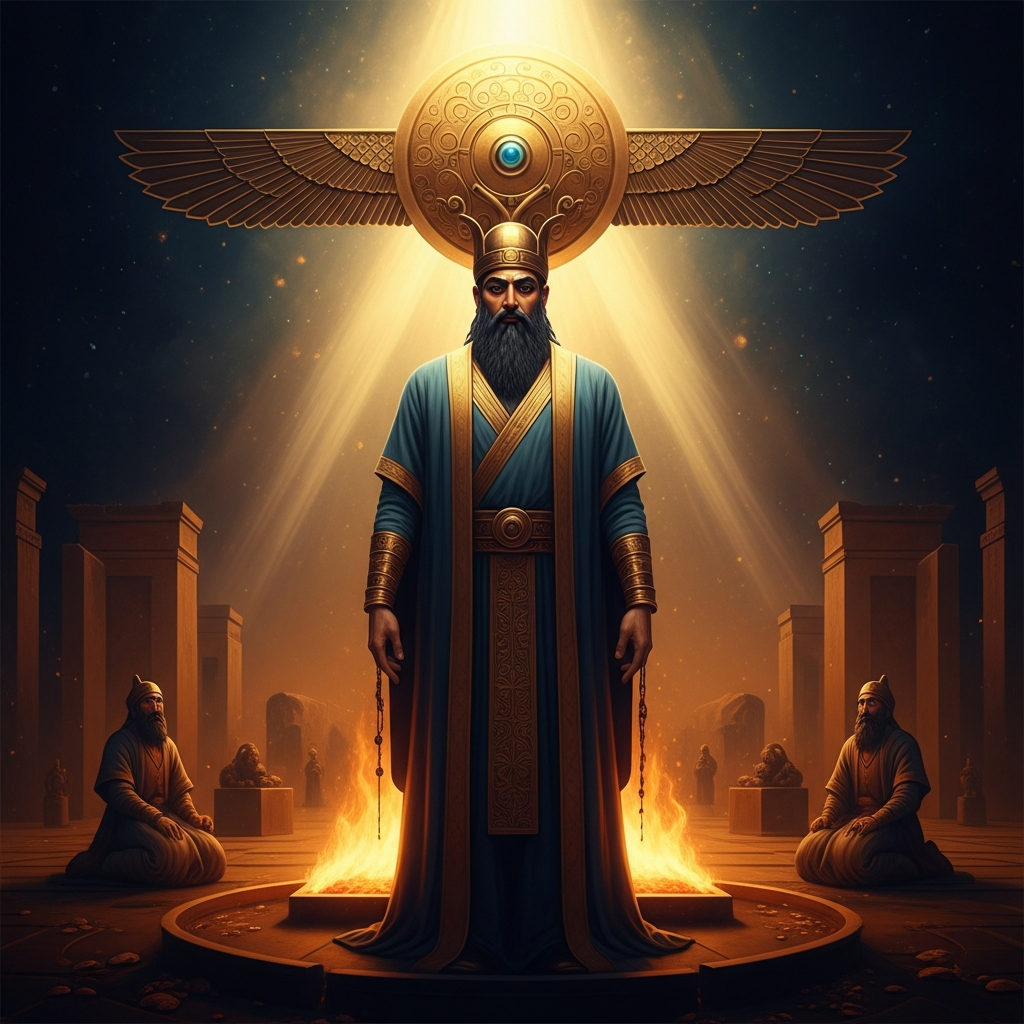
The texts describe his birth in terms of light so concentrated that it rivals the sun, and this is not merely metaphorical but cosmological: Astvat-Ereta carries in his body the accumulated righteousness of all the Zoroastrian faithful since Zarathustra, the spiritual weight of every good thought, good word, and good deed that has been performed since the prophet first crossed the river. The light is the farr — the divine royal glory — in its greatest possible concentration, given to a human being for the last human task.
His task is the Frashokereti.
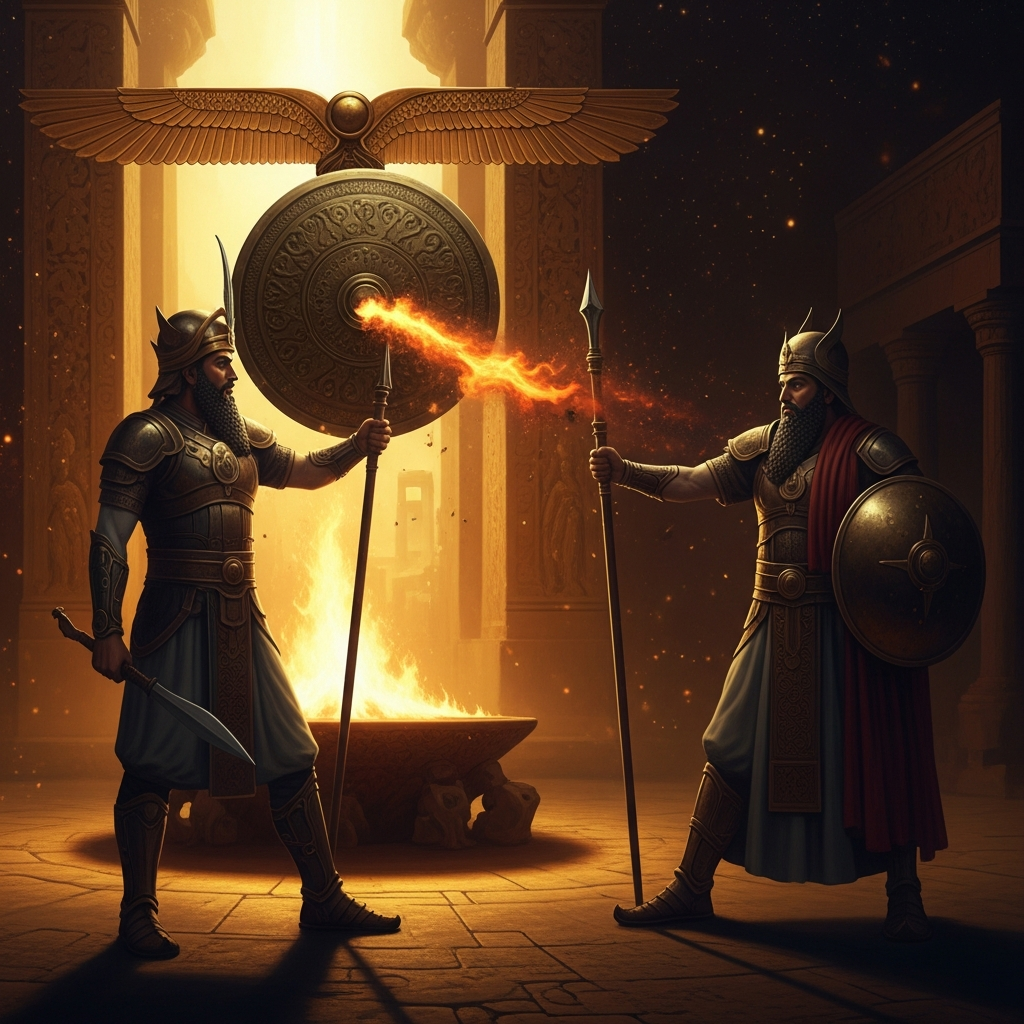
He will lead the final battle against Angra Mainyu and the remaining forces of evil. He will raise the dead — all the dead, from Gayōmard to the last person who dies in the third millennium — and lead them through the purification of the molten metal river that will run across the earth. For the righteous, the river will feel like warm milk. For those who spent time in the House of Lies, it will feel like what it is — purifying pain — but the result is the same: they will be cleaned.
Angra Mainyu will be defeated and his creation ended.
The exact mechanism of the final defeat varies slightly between sources. In some, Astvat-Ereta himself kills the Hostile Spirit. In others, the ritual of the final yasna ceremony — performed perfectly, with the last Haoma pressing, with the final sacrifice of the primordial bull — releases the power that destroys evil at the root. In all versions, the result is the same: the House of Lies is dissolved, the Endless Darkness can no longer sustain a hostile principle, and the world returns to the condition it had before Angra Mainyu’s attack — perfect, whole, and free of suffering.
The mountain-ranges that Angra Mainyu’s assault broke into the earth are smoothed away. The rivers run clear. The sky is unbroken. The resurrected dead live in perfect bodies, in a perfect world, in the eternal light of a creation that has finally become what it was always meant to be.
Zarathustra’s last gift to his faith was not a teaching or a prayer.
It was a child preserved in a lake, waiting.
The wait has a number: three thousand years.
The child has a name: the one whose righteousness is embodied.
The end has a shape: it looks exactly like the beginning, before the assault, except that now the assault can never come again.
Scenes
Echoes Across Traditions
Entities
- Astvat-Ereta (The Saoshyant)
- Zarathustra
- Lake Kansaoya
- Hvovi
- Vispa Taurvairi
Sources
- *Zand-i Wahman Yasn*, translated by Carlo Cereti (Rome, 1995)
- Mary Boyce, *A History of Zoroastrianism*, Vol. I (Brill, 1975)
- Prods Oktor Skjærvø, 'Saošyant,' *Encyclopædia Iranica* (2009)
- Anders Hultgård, 'Persian Apocalypticism,' *The Encyclopedia of Apocalypticism*, Vol. 1 (1998)