Rangi and Papa: The World Made from a Grief
Māori oral tradition; recorded in writing from 19th century CE · Aotearoa / New Zealand · the primordial space between sky and earth
Contents
In the beginning, Ranginui the Sky Father and Papatūānuku the Earth Mother lay locked in each other's arms, their children pressed between them in complete darkness. The children argued about what to do, and eventually Tāne-mahuta lay on his back, placed his feet against his father the sky, and pushed. The separation made the world — light, seasons, wind, the space in which all living things could exist. Ranginui still weeps: his tears fall as rain. Papatūānuku's breath rises as mist from the warming earth. They have not stopped reaching for each other.
- When
- Māori oral tradition; recorded in writing from 19th century CE
- Where
- Aotearoa / New Zealand · the primordial space between sky and earth
Before light, the two lay together.
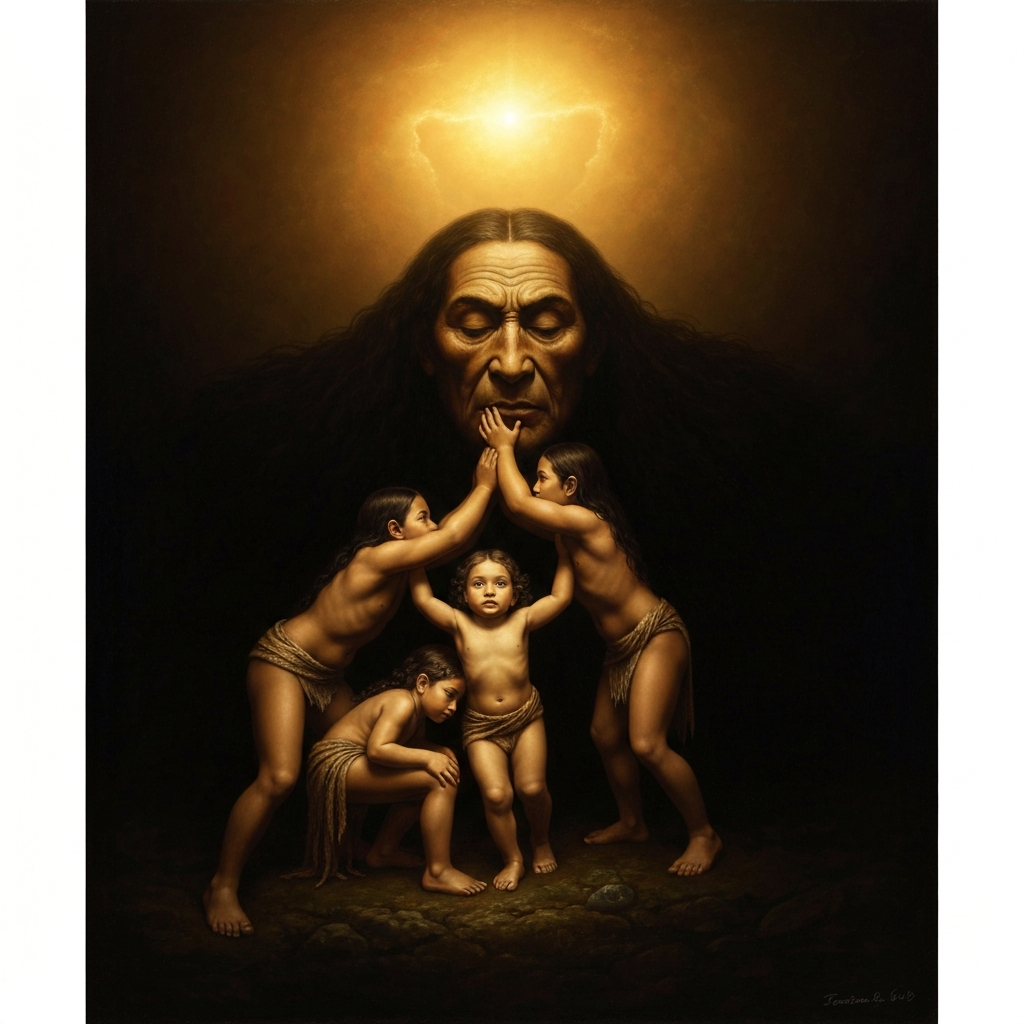
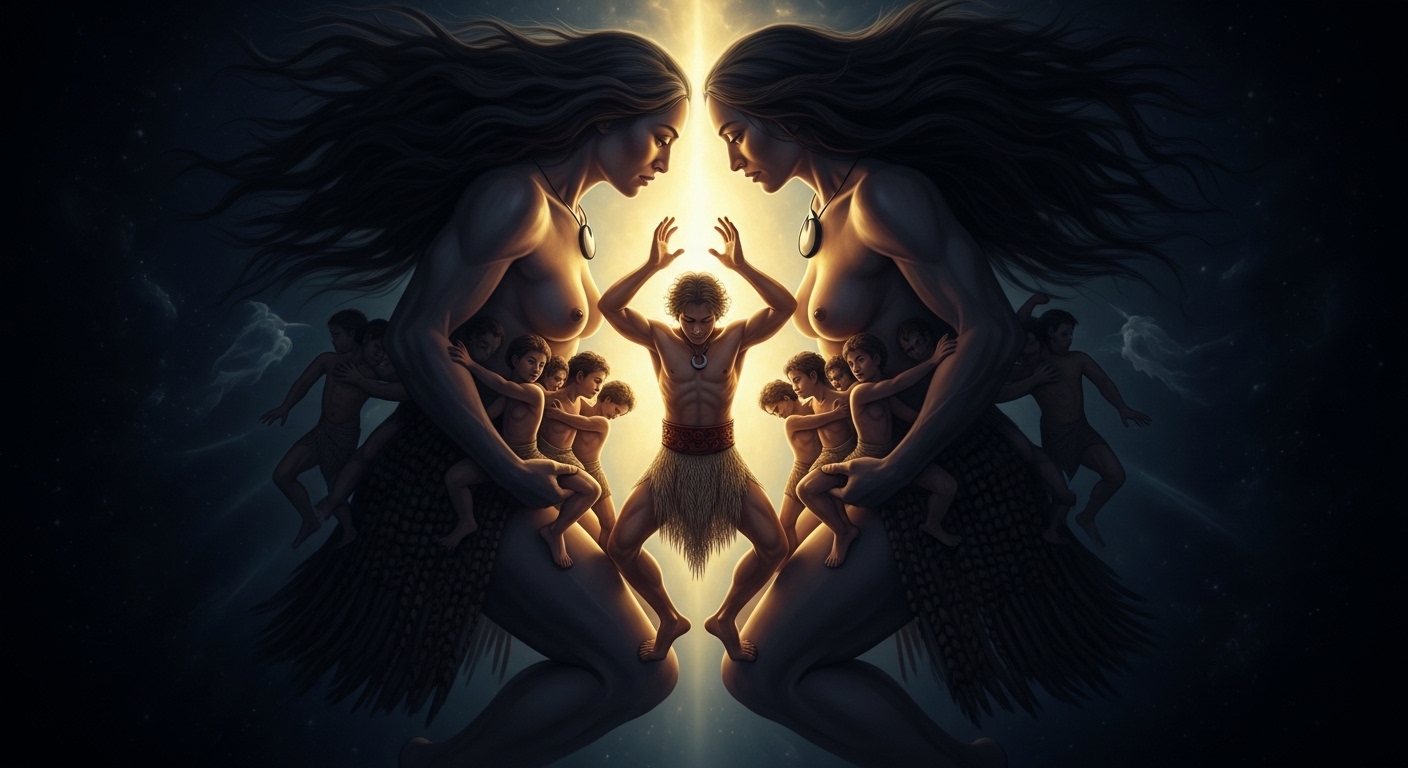
Ranginui, the Sky Father, held Papatūānuku, the Earth Mother, in an embrace that had no beginning that any of their children could remember. This was not warmth in the way warmth is known now, not the warmth of sunlight on water or soil after rain. It was the original warmth: two great bodies pressed together with nothing between them, their children living in the space — if it could be called a space — between their parents’ chests.
The children were gods. They were also prisoners.
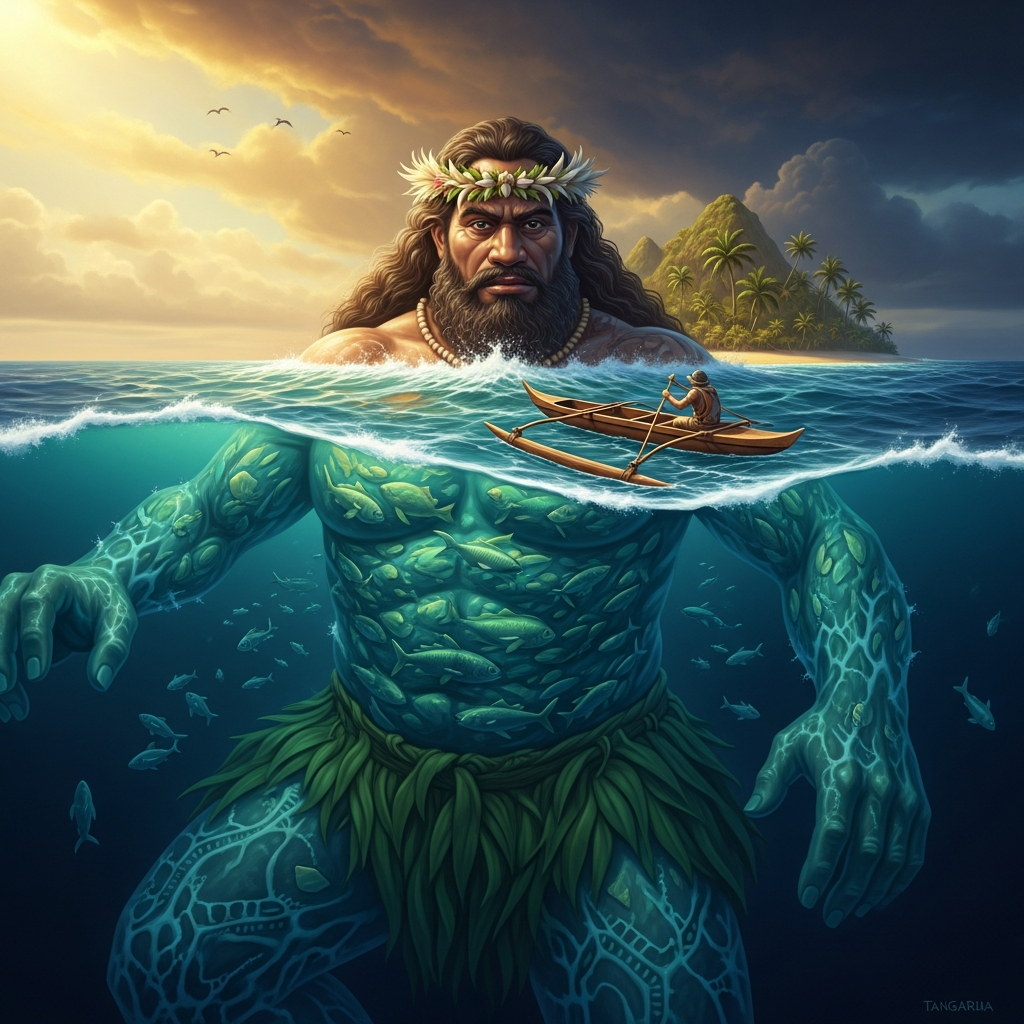
Tāne-mahuta was among them, the god of forests and of all creatures that live in trees. Tangaroa was there, who would become the god of the ocean. Rongo-mā-Tāne, the god of cultivated plants. Haumia-tiketike, the god of uncultivated food. Tūmatauenga, the god of humans and of war. And others — all of them living in the dark, in the press of their parents’ love, with no room to stand, no horizon to measure themselves against, no light by which to see their own hands.
They had always been there. They did not know what they were waiting for until one of them said: we have to decide.
The argument among the children of Rangi and Papa is one of the oldest recorded in human memory: what do you do when the thing that made you is also the thing that is containing you?
Most of the brothers said: separate them. Push the sky up from the earth, let in light, give ourselves room to become what we are. The embrace that had given them life was now the architecture of their limitation, and they understood that the limitation was not malice — their parents were simply holding each other, as they had always held each other, not knowing that their children needed the holding to end.
Tūmatauenga said something else. Kill them.
The others would not do it. This is a distinction the tradition preserves carefully. The separation that creates the world is not a killing. It is not a conquest. It does not come through violence against the parents but through an act that requires the children to take responsibility for what their living will cost. They choose to make themselves room, but they will not unmake their parents to do it. Tūmatauenga’s way — the way of war, of final solutions, of problems solved by elimination — is considered and refused.
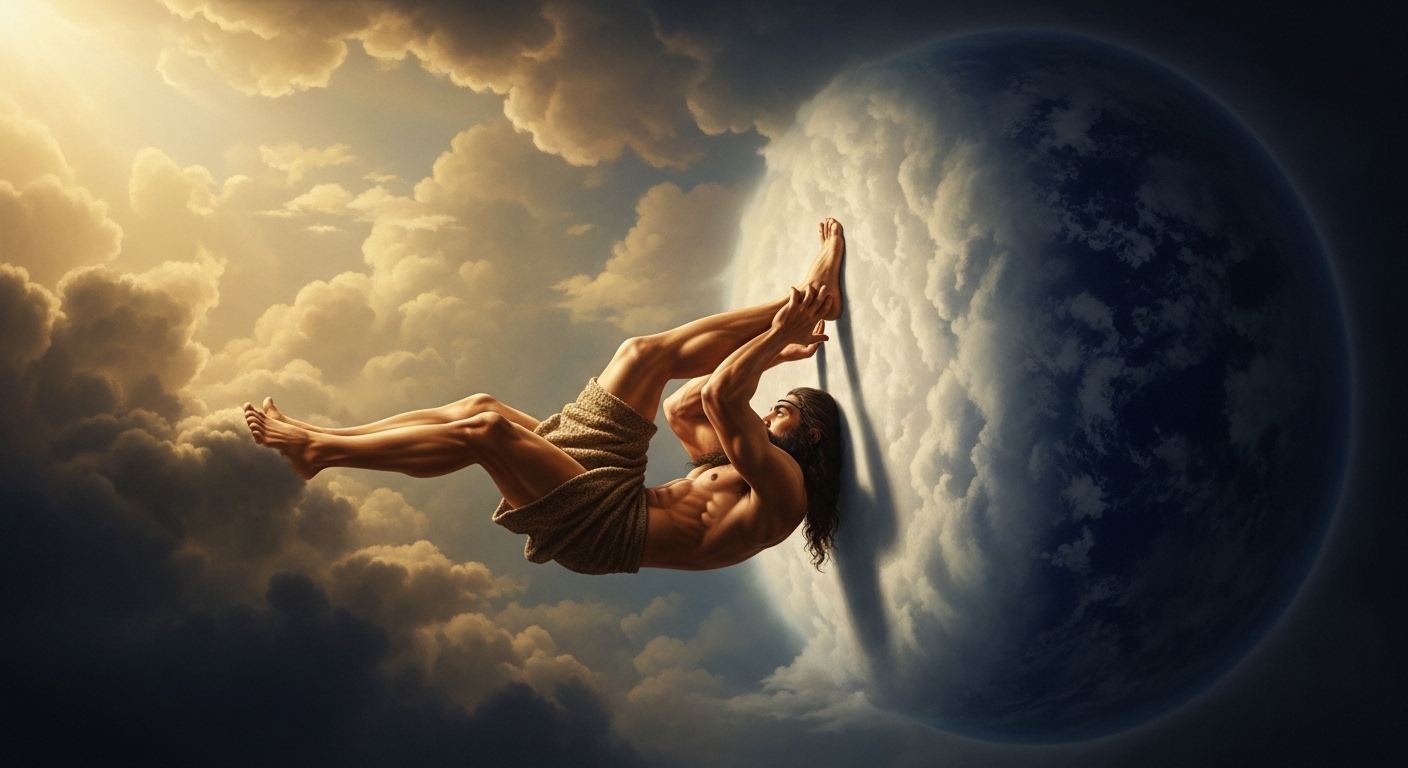
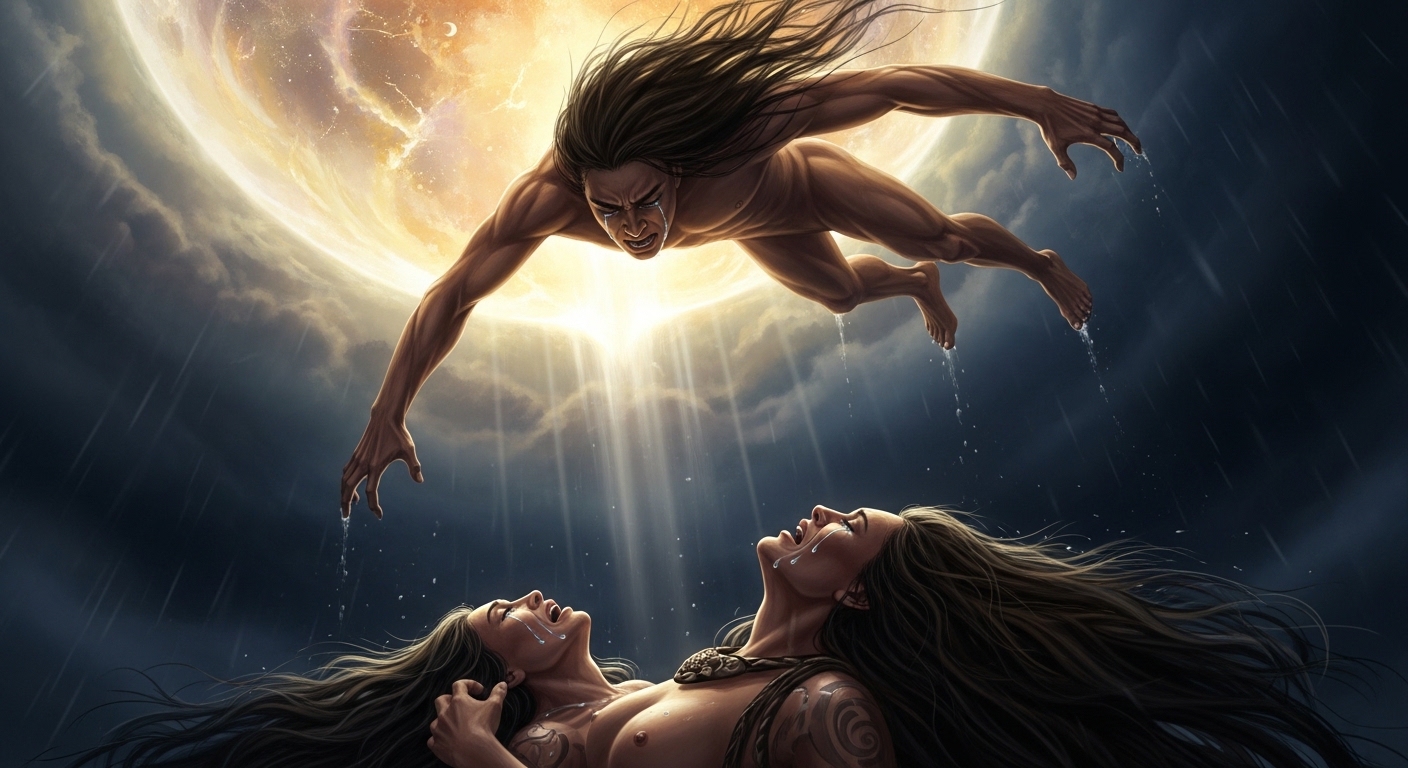
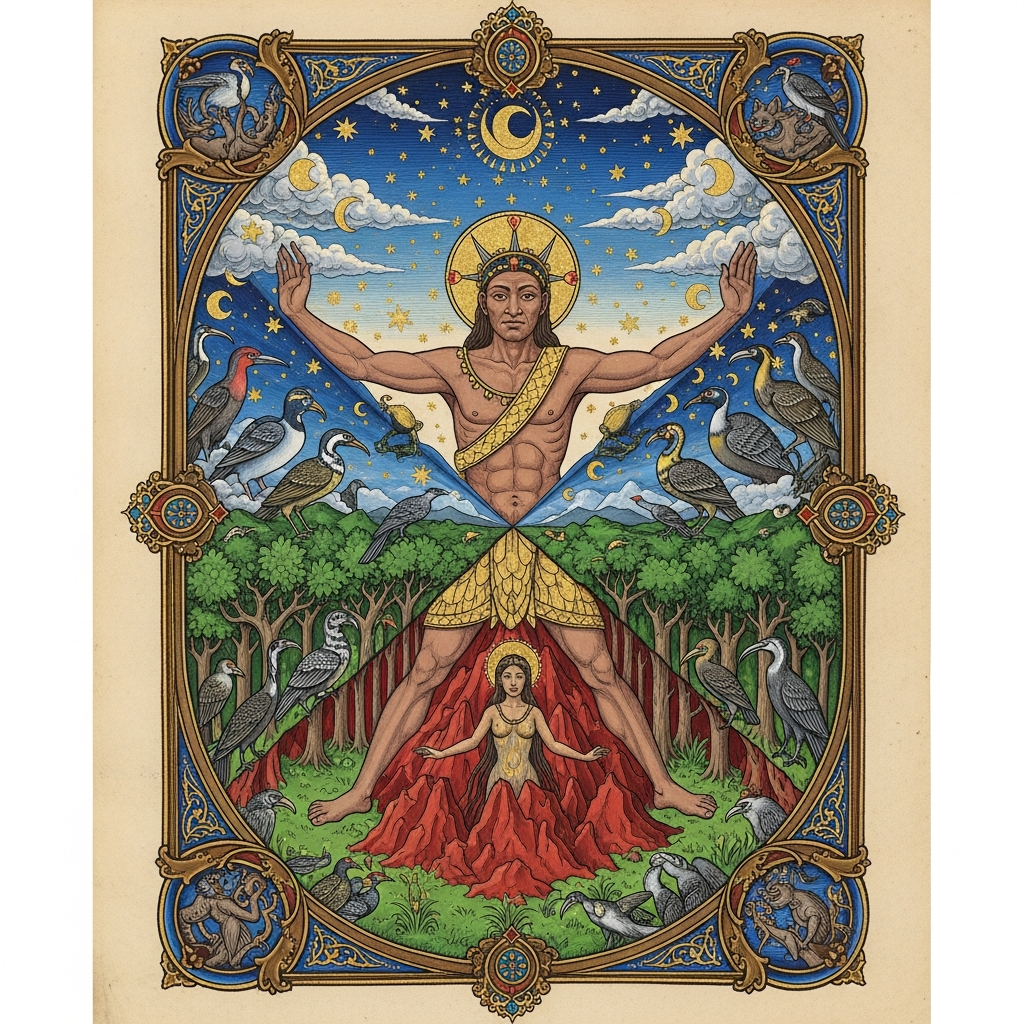
Then Tāne-mahuta lay down on the earth, on his mother’s body, and placed his feet against his father the sky.
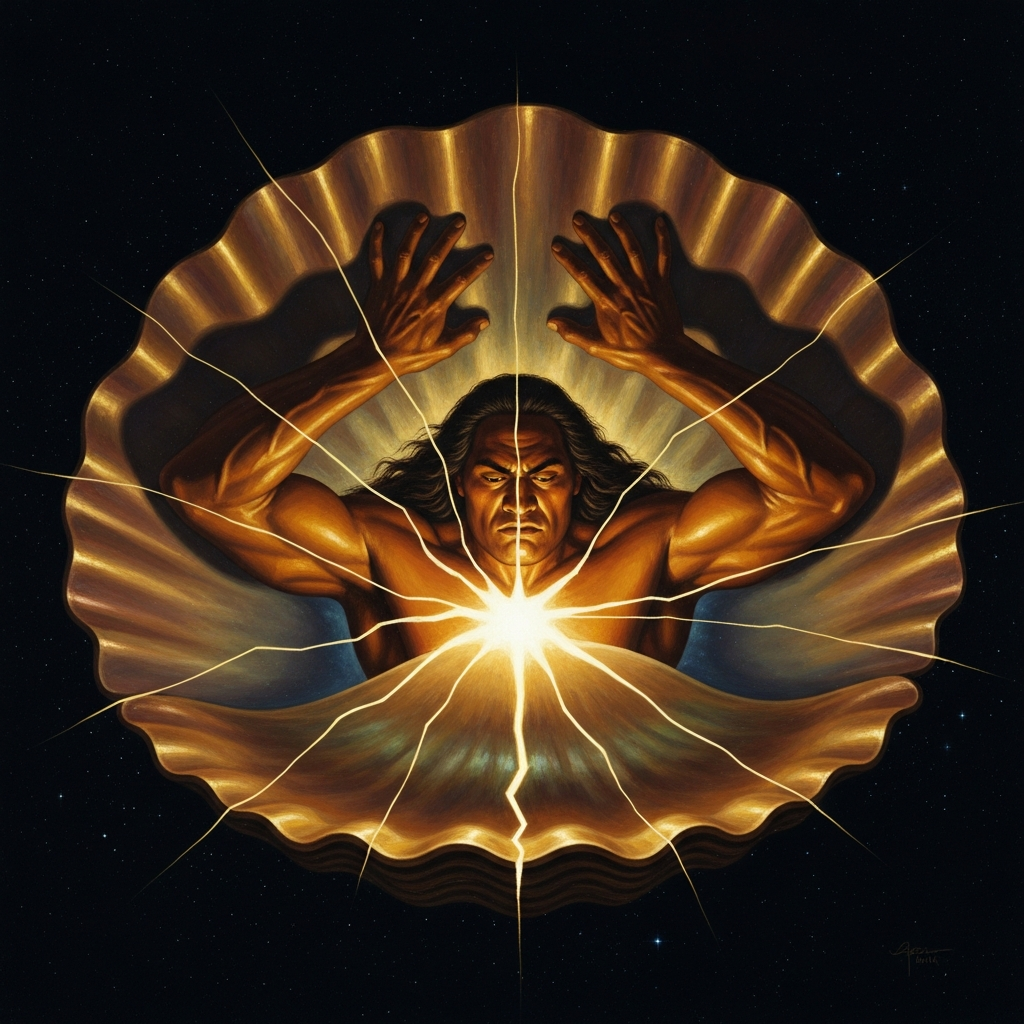
He pushed.
The Māori accounts dwell on the effort because the effort matters. This is not a god performing a casual miracle. Tāne-mahuta is the god of forests, of great trees, of everything that grows upward toward light — and he is working as trees work, slowly, persistently, with his whole body organized around a single purpose. His feet against the sky. His shoulders pressed into the earth. His spine the axis of the first exertion in the world.
The sky resisted. It had been there forever. The embrace had been the condition of everything, and conditions become their own kind of weight.
But Tāne-mahuta kept pushing.
The separation was not instantaneous. In some tellings it is a long labor, the sky lifting degree by degree, the first light entering not as a flood but as a crack, then a brightening, then something vast. The children who had lived in darkness saw their own hands. They saw their parents. They saw, for the first time, what they were.
Ranginui cried out to Papatūānuku as the distance between them grew. She cried out to him. The tradition is specific about this: the separation is not something either parent wanted, and neither of them pretends otherwise. They had lain together since before there was time to mark it. Now there was a sky and an earth, and between them, the world.
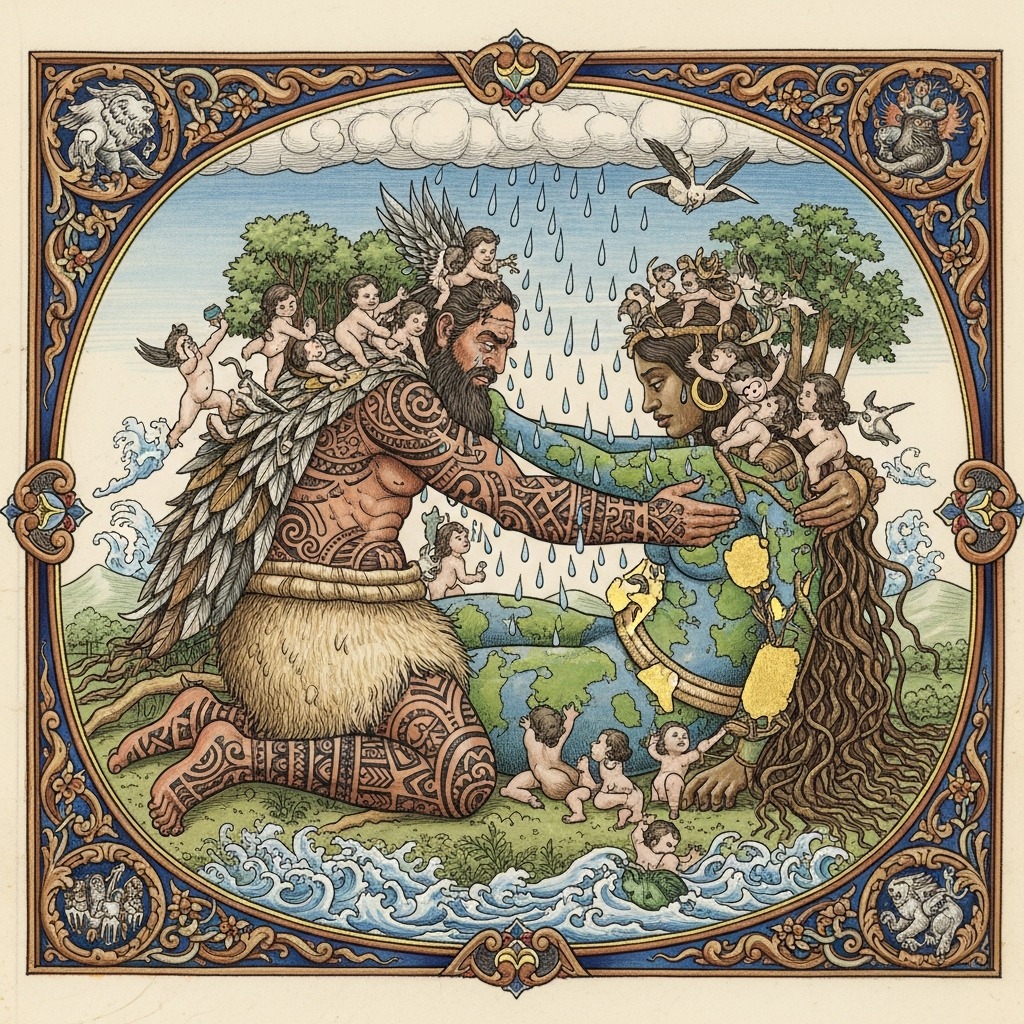
Ranginui still weeps.
This is not metaphor in the Māori understanding of it — or rather, it is metaphor that is also literal fact, the kind that weather makes available. When rain falls, that is Ranginui. His tears descend toward Papatūānuku, reach her, are absorbed by her. The water cycle is a love story that was interrupted and continues to negotiate its interruption, the sky reaching down in the only way a sky can, the earth receiving what falls.
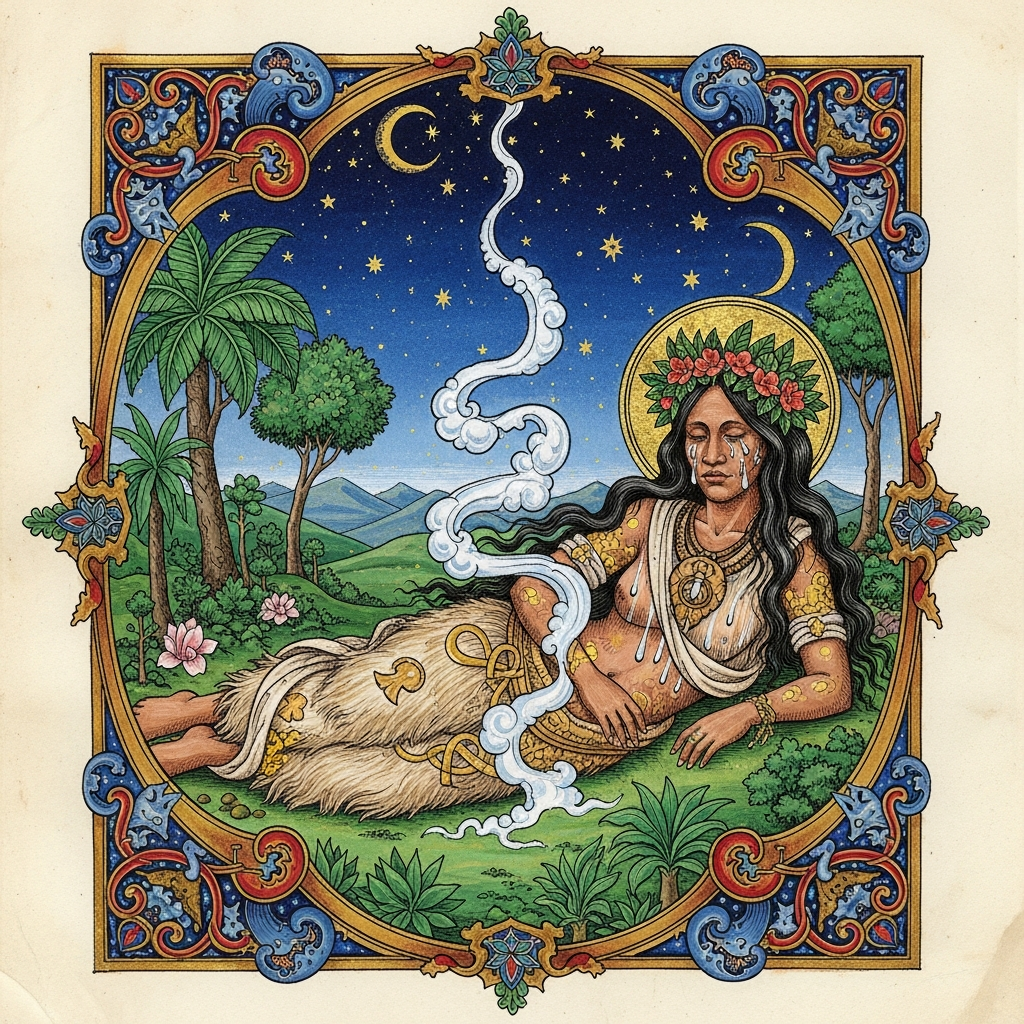
Papatūānuku’s breath rises as mist when the sun warms her body. On cool mornings, after rain, the mist lifting from the earth is not evaporation in the cold language of physics — it is the Earth Mother sighing upward toward her husband, her warmth rising into the space between them, visible for a moment before it disperses into the sky.
The children live in this space. They built lives in the light that their parents’ grief created. Tāne-mahuta planted trees that grew upward, always upward, filling the new sky. Tangaroa filled the oceans. Rongo-mā-Tāne made plants grow from Papatūānuku’s body, from the body of the Earth Mother who now lay open to light for the first time, her skin becoming soil, her breath becoming weather. Human beings came from Tūmatauenga’s domain, the god who had wanted to kill and was refused, the god of war who must live in a world organized by a gentler decision than his own.
The tradition asks something quiet of the people who inherit this story.
In many creation accounts, the act of making the world is triumphant. The god is victorious, the chaos is subdued, the order is imposed, and the world begins in the freshness of a good outcome. The Rangi and Papa story does not allow for this. The world begins in the acceptance of a loss. Ranginui accepted the distance because his children needed room. Papatūānuku accepted it for the same reason. The parents are not defeated. They are not punished. They are bereaved, and their bereavement is the ongoing climate of the world, falling and rising every day, visible to anyone who knows what they are looking at.
The rain is not weather that interrupts life. It is the reason for life — the sky father reaching down to the earth mother in the only way the distance between them allows, and the earth drinking it in, and the gap between them filled every season with what is needed to keep living.
Tāne-mahuta’s act is remembered not as a violent one. He used his body, not a weapon. He pushed, and the pushing was labor — the same labor as a tree, the same labor as birth, the same labor as grief working itself into something that can be carried. He is the god of forests because he knows what it means to grow toward light through resistance, to push with everything you have against the weight of what has always been, until the light comes.
The sky is still up there. The earth is still below. Between them, the world continues, made from the space a grief required.
Scenes
Echoes Across Traditions
Entities
Sources
- Māori oral tradition; recorded in writing from the 19th century CE onward
- Elsdon Best, Maori Religion and Mythology (Dominion Museum, 1924), Part 1
- Te Ao Hou (The New World), Māori magazine — traditional accounts of the separation
- Anne Salmond, Hui: A Study of Maori Ceremonial Gatherings (1975) — context for cosmological recitation
- John White, The Ancient History of the Maori (1887), vol. 1, on creation traditions