Chief Roi Mata and the Peace That Outlasted Him
c. 1600 CE — late pre-contact Vanuatu · Efate and Artok Island, Vanuatu — the central islands of the Vanuatu chain
Contents
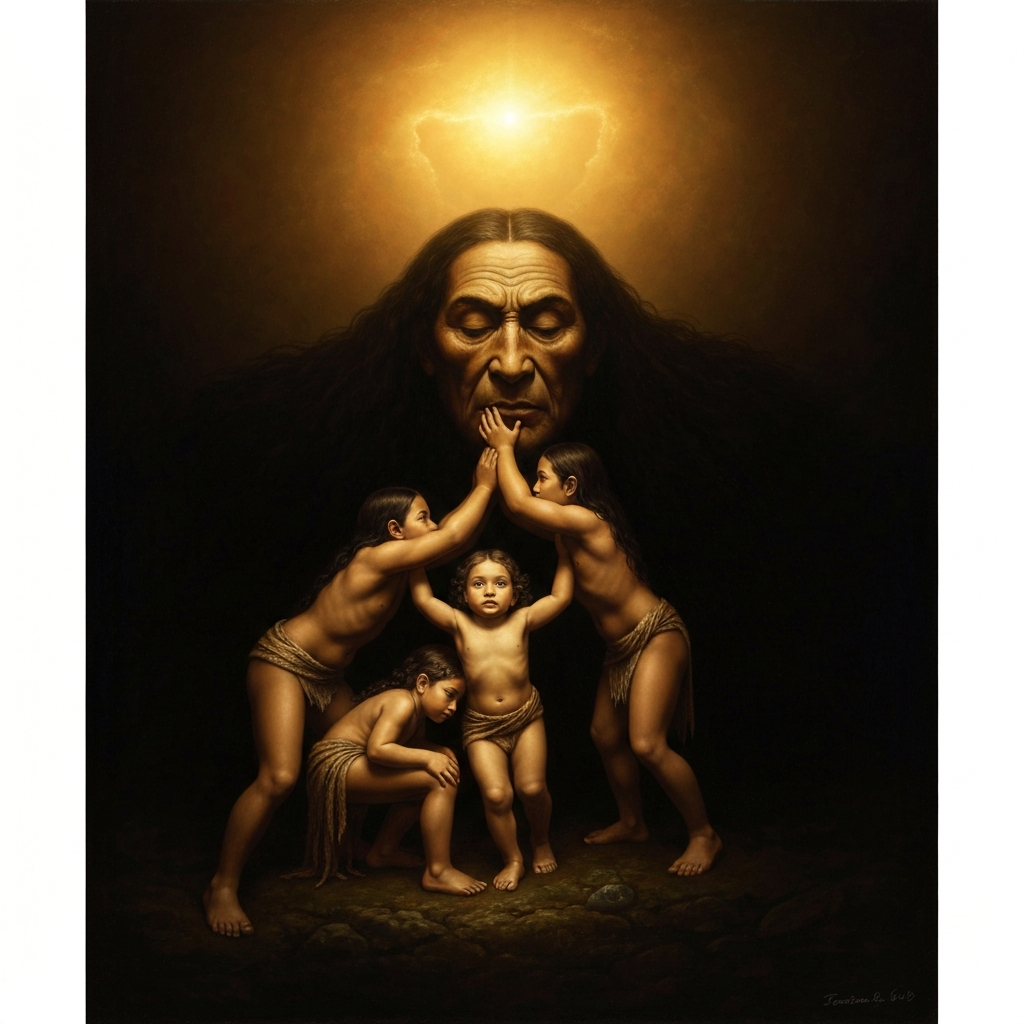
The last paramount chief of Vanuatu before European contact united the fractious island groups through ceremony rather than conquest, and when he died his retinue was buried alive with him — a mass grave discovered by archaeologists in 1967, exactly as the oral tradition described.
- When
- c. 1600 CE — late pre-contact Vanuatu
- Where
- Efate and Artok Island, Vanuatu — the central islands of the Vanuatu chain
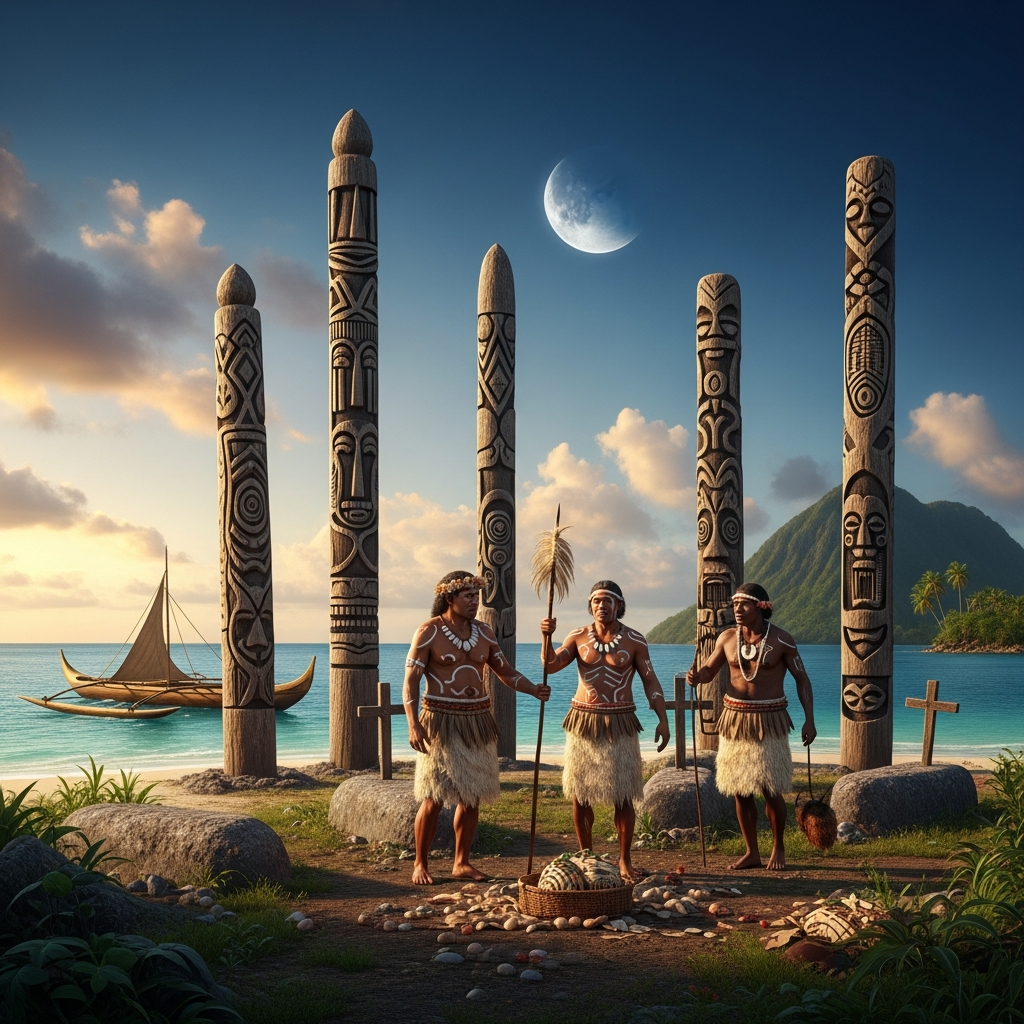
The oral tradition says: Roi Mata died on Fels Island. His body was brought to Artok Island for burial. Many people were buried with him — men and women, some of them alive. The burial ground is sacred. It is protected. Do not disturb it.
For four hundred years, the tradition was kept.
In 1967, the French archaeologist José Garanger went to Vanuatu with the oral tradition in hand and permission from the community to investigate. He found the burial ground on Artok Island exactly where the tradition said it was. He found the mass grave with the skeletal remains exactly as described: men and women, some arranged in postures suggesting they had been buried alive, the paramount chief at the center in a position of elevation, surrounded by the people who accompanied him into death.
The tradition was accurate in its geography, its personnel, and its structure, across four centuries of oral transmission.
This is what Roi Mata left: a community with a tradition good enough to locate a specific burial on a specific island after sixteen or seventeen generations, without writing.
But the burial is not the whole story. The burial is the end of a story about a man who achieved something more difficult than conquest. In the period before Roi Mata, the islands that are now Vanuatu were governed by a system of constantly shifting alliances and feuds, the kind of political environment that makes life in small island communities genuinely dangerous. Violence between groups was regular. The genealogical and ceremonial systems that might have contained it were not yet consolidated.
Roi Mata consolidated them.
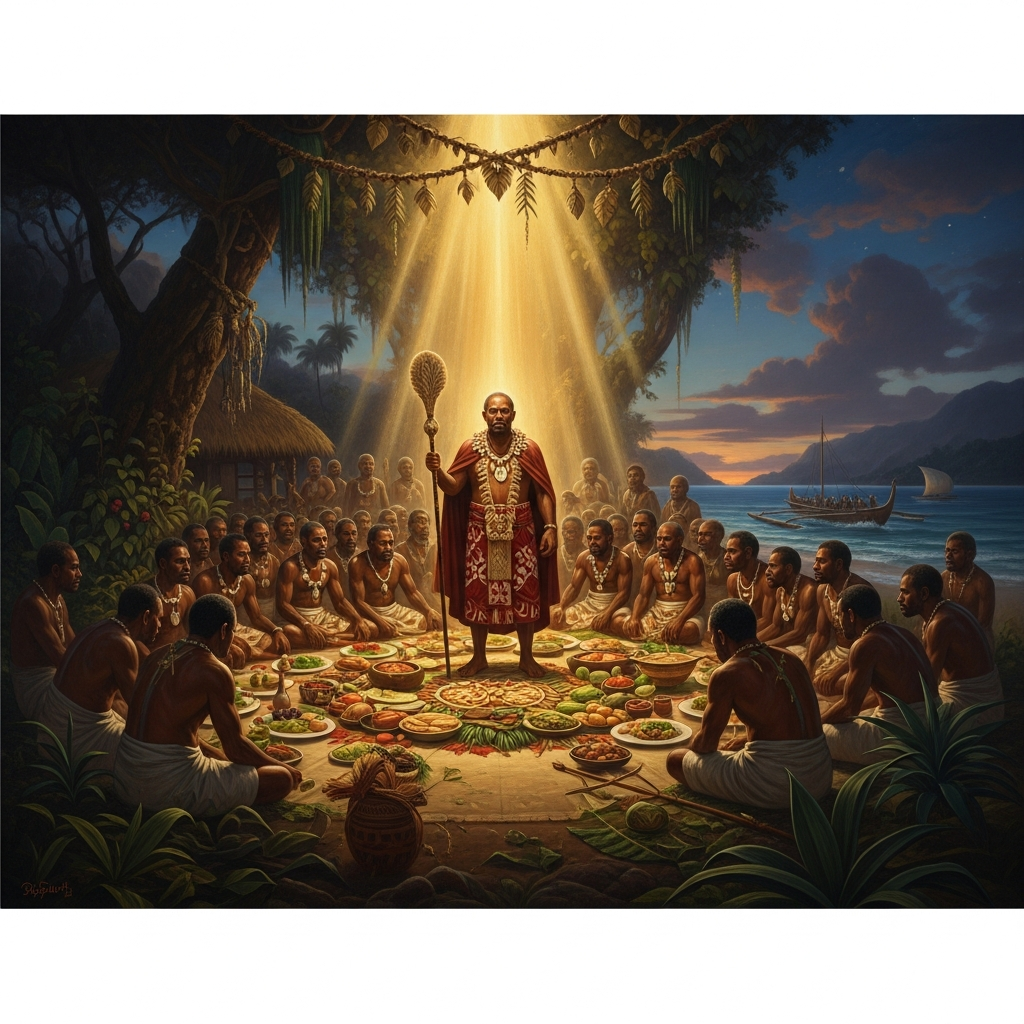
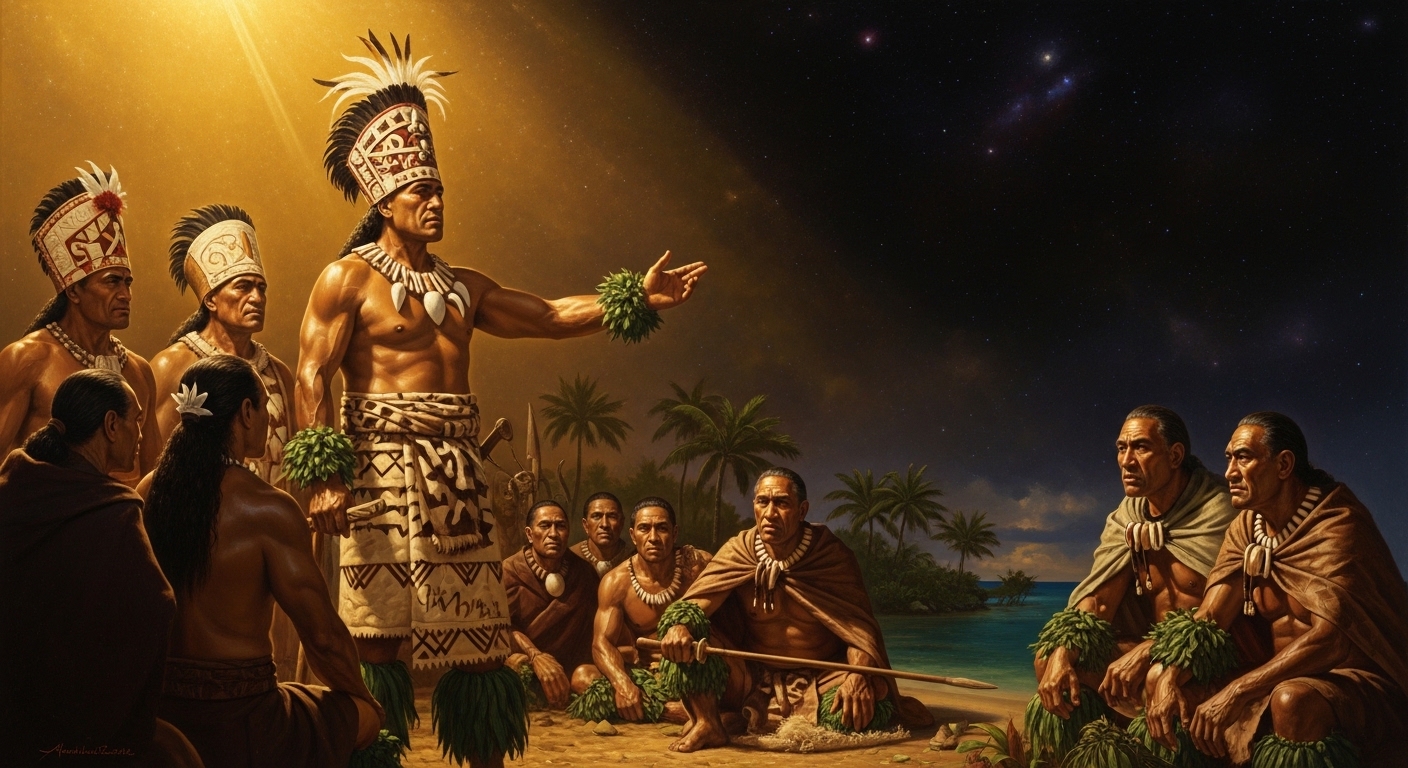
He traveled between the island groups — Efate, Nguna, Pele, Emau — and negotiated peace not through military dominance but through the complex ceremonial systems of rank and exchange that Pacific societies use to bind obligations between groups. The kava ceremony. The exchange of pigs. The recognition of titles. The marriage alliances that turn formerly hostile groups into in-laws who cannot attack each other without attacking family.
The peace was real. The oral traditions of the surrounding islands record it as a distinct historical period — a time when the feuding stopped and the ceremonial order held. It lasted, by some accounts, for his lifetime and somewhat beyond.
When he died, the burial was performed with the full weight of his authority. The people who went into the ground with him — some willingly, some not — were the continuation of his power into death, the statement that Roi Mata’s domain extended beyond the living world. It was the most powerful thing a chief could say at the moment of death: this is not an ending, this is a transformation.
The island of Artok has been a sacred restricted site ever since. The people of Efate maintained the prohibition on disturbance for sixteen generations. When they allowed Garanger to excavate, they were not abandoning the tradition; they were opening it to a new kind of confirmation. The bones were there. The chief was there. The tradition was true.
The UNESCO inscription of Chief Roi Mata’s Domain in 2008 recognized something that Vanuatu communities already knew: that the landscape around those burial sites, and the oral traditions attached to them, are a cultural system of extraordinary depth — a living memorial to a man who made peace through ceremony and was remembered across four centuries because the peace he made mattered enough to remember.
Scenes


Echoes Across Traditions
Entities
- Roi Mata
- the chiefs of Efate and neighboring islands
- the retinue buried on Artok Island
Sources
- José Garanger, *Archaeology and Society in Vanuatu* (1972)
- Kirk Huffman, various papers on Roi Mata traditions
- Vanuatu Cultural Centre oral tradition archives
- The 'Chief Roi Mata's Domain' UNESCO World Heritage Site documentation