Sitting Bull's Dream of the Falling Soldiers
June 1876 — the Sun Dance on the Rosebud River; Battle of the Little Bighorn · The Rosebud River, Montana; the Little Bighorn River, Montana
Contents
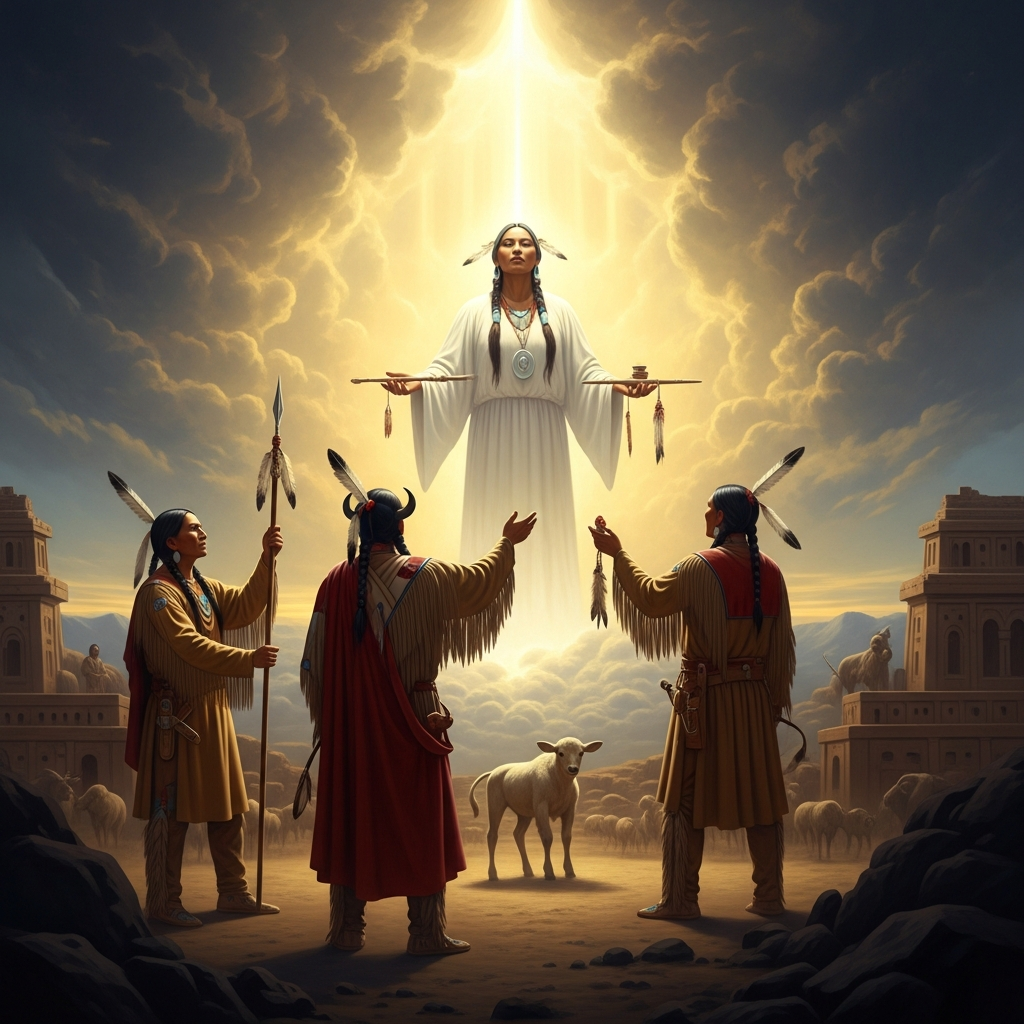
At the Sun Dance on the Rosebud River in June 1876, Sitting Bull dances with one hundred pieces of flesh cut from his arms and receives a vision of soldiers falling headfirst like grasshoppers into a Lakota village — and ten days later, at the Little Bighorn, the vision comes true.
- When
- June 1876 — the Sun Dance on the Rosebud River; Battle of the Little Bighorn
- Where
- The Rosebud River, Montana; the Little Bighorn River, Montana
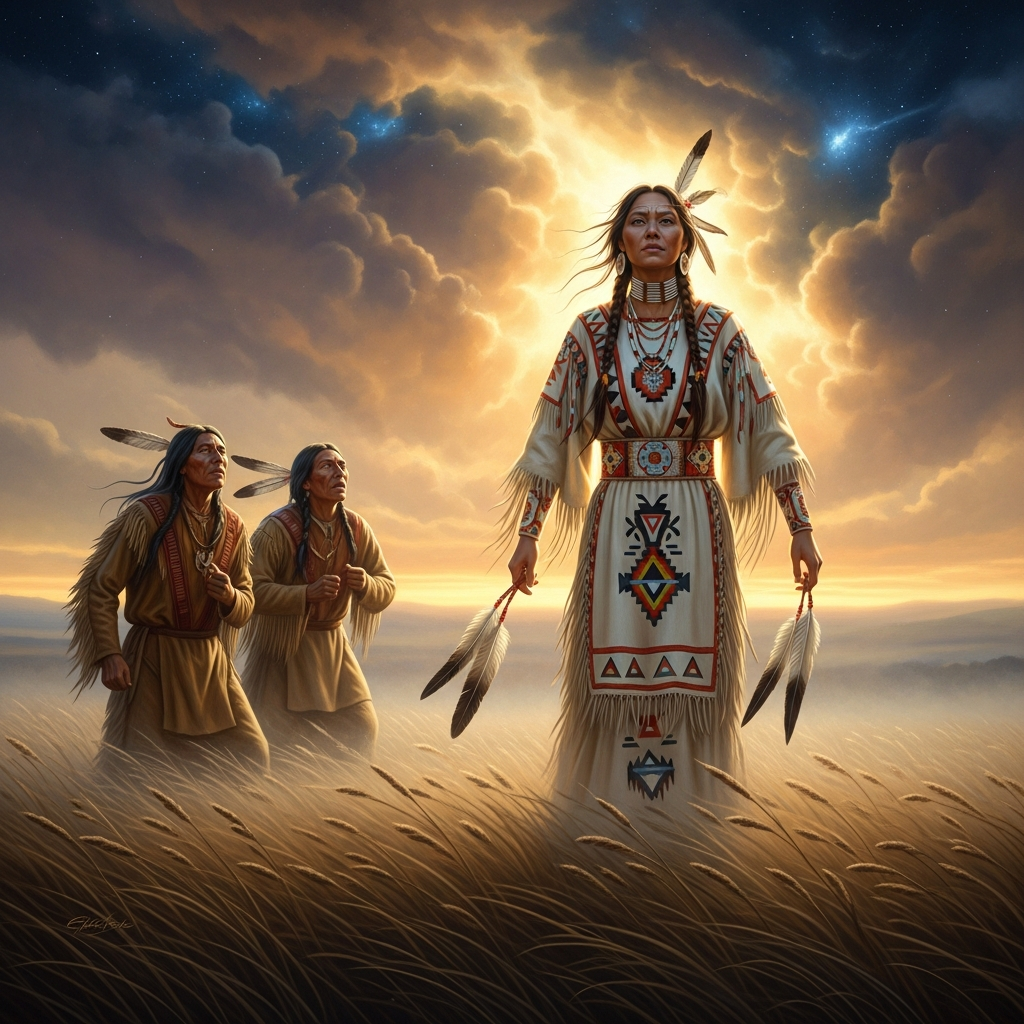
He has not slept in two days.
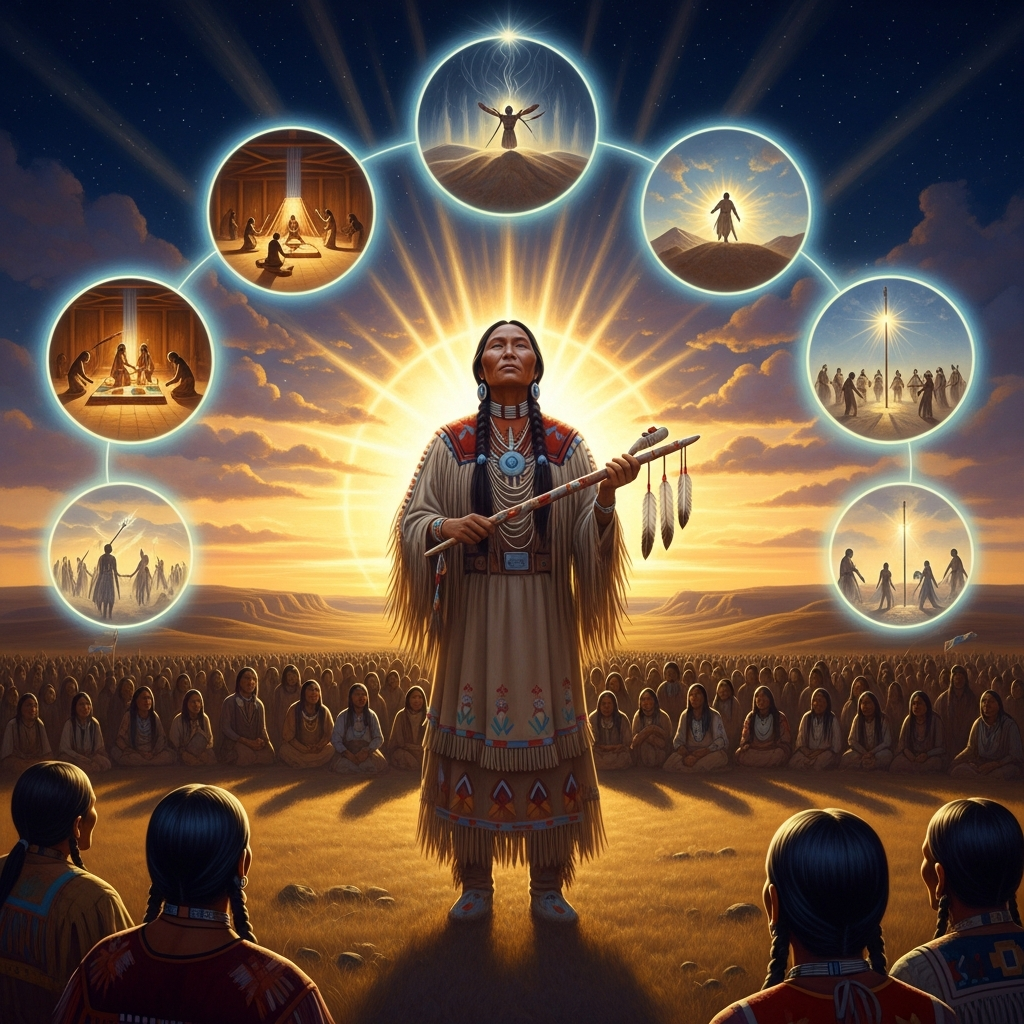
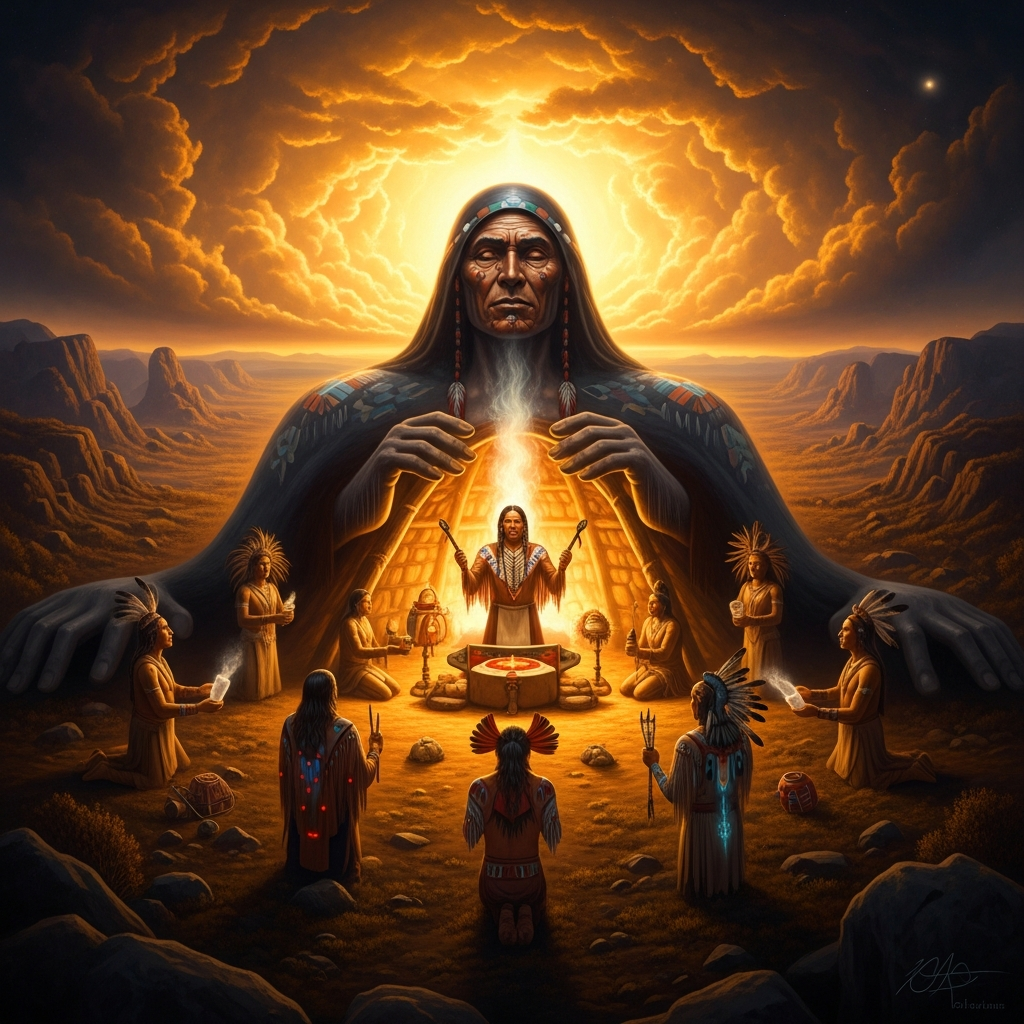
This is the preparation, and the preparation is part of the ceremony: the fasting, the purification in the sweat lodge, the prayers that strip away ordinary seeing and open the deeper sight that the Sun Dance is designed to produce. Sitting Bull is the principal holy man of the Hunkpapa Lakota. He has danced the Sun Dance before. He knows what the exhaustion and the flesh offering can open.
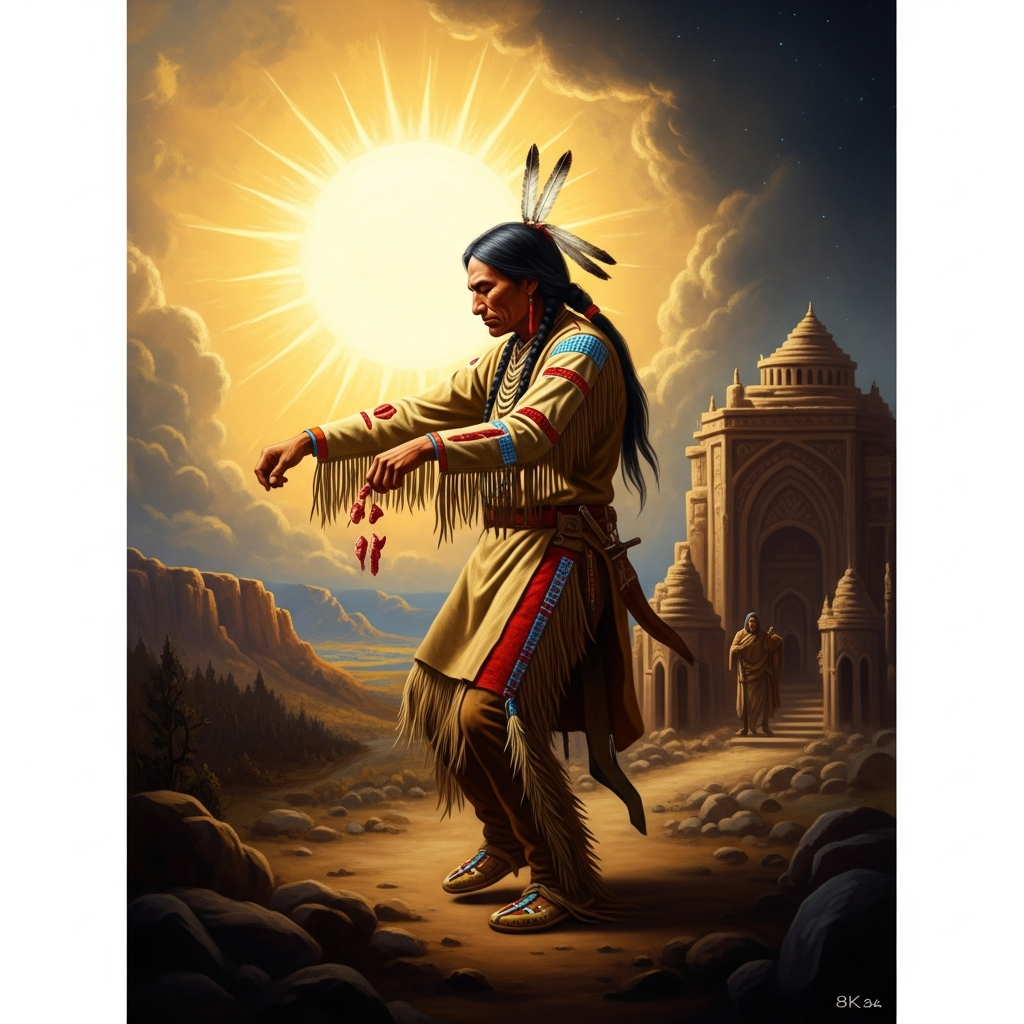
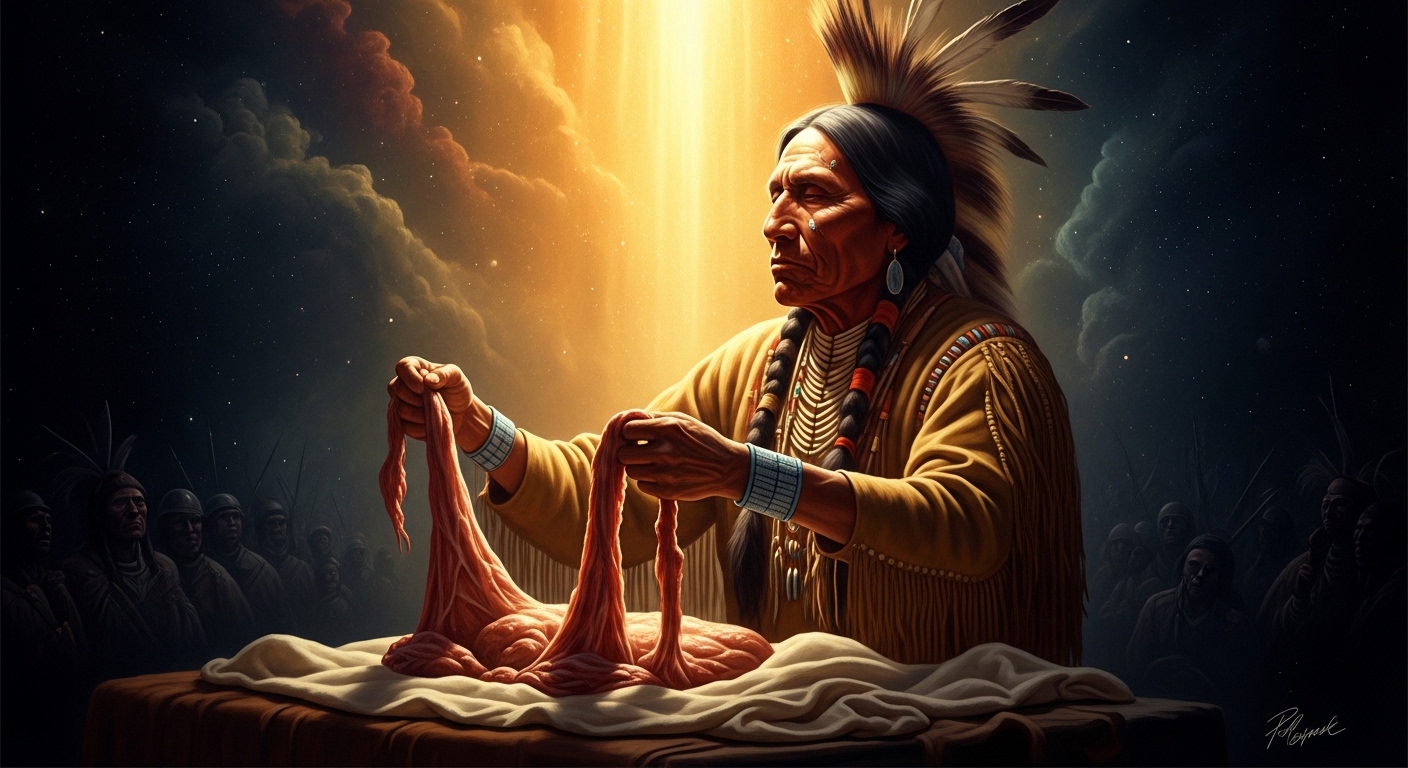
Jumping Bull makes one hundred cuts in Sitting Bull’s arms — fifty on each arm, from wrist to shoulder, with a sharp knife. Each cut produces a small piece of flesh. The cuts are the offering: the most personal thing Sitting Bull owns, given to Wakan Tanka without reservation.
Then he dances.
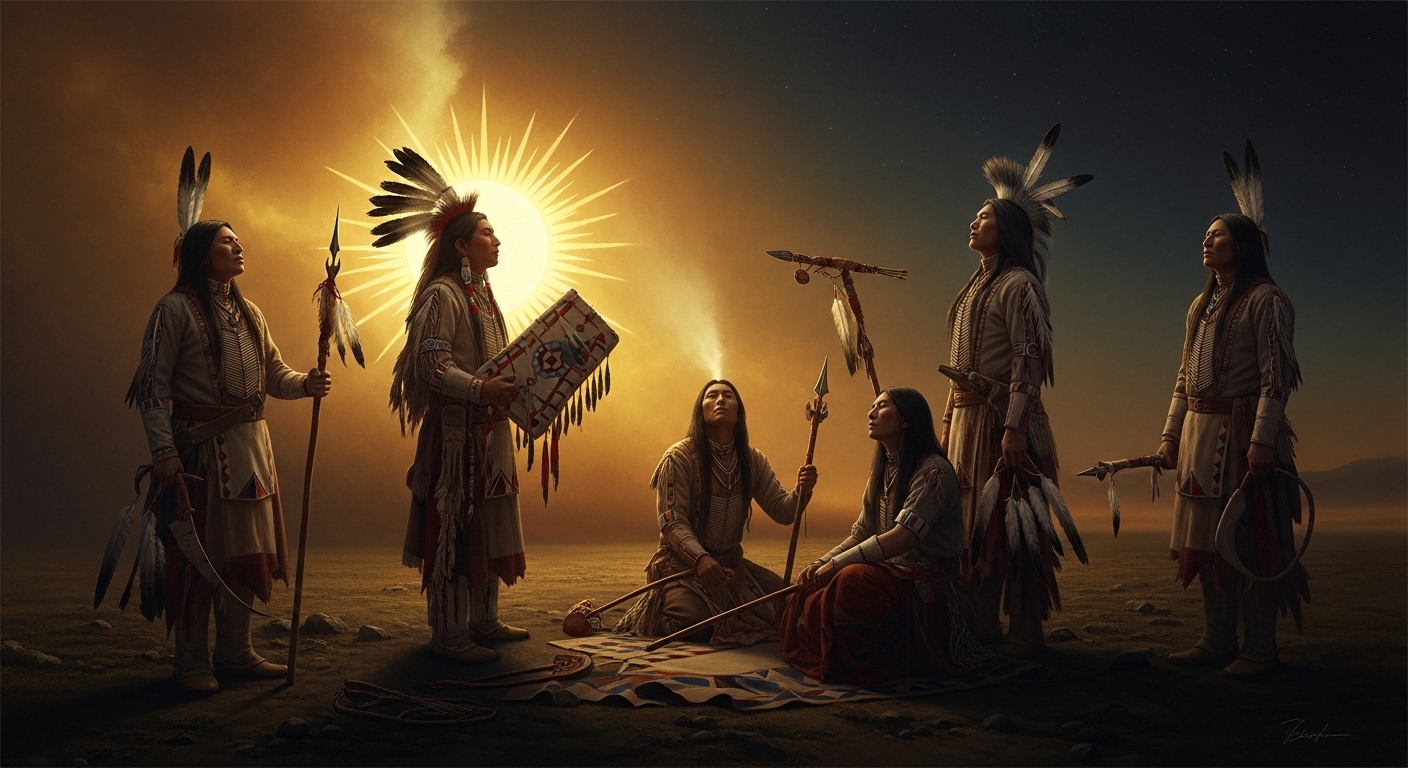
He dances for hours in the sun, facing the sacred cottonwood tree, blowing the bone whistle in rhythm with the drum. His arms run with blood. Around him, the great encampment — ten thousand Lakota, Cheyenne, and Arapaho gathered at the Rosebud River in response to the army’s demand that they return to their reservations — goes about its business. The camp is the largest gathering of free Plains people that anyone alive has ever seen.
The vision comes.
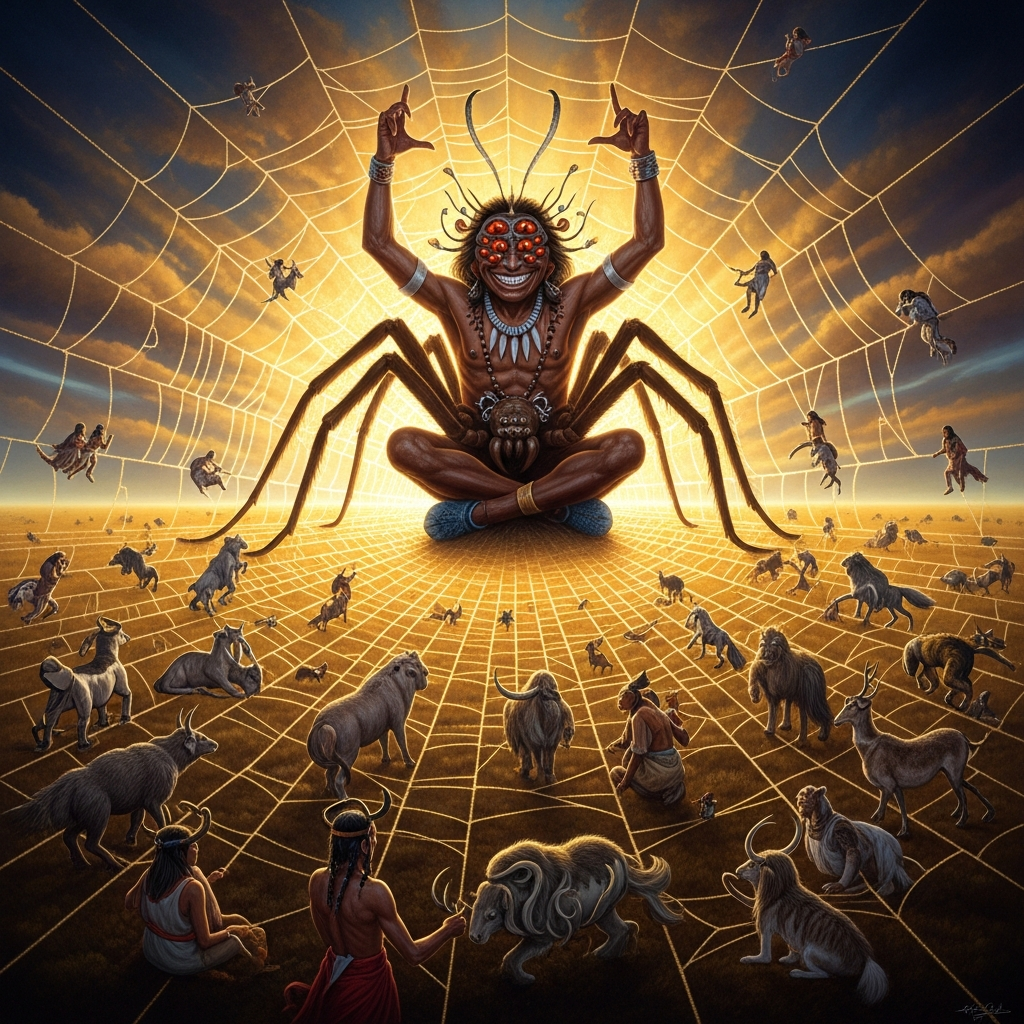
He sees soldiers. Not in the distance, not approaching — he sees them from above, as if he is the sky looking down, and the soldiers are upside down. They are falling. They are falling headfirst, their hats coming off, their rifles pointing downward, into a Lakota village. They are falling like grasshoppers falling off a plant: sudden, multiple, irreversible.
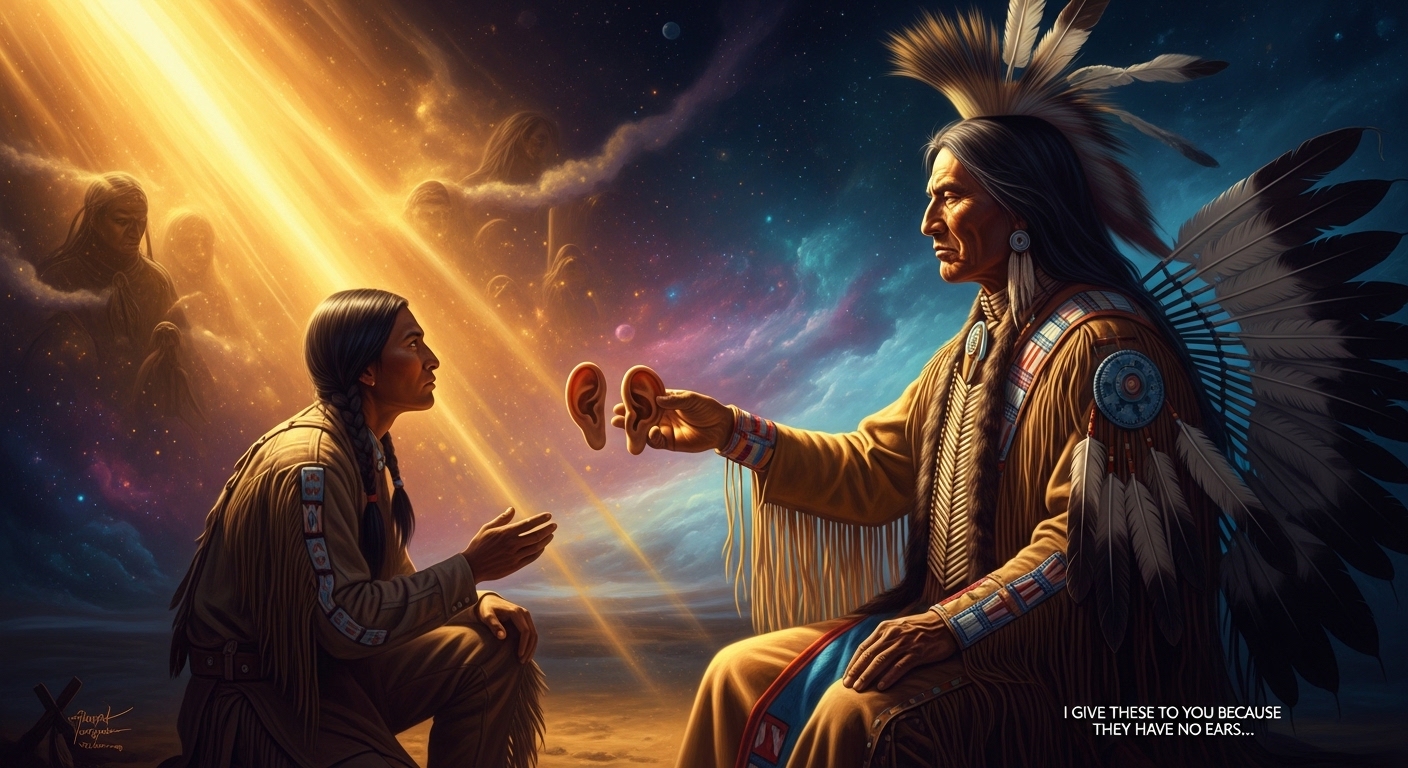
And a voice says: I give these to you because they have no ears.
He comes back from the trance and tells what he has seen.
The camp listens. The account is clear and specific and is recorded by the people who will later tell it to historians: soldiers, falling headfirst, into the village, given to the Lakota because the soldiers would not listen. Ten days later, on the twenty-fifth of June, 1876, Lieutenant Colonel George Armstrong Custer leads five companies of the 7th Cavalry down the slopes toward the Lakota encampment on the Little Bighorn River.
The warriors — Crazy Horse from one end, Gall from the other — meet them on the slopes.
In forty minutes the battle is over. All five companies are destroyed: 268 men killed. The exact number and the exact manner correspond to the vision: soldiers falling into the village, given to the people because they would not listen to the demand that they stay off Lakota land.
Sitting Bull himself did not fight. His role was the ceremony that made the battle possible: the flesh offering, the vision, the transmission of what was coming into the knowledge of the warriors who needed to know.
The victory at Little Bighorn was the fulfillment of a prayer.
The years of confinement that followed were the fulfillment of a reality that no prayer, however accurate, could hold off forever.
He was killed by Indian police at the Standing Rock Agency in 1890. Fourteen years after the vision on the Rosebud.
The soldiers fell as he had seen them fall.
Scenes
Echoes Across Traditions
Entities
- Sitting Bull (Tȟatȟáŋka Íyotȟake)
- Jumping Bull (who cut the flesh)
- Crazy Horse
- Custer (the falling soldiers)
Sources
- Robert Utley, *The Lance and the Shield: The Life and Times of Sitting Bull* (Henry Holt, 1993)
- Stanley Vestal, *Sitting Bull: Champion of the Sioux* (University of Oklahoma Press, 1957)
- Joseph Marshall III, *The Day the World Ended at Little Bighorn* (Viking, 2007)