Contents
The Sufi tradition produced the greatest body of mystical poetry in any world religion — not because the masters were literary artists first, but because they discovered that prose cannot hold what they were trying to say. The verse is not a vehicle for the content; it is the only form in which the content can exist.
- When
- 11th–14th century CE — the classical period of Sufi poetry, from Sana'i to Hafez
- Where
- Ghazna, Nishapur, Konya, Shiraz — the cities of Persian and Arabic mystical poetry
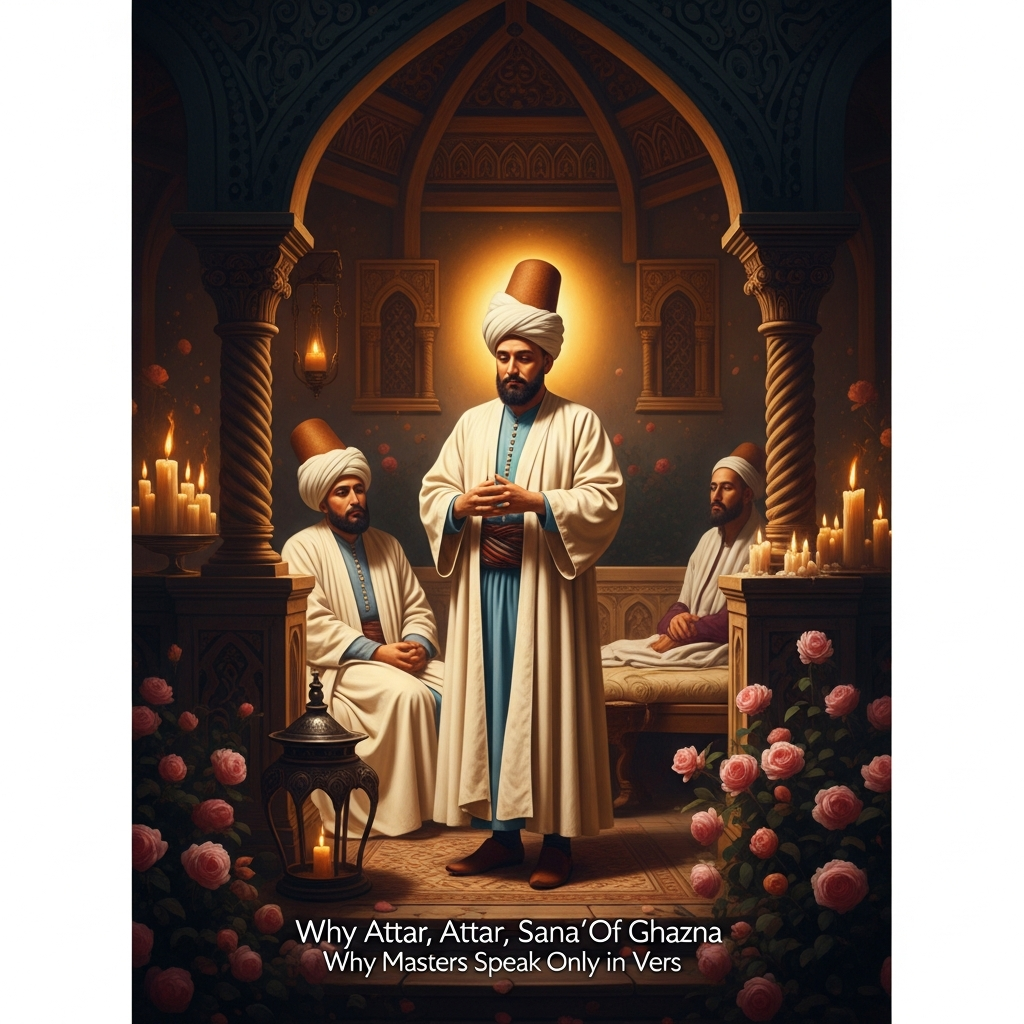
Sana’i of Ghazna writes the first major Sufi masnavi in the twelfth century — the Hadiqat al-Haqiqa, the Garden of Truth — and in doing so establishes the form that Attar and Rumi will bring to perfection.
The choice of form is not incidental. A masnavi — the couplet poem in which pairs of rhyming lines can extend for thousands of verses — is capable of containing story, argument, lyric digression, and paradox in a single structure that prose cannot replicate. The story stops. A lyric interjection on the nature of love occurs. The story resumes. The story was always the lyric interjection. The lyric interjection was always the story.
Why does this matter? Because the content of mystical experience is not sequential. It is not first this, then that. It is this, which is simultaneously that, which is also neither, which is therefore both. Narrative prose wants sequence. Philosophical prose wants propositions. Both forms impose a linearity on material that is inherently circular, paradoxical, and simultaneous. The masnavi can hold the circle.
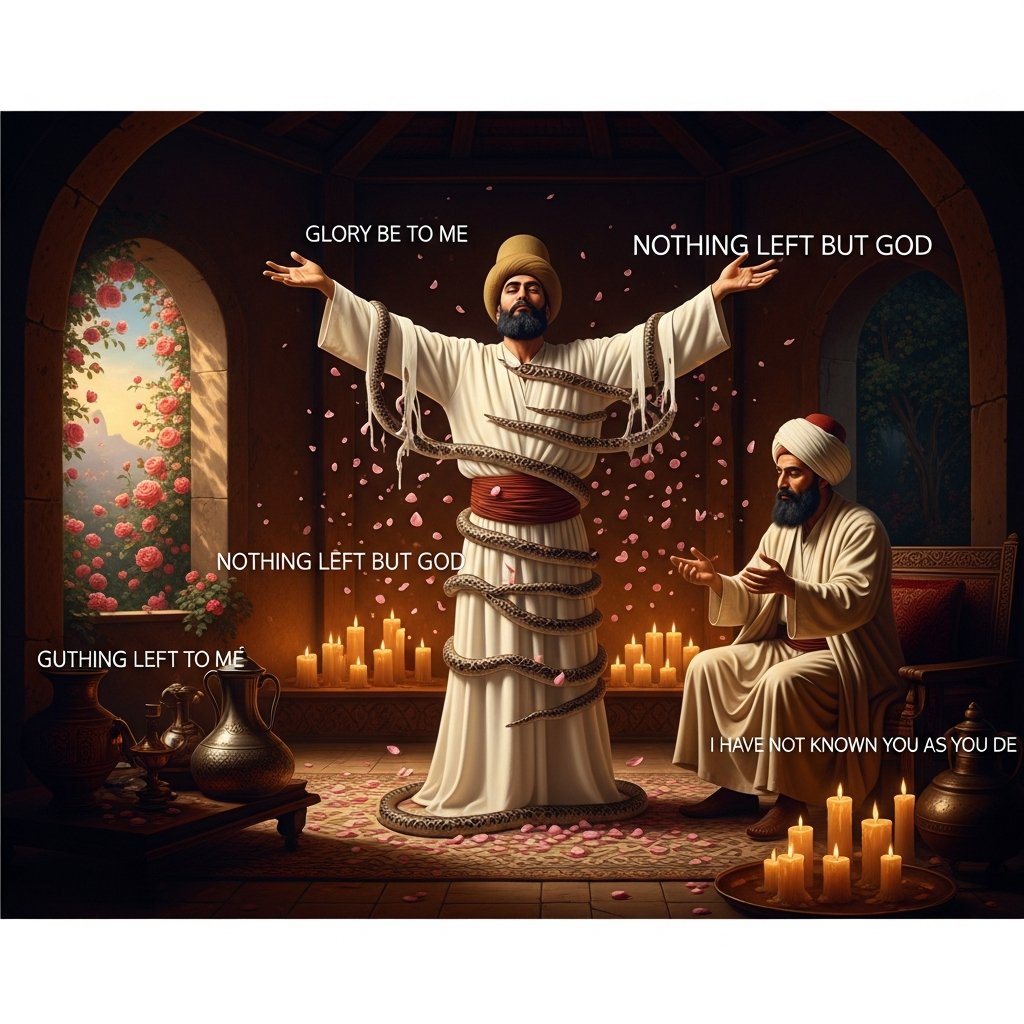
The more precise answer to why Sufis speak in verse comes from al-Hallāj’s prison poems.
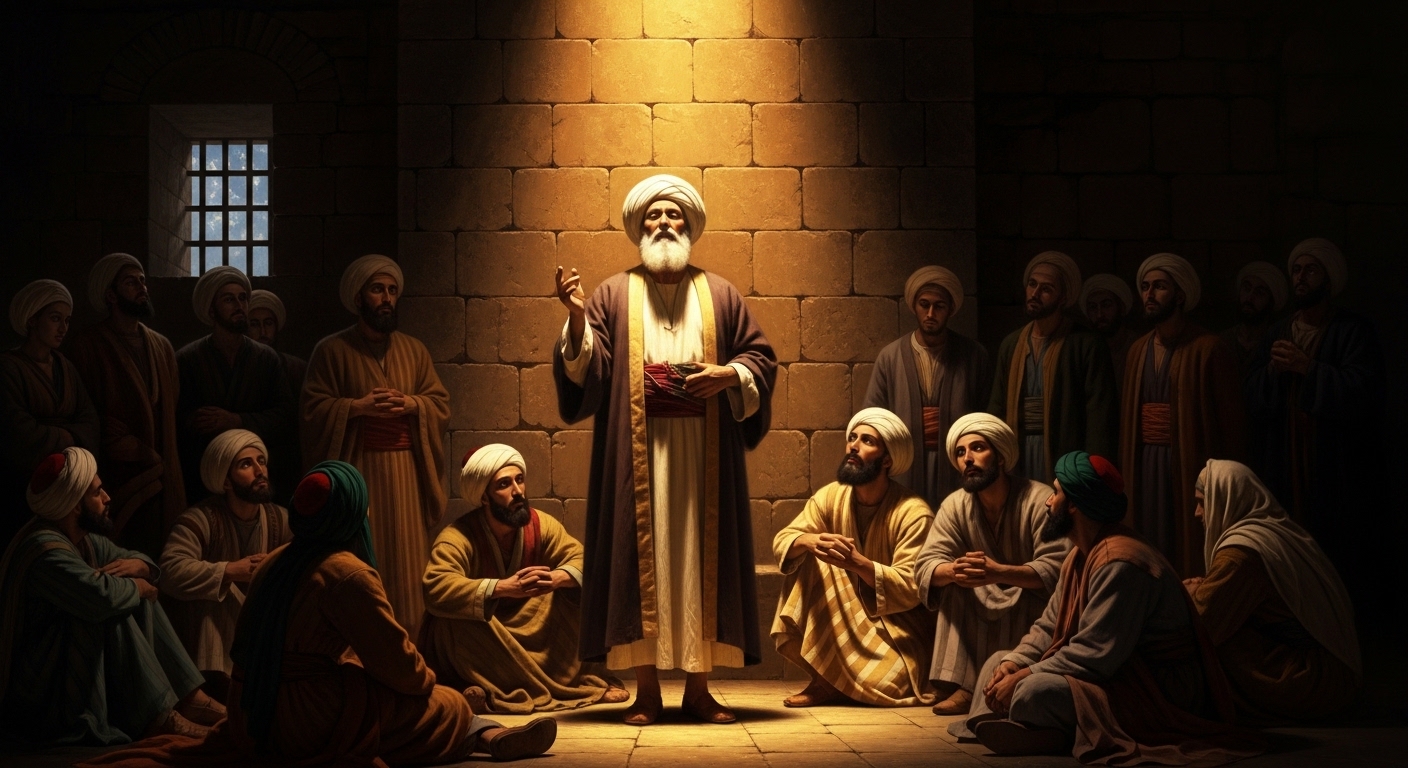
He is imprisoned. He is going to be executed. He has years — the accounts say nine — to write. He writes poems. Not systematic theological treatises, though he had the learning for them. Not legal arguments in his defense, though those might have helped. Poems.
The poems are not ornamental. They are doing something prose cannot do: they are saying the thing in the form of the thing. Kill me, my faithful friends, for in my killing is my life — this is not an argument that needs to be supported or a position that needs to be defended. It is a statement that carries its own verification. If you read it and something in your chest responds to it — if you know it is true before you have assembled the reasons — then the poem has done what al-Hallāj was trying to do. If you read it and need the reasons first, the poem has failed for you, and you are not yet where the poem is addressed.
This is the Sufi theory of poetry as transmission. The poem goes from heart to heart, bypassing the intermediate step of rational evaluation. The rational evaluation can happen afterward — the Sufi commentators spend centuries evaluating the poems rationally. But the poem first acts on the heart directly, in the way that music acts directly, in the way that a smell can instantly transport you to a specific memory before the mind has had time to construct a narrative about the smell.
Rumi is the fullest expression of this theory.
He was a jurist and a scholar and a theologian. He had all the tools of systematic prose at his command. The Masnavi is not less intelligent than a theological treatise. It is more so. But the intelligence operates differently — it surprises you into understanding, it creates the conditions for a recognition that argument cannot produce, it says things that you know are true without being able to say why you know.
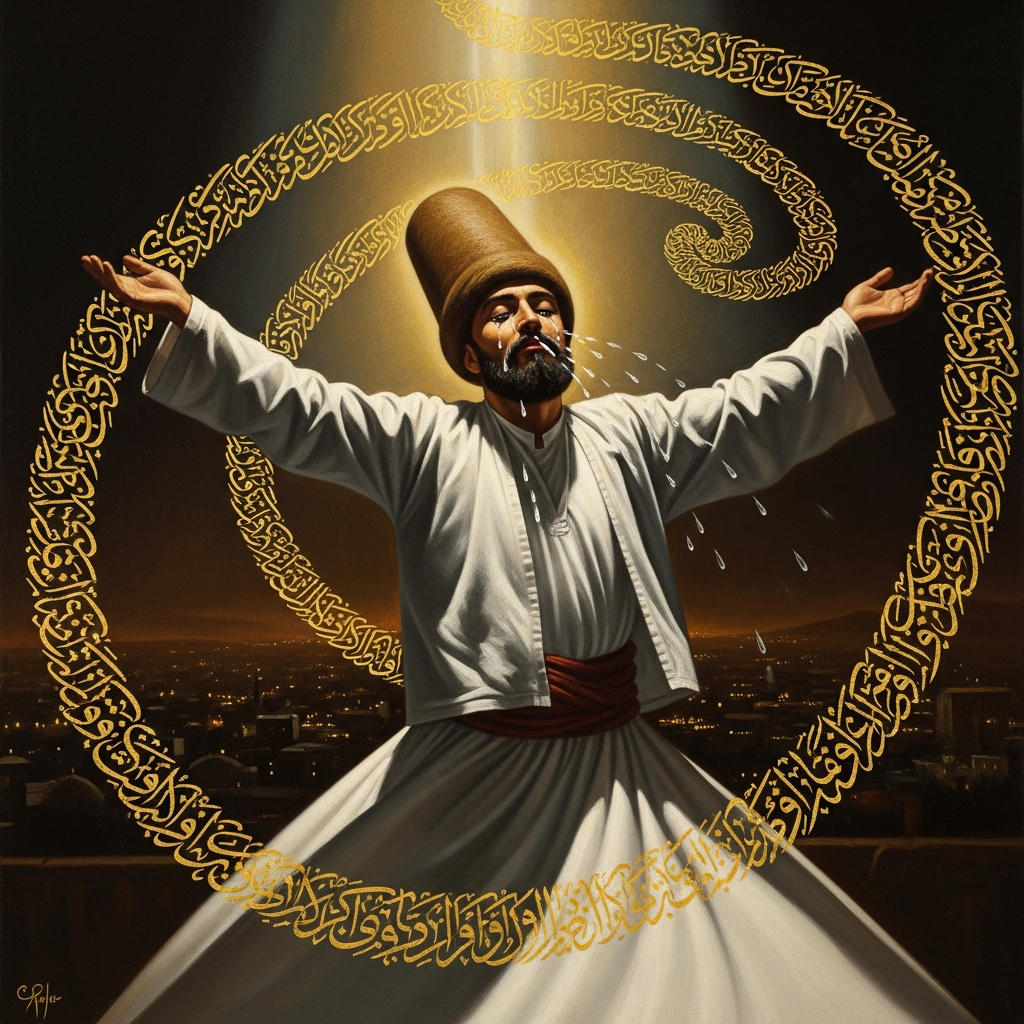
The story of the chickpea in the pot — boiling in water, trying to escape the heat, and the chickpea coming to understand that the heat is cooking it into something better, that the pain is the transformation — is not an argument for the Sufi path. It is an experience of the Sufi path occurring inside the reader. You follow the chickpea. You understand the chickpea. The chickpea is you. The heat is what you have been calling suffering. The poem has deposited a new relationship with your own difficulty inside you before you noticed it was happening.
Hafez understood the theory and perfected the execution.
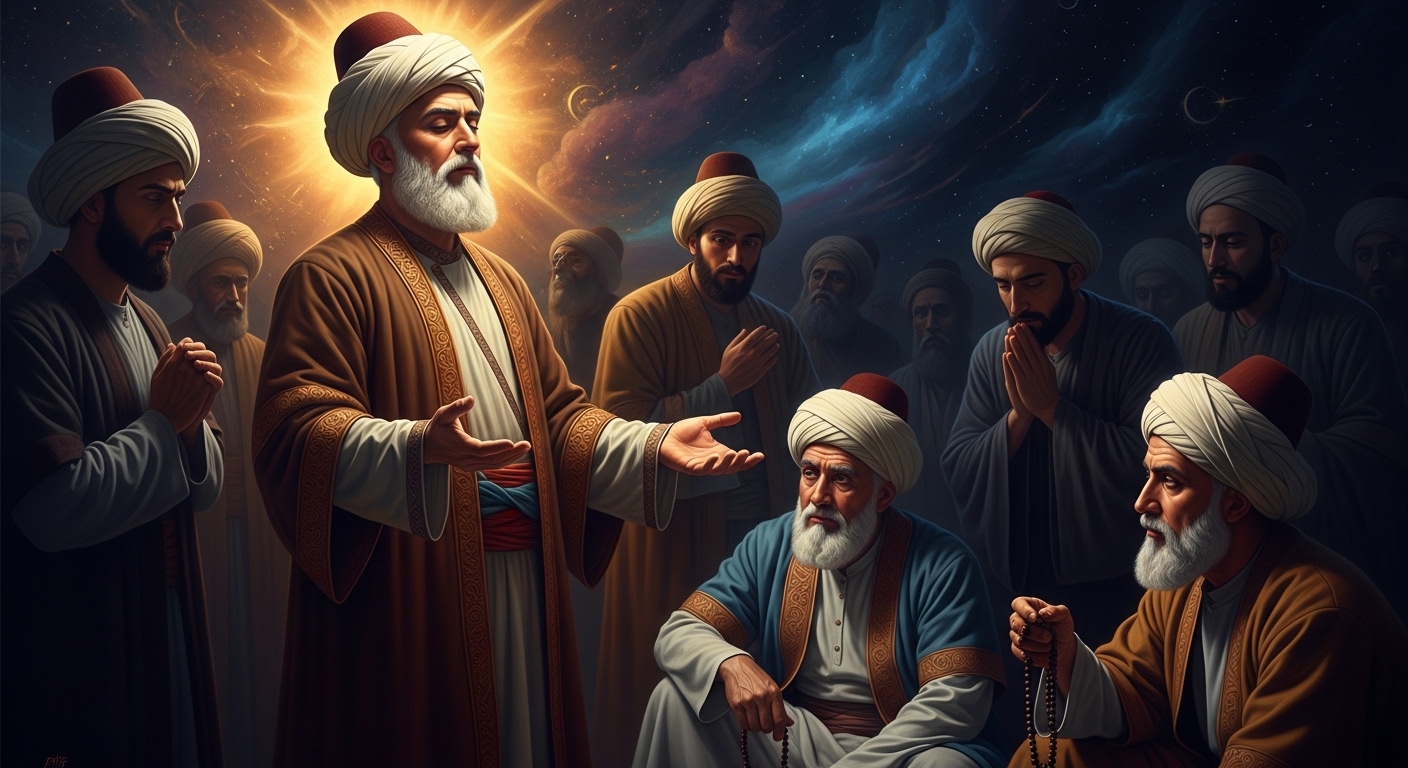
His ghazals are designed so that the poem’s content and the poem’s effect are identical. The poem about the paradox of divine love — you cannot describe it, only experience it — produces in the reader the experience of encountering something you cannot fully describe. The form enacts the content. The verse does not describe the wine; the verse is the wine.
The masters speak in verse not because they are poets. They speak in verse because the alternative — systematic prose — would be false to what they are trying to say. A map of a living city is useful. It is also not the city. The poem does not describe where the tradition is going. The poem, in its moment of transmission, is there.
Scenes
Echoes Across Traditions
Entities
- Rumi
- Attar
- Sana'i of Ghazna
- Hafez
- Ibn al-Fāriḍ
Sources
- Annemarie Schimmel, *As Through a Veil: Mystical Poetry in Islam* (Columbia, 1982)
- Franklin Lewis, *Rumi: Past and Present, East and West* (Oneworld, 2000)
- Seyyed Hossein Nasr, *Islamic Art and Spirituality* (SUNY, 1987)
- Michael Sells, *Mystical Languages of Unsaying* (Chicago, 1994)