Contents
Assigned to rule the ocean, Susanoo does nothing but weep for his dead mother — his grief so wild and violent that it shakes the earth, withers the trees, and earns him expulsion from every realm.
- When
- Age of the Gods — immediately after Izanagi's purification, before Susanoo's visit to Amaterasu
- Where
- The ocean realm assigned to Susanoo, then the border of the Plain of High Heaven
He was given the sea.
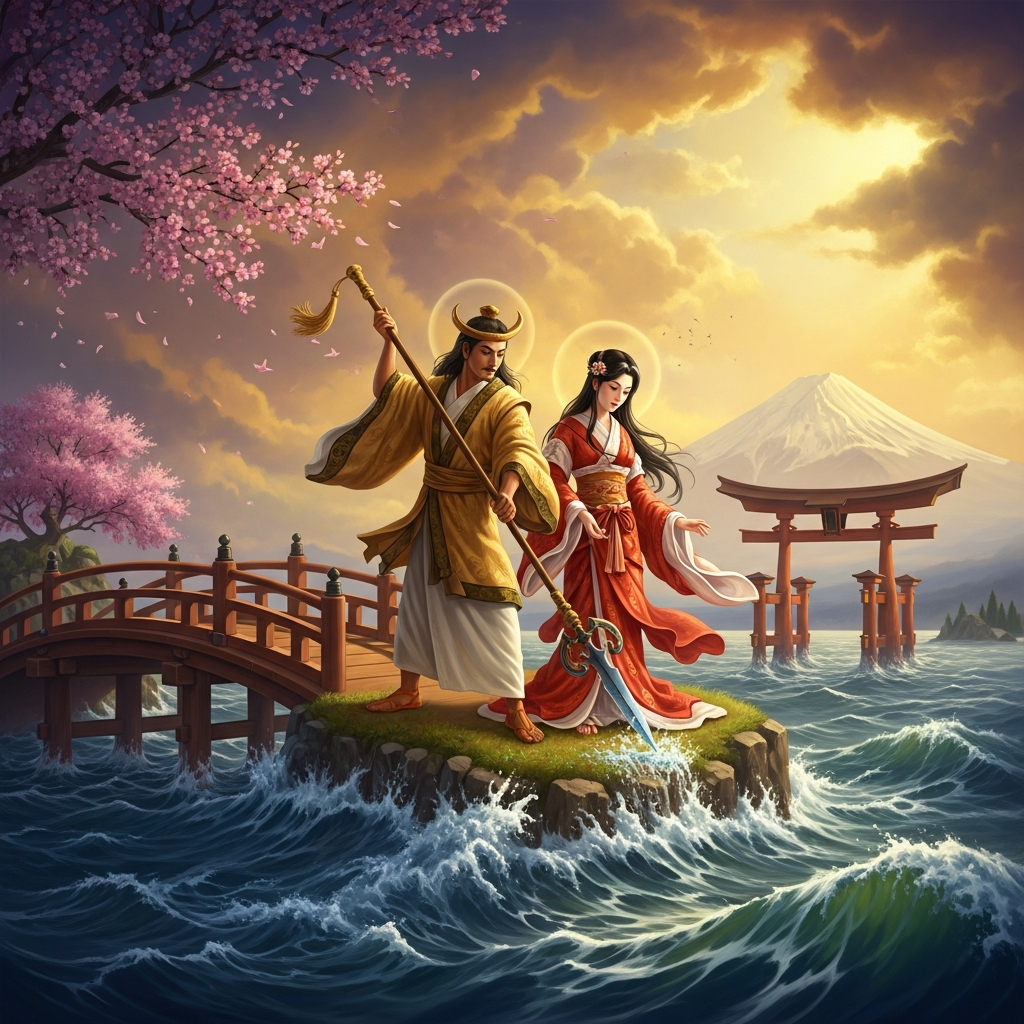
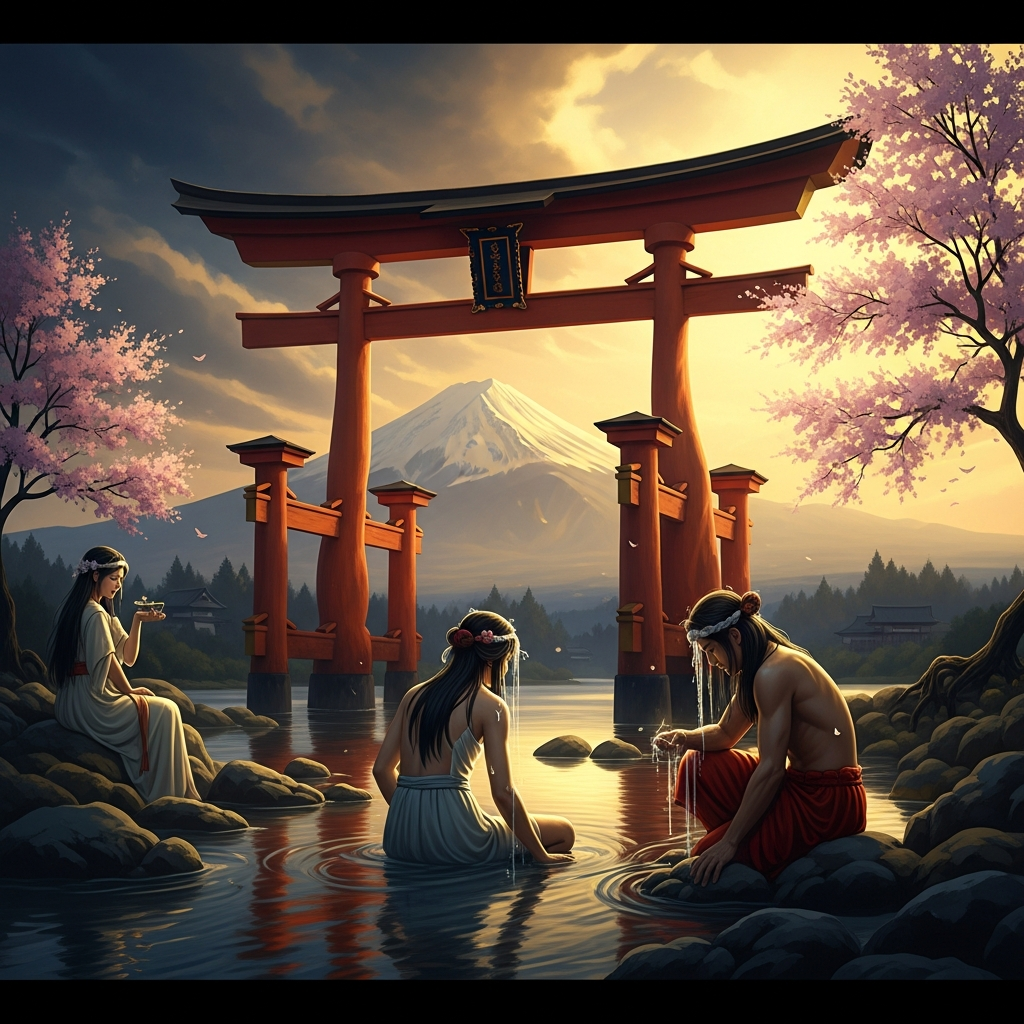
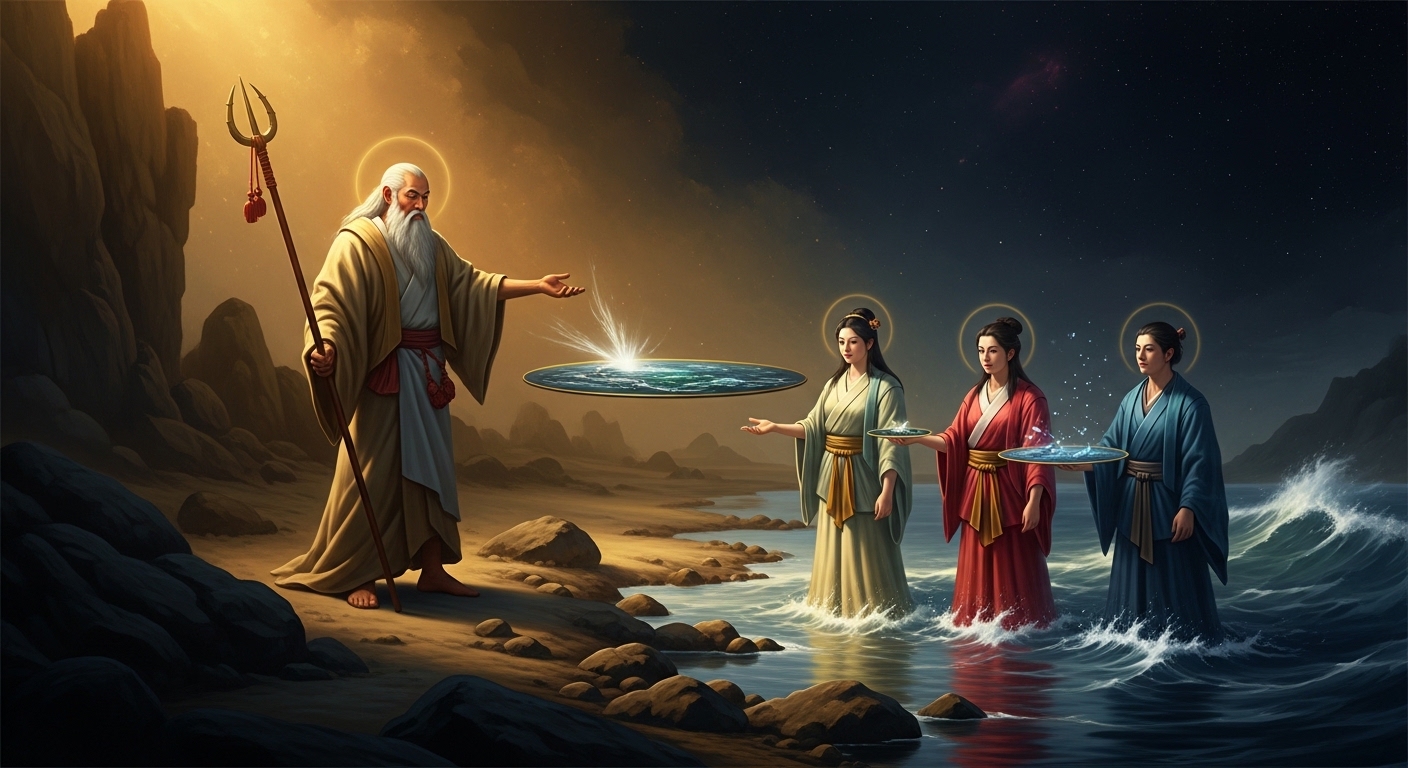
Izanagi, standing at the river after his purification, assigned each of his three new children a domain: the Plain of High Heaven to Amaterasu, the realms of night to Tsukuyomi, the sea to Susanoo. Simple, complete, tripartite. The cosmos organized by a father’s decree.
The other two departed for their domains. Susanoo did not.
Susanoo wept.
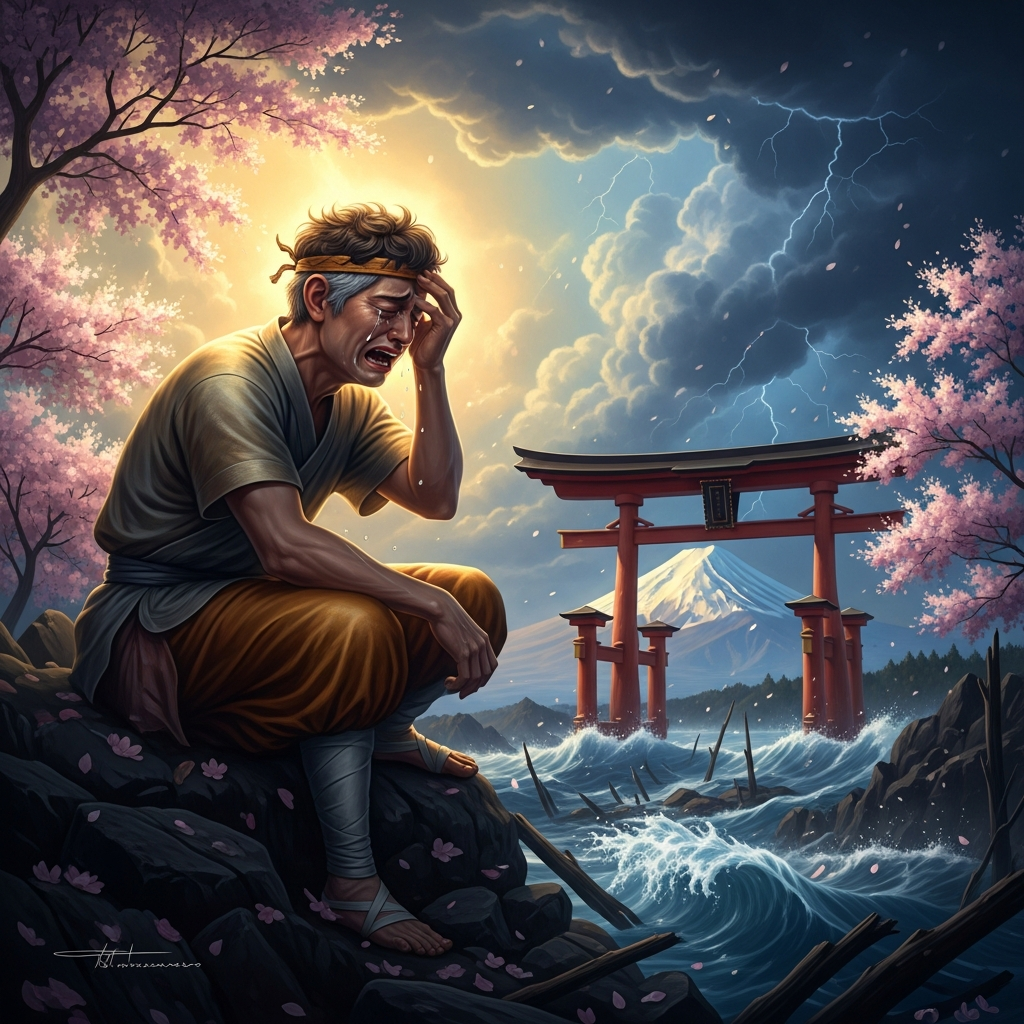
The weeping is the center of the story, the thing that everything else turns on. It is not quiet weeping. It is the weeping of a storm-god, which means it is indistinguishable from a storm: the mountains tremble, the trees dry out and die, the rivers run strange, the seas surge beyond their ordinary limits. The weeping sounds like what it is — the grief of an entity whose emotional scale is geological.
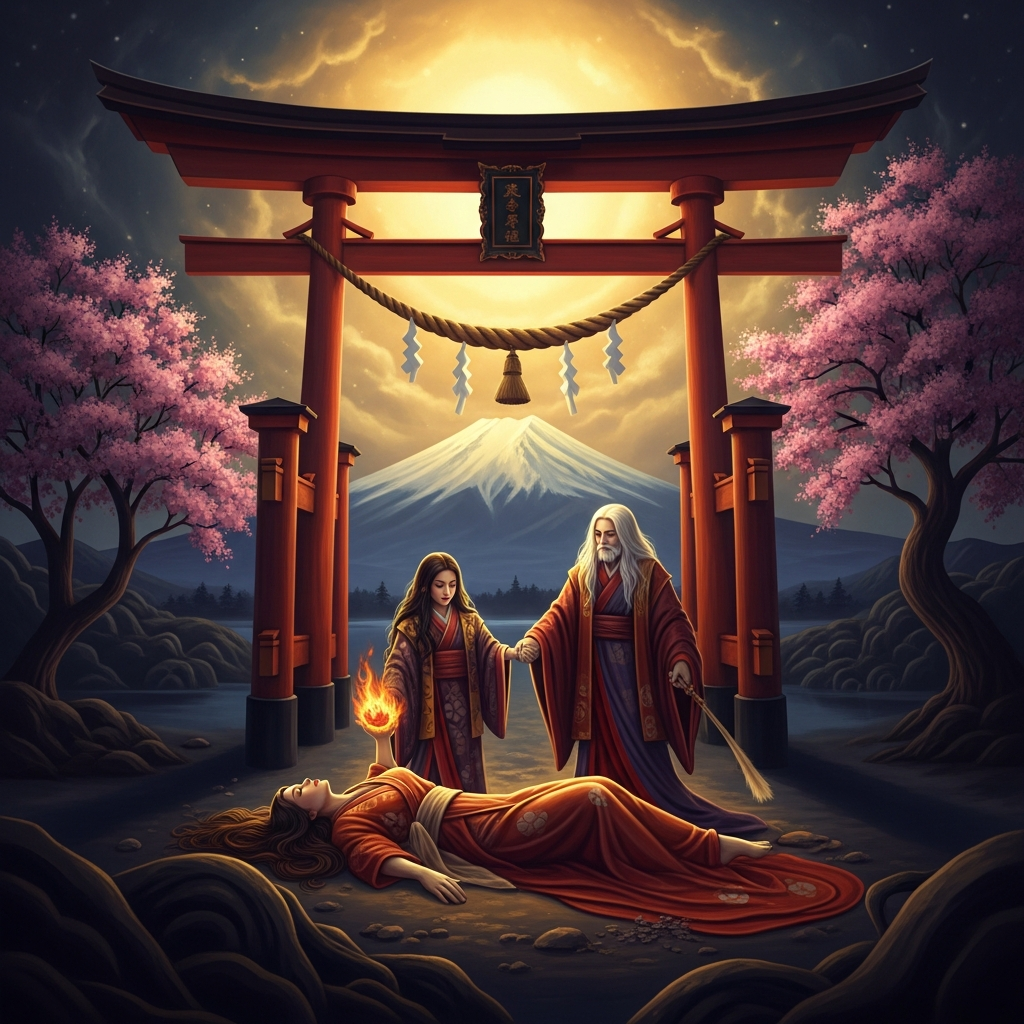
He weeps for his mother. He weeps for Izanami, dead in the underworld, the woman who gave birth to the three great deities and died in the process, and whom he has never met. His assigned domain is the ocean and he will not rule it because ruling it would mean accepting his situation, accepting that his mother is dead and his father is alive and the world is organized around that fact.
He refuses.
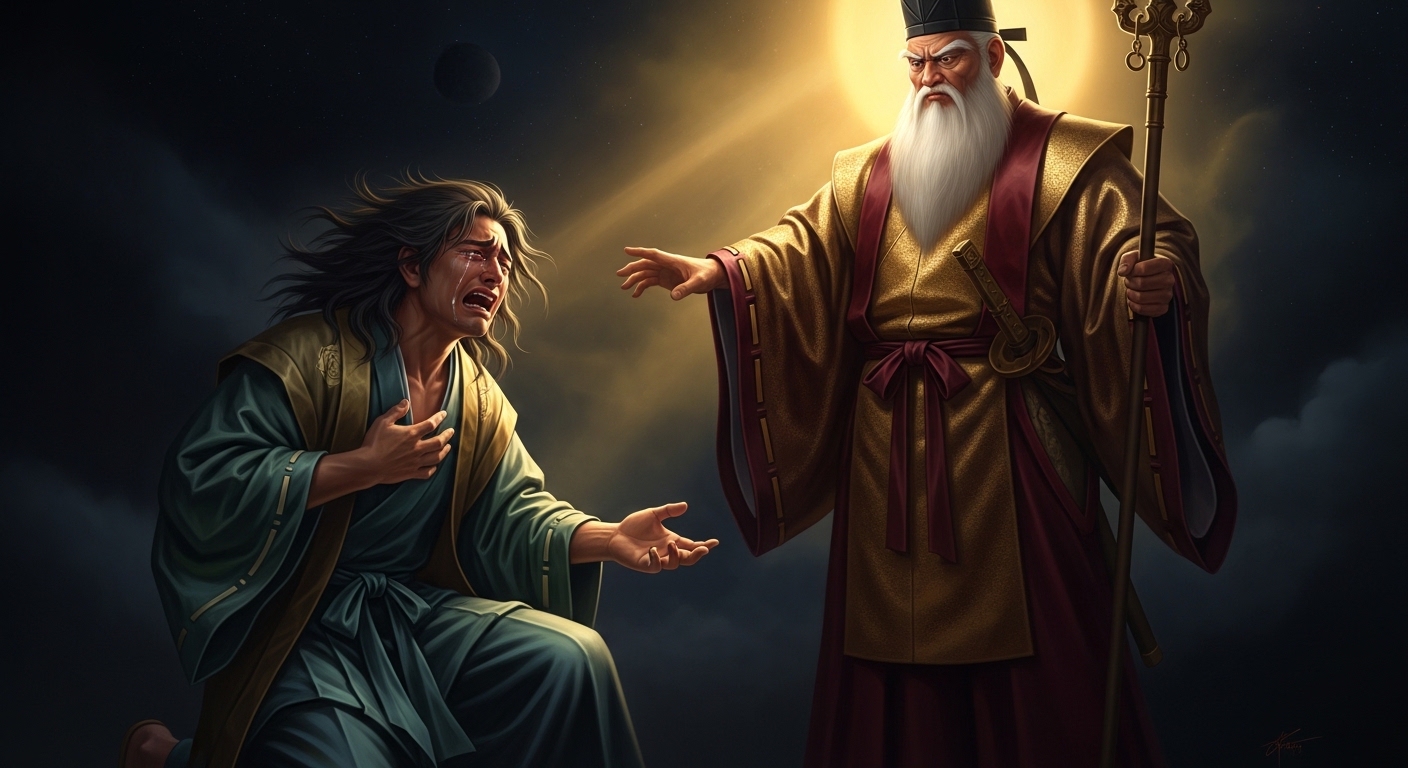
Izanagi comes to him. The account in the Kojiki is brief and parental in its frustration. He asks Susanoo: Why do you not rule your domain? Why do you weep?
Susanoo says: I want to go to my mother in the Root Country.
There is no arguing with this, because the desire itself is not wrong. Wanting your mother is not a defect. But the scale of the wanting, and its consequences — the withering trees, the shaking mountains, the surging seas — these are a problem. The weeping of a grief-stricken storm-god is an ecological catastrophe. The world cannot sustain it.
Izanagi expels him.
The expulsion is immediate and decisive: If that is what you want, you shall not live in this land. With divine authority the father banishes the son he has just created from the washing of his nose. Susanoo is expelled from the middle land — from Japan, from the world he could have been a part of — before he has even properly arrived in it.
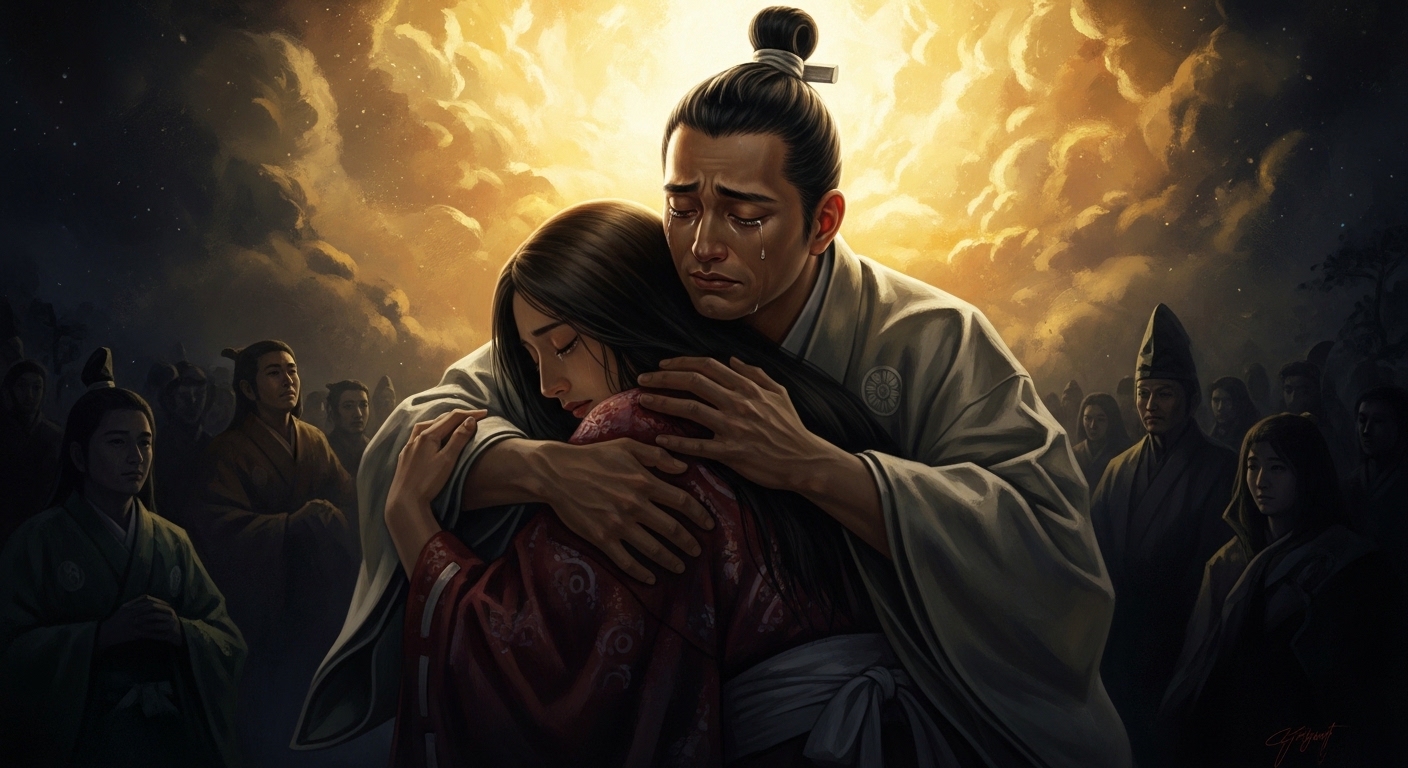
He decides, expelled, to say farewell to his sister.
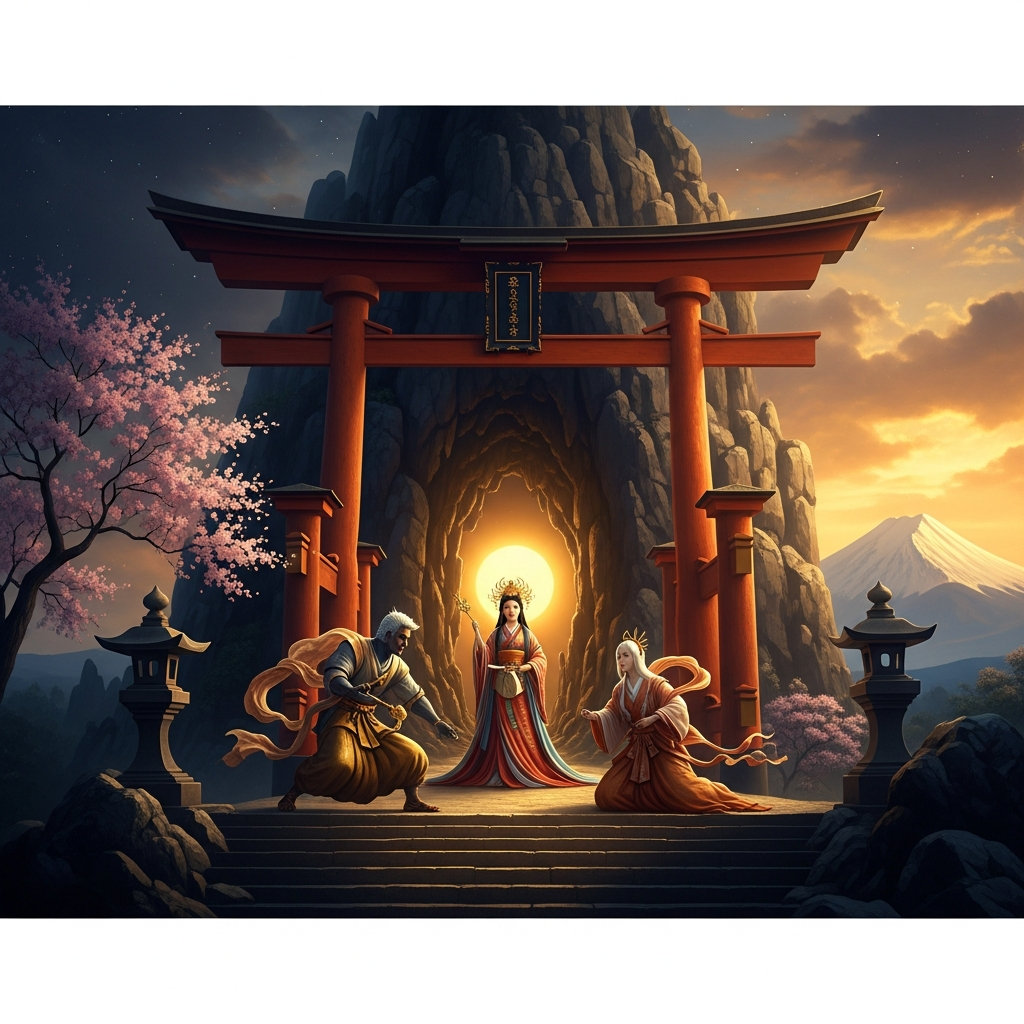
He goes to the Plain of High Heaven — we know what happens there, the destruction and the weaving maiden and the cave of darkness — but the prelude to all of that is this: a god of enormous power, assigned a domain, refusing it because he cannot stop weeping. The storm that will eventually slay a dragon and write the first poem in the Japanese language is, at its origin, a boy crying for a woman he never knew.
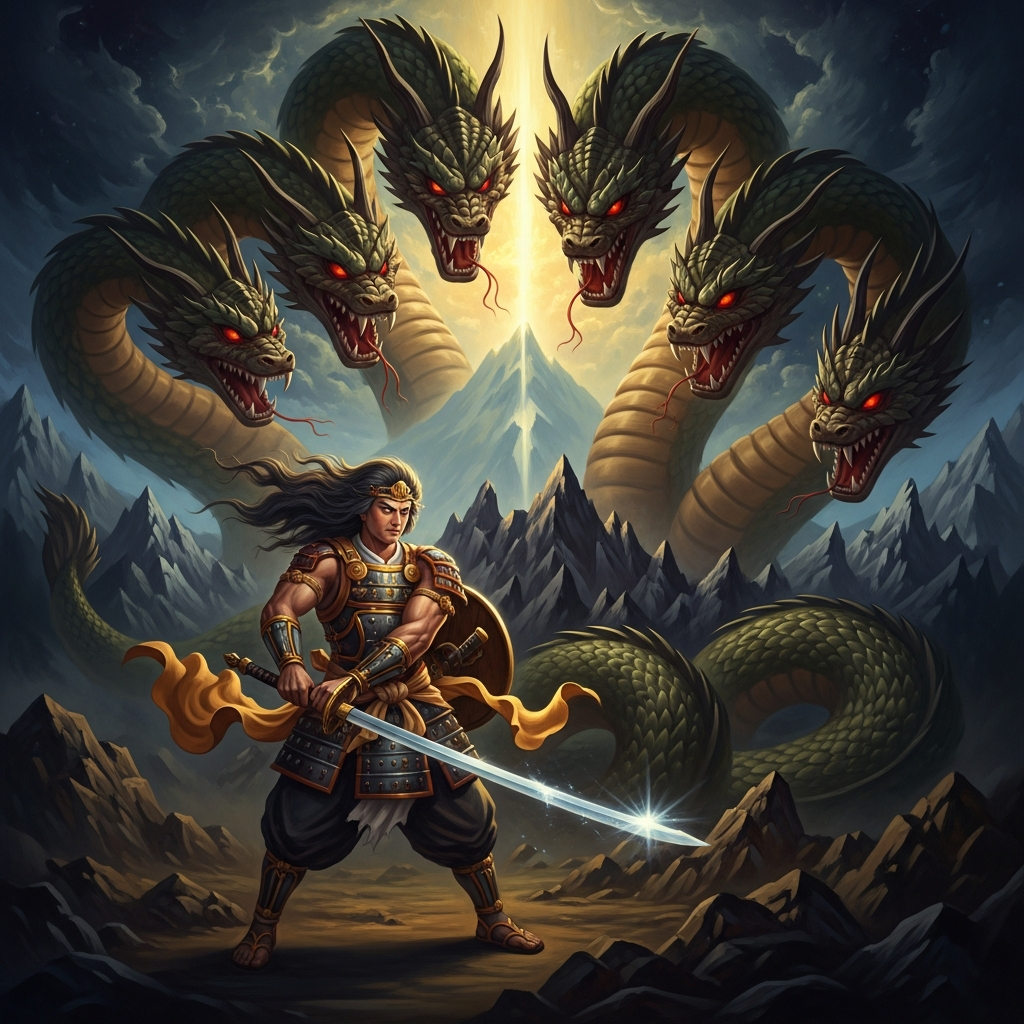
The expulsion of Susanoo is a recurring structure in world mythology: the necessary outsider cast out of the ordered world so that something can be accomplished that order alone cannot accomplish. The eight-headed dragon at Koshi cannot be killed by order. It takes a grief-mad storm-god, drunk on sake and armed with divine blades, to do what the polite world could not.
But before the heroism, the weeping.
The mountains shake. The seas rise. The trees die.
And a god who was given the whole ocean refuses to rule it because he wants, impossibly, irreversibly, only one thing — the mother he was not born soon enough to know.
Scenes
Echoes Across Traditions
Entities
- Susanoo
- Izanagi
- the mountains
- the rivers
Sources
- Kojiki (Record of Ancient Matters), compiled 712 CE, Book I, Sections 11-12
- Nihon Shoki (Chronicles of Japan), compiled 720 CE
- Kato Genchi, *A Study of Shinto* (Kegan Paul, 1926)
- Thomas Kasulis, *Shinto: The Way Home* (University of Hawaii Press, 2004)