The Tijāniyya Order Spreads Across West Africa
1781–1815 CE (founding and initial spread); West African expansion primarily 1850s–1900s · Ain Mahdi, Algeria (founding); Fez, Morocco (development); spreading across the Sahara into Senegal, Mali, Guinea, and West Africa
Contents
Ahmad ibn Idris al-Tijani, an Algerian mystic who received his wird directly from the Prophet in a waking vision in 1781, founded the most numerically significant Sufi order in African history — one that now has tens of millions of members across the Sahara and the West African coast.
- When
- 1781–1815 CE (founding and initial spread); West African expansion primarily 1850s–1900s
- Where
- Ain Mahdi, Algeria (founding); Fez, Morocco (development); spreading across the Sahara into Senegal, Mali, Guinea, and West Africa
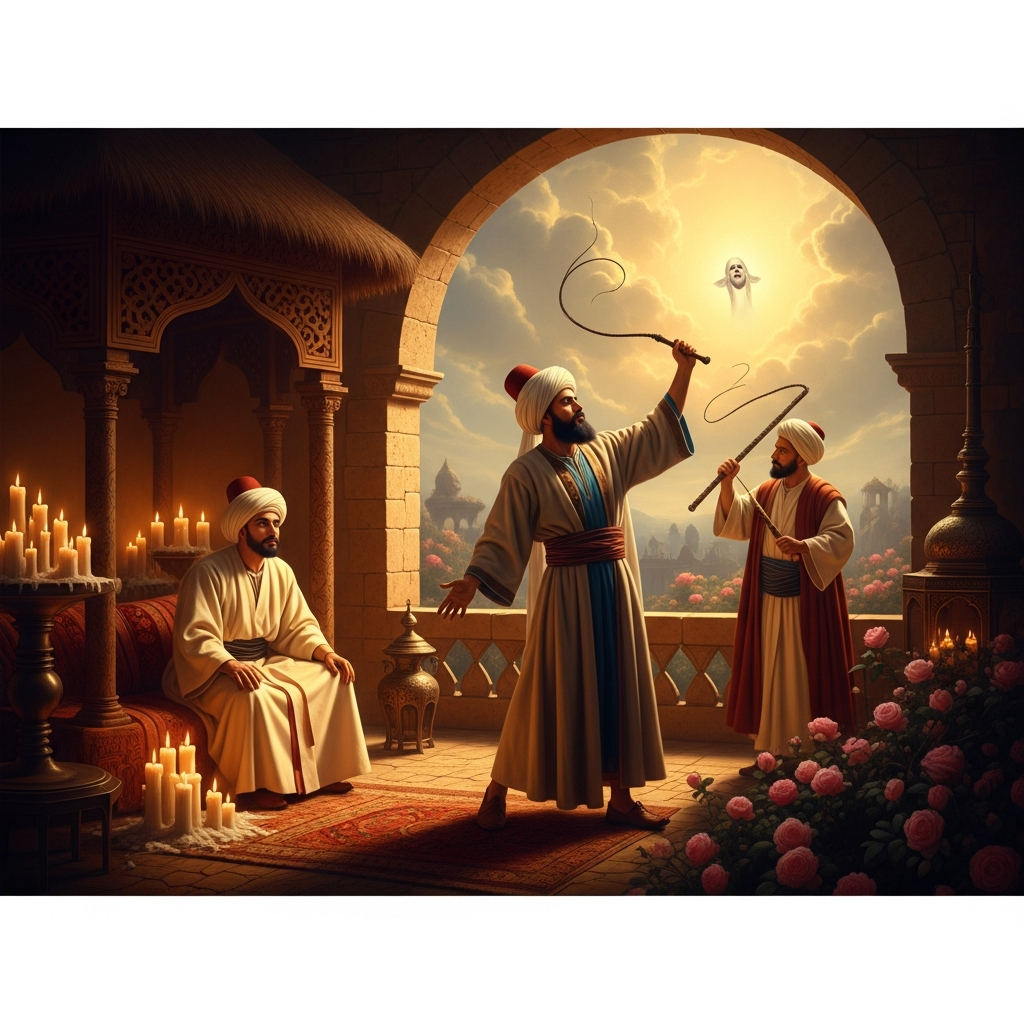
The vision arrives in a market town in western Algeria in the year 1781.
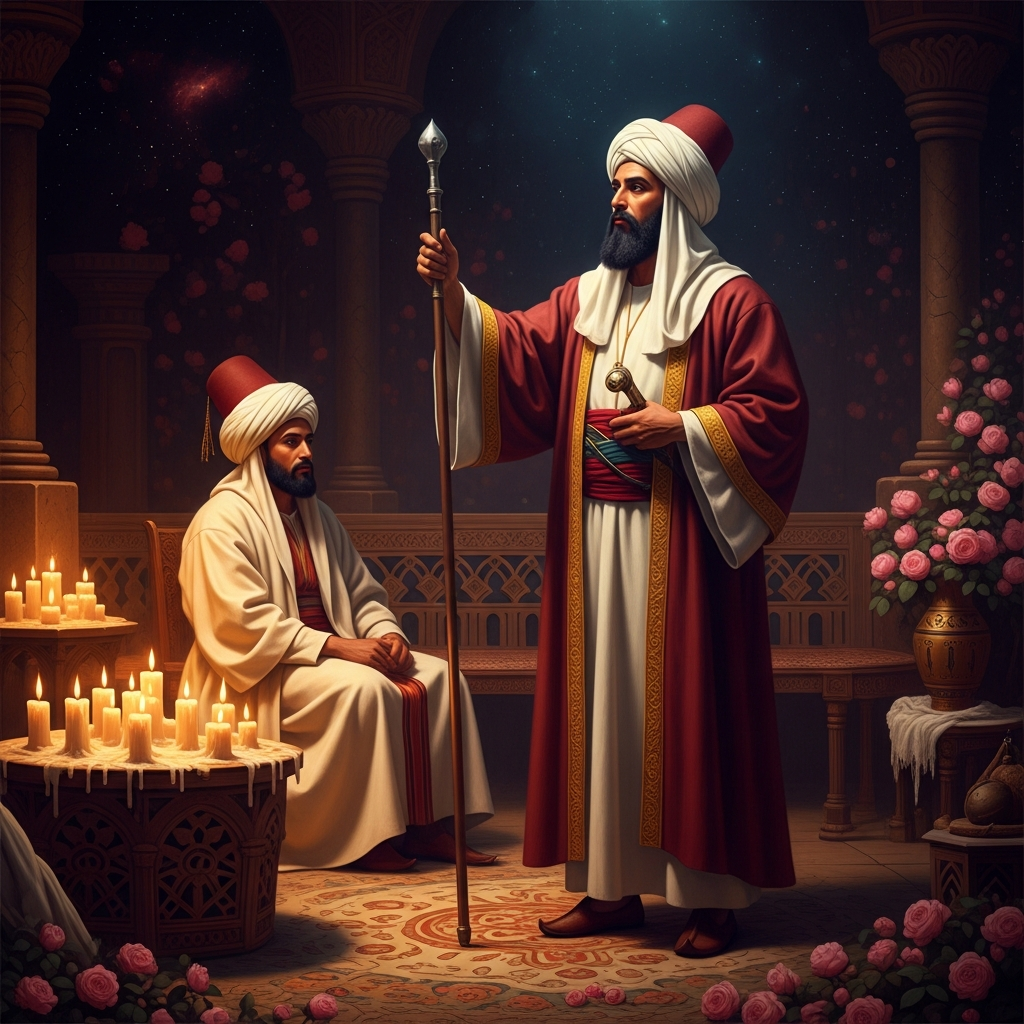
Ahmad ibn Idris al-Tijani is a mature religious scholar in his late forties, trained in the Islamic sciences of Fez, Morocco, well-traveled through North Africa and the Middle East, already initiated into several Sufi orders. He is sitting in a state of spiritual absorption in Abi Samghun, in the Saharan fringe, when he sees — awake, not asleep, the accounts are consistent on this — the Prophet Muhammad.
The Prophet gives him a wird: a specific sequence of prayers and divine names to be recited daily. He also transmits an authorization to initiate others into this received wird, creating an order without the conventional mediation of a human silsila. The authorization comes directly, prophetically, bypassing the chain of human masters. Al-Tijani claims thereafter that his order’s authority derives from the Prophet, not from any human sheikh.
This claim is explosive.
The theological implication is that the Tijaniyya stands apart from the entire network of Sufi transmission that preceded it.
In the conventional system, every order’s authority traces through a chain of masters back to the Prophet. The chain is the authorization. The Tijaniyya claims to have the chain’s source — the Prophet himself — without the intervening chain. Moreover, al-Tijani explicitly states that members of his order should not take initiation into any other order simultaneously. The Tijaniyya does not integrate into the existing network of Sufi affiliations; it supersedes them.
This makes the order controversial within the Sufi world and popular with outsiders to it. For Muslims who have not previously been Sufi, or who are uncomfortable with the elaborate hierarchies of the older orders, the Tijaniyya offers a direct, simple, accessible entry point. The wird is not long. The practice is manageable within an ordinary working life. The requirements do not demand the years of intensive retreat and study that the older orders expect.
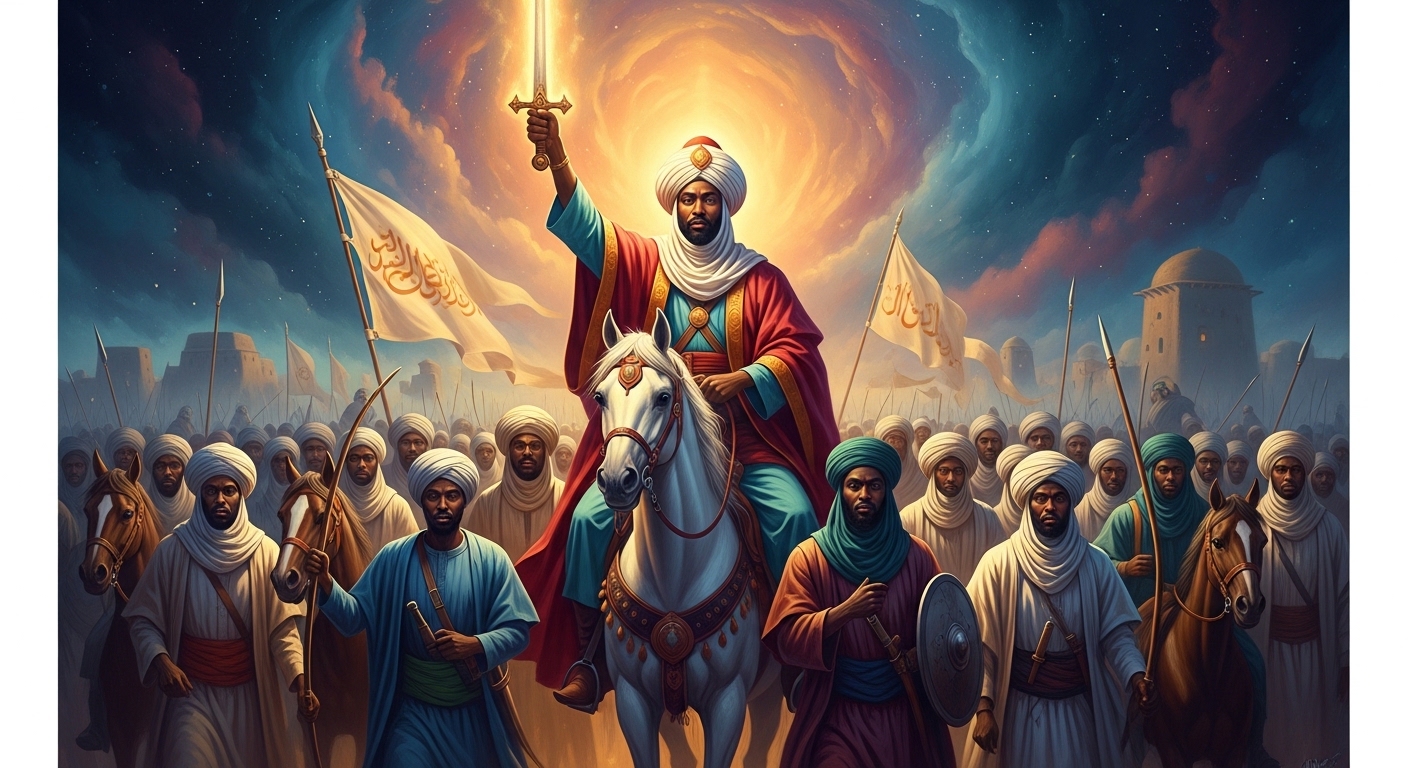
The West African expansion begins in earnest with al-Hajj Umar Tal.
Umar Tal is a Fula Muslim scholar from Futa Toro (in modern Senegal) who makes the hajj in 1825 and receives Tijaniyya initiation in Cairo. He returns to West Africa as the Tijaniyya’s khalifa (authorized representative) for the Sudan — the broad West African region — and spends decades building the order’s presence across the Saharan trade networks.
His method is both spiritual and political. He writes the Rimah (Spears) — the definitive West African text on Tijaniyya doctrine — and conducts an extensive correspondence with Muslim leaders across the region, offering Tijaniyya initiation and the accompanying prestige of direct prophetic authorization. He also leads a jihad in the 1850s and 1860s that creates a large state in the western Sudan, and the political legitimacy of the Tijaniyya order and the political legitimacy of his state are mutually reinforcing.
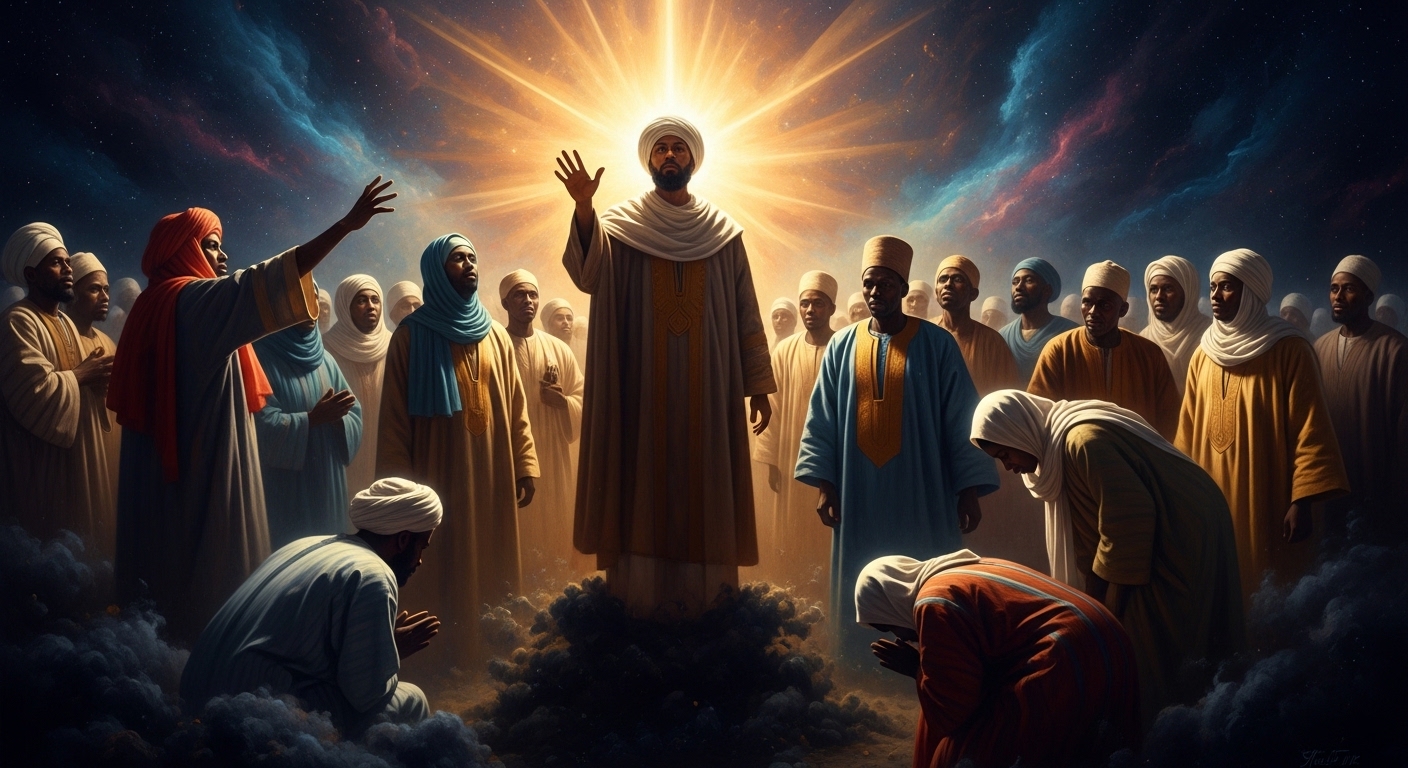
The result is that Islam in West Africa — particularly in Senegal, Mali, Guinea, Guinea-Bissau, and Mauritania — is substantially Tijaniyya-flavored in its lived form.
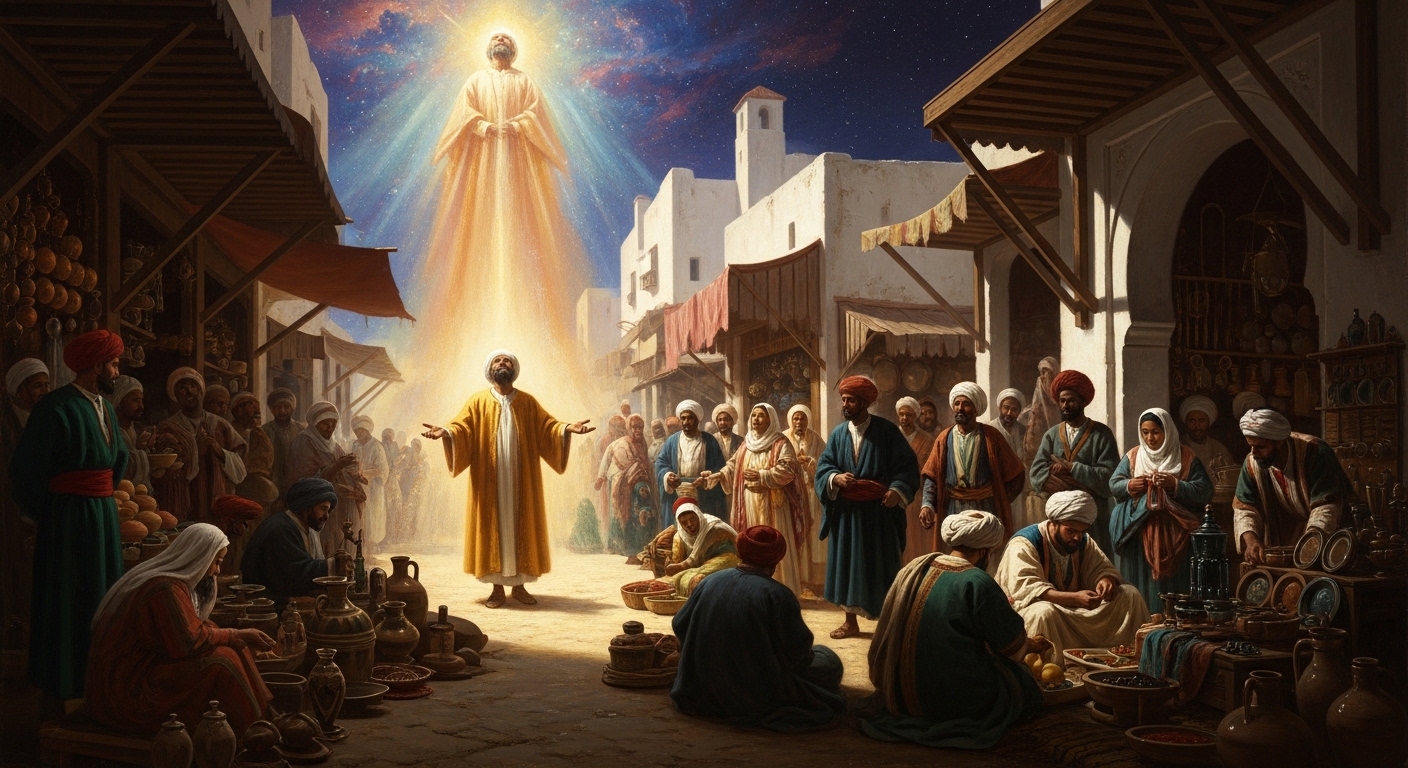
The Tijaniyya centers — zawāyā, as they are called — became focal points of Islamic education, community organization, economic networking (the order spread along trade routes), and political legitimacy. Marabouts — the West African Sufi teachers — built entire social systems around their Tijaniyya credentials. The French colonial administration, arriving in the second half of the nineteenth century, quickly understood that governing West Africa required working with the Tijaniyya networks.
The order today has between 100 and 150 million members by various estimates, making it one of the largest religious organizations in the world by any measure. Most of them are in West Africa. Most of them are reciting the daily wird that al-Tijani received in a market town in Algeria in 1781, in the vision of a scholar sitting alone on the edge of the desert.
The Prophet gave the prayers to one man. The prayers went everywhere.
Scenes
Echoes Across Traditions
Entities
- Ahmad ibn Idris al-Tijani
- al-Hajj Umar Tal (the order's West African expansion)
- the Prophet Muhammad (in vision)
Sources
- Jamil Abun-Nasr, *The Tijaniyya: A Sufi Order in the Modern World* (Oxford, 1965)
- John Hanson, *Migration, Jihad, and Muslim Authority in West Africa: The Futanke Colonies in Karta* (Indiana, 1996)
- David Robinson, *Paths of Accommodation: Muslim Societies and French Colonial Authorities in Senegal and Mauritania, 1880–1920* (Ohio, 2000)
- Ousmane Kane, *The Homeland is the Arena: Religion, Transnationalism, and the Integration of Senegalese Immigrants in America* (Oxford, 2011)