The Sound of One Hand: A Koan
c. 1750 CE — Rinzai Zen tradition; Hakuin Ekaku's formulation · A Zen training hall (zendō) — probably Shōin-ji temple in Hara (modern Numazu, Shizuoka)
Contents
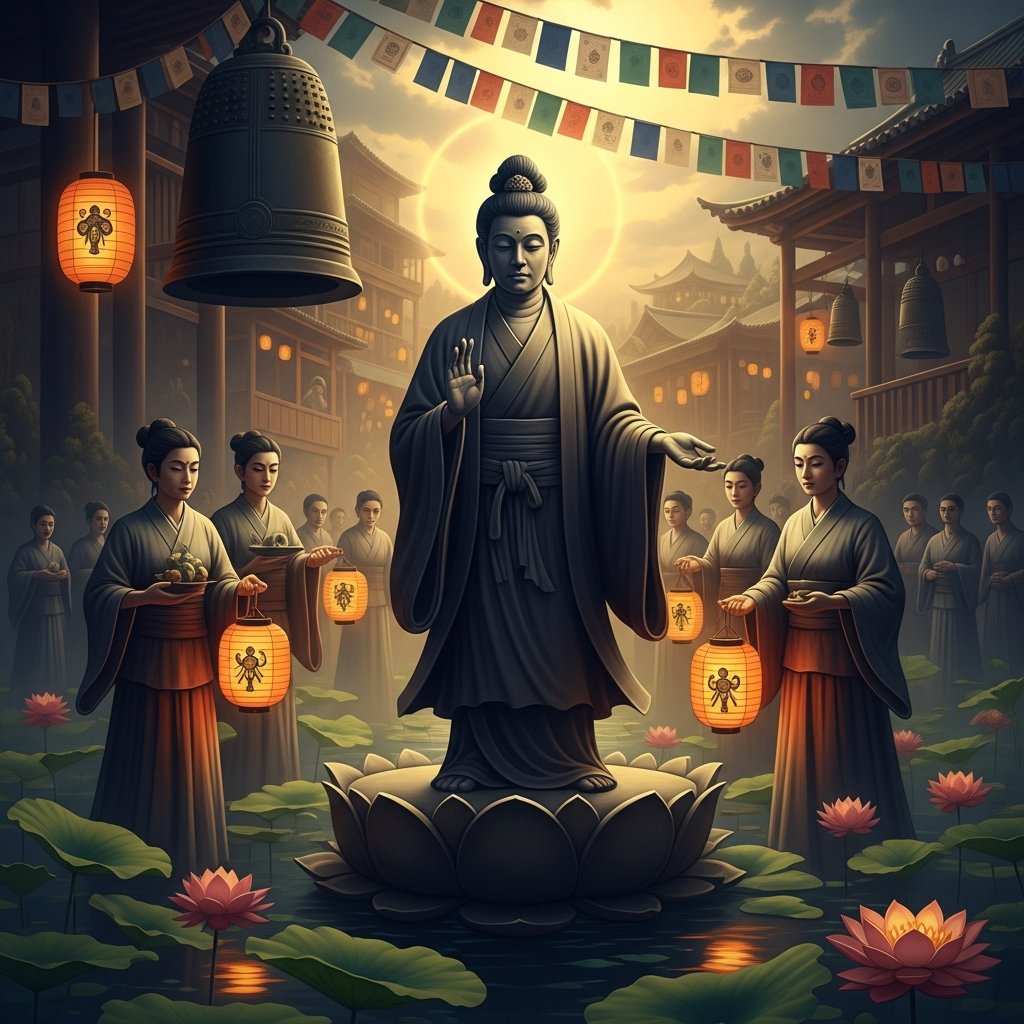
The Zen master Hakuin asks his students: what is the sound of one hand clapping? — and the question is not a riddle with an answer but a door with no handle, designed to exhaust the thinking mind until something else takes over.
- When
- c. 1750 CE — Rinzai Zen tradition; Hakuin Ekaku's formulation
- Where
- A Zen training hall (zendō) — probably Shōin-ji temple in Hara (modern Numazu, Shizuoka)
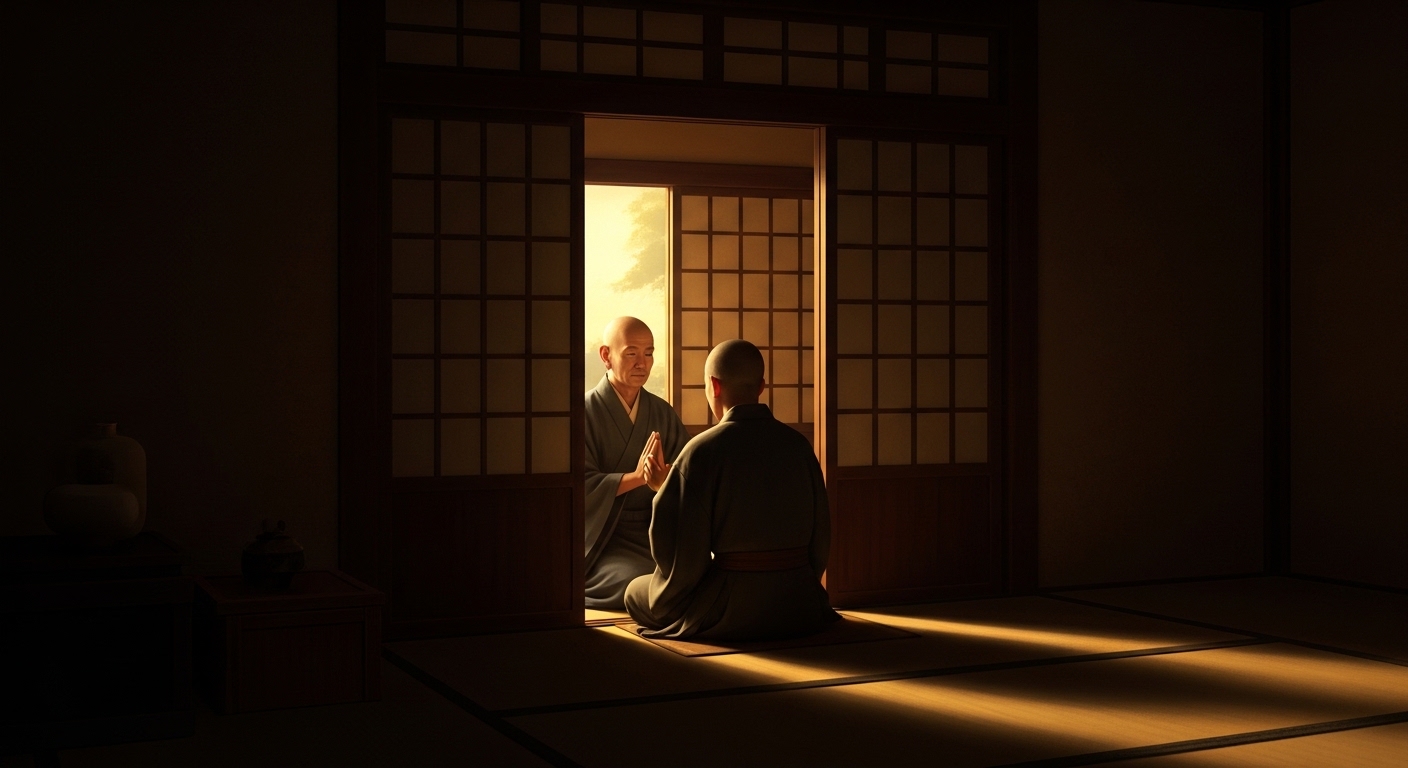
The question is given in dokusan.
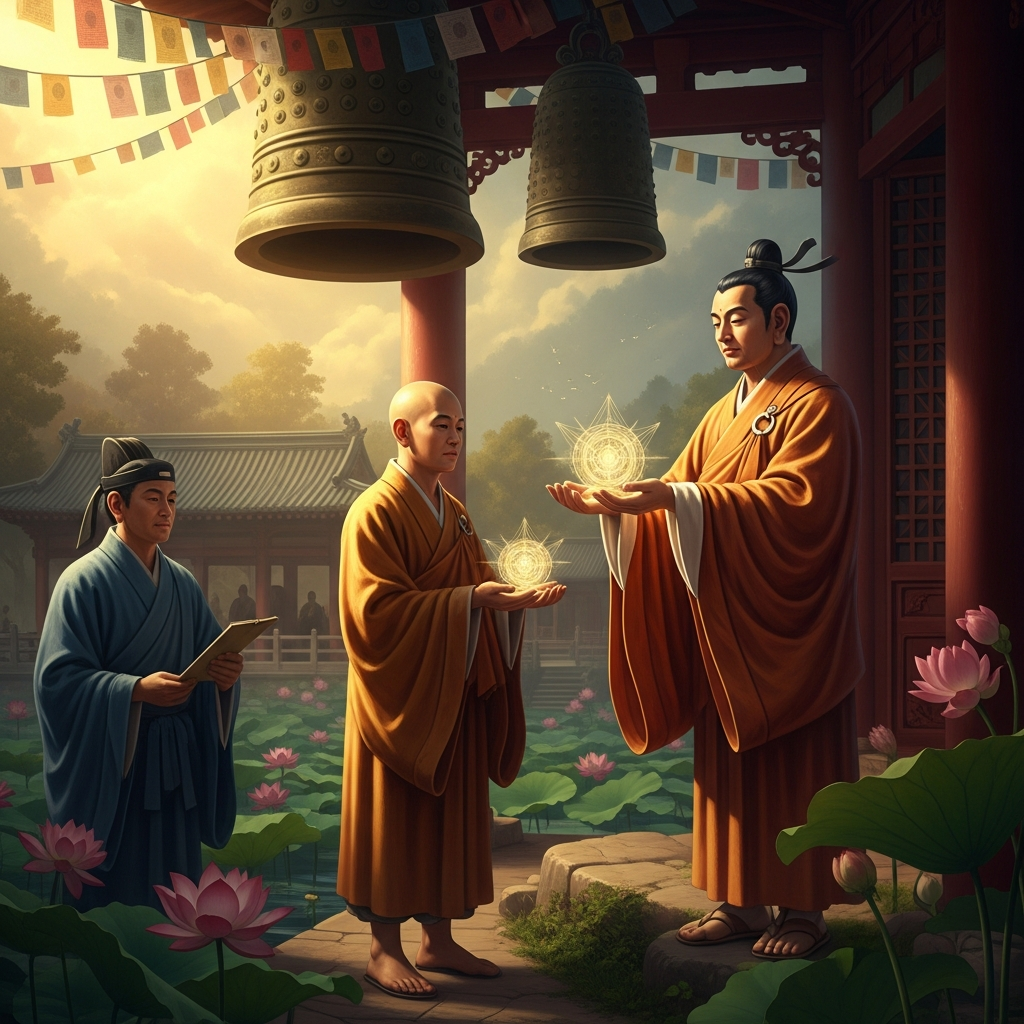
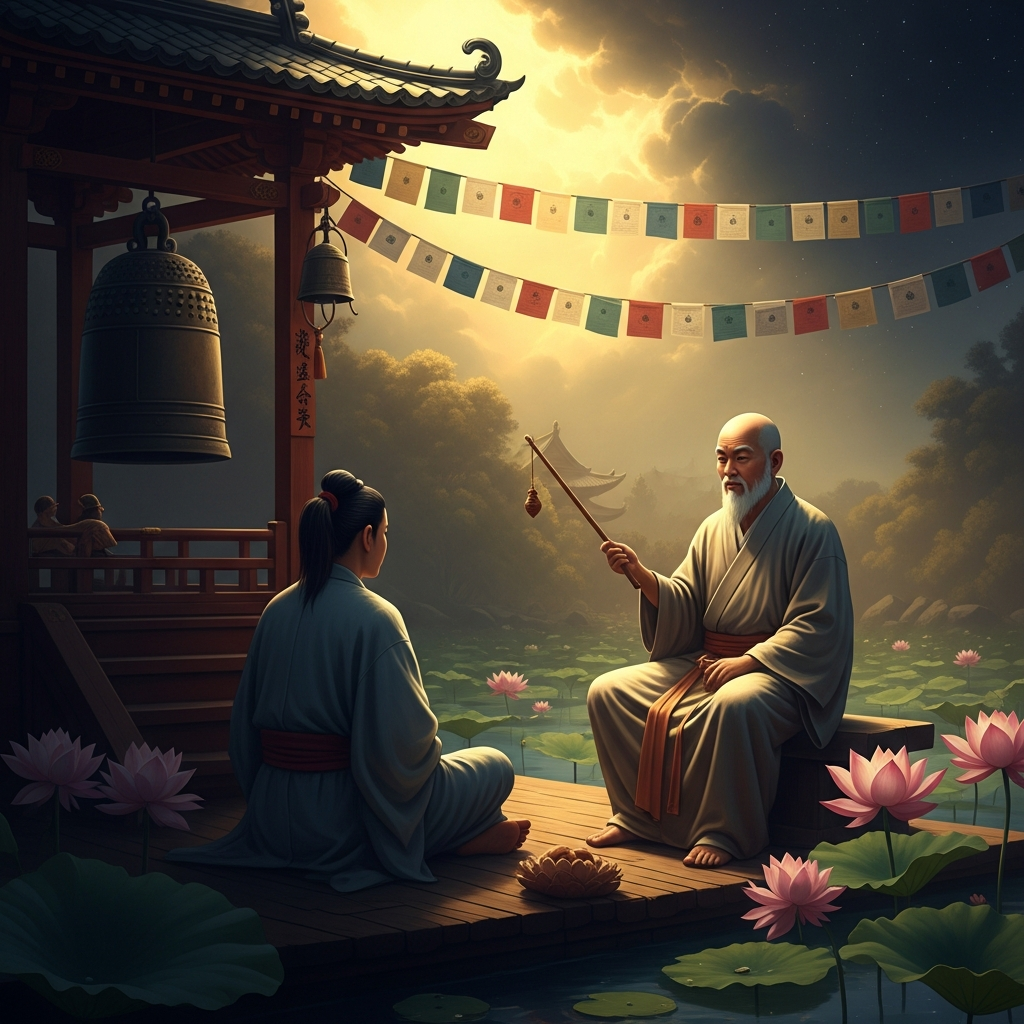
The student enters the small room where the master sits. This happens in the early morning, before the day’s regular sitting, in the formal exchange that Rinzai Zen reserves for the koan interview. The student bows. The teacher asks: What is the sound of one hand?
Two hands make a sound. This is ordinary. Two hands clap and produce a sharp report that everyone recognizes, a sound that comes from the collision of two surfaces, from the meeting of two things.
One hand produces — what?
The student goes away with the question and begins to do what students do: they think about it. They reason. They construct arguments. Perhaps one hand moving through the air produces a sound — the sound of air displaced, the whoosh of a palm swinging. Perhaps the question is pointing to some vibration that a single hand makes that is too subtle for ordinary attention. Perhaps the question has a correct answer and if they think carefully enough they will arrive at it.
They bring their answers to dokusan.
The sound of one hand is the silence before sound.
The master rings the bell. Time. Next student.
*The sound of one hand is this — * (student holds up one hand and makes a gesture).
The master rings the bell.
The sound of one hand is the sound of everything.
The bell.
The answers are not wrong in any ordinary sense. The answers are sophisticated and some of them are beautiful. But they are all answers, and the koan is not looking for an answer. The koan is looking for the moment when answering stops.
Hakuin Ekaku, the eighteenth-century master who systematized the Rinzai koan curriculum and made the one-hand question its standard opening, understood the function of the koan as therapeutic as much as doctrinal. The student who approaches a koan correctly will hit, eventually, a wall. The conceptual mind reaches the edge of what it can do and finds no further territory. This is daigi — the great doubt, the authentic uncertainty that is not philosophical skepticism but the lived experience of not knowing.
In that space — in the silence of the exhausted thinking mind, in the moment when the student stops trying to be clever — something is possible that is not possible before.
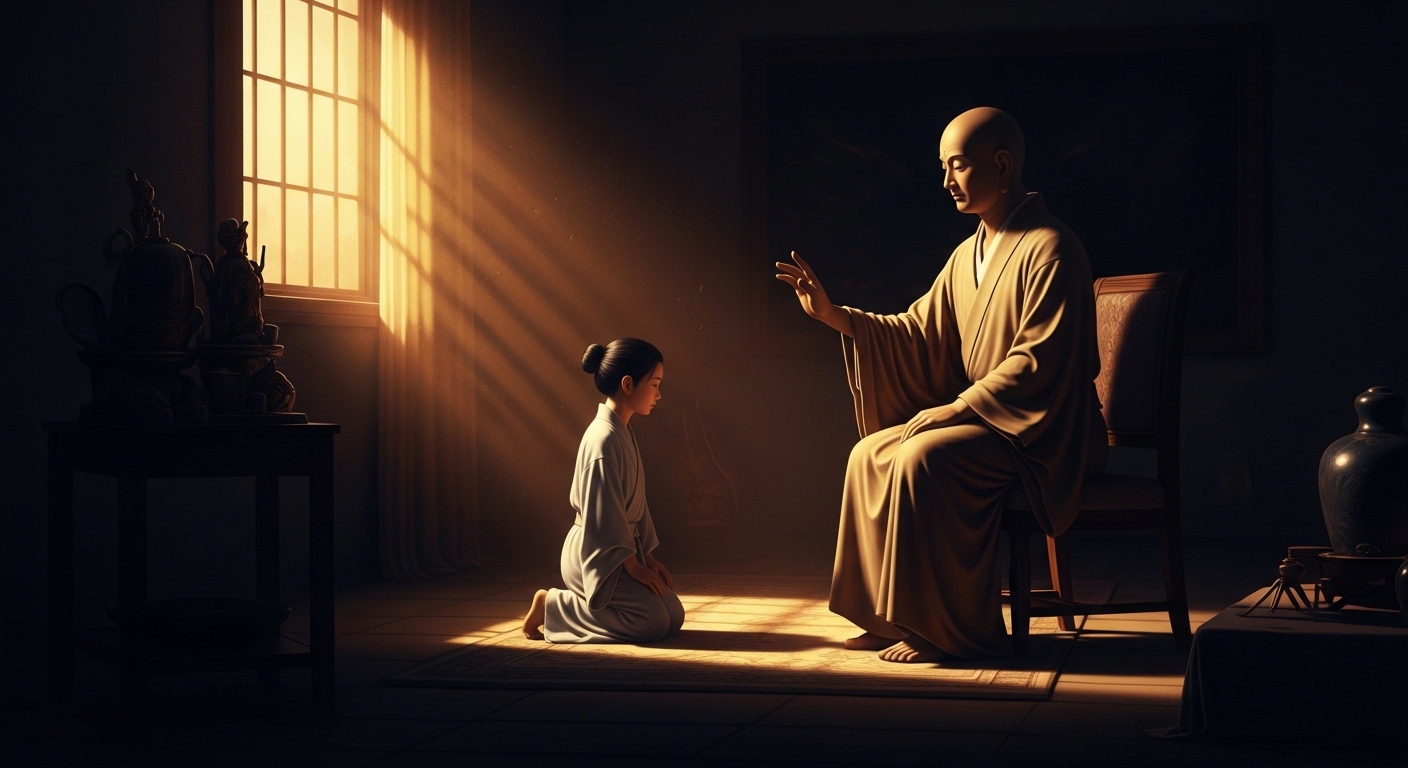
What is presented in dokusan at that moment is not an answer. It is a presentation: the student holds up the hand. Or makes a sound from the chest. Or sits in front of the master with the question alive in their body. The master — who has sat with the same question for decades and knows the quality of sitting that has actually entered the question — either rings the bell or does not.
The student who passes through the one-hand koan has not solved a riddle.
They have experienced something that the riddle was designed to produce.
Hakuin’s name for this is kenshō — seeing the nature. The one hand is still asking. The hearing of its sound is not a description that can be given to someone who has not heard it.
The bell does not ring for descriptions.
It rings for something else.
Scenes

Echoes Across Traditions
Entities
- Hakuin Ekaku
- the student
- the koan
Sources
- Hakuin Ekaku, *Yasen Kanna* (Chat on a Boat in the Evening), c. 1757
- Miura, Isshu and Ruth Fuller Sasaki, *Zen Dust: The History of the Koan and Koan Study in Rinzai Zen* (Harcourt Brace, 1966)
- Hoffman, Yoel, *The Sound of the One Hand: 281 Zen Koans with Answers* (Basic Books, 1975)
- Yamada Koun, *Gateless Gate: The Classic Book of Zen Koans* (Wisdom, 2004)