Contents
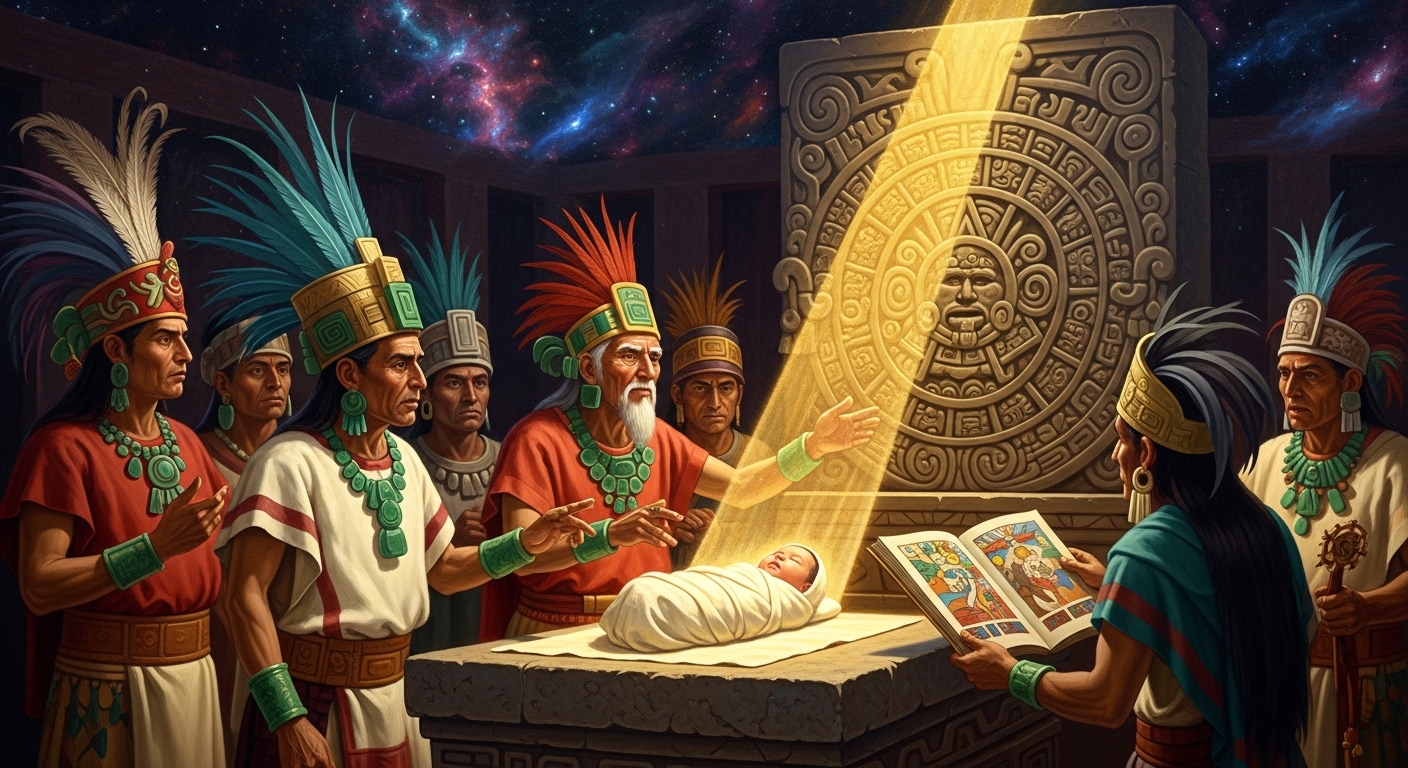
Every Aztec child was born onto one of 260 sacred days — twenty day-names crossed with thirteen numbers — and that day was their fate. Priests called *tonalpouhque* read the calendar at birth and told the parents whether the day was lucky, unlucky, or so dangerous the announcement should be delayed until a better one.
- When
- Daily life, every day, ca. 1300–1521 CE
- Where
- Every household and temple in the Aztec world
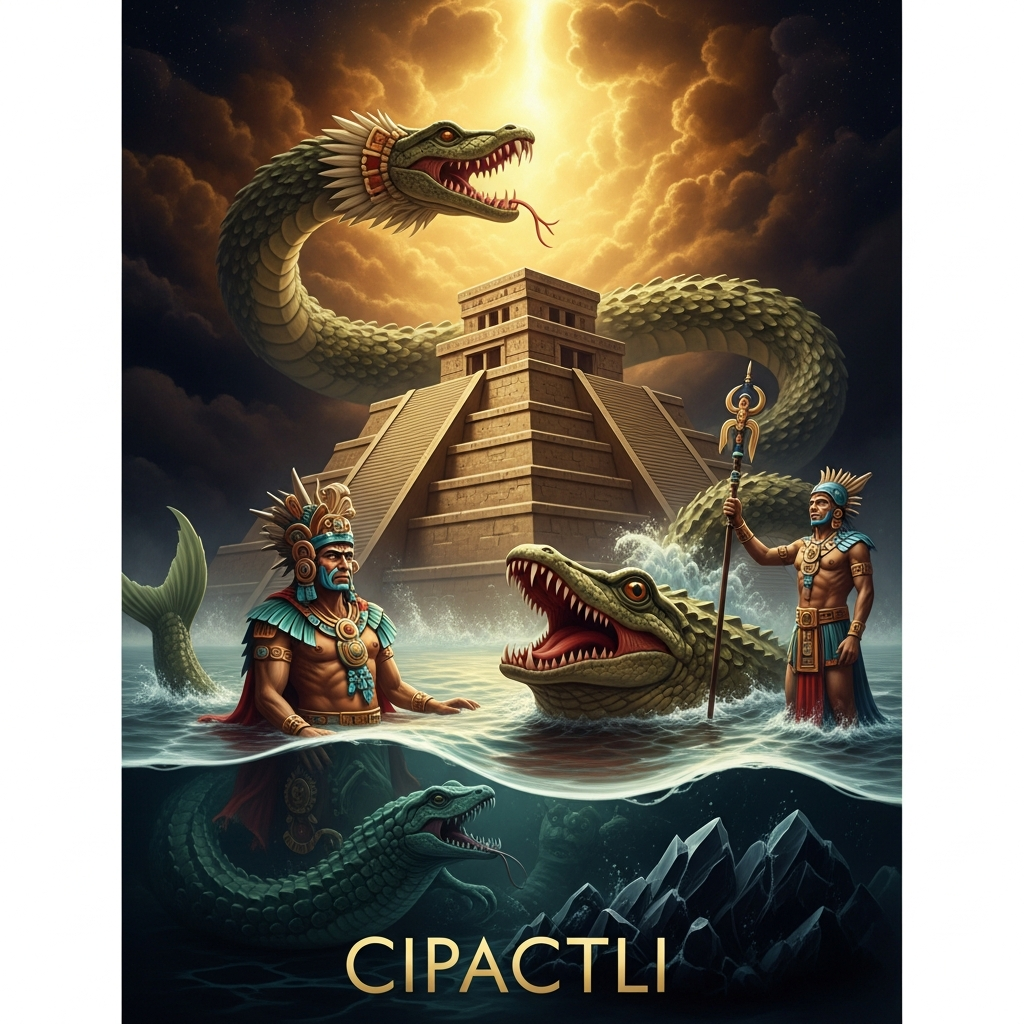
The Aztecs kept two calendars at once. One was the xiuhpohualli, the solar count of 365 days, which governed agriculture and the great public festivals. The other was the tonalpohualli, the “count of days,” and it was older and stranger: 260 days, made by crossing twenty day-names — Cipactli (alligator), Ehecatl (wind), Calli (house), Cuetzpalin (lizard), Coatl (snake), and on through Xochitl (flower) — with thirteen numbers, one through thirteen, never repeating. Every combination, from 1-Alligator to 13-Flower, occurred exactly once in the cycle. Then it began again.
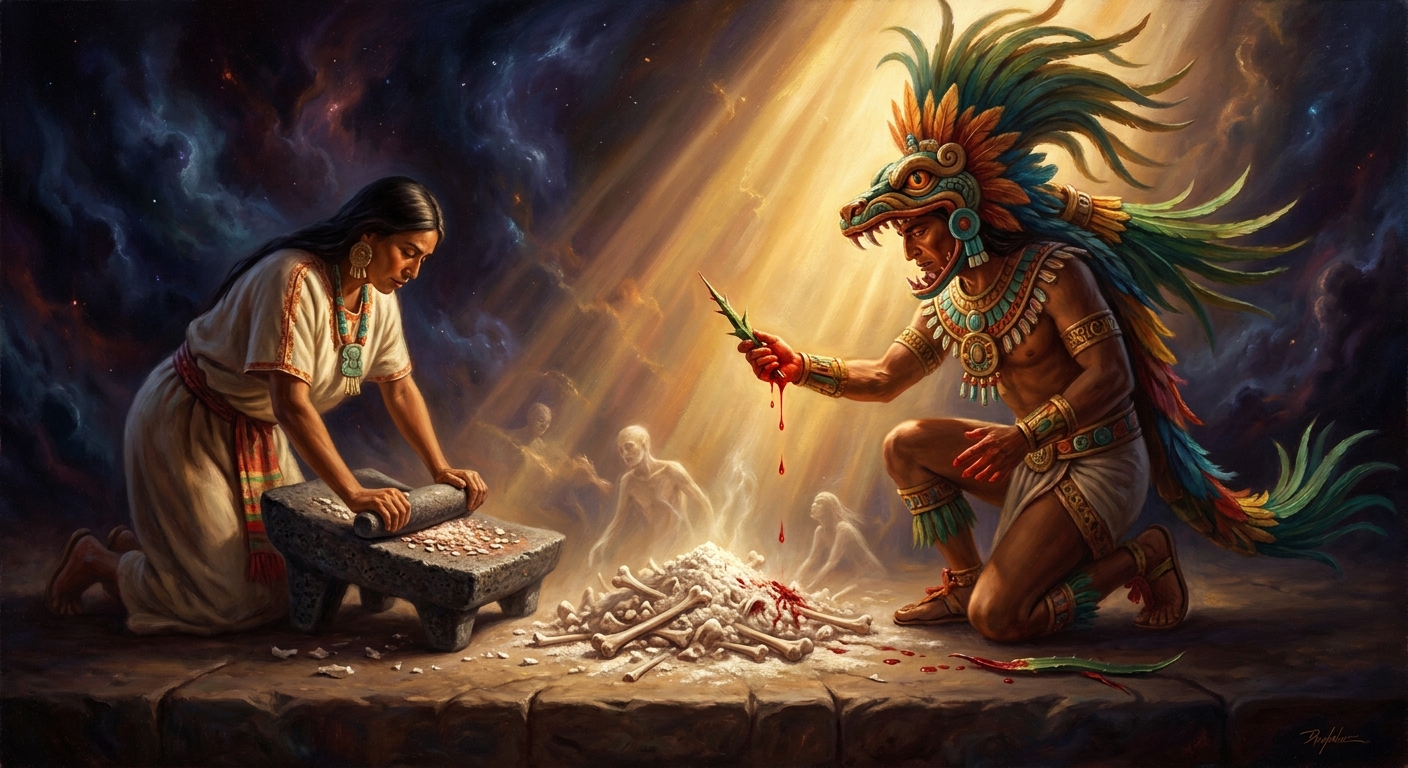
The Aztecs believed the tonalpohualli had been given to them at the beginning of time by Oxomoco and Cipactonal, the first man and first woman, who sat together with grains of maize and divined the structure of fate. The codex called Borbonicus opens with the two old diviners scattering kernels and reading them; behind them stands Tonacatecuhtli, “Lord of Our Sustenance,” and the calendar unrolls like a long woven cloth.
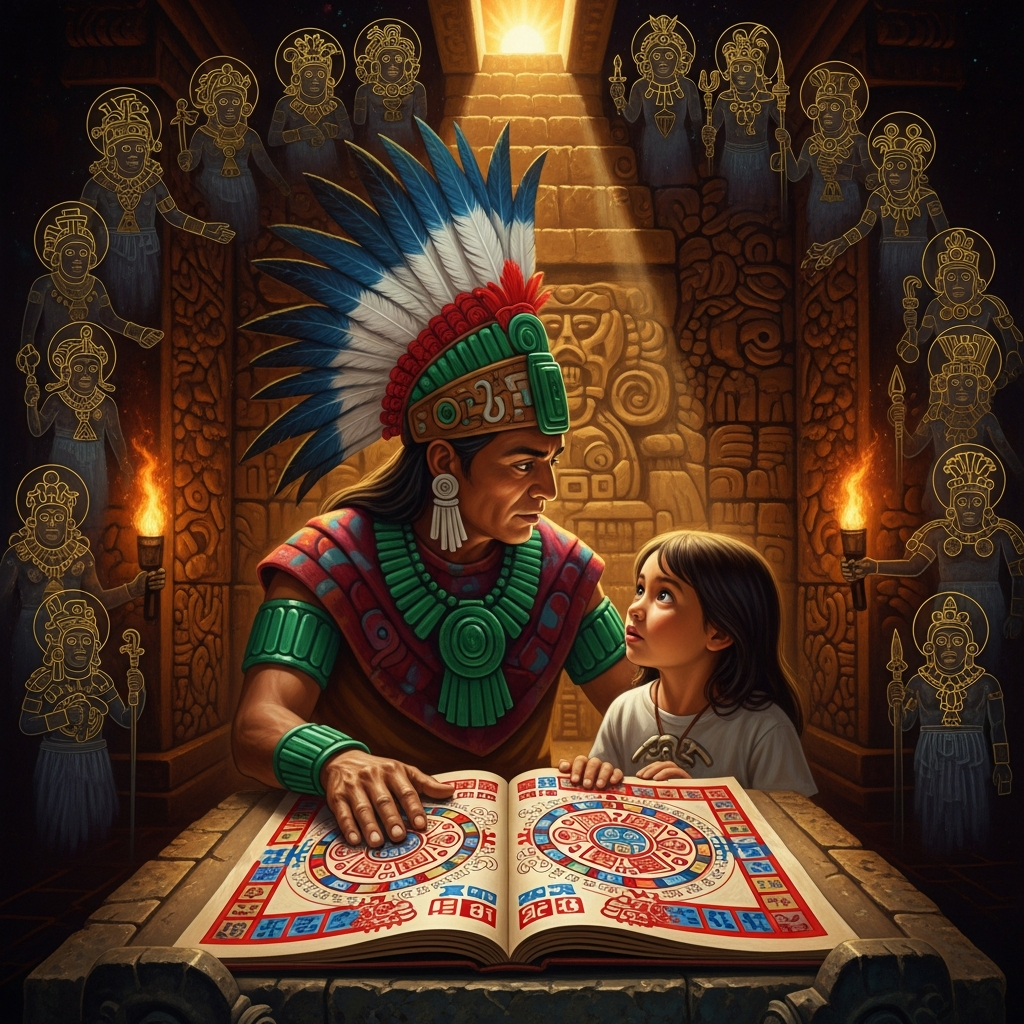
When a child was born, the parents did not announce it at once. They sent first for the tonalpouhque — “he who counts the days,” the calendar-priest, the diviner. He came with his book, an accordion-folded screen of bark paper painted in red and black, on which the 260 days marched in panels of twenty. He asked the day. He asked the hour. He looked at his book.
Some signs were good. Ce Coatl — One Snake — was a sign of merchants, of wealth gained through travel, of a long life. Chicome Xochitl — Seven Flower — was the sign of the artist, the painter of books, the maker of feathered mosaics, those for whom Xochiquetzal would smile. Mahtlactli omome Ozomahtli — Twelve Monkey — was the sign of joy, of marriage, of a person who would be loved.
Some signs were terrible. Ce Mazatl — One Deer — meant timidity, indecision, a life of being prey. Macuilli Cuetzpalin — Five Lizard — was the sign of one of the Macuiltonaleque, the Five Fates, malevolent gods who brought disease, gambling losses, sexual ruin. The number five itself was bad: every day with five was a day of excess, of going too far. Chicunaui Malinalli — Nine Grass — was perhaps the worst. The diviner would lay down his book gently and explain to the parents that the child was born under a sign of withering, and that the only chance was to delay.
For some signs were good in themselves but bad if announced too soon. The diviner could ask the parents to wait — sometimes a few days, sometimes longer — and then assign the child the tonalli, the day-sign, of a more auspicious day in the same trecena, the same thirteen-day week. This was not a lie; it was a manipulation of time itself, a re-routing of the child’s fate through a friendlier door. The wealthy could afford it. The poor often could not, and their children took whatever sign they had been born to.
The day-sign followed a person their whole life. It was their secret name, sometimes their public one. Many Aztecs were called by it: Acatl (“Reed”), Tecpatl (“Flint”), Quiahuitl (“Rain”). Moctezuma’s father had a calendar name. So did the woman who sold tomatoes in the market. To know your sign was to know what you had been born for and what you should beware. A person born on 1-Wind, Ce Ehecatl, knew they had a tendency toward sorcery and should not let it run loose. A person born on 1-Rain, Ce Quiahuitl, knew they had been born for greatness and that it would arrive only at the cost of suffering.
The Aztecs did not believe the sign was destiny in the sense of an iron rail. It was destiny in the sense of weather: this is the climate of your life, and you must dress for it. A child born on 9-Grass could become something other than a withered ghost, but they would have to fight every day against a wind blowing the other direction. The diviner did not curse the child. He told the parents what they were dealing with, and gave them the rituals — fasting, offerings, the burning of copal — that might soften it. Then the parents took the child home, knowing now what kind of life they had been given, and the great calendar of two hundred and sixty days kept turning, and the child began to grow into the day they had landed on.
Scenes

Echoes Across Traditions
Entities
- Tonacatecuhtli
- Oxomoco
- Cipactonal
Sources
- Florentine Codex, Book 4 (Sahagún)
- Codex Borbonicus
- Codex Borgia