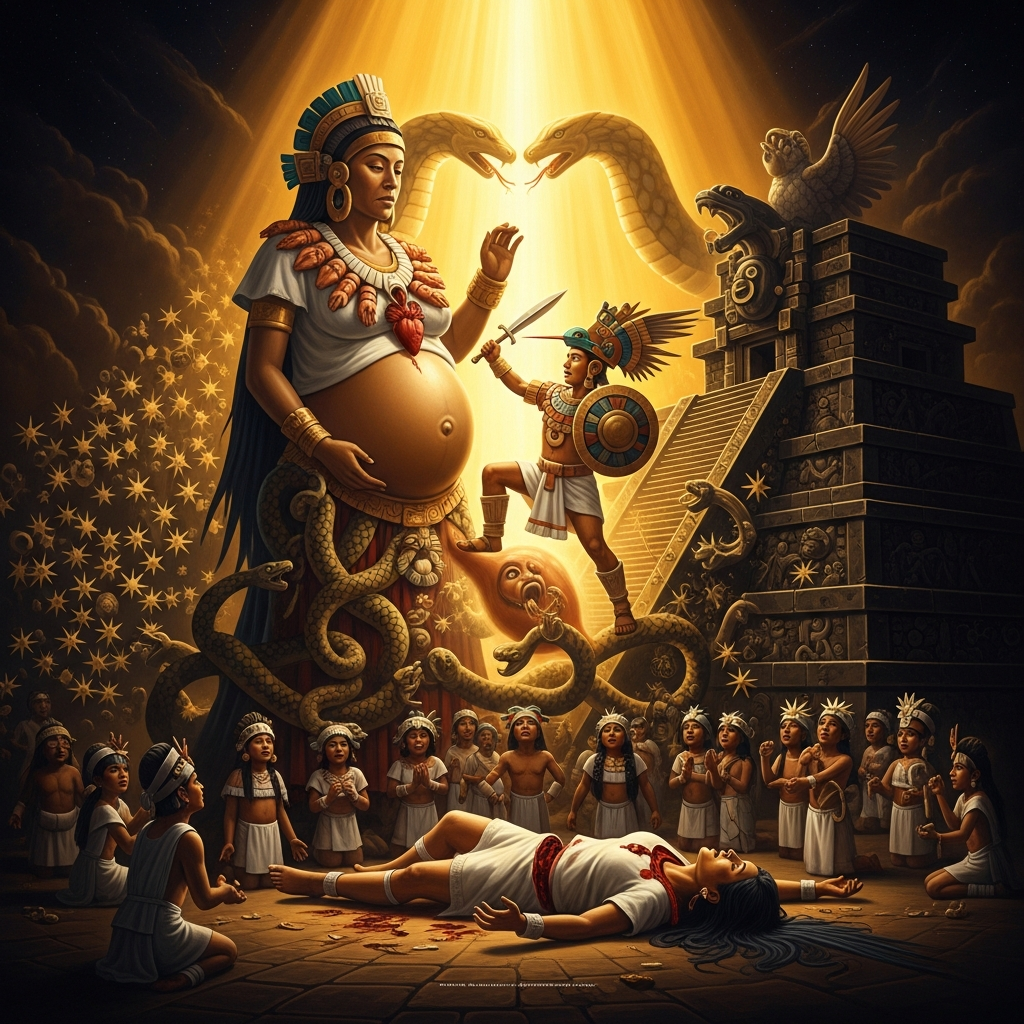
Tlazolteotl, Eater of Filth
Daily ritual life, ca. 1300–1521 CE · Aztec temples and the homes of the dying
Contents
Tlazolteotl — 'Filth Goddess' — devoured human sin, especially sexual sin, at the moment of confession. An old person could unburden a lifetime of transgression to her priest in one ceremony, and walk away clean. She was also the patron of midwives and of women in labor: the same goddess who ate sin presided over birth.
- When
- Daily ritual life, ca. 1300–1521 CE
- Where
- Aztec temples and the homes of the dying
Tlazolteotl. Tlazolli, “filth,” “garbage,” the things you sweep out of a house. Teotl, “god.” The goddess of filth. To call this her best name is to misunderstand: among the Aztecs, tlazolli was not garbage in the modern sense but a category that included menstrual blood, semen, the things wiped from the body, the things wiped from the soul. Tlazolli was what was left over after living, and it had to go somewhere. Tlazolteotl ate it.
She was older than most of the gods. She came, the codices say, from the Huasteca, the hot lowlands on the Gulf coast, and her cult was very ancient when the Mexica adopted her. She was usually shown with a black ring around her mouth, as if her lips were stained — and they were, with the filth she had eaten. She wore a headdress of unspun cotton with two spindles in it, because she was also the patron of weavers, of women, of the work of women. Her four faces were given four names: Tiacapan, Teicu, Tlaco, Xocotzin — Eldest Sister, Younger Sister, Middle Sister, Youngest Sister — and she was all four at once, a goddess of every age of woman.
The center of her cult was confession, neyolmelahualiztli, “the straightening of the heart.” Most peoples have some practice for getting rid of the weight of past wrongdoing; the Aztecs had this one. A person could confess to a priest of Tlazolteotl exactly once in a lifetime — and so most waited until they were old, until the account had grown long, until they could feel the weight of forty or sixty years of bad acts bowing them. Then they sent for the priest.
The confession was specific. The Florentine Codex describes the questions the priest asked: Have you stolen? Have you lied? Have you committed adultery? Have you slept with another man’s wife, with a kinswoman, with a child? Have you killed? Have you wished to kill? The penitent answered fully. Nothing was held back, the priest insisted, because what was held back the goddess could not eat, and would remain. The penitent received an penance — usually fasting, sometimes the drawing of blood from the tongue with a maguey thorn, sometimes a pilgrimage. When the penance was done, the sin was gone. Gone in the literal sense: Tlazolteotl had taken it into herself, had swallowed it, and the penitent stood up clean.
This sacrament had a strict consequence. Because it could be done only once, the Aztecs who had confessed could no longer claim mercy. If they had used their confession at thirty and then stole at fifty, they faced the full weight of Aztec law, which for some crimes was death. The sacrament was not a license; it was a single, irrevocable act of being unburdened. People held it like a key they would only ever turn once.
But here is the thing the codices put together that other religions do not. Tlazolteotl was also the goddess of childbirth. The midwives of Tenochtitlan invoked her over every laboring woman. She was the patron of the temazcalli, the steam-bath, where women went after giving birth to be cleansed. The same goddess who ate sin presided over the birth of children. Why?
Because the Aztecs understood that confession and labor are the same thing. Both are a long, painful, embarrassing, bloody process of getting something out of the body that has to come out. Both leave the person who undergoes them shaking, weeping, transformed. Both produce, at the end, a self that is new — in the case of birth, a literally new self, the child; in the case of confession, the old self made clean. The Aztec genius was to see that the woman in labor and the old man on his deathbed murmuring his sins to a priest were doing structurally the same work, and that the goddess who attended both was the same goddess. Tlazolteotl bent down. She ate what came out. She made it possible for the human being to keep being a human being. She was the goddess of finishing things, and we owe her — every person who has ever wanted to be done with what they were carrying — a great deal.
Scenes



Echoes Across Traditions
Entities
- Tlazolteotl
- Tezcatlipoca

Sources
- Florentine Codex, Book 1 (Sahagún)
- Florentine Codex, Book 6 (Sahagún)
- Codex Borgia