Combat Profile
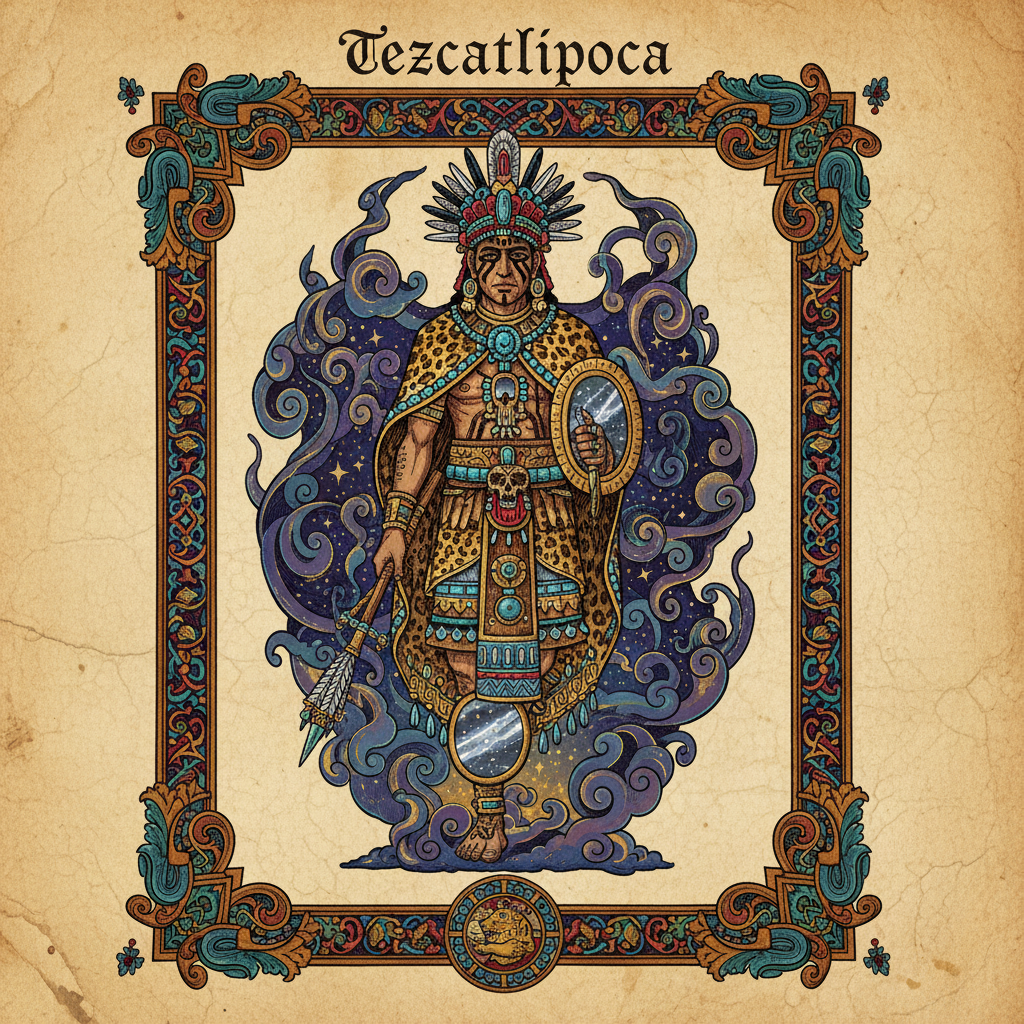
Obsidian Mirror
Tezcatlipoca reveals hidden truths and forces enemies to confront their deepest flaws, paralyzing them with existential dread.
Lord of the Night
All darkness bends to his will; Tezcatlipoca grows stronger under moonless skies and can see through any shadow or deception.
Lost his foot to the Earth Monster (Cipactli) during creation; wears an obsidian mirror in place of it. His very nature is change -- he cannot be stable
“We are his toys. He laughs at us. Tezcatlipoca, the enemy on both sides, the mocker.”
Lore: Tezcatlipoca (tezcatl “mirror” + poca “smoking” — the Smoking Mirror) is the most feared and respected god in the Aztec pantheon. He is the lord of the night sky, of jaguars, of sorcery, of destiny, and above all, of change. His obsidian mirror shows the truth — not the truth you want, but the truth that destroys you. He is called Titlacauan (“We are his slaves”), Moyocoyani (“He who creates himself”), and Necoc Yaotl (“The enemy on both sides”) — an epithet that captures his essential nature. He is not on anyone’s side. He is the force that tests, disrupts, overturns, and transforms.
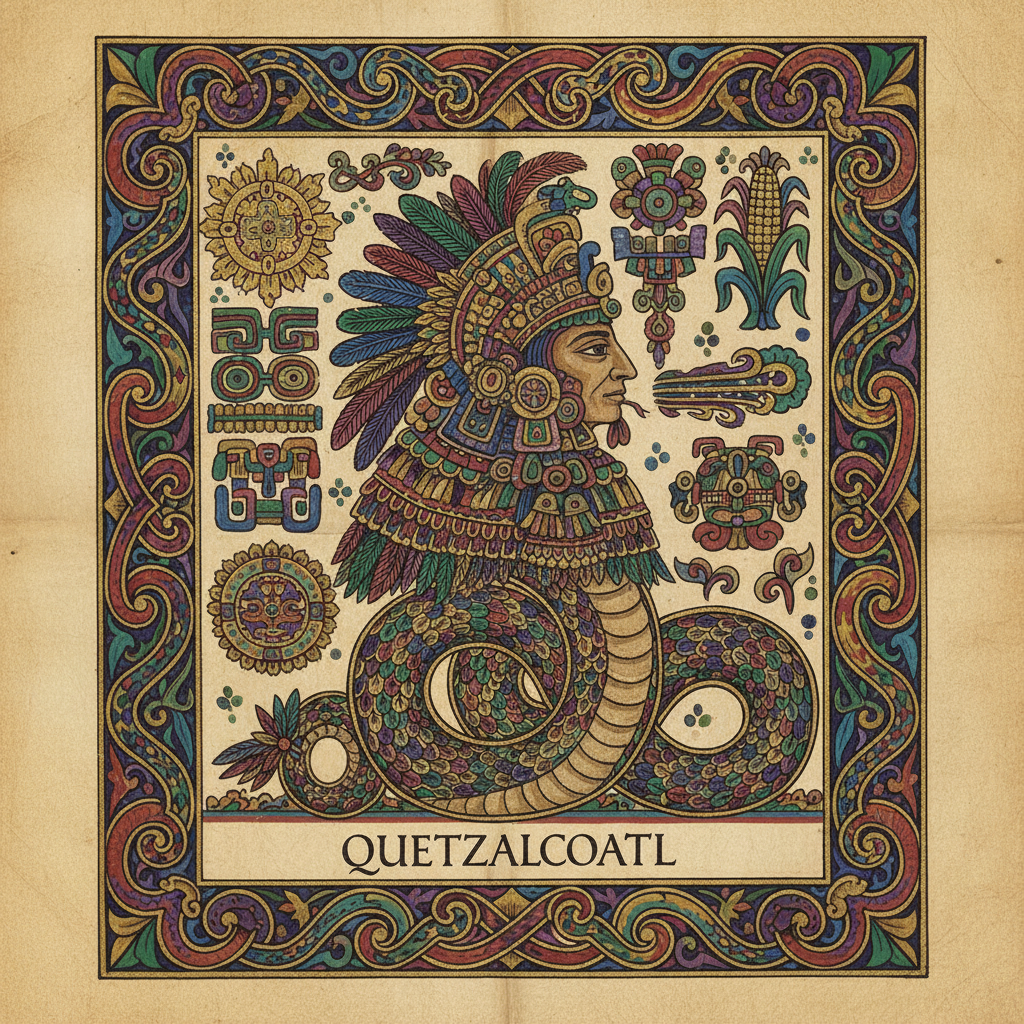
In the creation myths, Tezcatlipoca and Quetzalcoatl alternate as creators and destroyers through the five suns (world ages). Tezcatlipoca became the first sun and was knocked from the sky by Quetzalcoatl, who became the second sun and was knocked down by Tezcatlipoca. They do not cooperate out of love but out of necessity — the cosmos requires both order and chaos, creation and destruction, and neither principle can exist without the other. This is a more sophisticated cosmic dualism than the Persian Ahura Mazda vs. Angra Mainyu framework, because in the Mesoamerican system neither principle is “good” or “evil” — both are necessary, both are dangerous, and both take turns destroying the world.
The comparison to Satan is superficial and misleading. Tezcatlipoca is not a rebel against a higher god. He is a higher god — one of the four original sons of Ometeotl, co-equal with Quetzalcoatl. He is closer to the Norse Loki (trickster, shape-shifter, destabilizer) or the Egyptian Set (necessary chaos within the divine order) than to the Christian Satan. His adversarial relationship with Quetzalcoatl is not a fall narrative — it is a cosmic engine. Without Tezcatlipoca’s disruption, the world would stagnate. Without Quetzalcoatl’s order, it would dissolve. The mirror that replaces his lost foot is the defining symbol: obsidian, volcanic glass, black and reflective, capable of showing truth but only in darkness.
Parallel: The Tezcatlipoca-Quetzalcoatl dynamic maps onto several cosmic dualities: Ahura Mazda and Angra Mainyu (Zoroastrian), Set and Osiris/Horus (Egyptian), Loki and Baldur (Norse). But the Mesoamerican version is unique in that the adversary is not defeated at the end of the cosmic cycle — there is no final battle where good triumphs. Instead, the cycle continues. Each destroys the other. Each creates the conditions for the other’s return. This is a theology of eternal recurrence, closer to Nietzsche than to Revelation.
2 min read
Quetzalcoatl (his eternal opposite); but Tezcatlipoca usually wins their confrontations in myth
*Florentine Codex* (Sahagun); *Codex Borgia*; Olivier, *Mockeries and Metamorphoses of an Aztec God*