Combat Profile
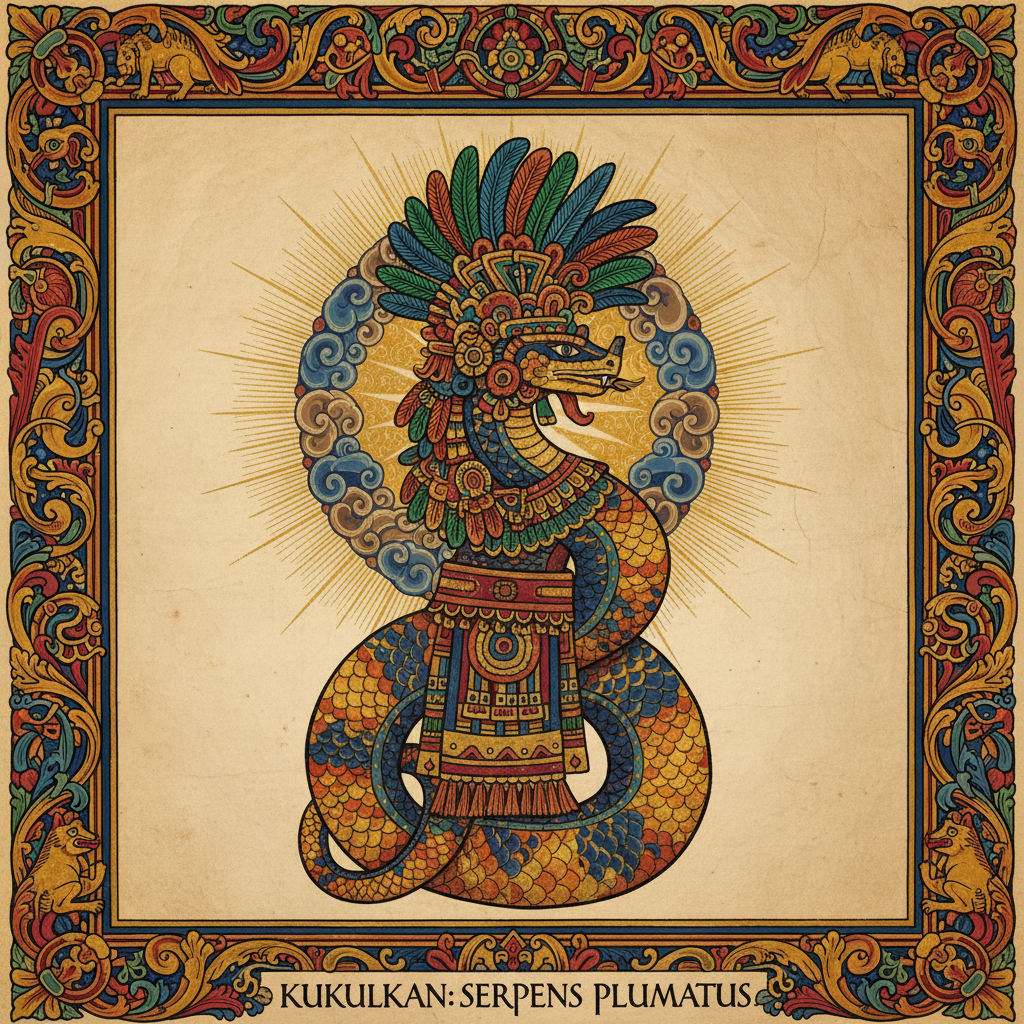
Serpent of Creation
Reshape reality itself by speaking truths of cosmology, capable of ending and beginning world ages
Feathered Ascension
All knowledge flows through this entity; allies gain clarity and foresight while enemies face obscured fates
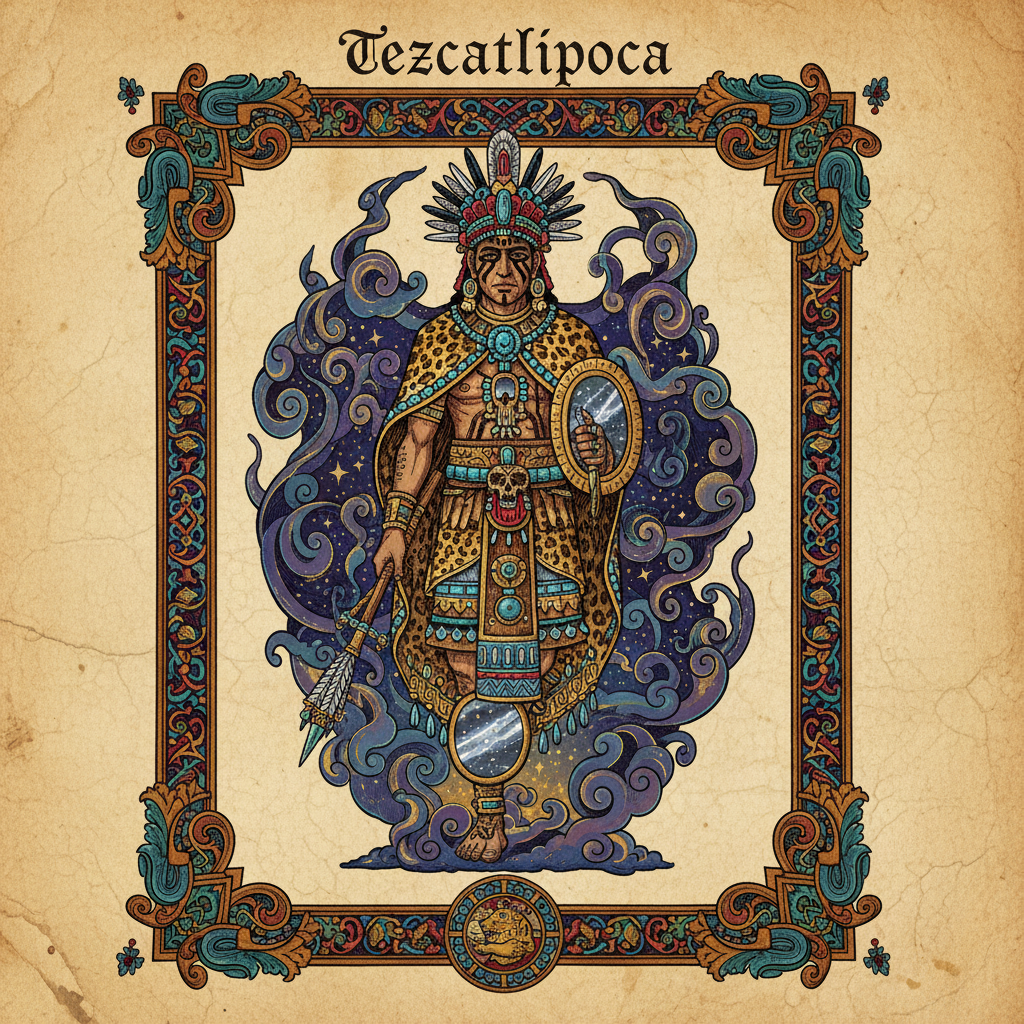
Tricked by Tezcatlipoca into drunkenness and disgrace; fled in shame, promising to return from the east. That promise nearly destroyed his people
“Quetzalcoatl wept over the bones and his blood fell upon them and they stirred. And from the blood and the bones, humanity rose again.”
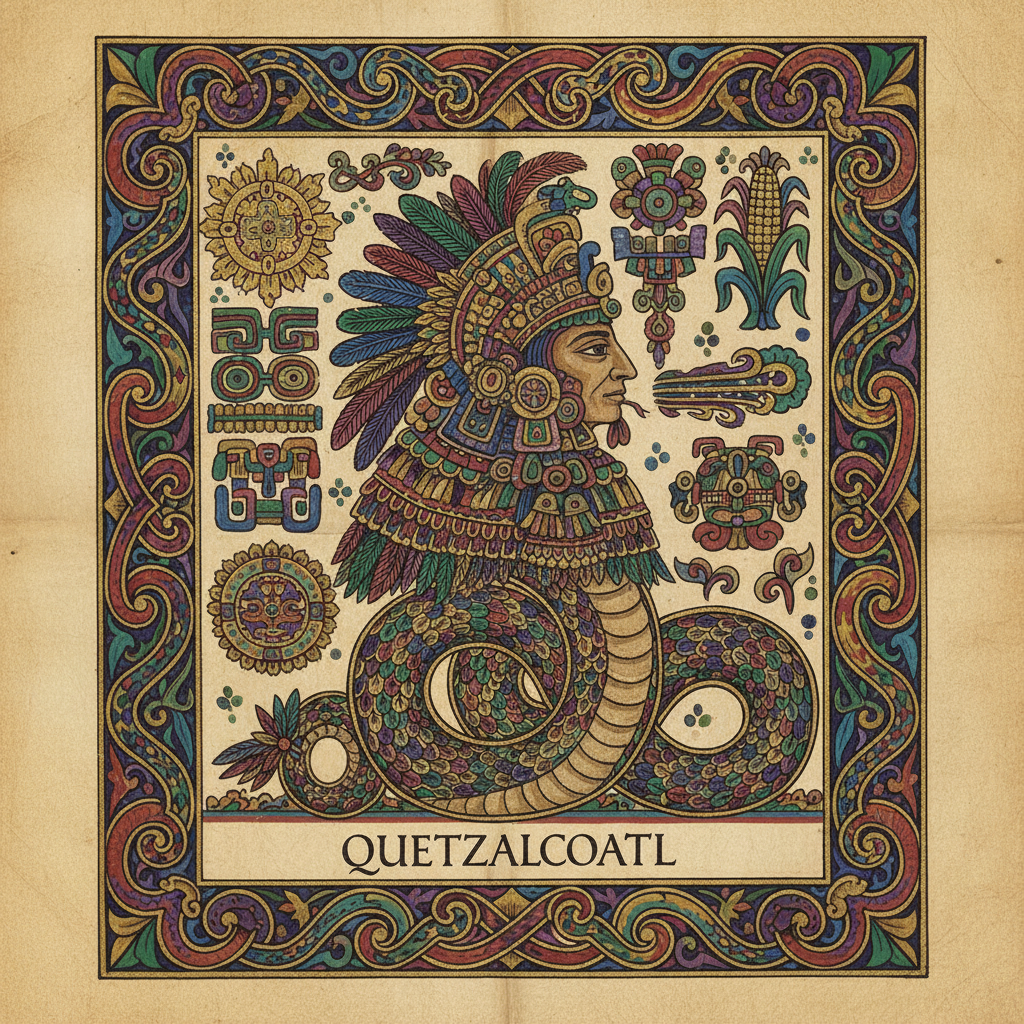
Lore: Quetzalcoatl (Nahuatl: quetzalli “precious feather” + coatl “serpent”) is the most complex figure in Mesoamerican religion — simultaneously a cosmic creator deity, a historical ruler, a priestly ideal, and a prophecy that would be weaponized against his own people. As a god, he is one of the four sons of Ometeotl (the dual god), associated with the west, the color white, and the wind (Ehecatl, his wind aspect, whose temples were built circular so the wind could flow around them). He is the god who values humanity — who descended into the underworld to steal the bones of the dead from Mictlantecuhtli, cutting his own body to bleed on them and bring a new humanity to life. In Aztec theology, human beings owe their existence to Quetzalcoatl’s blood. This is the foundation of the entire sacrificial system: the gods bled for us, so we must bleed for the gods.
As a historical figure, Quetzalcoatl is identified with Ce Acatl Topiltzin Quetzalcoatl, a Toltec ruler (possibly 10th century CE) who established a priestly order that rejected human sacrifice in favor of offerings of butterflies, flowers, and snakes. His rival Tezcatlipoca (or Tezcatlipoca’s priests) supposedly tricked him into drunkenness by offering him pulque (fermented agave), and in his intoxication he committed some act of shame — possibly sleeping with his own sister, or simply breaking his priestly vows. Upon waking and realizing what he had done, he burned himself to death on a pyre and ascended as the Morning Star (Tlahuizcalpantecuhtli). Or, in another version, he sailed east on a raft of serpents, promising to return.
That promise to return from the east became the most consequential myth in the history of the Americas. When Hernan Cortes arrived from the east in 1519, Moctezuma II initially treated the Spanish with ambiguity that some scholars attribute to the Quetzalcoatl prophecy — the pale strangers arriving from where the Feathered Serpent had departed. Whether Moctezuma truly believed Cortes was Quetzalcoatl is fiercely debated by modern historians (Matthew Restall’s When Montezuma Met Cortes argues the “returning god” narrative was largely a post-conquest Spanish invention used to justify the conquest as divinely ordained). But whether historical fact or colonial propaganda, the story demonstrates how a people’s most sacred prophecy can be turned into a weapon against them.
Parallel: The departed-god-who-promises-to-return is one of the most powerful archetypes in world mythology. Christ ascends to heaven and promises to return (Acts 1:11). [King Arthur](Arthurian.md), mortally wounded at Camlann, is carried to Avalon and prophesied to return as the “once and future king.” The Twelfth Imam in Islamic tradition went into occultation and will return as the Mahdi. In each case, the promise of return sustains hope — and in each case, that hope has been exploited by pretenders and conquerors who claimed to be (or be sent by) the returning figure. Quetzalcoatl is unique in that his return prophecy was allegedly exploited not by a fellow Mesoamerican but by an entirely alien civilization whose arrival annihilated the culture that awaited him.
2 min read
Tezcatlipoca (the Smoking Mirror, his eternal opposite -- order vs. chaos, creation vs. destruction, light vs. night)
*Florentine Codex* (Sahagun); *Annals of Cuauhtitlan*; *Legend of the Suns*; Carrasco, *Quetzalcoatl and the Irony of Empire*